Short answer
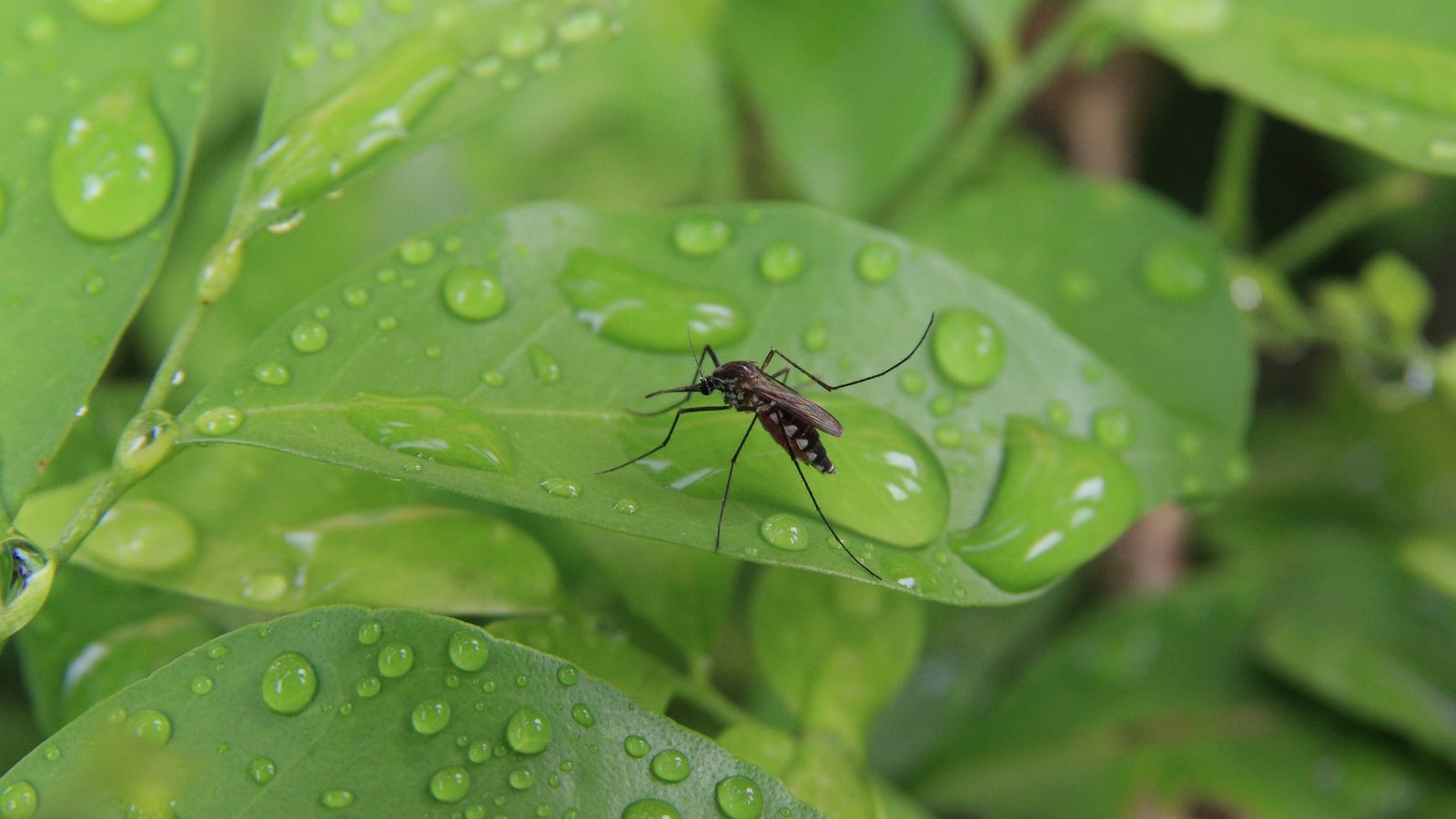
Mississippi’s warm, wet Delta and Gulf landscape produces a long mosquito season and a persistent West Nile virus burden. The state sits repeatedly among the higher per-capita case counts in the country. During 2009 through 2018, Mississippi’s average annual incidence of West Nile neuroinvasive disease was 1.17 cases per 100,000 residents, the fourth highest of any state, behind only North Dakota, South Dakota, and Nebraska (Source 1). Warm months, standing water, and a dominant West Nile vector combine to keep that risk in place year after year.
Mosquito season
Mississippi’s subtropical climate gives mosquitoes a long working season. Warm, humid conditions across the Delta, the central pine belt, and the Gulf Coast let populations complete several generations that a cooler northern climate would not allow (Source 2). Biting activity generally begins in spring and runs into late fall, and on the immediate Gulf Coast some biting continues through mild winters.
West Nile transmission does not spread evenly across that window. Human cases in Mississippi cluster in the warm late-summer and early-fall stretch, roughly July into October, when the mosquito that carries the virus is most active and infection has had time to build in local mosquito and bird populations (Source 3). That timing is why state and county health messaging tends to intensify in mid to late summer.
The mosquitoes you meet
Mississippi is home to roughly 60 mosquito species, though only a handful are significant pests or disease carriers (Source 2).
- Southern house mosquito (Culex quinquefasciatus). This is the state’s most important West Nile virus vector and a carrier of St. Louis encephalitis. It breeds in drainage ditches, storm drains, and artificial containers around homes, including sites rich in organic matter (Source 4). It bites mainly from dusk through the night.
- Container and floodwater Aedes. The Asian tiger mosquito (Aedes albopictus) is established statewide and bites aggressively by day. On the Gulf Coast, Aedes aegypti is present in the coastal counties.
- Saltmarsh Aedes. The coastal salt marsh from Hancock through Harrison and Jackson counties produces Aedes sollicitans and Aedes taeniorhynchus, strong fliers that can move well inland from their marsh breeding sites (Source 5).
- Psorophora and rice-field mosquitoes. The dark rice field mosquito (Psorophora columbiae) is a fierce biter tied to Delta rice agriculture and can fly at least five miles, which makes it hard to control (Source 6). The malaria mosquito (Anopheles quadrimaculatus) shares those rice-field habitats.
- Tree-hole mosquito (Aedes triseriatus). This species is the main vector of La Crosse encephalitis and breeds in tree holes and containers (Source 2).
Disease risk
West Nile virus is the leading mosquito-borne disease concern in Mississippi, and it has been the state’s primary insect-transmitted illness for the past two decades (Source 2). Southern house mosquitoes pick up the virus from infected birds and pass it to people.
The state’s worst recorded year was the 2012 outbreak, part of a regional epizootic that also hit Texas, Louisiana, Arkansas, and neighboring states. Mississippi recorded 247 human West Nile cases during that season (Source 2, Source 7).
Recent years show the burden has not gone away. In 2024, Mississippi reported 59 confirmed human West Nile cases and eight deaths (Source 8). At one reporting point during that 2024 season, the state ranked fifth in the country for West Nile cases (Source 9). A large share of Mississippi’s West Nile cases are neuroinvasive, the more severe form that affects the brain and nervous system, which is consistent with the state’s high per-capita neuroinvasive incidence (Source 1). The 2025 season opened with the first human case confirmed in Rankin County and the first death in Washington County (Source 8).
Beyond West Nile, St. Louis encephalitis and La Crosse encephalitis are documented in the state, though at much lower levels (Source 2). See the West Nile virus, St. Louis encephalitis, and La Crosse encephalitis pages for detail on symptoms and prevention.
Local control
Mosquito control in Mississippi is organized at the county and municipal level, and coverage is uneven. Most municipal programs are run by public works staff in small towns and cities rather than by dedicated abatement districts, and routine spraying is often driven loosely by resident complaints, the time of year, or budget rather than by trapping and larval surveillance data (Source 10). A statewide survey found that only a small fraction of programs used adult-trap surveillance to guide spraying, and only a minority checked for larvae before treating standing water (Source 11).
Two settings make control especially hard. In the Delta, flooded rice fields produce heavy broods of Psorophora columbiae and Anopheles quadrimaculatus, and because those mosquitoes fly long distances, effective control needs cooperation among rice growers, cities, and counties (Source 6). On the Gulf Coast, Harrison, Hancock, and Jackson counties run larger, more established programs against saltmarsh species, using larvicides (including aerial application over marsh) and marsh water management (Source 5). The practical result is that a resident’s local protection depends heavily on which county or town they live in.
Protect yourself
Personal protection carries much of the load in a state where organized control is uneven.
- Use an EPA-registered repellent. Mississippi State University Extension points to DEET for its long safety record, along with picaridin and oil of lemon eucalyptus (Source 2).
- Wear long sleeves and long pants, especially at dusk and after dark when southern house mosquitoes are active (Source 2).
- Screen windows and doors, and use netting when sleeping or camping outdoors (Source 2).
- Empty standing water weekly. Tip out containers, clean gutters and drains, and change water in pet dishes and birdbaths, since the West Nile vector breeds in exactly these container and ditch habitats (Source 4).
- Talk to local officials. State health leaders have encouraged residents to raise mosquito spraying and control with their county boards of supervisors and city officials (Source 9).
Sources
- CDC, Morbidity and Mortality Weekly Report, “Surveillance for West Nile Virus Disease, United States, 2009 to 2018” (Mississippi average annual neuroinvasive incidence 1.17 per 100,000, fourth highest of any state; page returned HTTP 403 on fetch, figure taken from the search-result summary of the same CDC document). https://www.cdc.gov/mmwr/volumes/70/ss/ss7001a1.htm (accessed 2026-07-20)
- Mississippi State University Extension Service, Publication P2530, “Mosquitoes, West Nile, and Other Encephalitis Viruses: What You Can Do to Protect Yourself” (60 species in the state, southern house mosquito as primary West Nile and St. Louis encephalitis vector, tree-hole mosquito as La Crosse vector, repellent and personal-protection guidance). https://extension.msstate.edu/publications/mosquitoes-west-nile-and-other-encephalitis-viruses-what-you-can-do-protect-yourself (accessed 2026-07-20)
- Mississippi Free Press, “Mississippi Ranks Fifth in West Nile Cases; Experts Discuss Disease Prevention Efforts” (late-summer to early-fall, roughly July to October, as the peak period for human cases; quotes from MSU entomologist and the State Health Officer). https://www.mississippifreepress.org/mississippi-ranks-fifth-in-west-nile-cases-experts-discuss-disease-prevention-efforts/ (accessed 2026-07-20)
- Mississippi State University Extension Service, “The Southern House Mosquito and Related Species: Biology and Control” (Culex quinquefasciatus breeding in drainage ditches and artificial containers, role as West Nile and St. Louis encephalitis vector). https://extension.msstate.edu/publications/the-southern-house-mosquito-and-related-species-biology-and-control (accessed 2026-07-20)
- Vector Disease Control International, “Mosquito Management in the Mississippi Delta / Mississippi” and Gulf Coast county program descriptions (saltmarsh Aedes sollicitans and Aedes taeniorhynchus in Hancock, Harrison, and Jackson counties; larvicide and marsh water management). https://www.vdci.net/vdci-mosquito-management-mississippi/ (accessed 2026-07-20)
- Mississippi State University Extension Service, Publication P3500, “Setting Up a Municipal Mosquito Control Program” (dark rice field mosquito Psorophora columbiae and Anopheles quadrimaculatus in Delta rice fields, long flight range, need for grower and agency cooperation). https://extension.msstate.edu/publications/setting-up-municipal-mosquito-control-program (accessed 2026-07-20)
- CDC, Morbidity and Mortality Weekly Report, “West Nile Virus and Other Arboviral Diseases, United States, 2012” (2012 regional outbreak context, including Mississippi). https://www.cdc.gov/mmwr/preview/mmwrhtml/mm6225a1.htm (accessed 2026-07-20)
- Mississippi State Department of Health, “MSDH Reports First Human West Nile Case of 2025” (2024 final total of 59 human cases and eight deaths; first 2025 case in Rankin County and first 2025 death in Washington County; page returned HTTP 404 on direct fetch, details taken from the search-result summary of the MSDH release). https://msdh.ms.gov/page/23,30114,341.html (accessed 2026-07-20)
- Mississippi Free Press, “Mississippi Ranks Fifth in West Nile Cases; Experts Discuss Disease Prevention Efforts” (fifth-in-the-nation ranking at that 2024 reporting point; State Health Officer encouraging residents to press local officials on spraying). https://www.mississippifreepress.org/mississippi-ranks-fifth-in-west-nile-cases-experts-discuss-disease-prevention-efforts/ (accessed 2026-07-20)
- Mississippi State University Extension Service, Publication P3500, “Setting Up a Municipal Mosquito Control Program” (municipal control run mostly by public works staff, routine spraying driven by complaints and season). https://extension.msstate.edu/publications/setting-up-municipal-mosquito-control-program (accessed 2026-07-20)
- Goddard J. et al., “Survey of mosquito control knowledge, attitudes, and practices among county and municipal programs in Mississippi,” PubMed record (small share of programs using adult-trap surveillance; minority dipping for larvae before treatment). https://pubmed.ncbi.nlm.nih.gov/19852228/ (accessed 2026-07-20)
Related
- West Nile virus
- St. Louis encephalitis
- La Crosse encephalitis
- Culex quinquefasciatus (southern house mosquito)
- Psorophora columbiae (dark rice field mosquito)
- Mosquitoes in Louisiana
- Mosquitoes in Alabama
- Gulf Coast region overview
Educational note: This guide is general reference information, not medical advice. If you have symptoms of a mosquito-borne illness, contact a healthcare provider or the Mississippi State Department of Health. For local spraying schedules and mosquito complaints, contact your county or municipal mosquito control program.
Last reviewed 20 July 2026.