The short answer
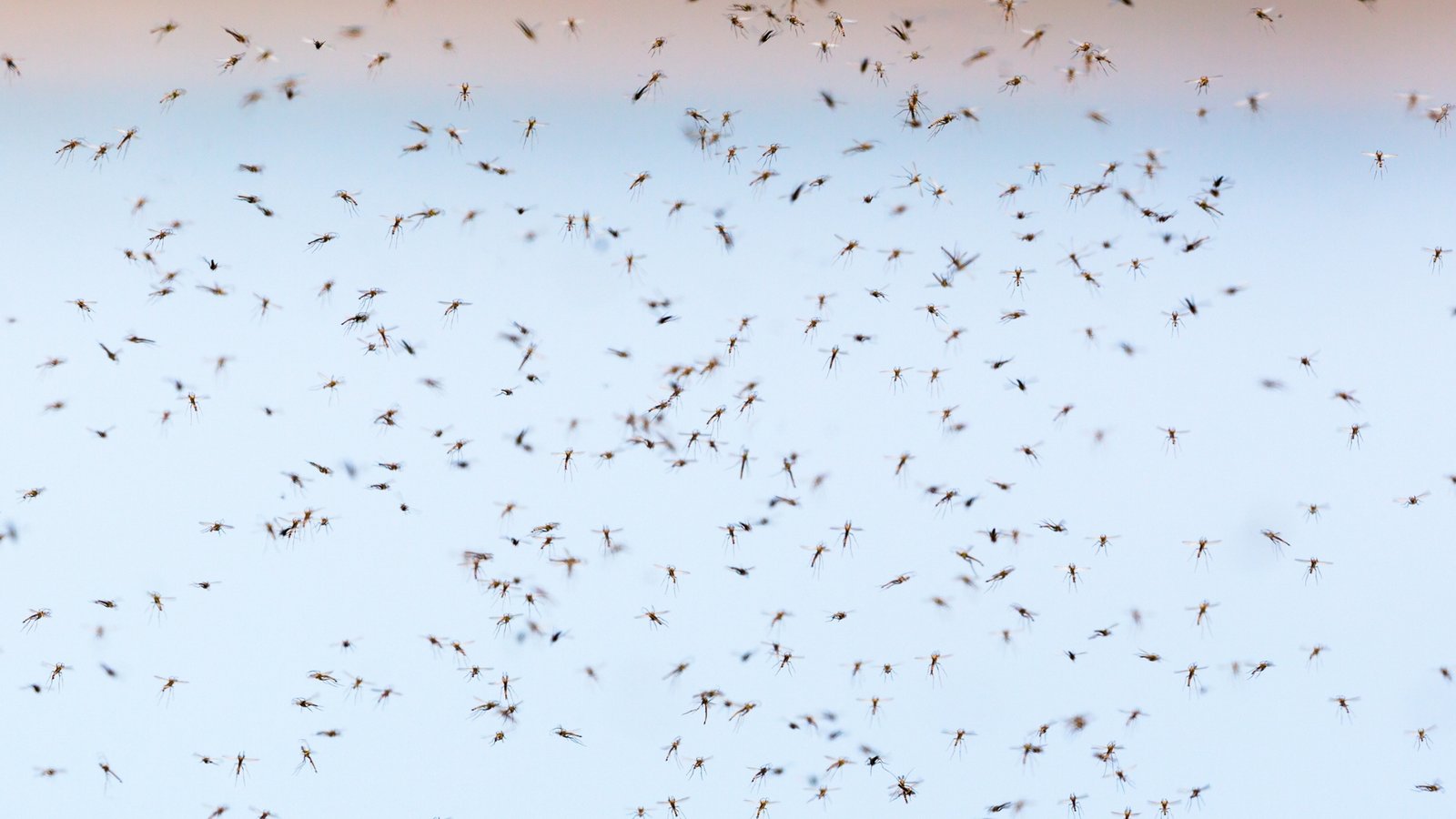
If you live in the Southeast, you face one of the longest and heaviest mosquito seasons anywhere in the country. Warm, humid weather, frequent rain, and mild winters let many species stay active for most of the year, and in the far south they barely pause at all.
That long season comes with a real range of disease risks. West Nile virus is the most widespread mosquito-borne illness across the region and is reported most years (CDC ArboNET, source 1). Eastern equine encephalitis (EEE) is rare but very serious and is concentrated in the Southeast and Gulf Coast (CDC, source 2). La Crosse encephalitis affects children in the Appalachian parts of the region (UNC, source 5). And in the warmest areas, especially southern Florida, small numbers of locally acquired dengue cases now turn up in most recent years (CDC HAN, source 6).
The plain takeaway: the odds of being bitten here are high, the odds of getting seriously sick from any one bite are low, and simple prevention lowers your risk a lot.
Mosquito season here
Mosquito season in the Southeast is long, roughly spring through late fall across most of the region, and closer to year-round in the far south. Because mosquitoes need warmth and standing water, the season tracks temperature and rainfall more than the calendar.
In the northern parts of the region (upper Georgia, the Carolinas, Tennessee, northern Alabama), frost usually shuts activity down for part of the winter. Farther south, the season stretches. In Florida the season can run all year, with warm temperatures and standing water letting mosquitoes lay eggs almost nonstop, and South Florida stays active most of the year with no reliable dormant period (University of Florida extension, source 4; source 7).
The worst stretch for most of the Southeast is summer, roughly June through September, when heat and afternoon storms combine and hurricane-season rainfall fills every low spot with water (source 7). Floodwater species can surge within days of a heavy storm.
The mosquitoes you meet
The Southeast is home to a large number of mosquito species. A few matter most for biting and for disease.
Asian tiger mosquito (Aedes albopictus) is one of the most common day-biting mosquitoes across the region. It is widely distributed in the southeastern states and breeds readily in small containers around homes (CDC, source 3). See the species page on Aedes albopictus.
Yellow fever mosquito (Aedes aegypti) overlaps with albopictus in the warmer parts of the region. It is the mosquito most likely to spread viruses such as dengue, chikungunya, and Zika (CDC, source 3). See the species page on Aedes aegypti.
Southern house mosquito (Culex quinquefasciatus) is a night-active, container-breeding mosquito found throughout the southern states, including all of Florida. It is an important part of how West Nile virus is maintained in bird populations and can transmit the virus to people (University of Florida extension, source 8). Other Culex species fill similar roles across the region. See the species page on Culex mosquitoes.
Gallinipper (Psorophora ciliata) is the largest blood-feeding mosquito in the region and delivers a notably painful bite. It is a floodwater mosquito whose numbers can surge after heavy rain and flooding, and its predatory larvae eat other mosquito larvae (University of Wisconsin-Milwaukee Field Station, source 9). See the species page on Psorophora.
Culiseta melanura lives in freshwater hardwood swamps and mostly feeds on birds. You will rarely notice it biting, but it is central to disease risk because it keeps EEE virus circulating among birds in swampy areas (CDC, source 2). See the species page on Culiseta melanura.
Disease risk
West Nile virus is the most common and most widespread mosquito-borne disease across the Southeast, spread mainly by Culex mosquitoes. Most people who are infected have no symptoms, and only a small share develop severe neuroinvasive illness. Nationally, CDC ArboNET recorded more than 1,800 preliminary human cases in 2025 across dozens of states (CDC ArboNET, source 1). See the disease page on West Nile virus.
Eastern equine encephalitis (EEE) is rare but among the most dangerous mosquito-borne diseases. The virus cycles between Culiseta melanura and birds in freshwater hardwood swamps, and reaches people only when bridge mosquito species that feed on both birds and mammals pass it along; in the Southeast these include Coquillettidia perturbans, Aedes canadensis, Culex salinarius, and Culex erraticus (source 10). The United States averaged only about eight reported EEE cases per year during 2003 to 2018, but roughly 30 percent of people who develop severe disease die, and many survivors have lasting neurologic problems (CDC, source 2). See the disease page on Eastern equine encephalitis.
La Crosse encephalitis is concentrated in the Appalachian parts of the region and is a leading cause of mosquito-borne encephalitis in children. Cases cluster in western North Carolina, eastern Tennessee, West Virginia, and neighboring areas. It is spread mainly by the eastern treehole mosquito (Aedes triseriatus), with Aedes albopictus and Aedes japonicus also carrying the virus in the region (UNC, source 5). See the disease page on La Crosse encephalitis.
Dengue is not established as a continuously circulating disease in the region, but the warm areas of the Southeast now see small numbers of locally acquired cases in most recent years. In 2024, Florida reported 91 locally acquired dengue cases across ten counties, most of them in Miami-Dade, and a locally acquired case was again reported in Miami-Dade in 2025 (CDC HAN, source 6). See the disease page on dengue.
Local control and what to do
Most protection comes down to two things: keeping mosquitoes from breeding near you, and keeping them from biting you.
Around the home, remove standing water at least once a week. Aedes and Culex mosquitoes that live near people breed in surprisingly small amounts of water, including tires, buckets, plant saucers, clogged gutters, tarps, and any container that holds rain (University of Florida extension, source 8). Empty, cover, or drill drainage holes in anything that collects water.
On your body, use an EPA-registered repellent (products with DEET, picaridin, or oil of lemon eucalyptus are common choices) and wear long sleeves and long pants when mosquitoes are active. Timing matters and depends on the species: Culex mosquitoes tied to West Nile virus bite mostly at night, so evening and nighttime activity calls for repellent and covering up (source 8), while Aedes mosquitoes bite during the day.
For property-scale or neighborhood problems, contact your county or district mosquito control program. Many parts of the Southeast, especially in Florida, have organized mosquito control districts that conduct surveillance and treatment. For personal medical questions, talk with a healthcare provider, and check your state health department for current local advisories.
Sources
- Centers for Disease Control and Prevention, “Current Year Data (2026)” and West Nile virus data and maps. https://www.cdc.gov/west-nile-virus/data-maps/current-year-data.html (accessed 20 July 2026). Preliminary 2025 national case count reported via ArboNET surveillance.
- Centers for Disease Control and Prevention, “About Eastern Equine Encephalitis Virus.” https://www.cdc.gov/eastern-equine-encephalitis/about/index.html (accessed 20 July 2026). Swamp transmission cycle, roughly 30 percent fatality among severe cases, and average of about eight reported cases per year 2003 to 2018.
- Centers for Disease Control and Prevention, “Potential Range of Aedes Mosquitoes.” https://www.cdc.gov/mosquitoes/php/toolkit/potential-range-of-aedes.html (accessed 20 July 2026). Distribution of Aedes albopictus and Aedes aegypti and their relative role in spreading dengue, chikungunya, and Zika.
- UF/IFAS Extension (Levy County), “There is a Mosquito Season in Florida?” https://blogs.ifas.ufl.edu/levyco/2023/07/11/theres-a-mosquito-season-in-florida/ (accessed 20 July 2026). (Mosquitoes are active year-round in Florida, with populations much higher in the summer rainy season.)
- University of North Carolina Institute for Global Health and Infectious Diseases, “La Crosse Encephalitis Virus.” https://globalhealth.unc.edu/2023/04/la-crosse-encephalitis-virus-understanding-a-rare-mosquito-borne-disease-that-affects-children-in-the-appalachian-region/ (accessed 20 July 2026). Appalachian focus, pediatric impact, and Aedes triseriatus as primary vector.
- Centers for Disease Control and Prevention, Health Alert Network (HAN) 00523, “Ongoing Risk of Dengue Virus Infections and Updated Testing Recommendations in the United States.” https://www.cdc.gov/han/php/notices/han00523.html (accessed 20 July 2026). Florida locally acquired dengue cases in 2024 and 2025.
- UF/IFAS Extension (Sarasota County), “Mosquito FAQs.” https://blogs.ifas.ufl.edu/sarasotaco/2024/06/21/mosquito-faqs/ (accessed 20 July 2026). (Rainy season runs June through September when mosquito populations peak, though mosquitoes occur year-round.)
- University of Florida IFAS Featured Creatures, “Southern House Mosquito, Culex quinquefasciatus Say” (EENY-457/IN837). https://ask.ifas.ufl.edu/publication/IN837 (accessed 20 July 2026). Range, night-biting behavior, container breeding, and role in West Nile virus.
- University of Wisconsin-Milwaukee Field Station, “Psorophora ciliata aka The Shaggy-Legged Gallinipper.” https://uwm.edu/field-station/bug-of-the-week/psorophora-ciliata-aka-the-shaggy-legged-gallinipper/ (accessed 20 July 2026). Largest US mosquito, painful bite, floodwater breeding, predatory larvae.
- Burkett-Cadena et al., “Ecology of Eastern Equine Encephalitis Virus in the Southeastern United States: Incriminating Vector and Host Species Responsible for Virus Amplification, Persistence, and Dispersal,” PubMed 34734635. https://pubmed.ncbi.nlm.nih.gov/34734635/ (accessed 20 July 2026). Southeastern bridge vector species for EEE.
Related
- Species: Aedes albopictus (Asian tiger mosquito) [placeholder link]
- Species: Aedes aegypti (yellow fever mosquito) [placeholder link]
- Species: Culex mosquitoes [placeholder link]
- Species: Psorophora (gallinipper) [placeholder link]
- Species: Culiseta melanura [placeholder link]
- Disease: West Nile virus [placeholder link]
- Disease: Eastern equine encephalitis [placeholder link]
- Disease: La Crosse encephalitis [placeholder link]
- Disease: Dengue [placeholder link]
- Regions index [placeholder link]
Educational note: This page is for general information only and is not medical advice. It is not affiliated with any government agency or product. If you think you may have a mosquito-borne illness, contact a healthcare provider, and consult your state or local health department for current advisories.
Last reviewed 20 July 2026.