The short answer
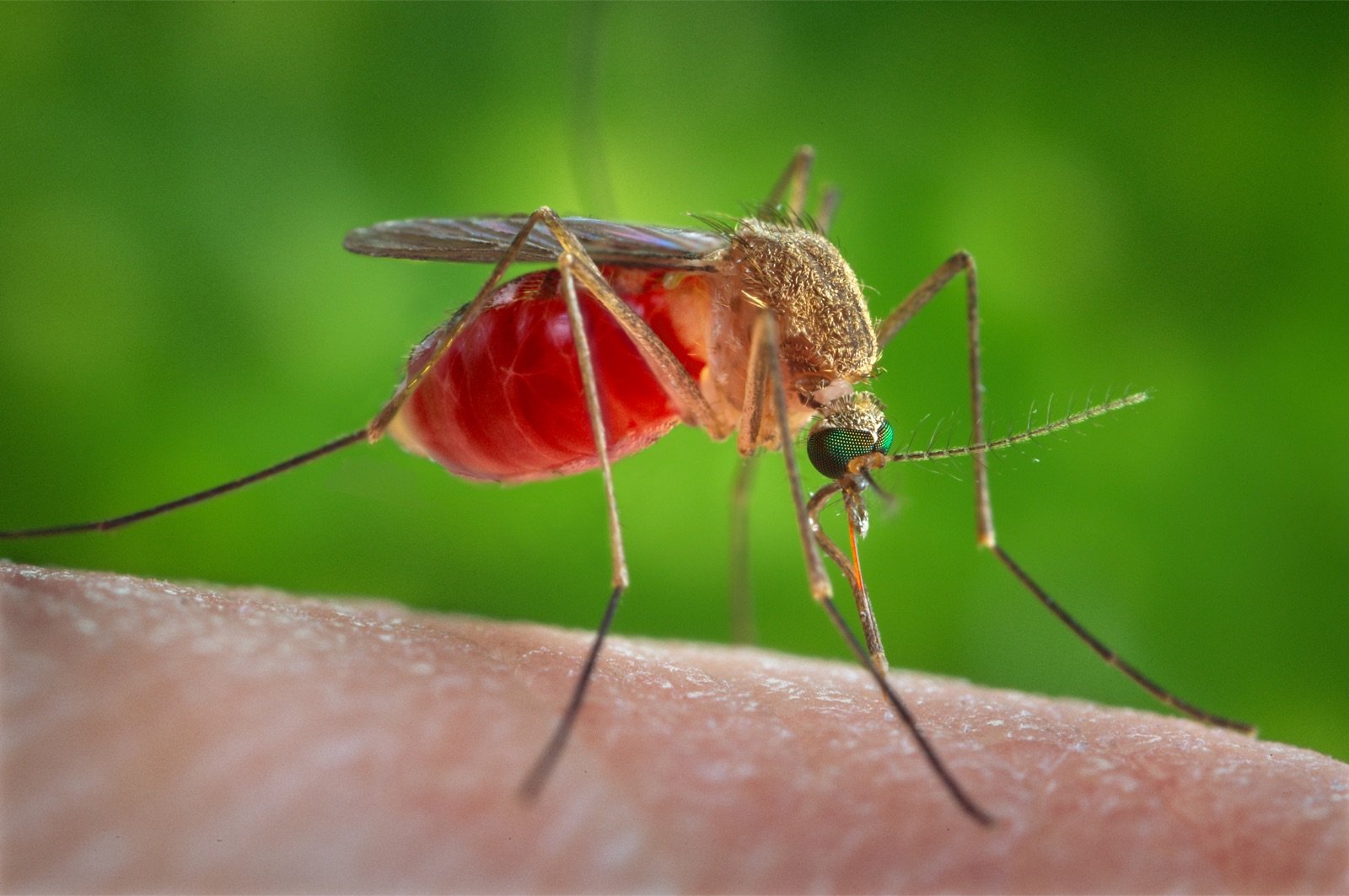
Culex quinquefasciatus is the southern counterpart of Culex pipiens, the common brown house mosquito. It is a plain, medium-sized, brown mosquito that lives close to people in warm regions and comes out to bite at night. It matters for public health because it is one of the main mosquitoes that spread West Nile virus across the southern and warmer parts of the country, and it is the principal vector of St. Louis encephalitis virus in the southern regions [1]. Where its range overlaps that of the northern house mosquito, the two species look nearly identical and interbreed [1].
Note: We do not yet have a verified library photo of Culex quinquefasciatus for this page. The species closely resembles Culex pipiens (northern house mosquito), and the two cannot be told apart reliably by eye, so we do not substitute a Culex pipiens image here.
How to identify it
Culex quinquefasciatus is a plain brown mosquito, which is part of how you separate it from flashier, boldly striped species. Adults measure about 3.96 to 4.25 mm in length and are brown overall, with the proboscis (the long feeding tube), thorax, wings, and tarsi (the far ends of the legs) darker than the rest of the body [1]. Each abdominal segment carries a pale, narrow, rounded band on its basal side, and these bands take on a half-moon shape, rather than showing bold stripes down the middle [1].
The hard part is telling it apart from Culex pipiens, the northern house mosquito. The two are extremely similar, and in a broad zone between about 36 and 39 degrees north latitude they freely hybridize and produce viable offspring, which is why some references treat them as subspecies of a single Culex pipiens complex [1]. In that overlap band, a reliable identification usually needs a specialist and a microscope rather than a naked-eye look.
Separating this mosquito from Aedes species is easier and can be done by how it lays eggs. Culex females glue their eggs together into a floating raft of about 100 or more eggs that sits on the water surface, while Aedes and related mosquitoes lay their eggs singly, usually on damp soil rather than on open water [4], [1]. Aedes species (such as the yellow fever and Asian tiger mosquitoes) also tend to be strongly patterned with white markings and bite aggressively during the day, whereas the southern house mosquito is drab and comes out mainly at night.
Where it lives
Culex quinquefasciatus is a mosquito of the southern and warmer regions. In North America its range runs from Virginia across the southern plains to southern California, and it reaches north to about southern Iowa and has been reported as far north as Indiana, while extending south through Texas and Florida [1]. In Florida it is found in all 67 counties [1]. Roughly speaking, it occupies the warm band below the latitudes where the northern house mosquito, Culex pipiens, takes over, and the two meet and interbreed in the overlap zone described above [1].
Its larvae favor stagnant, nutrient-rich water, often water fouled by organic waste. Typical breeding sites include waste water areas, storm-water catch basins, and almost any container that holds standing water, from bird baths and old tires to buckets and other vessels around the home [1]. Because it thrives in polluted, container, and drainage water in built-up areas, it is closely tied to human settlement.
Behavior
Culex quinquefasciatus is a night biter. Gravid females fly at night to nutrient-rich standing water to lay their eggs, and the adults feed through the hours of darkness rather than in midday sun [1]. They are opportunistic feeders, taking blood from mammals and birds during the night, and females take multiple blood meals over their lives, while males feed only on sugar and do not bite [1].
That willingness to feed on both birds and people is exactly what makes the species important for disease. A mosquito can pick up a virus from an infected bird and later bite a person, which is why this mosquito is often described as an urban bridge vector between wild bird reservoirs and humans. Its strong association with human dwellings and human-made water sources keeps it in close, regular contact with people.
Diseases it can carry
The main viral concern with Culex quinquefasciatus is West Nile virus, and in the southern regions it is also the principal vector of St. Louis encephalitis virus [1]. West Nile virus circulates in nature between mosquitoes and birds, and people become infected when a mosquito feeds on an infected bird and then bites a person [3]. Culex species are the primary mosquitoes that spread it [3]. People are dead-end hosts, meaning they do not build up enough virus to pass it back to biting mosquitoes [3].
Most people who are infected with West Nile virus never feel sick. About 80 percent of those infected develop no symptoms, and roughly 20 percent develop a fever with headache, body aches, joint pain, vomiting, diarrhea, or rash [2]. A small share of infections become severe and can cause inflammation of the brain (encephalitis) or of the membranes around the brain and spinal cord (meningitis), with higher risk for older adults and people with certain medical conditions [2]. There are no licensed vaccines or medicines to prevent West Nile virus in people, so prevention rests on mosquito control and personal protection [3]. St. Louis encephalitis is caused by a related virus spread by the same kind of Culex mosquitoes.
Culex quinquefasciatus is also recognized as an important vector of dog heartworm (Dirofilaria immitis), the parasitic worm that infects dogs and other animals [6]. Many mosquito species can carry heartworm, and this one is among the mosquitoes that contribute to its spread, which is one reason year-round heartworm prevention is recommended for pets in warm regions.
See the [West Nile virus], [St. Louis encephalitis], and [dog heartworm] disease pages for full detail on symptoms, testing, and risk.
How to control it
Because this mosquito breeds in stagnant water near homes, the most effective step is source reduction: get rid of standing water so larvae have nowhere to grow. Change the water in bird baths and pet bowls often, empty or turn over buckets, old tires, and other containers, and keep gutters and ditches draining freely [1]. Stocking ornamental ponds with mosquito-eating fish is another way to cut down larvae in water that cannot be drained [1].
Some breeding sites cannot simply be emptied. Street stormwater catch basins are a major, hard-to-drain source for house mosquitoes, and mosquito control programs routinely treat them with larvicides such as Bacillus thuringiensis israelensis (Bti), a biological product toxic to mosquito larvae but not to fish, wildlife, or people [5]. For personal protection, use an EPA-registered repellent, wear long-sleeved shirts and long pants during the evening and nighttime hours when this species is active, and keep window and door screens in good repair [1], [5]. Before applying any pesticide, check with your local mosquito control district or extension office [1].
Sources
- University of Florida IFAS, Featured Creatures, “Southern House Mosquito Culex quinquefasciatus Say” (EENY-457/IN837). https://ask.ifas.ufl.edu/publication/IN837 (accessed 2026-07-20). Supports: adult length 3.96 to 4.25 mm, brown body with darker proboscis, thorax, wings, and tarsi, pale narrow rounded basal abdominal bands in a half-moon shape; free hybridization with Culex pipiens in a zone between 36 and 39 degrees north and treatment as a pipiens complex; distribution from Virginia across the southern plains to southern California, north to southern Iowa and reported to Indiana, south through Texas and Florida, present in all 67 Florida counties; larval habitat in nutrient-rich waste water, catch basins, and containers such as bird baths, old tires, and buckets; nocturnal egg-laying and opportunistic night feeding on mammals and birds, females taking multiple blood meals, males feeding on sugar only; egg rafts of about 100 or more eggs; principal vector of St. Louis encephalitis virus in the southern regions and a vector of West Nile virus; management by source reduction, changing bird bath and pet water, mosquito fish, larvicides and adulticides, personal protection, and consulting local mosquito control before pesticide use.
- CDC, “About West Nile.” https://www.cdc.gov/west-nile-virus/about/index.html (accessed 2026-07-20; page returned HTTP 403, claims verified from CDC search-result text). Supports: about 80 percent of infected people have no symptoms and about 20 percent develop febrile illness with headache, body aches, joint pain, vomiting, diarrhea, or rash; severe cases can cause encephalitis and meningitis; higher risk for older adults and people with certain medical conditions.
- CDC, “West Nile: Causes and How It Spreads.” https://www.cdc.gov/west-nile-virus/causes/index.html (accessed 2026-07-20). Supports: transmission cycle between mosquitoes (primarily Culex) and birds; people infected when mosquitoes feed on infected birds then bite people; people are dead-end hosts; no licensed vaccines or medicines; prevention depends on mosquito control and personal protection.
- American Mosquito Control Association, “Life Cycle.” https://www.mosquito.org/life-cycle/ (accessed 2026-07-20). Supports: Culex lay eggs stuck together in a floating raft on the water surface, while Aedes lay eggs singly on damp soil.
- CDC, “Guidelines for West Nile Virus Surveillance and Control.” https://www.cdc.gov/west-nile-virus/php/surveillance-and-control-guidelines/ (accessed 2026-07-20). Supports: catch basins as productive larval sites treated with larvicides including Bti, which is toxic to larvae but not to fish, wildlife, or people; personal protective measures such as repellent, long sleeves, and screens.
- Cardona-Rivera et al., “Assessment of monthly infection risk of heartworm infection in Colombia: integrative ecological niche modeling of Culex quinquefasciatus and Dirofilaria immitis,” Veterinary Parasitology (via ScienceDirect). https://www.sciencedirect.com/science/article/pii/S0304401726000154 (accessed 2026-07-20). Supports: Culex quinquefasciatus is recognized as an important and widely distributed vector of Dirofilaria immitis (dog heartworm).
Related
- [West Nile virus]
- [St. Louis encephalitis]
- [dog heartworm]
- [Culex pipiens (northern house mosquito)]
- [How to get rid of standing water around your home]
- [Aedes vs Culex: how to tell mosquito groups apart]
- [Mosquito larvicides explained]
Educational note: This page is a general reference for identification and public health awareness. It is not medical advice. If you have symptoms of a mosquito-borne illness, contact a healthcare provider, and for local mosquito problems contact your county or regional mosquito control program.
Last reviewed 20 July 2026.