The short answer
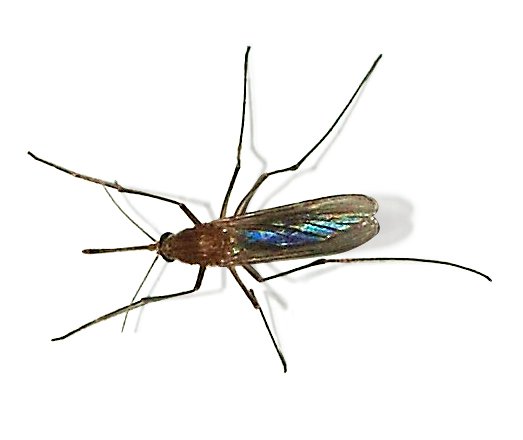
St. Louis encephalitis is an illness caused by a virus (St. Louis encephalitis virus, or SLEV) that a few kinds of Culex mosquitoes can pass to people when they bite. The good news is that most people who get infected never feel sick at all. When illness does happen, it usually looks like a fever and headache. A small number of people, most often older adults, develop a serious infection of the brain or its surrounding membranes. There is no vaccine and no specific drug for it, so avoiding mosquito bites is the main way to protect yourself.
The short version: SLEV is a mosquito-borne virus carried by Culex mosquitoes in a bird-and-mosquito cycle. Most infections cause no symptoms. Severe brain disease is uncommon but more likely with age. No vaccine exists, and care is supportive. Prevent bites to prevent the disease.
What it is
St. Louis encephalitis virus is a flavivirus, part of the same virus family as West Nile virus, dengue, and Zika. It was first identified during a large outbreak of brain inflammation in and around St. Louis, Missouri, in the summer of 1933, which is how it got its name. [1]
The virus lives in a cycle between mosquitoes and birds. People are not part of that cycle. When a person is infected, it is a side event that does not keep the virus going in nature. Most years, only a handful of human cases are reported nationally, but the virus is capable of causing larger outbreaks under the right conditions. [1][4]
How you get it
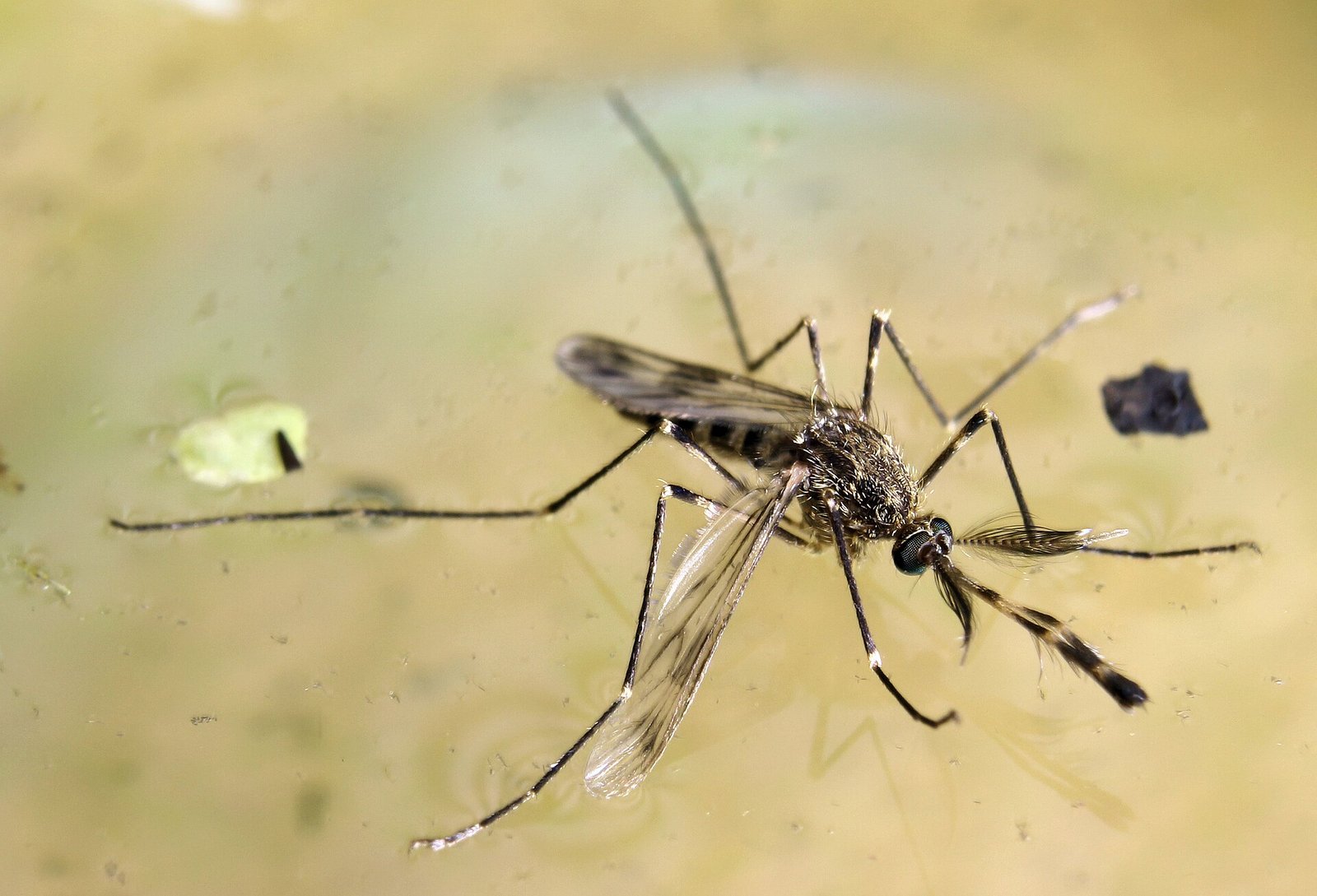
You get St. Louis encephalitis from the bite of an infected mosquito. Specifically, the virus is carried by several Culex species, including Culex pipiens (the northern house mosquito), Culex quinquefasciatus (the southern house mosquito), Culex tarsalis (the western encephalitis mosquito), and Culex nigripalpus. [2]
The transmission cycle works like this: mosquitoes feed on birds that carry the virus in their blood, the mosquitoes become infected, and then some of those mosquitoes bite people. This bird-mosquito-bird pattern is the same basic cycle that keeps West Nile virus circulating, and the two viruses share the same Culex mosquitoes and the same bird hosts across much of their range. [2][9]
What does not transmit it is just as important to know:
- You cannot catch it from another person. People are considered dead-end hosts, meaning they do not build up enough virus in their blood to infect a mosquito that bites them, so the virus does not spread person to person. [2]
- It is not spread by casual contact, coughing, or sneezing.
- Birds do not give it to you directly. The virus reaches people only through the mosquito, not from handling or being near birds.
Symptoms
Most people infected with St. Louis encephalitis virus have no symptoms at all. [1] Among those who do get sick, the time from the bite to feeling ill (the incubation period) is usually 4 to 14 days. [3]
When symptoms occur, they often start as a mild, flu-like illness: fever, headache, nausea, vomiting, and tiredness. [1] Many people recover from this stage without further trouble.
A smaller number go on to develop severe neuroinvasive disease, meaning the infection affects the nervous system. This can take the form of:
- Aseptic meningitis, inflammation of the membranes around the brain and spinal cord.
- Encephalitis, inflammation of the brain itself. [1]
Signs of the severe form can include a stiff neck, confusion or altered mental status, tremor, unsteadiness, seizures, and in serious cases paralysis. [3] Of people who develop encephalitis, roughly 5 to 20 percent of cases are fatal, and the risk of death rises sharply with age. [3][5] Among survivors of severe disease, an estimated 5 to 10 percent are left with lasting neurological effects. [5]
Who is at higher risk
Age is the single biggest factor in how serious this infection becomes. In one long-standing pattern documented in the medical literature, about 40 percent of children and young adults who get sick develop only fever, headache, or aseptic meningitis, while nearly 90 percent of elderly patients who get sick develop encephalitis. [5] Older adults are both more likely to develop the severe brain form and more likely to die from it. [1][5]
People at higher risk of a bad outcome include:
- Older adults, especially those over 60.
- People who spend time outdoors in areas with active mosquito transmission, particularly in the eastern, central, and some southwestern states during summer and early fall. [4][5]
When to see a doctor: Seek prompt medical care if you or someone you care for develops a high fever with a severe headache, a stiff neck, confusion, unusual sleepiness, tremors, or a seizure, especially during mosquito season and after known mosquito exposure. These can be signs of neuroinvasive disease and need evaluation right away.
Diagnosis and treatment
St. Louis encephalitis is diagnosed by a doctor based on symptoms, recent exposure to mosquitoes, and laboratory tests on blood or spinal fluid that look for antibodies to the virus. [3]
On treatment, the facts are straightforward: there is no vaccine to prevent St. Louis encephalitis, and there is no specific medicine or antiviral drug to treat it. [6] Care is supportive, meaning it focuses on relieving symptoms and supporting the body while the immune system fights the infection. For severe cases this can include hospitalization, fluids for dehydration, medicine for pain and nausea, help with breathing, and close monitoring for complications such as brain swelling and seizures. [6]
Because there is no cure and no shot, preventing mosquito bites is the most effective tool available.
How to protect yourself
Reducing mosquito bites and mosquito breeding around your home lowers your risk. Practical steps include:
- Use an EPA-registered insect repellent and follow the label instructions. See prevention: repellents.
- Wear long sleeves and long pants when you are outside during peak mosquito hours, which for Culex species is often dusk to dawn.
- Repair or install screens on windows and doors to keep mosquitoes out. See prevention: home defense.
- Empty standing water at least once a week from anything that holds it: buckets, planters, tarps, gutters, birdbaths, and old tires. Culex mosquitoes breed in stagnant water. See prevention: standing water.
- Support or cooperate with local mosquito-control efforts in your community.
Sources
- Centers for Disease Control and Prevention. About St. Louis Encephalitis Virus. https://www.cdc.gov/sle/about/index.html. Accessed 20 Jul 2026. (Backs: virus family, 1933 origin, most infections asymptomatic, symptoms, older-adult severe-disease risk.)
- Centers for Disease Control and Prevention. Transmission of St. Louis Encephalitis Virus. https://www.cdc.gov/sle/php/transmission/index.html. Accessed 20 Jul 2026. (Backs: Culex vector species, bird-mosquito cycle, humans as dead-end hosts, no person-to-person spread.)
- Centers for Disease Control and Prevention. Clinical Signs and Symptoms of St. Louis Encephalitis. https://www.cdc.gov/sle/hcp/clinical-signs/index.html. Accessed 20 Jul 2026. (Backs: 4 to 14 day incubation period, neuroinvasive signs, diagnosis approach, 5 to 20 percent case fatality.)
- Centers for Disease Control and Prevention. Data and Maps for St. Louis Encephalitis. https://www.cdc.gov/sle/data-maps/index.html. Accessed 20 Jul 2026. (Backs: small number of cases most years, geographic distribution via ArboNET surveillance.)
- National Center for Biotechnology Information, StatPearls. St. Louis Encephalitis. https://www.ncbi.nlm.nih.gov/books/NBK470426/. Accessed 20 Jul 2026. (Backs: ~40 percent of children/young adults vs ~90 percent of elderly develop encephalitis, case fatality rises with age, 5 to 10 percent lasting sequelae, eastern/central seasonal distribution.)
- Centers for Disease Control and Prevention. Treatment and Prevention of St. Louis Encephalitis. https://www.cdc.gov/sle/hcp/treatment-prevention/. Accessed 20 Jul 2026. (Backs: no vaccine, no specific antiviral, supportive care only.)
- Lindsey NP, et al. St. Louis Encephalitis Virus Disease in the United States, 2003 to 2017. PMC. https://pmc.ncbi.nlm.nih.gov/articles/PMC6159600/. Accessed 20 Jul 2026. (Backs: 193 reported cases including 148 neuroinvasive over the period, low annual case counts.)
- Centers for Disease Control and Prevention. Symptoms, Diagnosis, and Treatment of St. Louis Encephalitis. https://www.cdc.gov/sle/symptoms-diagnosis-treatment/index.html. Accessed 20 Jul 2026. (Backs: general symptom and treatment framing.)
- Centers for Disease Control and Prevention. Notes from the Field: Concurrent Outbreaks of St. Louis Encephalitis Virus and West Nile Virus Disease, Arizona, 2015. https://www.cdc.gov/mmwr/preview/mmwrhtml/mm6448a5.htm. Accessed 20 Jul 2026. (Backs: shared Culex vectors and geography with West Nile virus.)
Related
- West Nile virus
- Culex pipiens (northern house mosquito)
- Culex tarsalis (western encephalitis mosquito)
- How mosquitoes transmit disease
- Mosquito repellents that work
- Eliminating standing water
Educational reference only. This is not medical advice. If you think you may have a mosquito-borne illness, contact a licensed healthcare provider or your local health department.
Last reviewed 20 July 2026.