Short answer
Massachusetts is the signature state for Eastern equine encephalitis (EEE) in the Northeast. In bad years the state raises the EEE risk level for individual towns, communities close parks and fields at dusk, and officials authorize aerial spraying over high-risk areas. West Nile virus (WNV) is the more common mosquito-borne concern here, but it is usually the milder of the two. Both are tracked through the same state surveillance program, and the practical advice for residents is the same for each: avoid bites, especially from dusk to dawn.
EEE is rare but severe. Nationally about 30 percent of people who develop severe EEE die, and many survivors have lasting neurologic problems (Source 9). In Massachusetts specifically, roughly half of the people identified with EEE have died from the infection, and most survivors are left permanently disabled (Source 1). West Nile is far more widespread but produces no symptoms in most people who are infected (Source 11).
Mosquito season
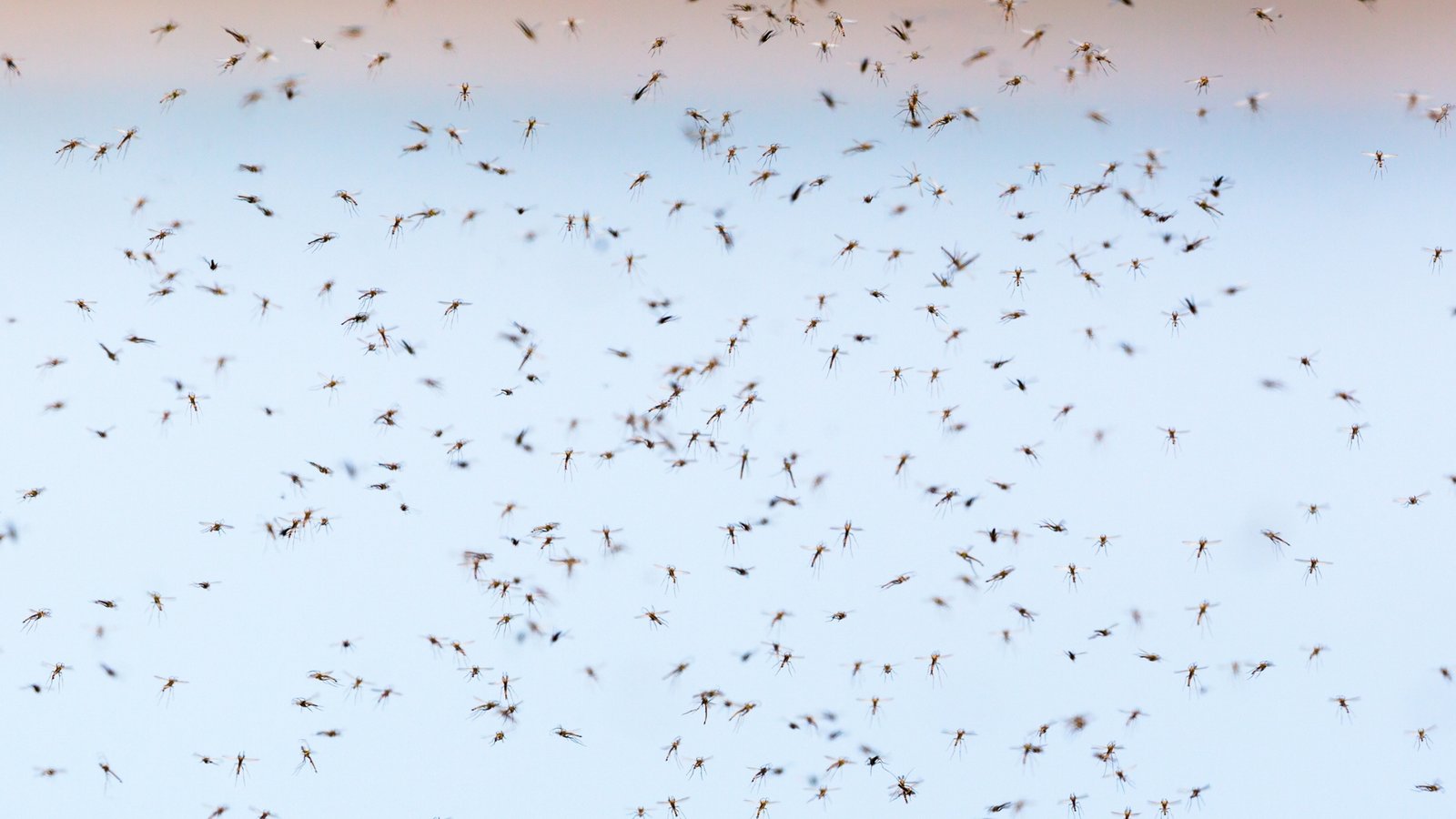
Mosquito activity in Massachusetts runs roughly from spring through the first hard frost of fall. The state’s public health surveillance season, when mosquitoes are trapped and tested, runs from June through October, with results updated daily during that window (Source 2). Populations typically peak in the warm, wet stretch of June through August, when regular rainfall and heat can compress the mosquito life cycle and drive fast population growth (Source 15).
Risk does not end when populations peak. EEE and West Nile detections often climb into late August and September, which is why elevated risk levels and park closures in Massachusetts are usually lifted only after the first frost rather than on a fixed calendar date (Source 6). Adult mosquito activity slows sharply once nighttime temperatures drop, and the biting season effectively closes with hard frost.
The mosquitoes you meet
Massachusetts has dozens of mosquito species, but a small number matter for disease.
- Culiseta melanura is the engine of the EEE cycle. It breeds in freshwater hardwood swamps and feeds almost entirely on birds, moving the virus between infected and uninfected birds. Because it rarely bites people, it drives the amount of virus in the environment without infecting many humans directly (Source 10, Source 13).
- Coquillettidia perturbans and several Aedes species (including Aedes vexans and Aedes sollicitans) act as bridge vectors. They feed on both birds and mammals, so they can carry EEE from the swamp bird cycle to people and horses (Source 13, Source 15).
- Culex species are the main vectors of West Nile virus. They are common around towns and cities and breed readily in stagnant, nutrient-rich water such as catch basins and neglected containers (Source 11).
The freshwater swamps of southeastern and central Massachusetts, including the Hockomock Swamp, are recognized foci of EEE transmission, which is why control efforts concentrate there (Source 14).
Disease risk
Eastern equine encephalitis is the headline threat in outbreak years. EEE spreads to people through the bite of an infected mosquito; birds are the reservoir, and humans and horses are dead-end hosts that do not pass the virus on (Source 1). Outbreaks in Massachusetts have historically arrived roughly every 10 to 20 years and tended to last two to three years each (Source 1). The virus was first identified in the state in 1938, and the majority of human cases have come from Bristol, Plymouth, and Norfolk counties (Source 1).
The 2019 to 2020 cluster was the most severe in recent memory: Massachusetts recorded 17 human cases and 7 deaths across the two years, concentrated in southeastern and central parts of the state, alongside statewide alerts and aerial spraying (Source 1). A smaller resurgence followed in 2024, when the state’s first human case in four years (a man in his 80s exposed in Worcester County) prompted a Critical Risk designation for Douglas, Oxford, Sutton, and Webster; the season produced four human cases and one death (Source 6). There is no vaccine and no specific treatment for EEE in people, so prevention and mosquito control are the only tools (Source 9).
West Nile virus is the more common but usually milder concern. About 80 percent of people infected have no symptoms, and roughly 1 in 150 develop severe neuroinvasive disease such as meningitis or encephalitis, which carries a fatality rate near 10 percent (Source 11, Source 12). Older adults and people with weakened immune systems face the highest risk. West Nile is detected in Massachusetts mosquitoes and people almost every year; in 2024 the state reported 19 human cases (Source 8). There is no human vaccine for West Nile either.
See the Eastern equine encephalitis and West Nile virus pages for symptoms and clinical detail.
Local control
Massachusetts runs a coordinated, statewide arbovirus program. The Massachusetts Department of Public Health (MDPH) conducts the surveillance, trapping and testing mosquitoes and tracking human and animal cases from June through October, and sets local risk levels (remote, low, moderate, high, and critical) town by town (Source 2, Source 3).
Day-to-day mosquito control is delivered by regional mosquito control districts and projects, overseen by the State Reclamation and Mosquito Control Board (SRMCB) within the Massachusetts Department of Agricultural Resources (MDAR). The SRMCB oversees roughly a dozen regional programs across the Commonwealth, which handle larval habitat management, ground spraying, and public education (Source 4, Source 5).
When human risk is judged high or critical, the state’s response plan allows for aerial pesticide spraying over targeted areas during evening and overnight hours to knock down infected adult mosquitoes, planned jointly by MDAR, the regional districts, and MDPH (Source 4, Source 7). During the 2019, 2020, and 2024 EEE seasons, this included aerial spraying over parts of southeastern Massachusetts and truck-mounted ground spraying elsewhere (Source 6, Source 7).
Protect yourself
- Use an EPA-registered repellent (DEET, picaridin, oil of lemon eucalyptus, or IR3535) and follow the label.
- Limit outdoor activity from dusk to dawn during elevated-risk periods, when EEE and West Nile vectors are most active. When towns close parks and fields at dusk, treat that as the guidance it is meant to be (Source 2).
- Wear long sleeves and long pants outdoors in the evening.
- Repair window and door screens, and drain standing water weekly from containers, gutters, and buckets to remove breeding sites.
- Check your town’s current risk level on the MDPH arbovirus update before planning evening events during the season (Source 2).
Sources
- Massachusetts Department of Public Health, “Eastern Equine Encephalitis (EEE),” mass.gov (Massachusetts case history, county pattern, outbreak frequency, in-state fatality). https://www.mass.gov/info-details/eee-eastern-equine-encephalitis (page returned 403 on 2026-07-20; content confirmed via search snippet and MDPH-derived local fact sheets; accessed 2026-07-20)
- Massachusetts Department of Public Health, “Massachusetts arbovirus update,” mass.gov (risk levels, surveillance season, guidance). https://www.mass.gov/info-details/massachusetts-arbovirus-update (accessed 2026-07-20)
- Massachusetts Department of Public Health, “Arbovirus Surveillance Plan and historical data,” mass.gov. https://www.mass.gov/lists/arbovirus-surveillance-plan-and-historical-data (accessed 2026-07-20)
- Massachusetts Department of Agricultural Resources, “Mosquito control and spraying,” mass.gov. https://www.mass.gov/info-details/mosquito-control-and-spraying (accessed 2026-07-20)
- State Reclamation and Mosquito Control Board (SRMCB), mass.gov (oversight of regional programs). https://www.mass.gov/state-reclamation-and-mosquito-control-board-srmcb (accessed 2026-07-20)
- Massachusetts Department of Public Health, “State health officials announce season’s first human case of Eastern Equine Encephalitis in Massachusetts” (2024), mass.gov. https://www.mass.gov/news/state-health-officials-announce-seasons-first-human-case-of-eastern-equine-encephalitis-in-massachusetts (accessed 2026-07-20)
- Massachusetts officials, “State Officials Announce Plans to Conduct Aerial Spraying for Mosquitoes in Sections of Southeastern Massachusetts,” mass.gov. https://www.mass.gov/news/state-officials-announce-plans-to-conduct-aerial-spraying-for-mosquitoes-in-sections-of-southeastern-massachusetts (accessed 2026-07-20)
- Massachusetts Department of Public Health, “State Health Officials Announce Additional Human Cases of West Nile Virus in Massachusetts” (2024 season totals), mass.gov. https://www.mass.gov/news/state-health-officials-announce-additional-human-cases-of-west-nile-virus-in-massachusetts (accessed 2026-07-20)
- Centers for Disease Control and Prevention, “About Eastern Equine Encephalitis Virus” (approximately 30 percent fatality in severe cases, no vaccine or treatment). https://www.cdc.gov/eastern-equine-encephalitis/about/index.html (page returned 403 on 2026-07-20; content confirmed via CDC search snippet; accessed 2026-07-20)
- Centers for Disease Control and Prevention, “Guidelines for Eastern Equine Encephalitis Virus Surveillance and Control” (Culiseta melanura as enzootic vector; bridge vectors). https://www.cdc.gov/eastern-equine-encephalitis/php/surveillance-and-control-guidelines/ (accessed 2026-07-20)
- Centers for Disease Control and Prevention, “Clinical Signs and Symptoms of West Nile Virus Disease” (asymptomatic share, 1 in 150 neuroinvasive, Culex vector). https://www.cdc.gov/west-nile-virus/hcp/clinical-signs/index.html (accessed 2026-07-20)
- World Health Organization, “West Nile virus” fact sheet (neuroinvasive fatality, at-risk groups, no vaccine). https://www.who.int/news-room/fact-sheets/detail/west-nile-virus (accessed 2026-07-20)
- Molaei G, Andreadis TG, Armstrong PM, et al., “Vector-Host Interactions and Epizootiology of Eastern Equine Encephalitis Virus in Massachusetts,” Vector-Borne and Zoonotic Diseases (2013). https://journals.sagepub.com/doi/10.1089/vbz.2012.1099 (accessed 2026-07-20)
- “Evaluation of a Methoprene Aerial Application for the Control of Culiseta melanura in Wetland Larval Habitats,” Journal of Medical Entomology (2021), documenting the Hockomock Swamp EEE focus. https://academic.oup.com/jme/article/58/6/2330/6305130 (accessed 2026-07-20)
- Central Massachusetts Mosquito Control Project, “Mosquito Species in Mass.” (seasonal activity, Aedes vexans and related bridge species). https://www.cmmcp.org/1509/Mosquito-Species-in-Mass (accessed 2026-07-20)
- East Middlesex Mosquito Control Project, “Mosquito Species in Eastern Massachusetts.” https://sudbury.ma.us/emmcp/mosquitospecies/ (accessed 2026-07-20)
Related
- Eastern equine encephalitis (placeholder)
- West Nile virus (placeholder)
- Culiseta melanura (placeholder)
- Coquillettidia perturbans (placeholder)
- Mosquitoes in the Northeast region (placeholder)
Educational note: This page is a general reference and is not medical advice. If you develop fever, severe headache, stiff neck, confusion, or other concerning symptoms after mosquito exposure, contact a healthcare provider. For current local risk levels, consult the Massachusetts Department of Public Health arbovirus update.
Last reviewed 20 July 2026.