The short answer
Culiseta melanura is the mosquito that keeps Eastern equine encephalitis (EEE) circulating among birds. It lives in freshwater swamps, feeds almost entirely on birds, and rarely bites people directly. That last point makes it easy to overlook, but it is exactly why this species matters. By moving the virus from bird to bird, Culiseta melanura maintains the reservoir of infection that other mosquitoes can later carry to people and horses. It is a driver of the cycle rather than a mosquito most of us will ever notice biting us.
How to identify it
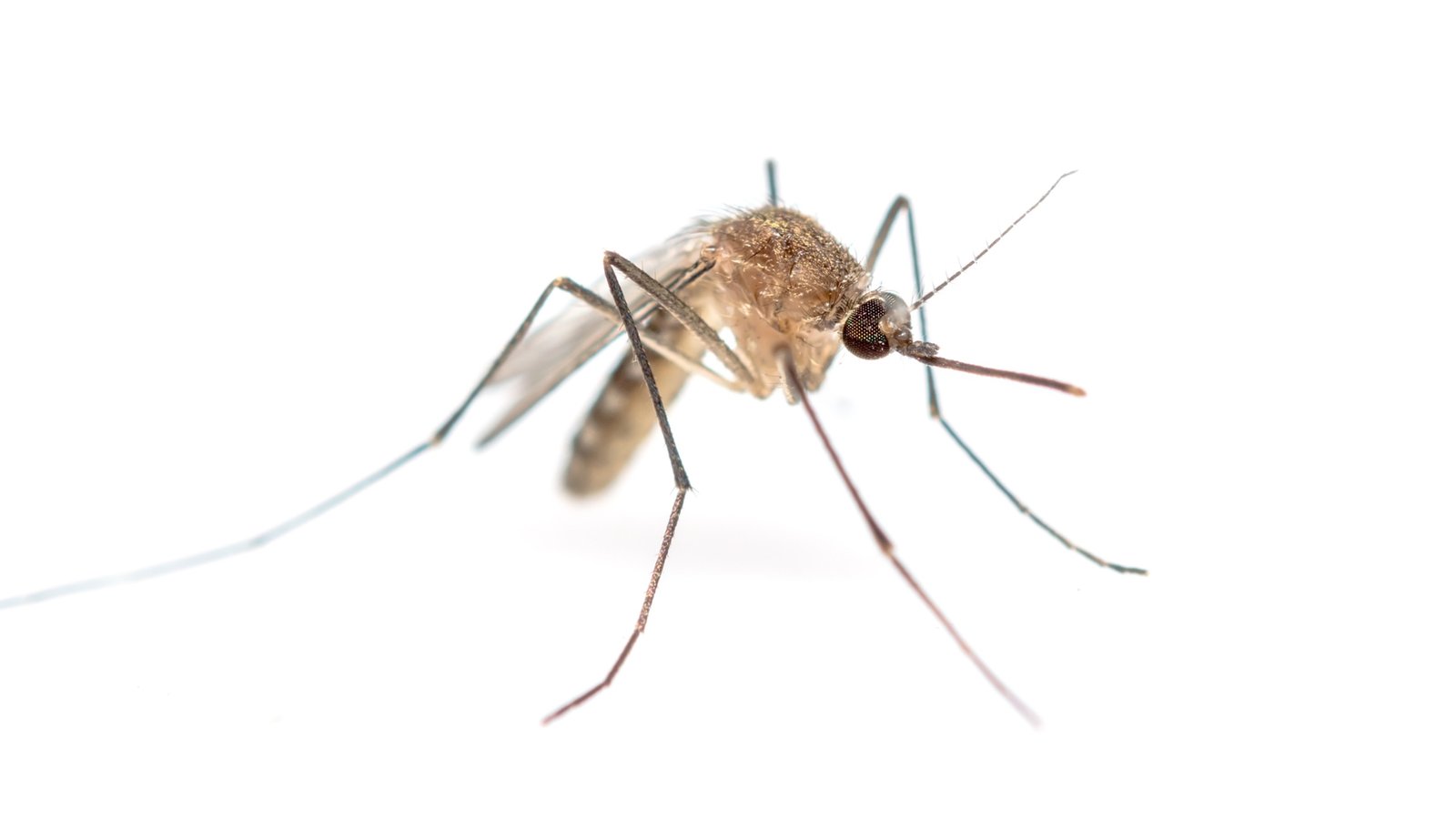
This is a dark mosquito. The name melanura means “dark-colored tail,” a nod to the overall dark coloration of the abdomen. The upper surface of the abdomen is covered with dark-brown to black scales with a bronze to slightly purple sheen, with small pale patches at the sides, and the legs are mostly dark-scaled.
In practice, Culiseta melanura is identified by specialists and by its habitat, not by the casual observer. The reliable features are microscopic. Larvae, for example, carry a pair of hair-like setae right at the base of the breathing siphon, a trait found in this genus and not in other mosquitoes. Telling this species apart from other dark mosquitoes at a glance in your yard is not realistic. If it matters, it is a job for a mosquito control lab.
Where it lives
Culiseta melanura is a swamp mosquito. Its range extends from Maine and southern Quebec south to southern Florida, west to eastern Texas, and north to the lower Great Lakes region, and it is most abundant in the coastal plain of the eastern and Gulf regions. It is tied to freshwater hardwood and cedar swamps, including red maple and Atlantic white cedar wetlands.
What makes this species unusual is where the larvae actually develop. The adults seek out passageways through the root mat of swamp trees, where the water table is highest, and lay their eggs in underground water pockets called crypts. These crypts sit among the tree roots, often in the dark and out of sight, and the larvae frequently have no contact with any standing water you could see from the surface. The species favors acidic water and is typically found in acid bogs with a pH of 5.0 or lower.
Behavior
Culiseta melanura feeds almost entirely on birds. It does its host seeking up in the forest canopy, where birds roost, and it is not drawn to mammals the way many biting mosquitoes are. Studies in the Northeast found mammalian blood meals in only about 1 to 10 percent of the mosquitoes sampled.
This narrow, bird-focused feeding is the whole story of why the species matters. Because it bites bird after bird, it keeps the virus moving within bird populations and holds a reservoir of infection in the swamp. It does not, on its own, deliver much of that virus to people. That handoff falls to other mosquitoes, so-called bridge vectors, that feed on both infected birds and mammals and carry the virus out of the swamp to people and horses.
Disease role
Culiseta melanura is the enzootic vector of Eastern equine encephalitis. Understanding the term is worth a moment.
An enzootic vector maintains a virus within its natural wildlife cycle. Here that cycle runs between Culiseta melanura and wild songbirds (passerines) in freshwater swamps. The virus is “perpetuated in an enzootic cycle involving ornithophilic mosquitoes (primarily Culiseta melanura) and passerine birds,” and in field studies this species yielded the large majority of virus isolations and was the only species to support consistently high virus levels needed for efficient transmission. In short, it keeps EEE alive in nature.
A bridge vector is a different job. These are mosquitoes that feed on infected birds but also readily bite mammals, moving the virus from the wildlife cycle into people and horses during outbreaks. Species implicated as EEE bridge vectors include Aedes vexans, Coquillettidia perturbans, and some Ochlerotatus species. They are the ones that reach us; Culiseta melanura is the one that keeps the virus circulating for them to pick up.
For the disease itself, its symptoms, and its severity, see the Eastern equine encephalitis page.
Why controlling it is hard
The difficulty comes down to the larval habitat. Culiseta melanura does not breed in the open puddles, ditches, and containers that routine mosquito control targets. It breeds in underground crypts among the roots of swamp trees, in acidic water that is often invisible from the surface. Larvae favor the deepest recesses, and many cannot even be reached with a standard dipper, so surveyors sometimes resort to tools like bilge pumps just to sample them.
That means the usual approaches, source reduction and surface larviciding, are a poor fit. You cannot easily drain or treat a cryptic, subterranean, protected swamp habitat spread across a wetland without disturbing the wetland itself. Control programs lean instead on surveillance and, when EEE risk rises, on targeted treatment of accessible habitat, rather than on wiping out the breeding sites.
Sources
- UF/IFAS Featured Creatures / EDIS (EENY-536), “Black-tailed Mosquito, Culiseta melanura (Coquillett).” Access date 2026-07-20. https://journals.flvc.org/edis/article/view/120240. Meaning of “melanura” and dark coloration; adult scale coloration and legs; larval siphon setae used for identification; feeds primarily on birds and maintains EEE virus in bird populations.
- Rutgers Center for Vector Biology, species page for Culiseta melanura. Access date 2026-07-20. https://vectorbio.rutgers.edu/outreach/species/sp25.htm. US range (Maine and southern Quebec to southern Florida, west to eastern Texas, north to lower Great Lakes); most abundant in southern New Jersey coastal plain; acid water pH 5.0 or lower; egg-laying in underground crypts through tree root mat; canopy host-seeking and feeding almost entirely on birds; larvae in deep recesses not accessible with a standard dipper (bilge pumps used).
- Armstrong PM, Andreadis TG. “Eastern Equine Encephalitis Virus in Mosquitoes and Their Role as Bridge Vectors.” Emerging Infectious Diseases (CDC), 16(12), 2010. Access date 2026-07-20. https://wwwnc.cdc.gov/eid/article/16/12/10-0640_article. Enzootic cycle involving Culiseta melanura and passerine birds; 83 of 122 (68%) virus isolations from Cs. melanura and only species supporting consistently high titers; definition of bridge vectors; Aedes vexans, Coquillettidia perturbans, and Ochlerotatus species implicated as bridge vectors; mammalian blood meals in about 1 to 10 percent of sampled Cs. melanura.
- Soghigian J, et al. “Population genomics of Culiseta melanura, the principal vector of Eastern equine encephalitis virus in the United States.” PLOS Neglected Tropical Diseases, 2018. Access date 2026-07-20. https://journals.plos.org/plosntds/article?id=10.1371/journal.pntd.0006698. Culiseta melanura described as the principal (enzootic) vector of EEE virus circulating among wild birds in freshwater swamp habitats.
Related
- Eastern equine encephalitis
- Coquillettidia perturbans (cattail mosquito)
- Aedes vexans (inland floodwater mosquito)
- Mosquito-borne diseases overview
Educational note: This profile is for general reference and public education. It is not medical or pest-control advice. For EEE risk in your area or for swamp mosquito management, contact your local mosquito control district or public health department.
Last reviewed 20 July 2026.