Short answer
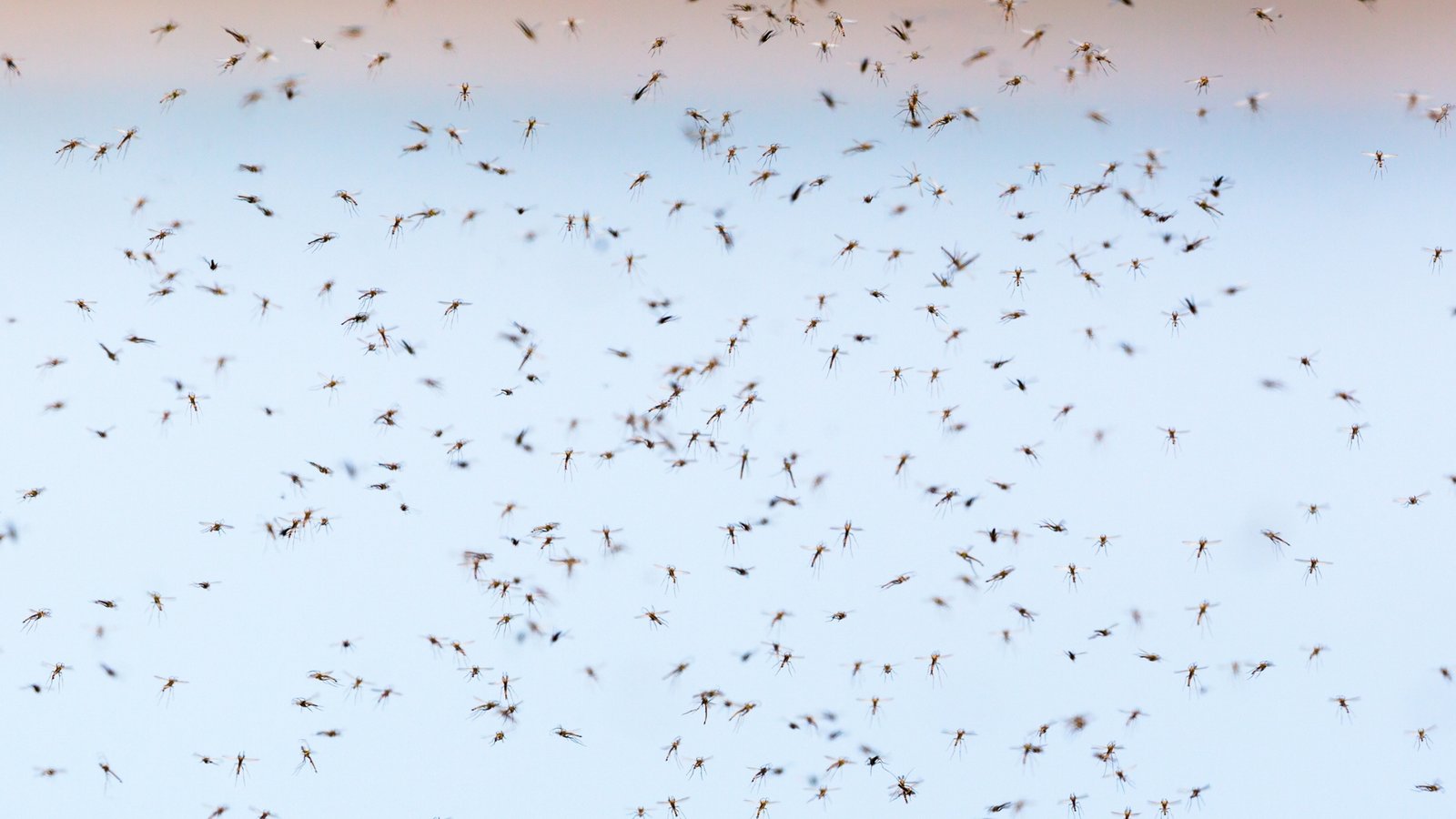
Mosquito activity follows temperature and rain. It builds in spring as the air and water warm, peaks in the warm wet months of summer, and fades as the weather turns cold. Mosquitoes are cold-blooded, so their development, flight, and biting all track the local climate, and standing water is what turns warmth into new mosquitoes (Sources 2, 3, 6). Because of that, there is no single national calendar. The exact timing depends on where you live: the season is long and can run nearly year-round along the warm southern edge of the country, and short in the cold north (Sources 2, 6).
The mosquito year at a glance
Across most of the country the mosquito year moves through four phases.
Spring emergence. As days lengthen and temperatures climb, overwintering mosquitoes become active again and the first new generations develop in warming standing water. Species that spent the winter as eggs hatch when rain or snowmelt floods the places those eggs were laid, and females that spent the winter as adults resume feeding and laying (Sources 2, 3, 4). See Mosquitoes in spring.
Summer peak. The warmest, wettest stretch of the year is also the busiest. Warm water shortens the time it takes an egg to become a biting adult, so populations can turn over quickly and build generation on generation (Sources 2, 3, 5). See Mosquitoes in summer.
Fall second surge. Warm early-fall weather, late-season rain, and standing water left by summer storms can drive a second rise in biting before the cold sets in. This is also the stretch when the mosquitoes that will survive the winter are produced (Sources 2, 4). See Mosquitoes in fall.
Winter dormancy. When it turns cold, mosquitoes do not simply die out. Many common species pass the winter as cold-hardy eggs, and others survive as mated adult females sheltering in protected spots in a dormant state called diapause (Sources 3, 4). See Mosquitoes in winter.
What drives the timing
Three things set the mosquito calendar in any given place.
Temperature. Mosquitoes are cold-blooded, so warmth controls how fast they develop and how active they are. One analysis that tracked conditions suitable for mosquitoes used a working range of daily temperatures between 50 and 95 degrees Fahrenheit, paired with humidity, to define a “mosquito day” (Source 6). Warmer temperatures speed up mosquito development and biting, which is part of why the summer months are the busiest (Sources 5, 6).
Rainfall and standing water. Mosquitoes lay their eggs in or near standing water, and the larvae and pupae grow in it, so no water means no new mosquitoes. During warm weather a mosquito can breed in almost any puddle, and rain or snowmelt that floods egg-laying sites is what triggers many spring and floodwater broods (Source 3). This is why a wet week can be followed a week or two later by a jump in biting.
Day length and diapause. As late summer shortens the days, many mosquitoes read that signal, along with cooling temperatures, as a cue that winter is coming. The northern house mosquito (Culex pipiens), a key carrier of West Nile virus, responds to the short day lengths of late summer by entering a reproductive diapause: the females stop developing eggs and store fat to survive the winter (Sources 4, 3). Diapause is what lets mosquitoes bridge the unfavorable season and reappear on schedule the next year (Source 4).
Disease risk usually peaks in late summer and early fall
More mosquitoes do not immediately mean more disease. It takes time through the season for mosquito numbers to build and for a virus to cycle and amplify between mosquitoes and the animals they feed on. For West Nile virus, the most common mosquito-borne infection in the country, people are infected during mosquito season from roughly June through October, and the number of diagnosed cases typically peaks in late August and early September (Source 1). That lag is why the highest-risk weeks often arrive after the hottest part of summer. For the full picture, see Disease risk by season and the diseases overview, and West Nile virus in particular.
Season length varies by region, and is lengthening in many places
Where you live sets both when the season starts and how long it lasts. Along the warm, humid southern and Gulf edges of the country mosquitoes can be active for most of the year, while the cold northern states get a short season squeezed into the warm months (Sources 2, 6).
That window has been getting longer in much of the country. Comparing 1979 through 2022, one analysis found that 173 of 242 locations studied (about 71 percent) saw an increase in the number of annual “mosquito days,” by roughly 16 days on average (Source 6). Warmer temperatures can speed mosquito development, biting, and the incubation of viruses, although year-to-year case counts still swing widely and no simple long-term trend in West Nile disease has been established (Source 5). See Mosquito season and a warming climate and the regions overview for how this plays out where you are.
A month-by-month approach
Because the calendar shifts with latitude, elevation, and local rain, the most useful plan is one you run month by month for your own area: watch for the first warm spells in spring, stay consistent about dumping standing water through the summer peak, keep protection up during the late-summer and early-fall risk window, and ease off only once cold weather has truly set in. For a step-by-step version, see the month-by-month mosquito checklist.
Sources
- Centers for Disease Control and Prevention (CDC), “About West Nile Virus.” States that infections occur during mosquito season from summer through fall (typically June through October) and that diagnosed cases usually peak in late August and early September. https://www.cdc.gov/west-nile-virus/about/ (accessed 20 July 2026; page returned an access block on direct fetch, figures taken from the indexed page summary of the same URL).
- Biology Insights, “Is It Mosquito Season? Regional Timing and Risks.” General reference for how regional timing and season length vary with local temperature and climate. Used only for the broad regional pattern, not for any specific statistic. https://biologyinsights.com/is-it-mosquito-season-regional-timing-and-risks/ (accessed 20 July 2026).
- Penn State Extension, “Mosquito Biology and Control.” Describes the four-stage life cycle (egg, larva, pupa, adult), the standing-water breeding requirement, Aedes overwintering in the egg stage, and species that pass through multiple generations per year. https://extension.psu.edu/mosquito-biology-and-control (accessed 20 July 2026).
- Denlinger, D.L., and Armbruster, P.A. “Mosquito Diapause.” Annual Review of Entomology 59:73-93 (2014). Establishes that short day lengths of late summer program Culex pipiens into a reproductive diapause with arrested ovarian development and fat storage, and that diapause bridges unfavorable seasons. https://www.annualreviews.org/content/journals/10.1146/annurev-ento-011613-162023 (accessed 20 July 2026).
- U.S. Environmental Protection Agency (EPA), “Climate Change Indicators: West Nile Virus.” States that warmer temperatures can speed up mosquito development, biting rates, and viral incubation, while noting that yearly incidence varies widely and no clear long-term trend has been detected. https://19january2021snapshot.epa.gov/climate-indicators/climate-change-indicators-west-nile-virus_.html (accessed 20 July 2026).
- Climate Central, “Mosquito Days” (2023 analysis). Defines a “mosquito day” as one with average relative humidity of 42 percent or higher and daily temperatures between 50 and 95 degrees Fahrenheit, and reports that 173 of 242 locations analyzed (about 71 percent) saw annual mosquito days increase by roughly 16 days on average between 1979 and 2022. https://www.climatecentral.org/climate-matters/mosquito-days-2023 (accessed 20 July 2026).
Explore the seasons
- Mosquitoes in spring (placeholder)
- Mosquitoes in summer (placeholder)
- Mosquitoes in fall (placeholder)
- Mosquitoes in winter (placeholder)
- Mosquito season and a warming climate (placeholder)
- Month-by-month mosquito checklist (placeholder)
This page is educational and is not medical advice. If you are concerned about a mosquito-borne illness, contact a healthcare professional or your local health department.
Last reviewed 20 July 2026.