Short answer
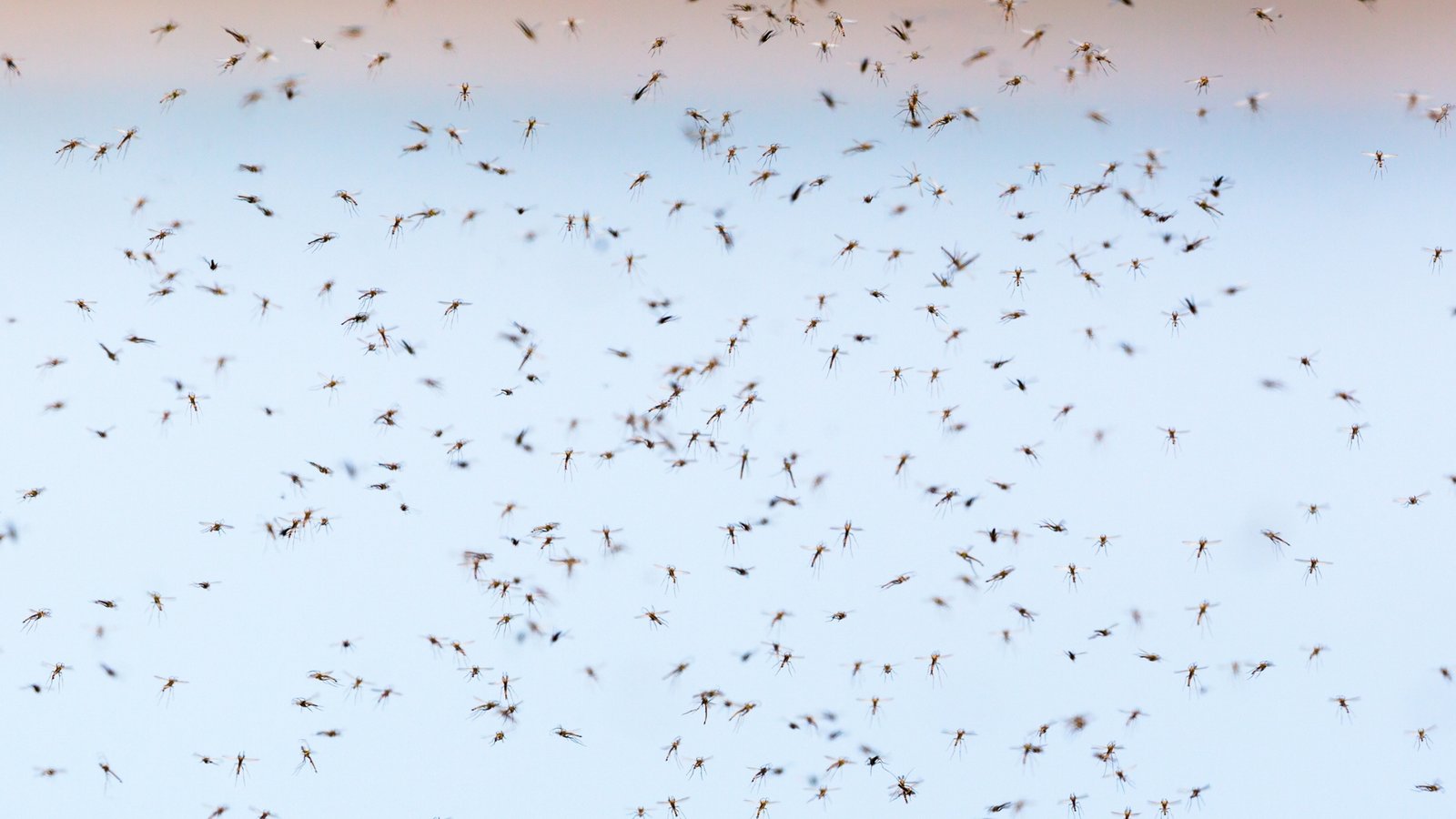
Summer is when mosquitoes are at their worst, and it is worst for two separate reasons that land at slightly different times. Through the warm months, biting pressure climbs because heat lets mosquitoes breed faster and stack up more generations. Then, in late summer and into early fall, the risk shifts from nuisance to disease: West Nile virus and the encephalitis viruses build to their yearly peak as heat speeds up both mosquito breeding and the amplification of virus in birds and mosquitoes. So summer is peak biting season first, and peak transmission season a little later (Sources 1, 3, 7, 8, 9).
Why the numbers peak
Mosquitoes are cold-blooded, and their whole life cycle runs on temperature. In warm water, eggs hatch sooner and larvae and pupae develop faster, so a mosquito goes from egg to biting adult in a shorter window. Controlled studies of common house and container mosquitoes show development time falling steadily as water warms: the immature stages that take weeks in cool water can finish in only a few days at summer temperatures (Source 7).
Two things follow from that. First, a single warm spell with a little standing water can produce a wave of adults within about a week (Source 2). Second, because each generation finishes faster, more generations fit into the season, and they overlap. That overlap is why backyard biting pressure builds through June, July, and August rather than staying flat. The heat is not making individual mosquitoes bigger or hungrier so much as it is turning the population over faster.
Late summer is the disease peak
The nuisance peak and the disease peak are not the same moment. Mosquito-borne virus needs time to build in the environment. West Nile virus cycles between mosquitoes and birds all summer, and each round of that cycle raises the amount of virus in circulation. By the time enough virus has amplified to spill over into people in numbers, it is usually late summer. West Nile season generally runs from summer through fall, and reported human cases typically peak from late August into early September (Source 1).
The encephalitis viruses follow the same calendar. Eastern equine encephalitis is most often reported during the summer months, with case data updated through summer and fall (Source 8). St. Louis encephalitis cases in temperate parts of the country occur primarily in late summer or early fall, though in milder southern climates they can appear across a longer stretch of the year (Source 9). The practical takeaway is that the weeks when you may feel the biting is easing slightly are often the weeks when the disease risk is highest, so late summer is not the time to relax about bites.
For the mechanics of how these viruses move and who is most at risk, see the disease cluster (Related, below).
Surviving the season
Prevention in summer comes down to a few things done consistently.
Use repellent that works. Public health agencies point to repellents registered with the Environmental Protection Agency, whose recognized active ingredients include DEET, picaridin, IR3535, oil of lemon eucalyptus and its refined compound PMD, 2-undecanone, catnip oil, and oil of citronella (Source 3). Mosquito control professionals still treat DEET as the benchmark other repellents are measured against, and note that most apparent failures come from applying it too thinly rather than from the product itself (Source 4).
Empty standing water every week. This is the single highest-value backyard step. Mosquitoes can develop in very small amounts of water, so once a week empty, scrub, turn over, cover, or throw out anything that holds water: buckets, planters and plant saucers, tires, toys, birdbaths, and trash containers (Source 2). Weekly matters because the egg-to-adult clock in summer can be only a handful of days, so a monthly pass lets a full generation escape.
Put a fan on the patio. Mosquitoes are relatively weak fliers, so a large fan on a deck or porch is a genuinely effective low-tech barrier: the moving air both makes it hard for them to reach you and disperses the carbon dioxide and body odors they use to find you (Source 4).
Keep them out and mind the timing. Use screens on windows and doors and repair any holes, and use air conditioning where it is available (Source 2). Many of the mosquitoes that carry West Nile virus are most active between dusk and dawn, so limiting time outdoors in those hours, or covering up and using repellent when you are out, reduces exposure (Source 2). Note that this timing rule does not hold for every species; the daytime-biting container mosquitoes are a separate problem.
Vacation and travel considerations
Summer travel can raise your exposure, either by taking you somewhere with more mosquitoes or by taking you somewhere with diseases that are rare at home. The daytime-biting Aedes mosquitoes that spread dengue, Zika, and chikungunya are most active around sunrise and sunset, which is different from the dusk-to-dawn pattern of West Nile mosquitoes, so daytime protection matters at many destinations (Source 5).
The core travel measures are the same repellent and clothing habits, plus a few extras. Treating clothing and gear with 0.5 percent permethrin adds protection that survives multiple washings (permethrin goes on fabric, not skin) (Source 5). If you are staying somewhere without air conditioning or intact window and door screens, or sleeping outdoors, use a mosquito net (Source 6). Before a trip, it is worth checking your destination for current travel health notices and for any recommended or required vaccines, since a few mosquito-borne diseases are vaccine-preventable and others are not (Sources 5, 6).
Sources
- Centers for Disease Control and Prevention, “About West Nile Virus.” West Nile season runs from summer through fall, and reported human cases typically peak from late August into early September. https://www.cdc.gov/west-nile-virus/about/index.html (accessed 20 July 2026; page returned HTTP 403 on direct fetch, statements taken from the CDC search result summary of this URL).
- Centers for Disease Control and Prevention, “Preventing Mosquito Bites.” Weekly emptying of standing-water containers, use of screens and air conditioning, avoiding outdoor exposure between dusk and dawn for West Nile mosquitoes, and use of repellent. https://www.cdc.gov/mosquitoes/prevention/index.html (accessed 20 July 2026).
- United States Environmental Protection Agency, “Skin-Applied Repellent Ingredients.” List of active ingredients recognized in EPA-registered skin-applied repellents. https://www.epa.gov/insect-repellents/skin-applied-repellent-ingredients (accessed 20 July 2026).
- American Mosquito Control Association, “FAQs.” Mosquitoes are relatively weak fliers and a large fan is an effective deterrent; DEET is the standard against which other repellents are judged, and most apparent failures come from misapplication. https://www.mosquito.org/faqs/ (accessed 20 July 2026).
- Centers for Disease Control and Prevention, CDC Yellow Book, “Mosquitoes, Ticks, and Other Arthropods.” Aedes peak biting around dawn and dusk; use of 0.5 percent permethrin on clothing and gear; EPA-registered repellents proven safe and effective when used as directed. https://www.cdc.gov/yellow-book/hcp/environmental-hazards-risks/mosquitoes-ticks-and-other-arthropods.html (accessed 20 July 2026).
- Centers for Disease Control and Prevention, “Preventing Mosquito Bites While Traveling.” Use of mosquito nets when air conditioning or screens are unavailable, and general travel protection guidance. https://www.cdc.gov/mosquitoes/prevention/preventing-mosquito-bites-while-traveling.html (accessed 20 July 2026).
- Rueda LM, Patel KJ, Axtell RC, Stinner RE. “Temperature-Dependent Development and Survival Rates of Culex quinquefasciatus and Aedes aegypti (Diptera: Culicidae).” Journal of Medical Entomology, 1990. Larval and pupal development times decrease as rearing temperature rises, falling to a few days at summer temperatures. https://pubmed.ncbi.nlm.nih.gov/2231624/ (accessed 20 July 2026).
- Centers for Disease Control and Prevention, “About Eastern Equine Encephalitis Virus.” EEE is considered especially during the summer months in areas of reported activity, with case data updated through summer and fall. https://www.cdc.gov/eastern-equine-encephalitis/about/index.html (accessed 20 July 2026).
- StatPearls (NCBI Bookshelf), “St. Louis Encephalitis.” In temperate regions, cases occur primarily in late summer or early fall; in milder southern climates cases can occur across a longer part of the year. https://www.ncbi.nlm.nih.gov/books/NBK470426/ (accessed 20 July 2026).
Related
- [Spring: the season mosquitoes wake up] (placeholder)
- [Fall: when mosquito season ends] (placeholder)
- [Winter: where mosquitoes go in the cold] (placeholder)
- [West Nile virus explained] (placeholder)
- [How to choose and use an insect repellent] (placeholder)
- [Standing water: the backyard breeding checklist] (placeholder)
Educational note: This guide is general reference information about mosquito biology and bite prevention. It is not medical advice. If you have symptoms of a mosquito-borne illness, or questions about repellents, vaccines, or travel health, consult a licensed healthcare professional or your local health department.
Last reviewed 20 July 2026.