Short answer
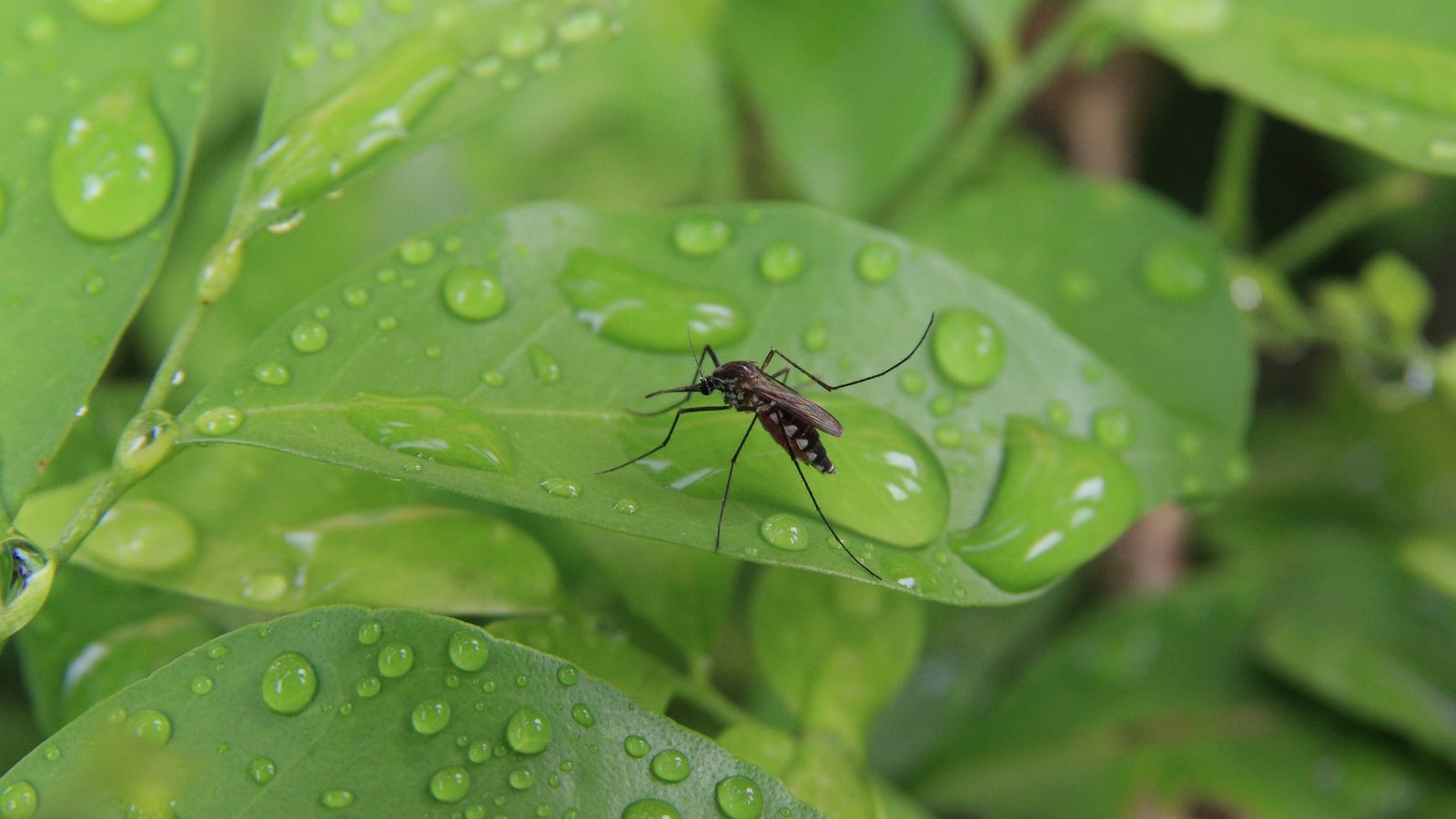
Mosquitoes do not disappear in winter. They stop flying and biting when the weather turns cold, but the population does not die out. Depending on the species, mosquitoes wait out the cold in one of three ways: as hibernating adult females, as cold-hardy eggs, or as larvae in water. Each strategy is a form of dormancy that pauses development until warmth returns, so the mosquitoes you notice in spring are, in large part, survivors of the previous season rather than a fresh arrival (Source 1, Source 4).
Overwintering as adults
Several important mosquitoes pass the winter as adults. In the Culex group, which includes the northern house mosquito, mated females enter a dormant state called reproductive diapause in the fall. Instead of maturing eggs, they build up fat reserves and shelter in cool, protected places. Field collections have taken these dormant females from storm drains, manholes, catch basins, sheds, barns, woodpiles, and similar spots in and around homes (Source 2). The theme is the same across sites: a location that stays cool and humid but does not freeze solid, such as a basement, a culvert, or a hollow.
Some Anopheles mosquitoes do the same. Inseminated Anopheles females survive winter in reproductive diapause, a dormancy that halts ovarian development and extends their lifespan through the cold months (Source 3). Older regional work on Anopheles quadrimaculatus describes fertilized females passing the winter in sheltered sites, drawing down a fat reserve accumulated in autumn, and becoming active again on warm days (Source 3). Only females overwinter this way. The males die off in fall.
Overwintering as eggs
Many container-using mosquitoes, including the Aedes group, do not overwinter as adults at all. Instead, the last generation of females in fall lays eggs that are built to survive the cold. In the Asian tiger mosquito (Aedes albopictus), shortening day length in late summer triggers females to produce diapause eggs, which enter a state of arrested development and resist cold and drying (Source 4). Laboratory work shows that diapause and cold acclimation raise the cold hardiness of these eggs, letting them survive subfreezing exposure that would kill non-diapause eggs (Source 4).
These eggs are laid on damp surfaces just above the waterline, in places such as tree holes, leaf-choked gutters, and artificial containers. They wait through winter and hatch when spring rain or snowmelt floods them. That flooding cue is why removing or emptying water-holding containers matters so much: the eggs are already present and simply need water to complete the job.
Overwintering as larvae
A smaller number of species spend the winter as larvae in water that does not freeze all the way through. The clearest example is the cattail mosquito (Coquillettidia perturbans). Its larvae overwinter attached to the roots and submerged stems of cattails and other aquatic plants, using a hardened, thorn-like siphon to pierce the plant tissue and draw oxygen directly from it (Source 5). Because they get air from the plant rather than the surface, they can stay submerged under winter ice for months. Overwintering as larvae is unusual, which is part of why this species emerges in a single large, synchronized wave the following season (Source 5).
Why this matters
Winter dormancy has a direct effect on the next mosquito season, and on disease risk. Hibernating Culex females can carry West Nile virus straight through the cold months. Investigators recovered both viral RNA and live West Nile virus from overwintering Culex collected in midwinter, which points to the virus persisting in dormant mosquitoes and re-emerging with them in spring to restart local transmission (Source 1). In other words, winter does not reliably reset the slate.
The practical takeaway is that spring source reduction pays off. Because Aedes eggs are already waiting to hatch and dormant adults are already sheltering nearby, the population that shows up in warm weather is set in motion by conditions that existed over the winter. Emptying containers, clearing gutters, and knocking out standing water early removes eggs and breeding sites before they produce biting adults. For the biology behind these dormant states, see overwintering and diapause. For a season-opening checklist, see spring prep.
Sources
- Nasci RS, et al. West Nile Virus in Overwintering Culex Mosquitoes, New York City, 2000. Emerging Infectious Diseases (CDC), 2001. https://wwwnc.cdc.gov/eid/article/7/4/01-7426_article (peer-reviewed CDC journal; found viral RNA and live West Nile virus in overwintering Culex, indicating winter virus persistence. Accessed 2026-07-20.)
- Nelms BM, et al. Overwintering Biology of Culex (Diptera: Culicidae) Mosquitoes in the Sacramento Valley of California. Journal of Medical Entomology (via PMC), 2013. https://pmc.ncbi.nlm.nih.gov/articles/PMC3920460/ (peer-reviewed; documents adult female reproductive diapause and winter resting sites such as storm drains, manholes, sheds, and barns. Accessed 2026-07-20.)
- Characterizing the seasonal abundance and reproductive activity of overwintering Anopheles (Diptera: Culicidae) mosquitoes. Journal of Medical Entomology, 2024. https://academic.oup.com/jme/article/61/3/644/7612783 (peer-reviewed; inseminated Anopheles females overwinter in reproductive diapause. Cross-referenced with Rutgers Center for Vector Biology, Anopheles quadrimaculatus biology, https://vectorbio.rutgers.edu/outreach/mal5.htm. Accessed 2026-07-20.)
- Hanson SM, Craig GB. Cold acclimation, diapause, and geographic origin affect cold hardiness in eggs of Aedes albopictus (Diptera: Culicidae). Journal of Medical Entomology, 1994. https://pubmed.ncbi.nlm.nih.gov/8189409/ (peer-reviewed; diapause and cold acclimation raise cold hardiness of Aedes albopictus eggs, supporting egg overwintering. Accessed 2026-07-20.)
- University of Florida IFAS Featured Creatures / EDIS. Cattail Mosquito, Coquillettidia perturbans (Walker). https://journals.flvc.org/edis/article/view/105381 (university extension; larvae overwinter attached to roots of emergent aquatic plants and draw oxygen through the plant. Page returned HTTP 403 on direct fetch; details drawn from the search result summary of this canonical URL. Accessed 2026-07-20.)
Related
- Overwintering and diapause: how mosquitoes pause their life cycle [placeholder]
- Spring prep: getting ahead of mosquito season [placeholder]
- The mosquito life cycle [placeholder]
Educational note: This page is a non-commercial, science-based reference. It is intended for general education, not pest-control, medical, or public-health advice. For decisions about mosquito management or disease risk in your area, consult your local mosquito control district or public health authority.
Last reviewed 20 July 2026.