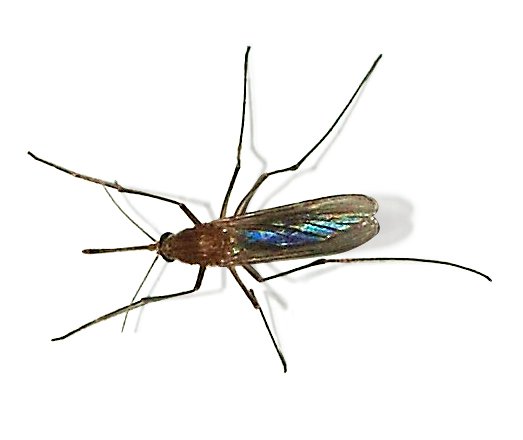
A plain-language overview of the mosquito-spread viruses that, in a small share of cases, can inflame the brain. Most infections are mild or silent. The prevention is the same for all of them.
The short answer
An arbovirus is simply a virus that spreads through the bite of a blood-feeding bug, most often a mosquito. Several of these viruses circulate here, and they share an important pattern: for most people who get infected, the illness is mild or produces no symptoms at all. A small minority go on to develop a serious complication in which the virus reaches the brain or the tissues around it and causes inflammation. That inflammation of the brain is called encephalitis.
The plain takeaway is that these viruses are usually not dangerous to any one person on any given bite, but because they can occasionally cause severe brain infection, and because there is no specific cure and no human vaccine for the ones found here, avoiding mosquito bites is the practical protection. The same handful of habits lowers your risk across the whole family.
The short version: “Arbovirus” means a mosquito-spread (or tick-spread) virus. Most infections are mild. A few cause encephalitis, which is brain inflammation. The prevention, avoiding bites and draining standing water, is shared across all of them.
What “arbovirus” and “encephalitis” mean
Arbovirus is short for arthropod-borne virus. Arthropods are the group of animals that includes insects and ticks, so an arbovirus is one that travels from host to host inside a biting arthropod, in the cases on this page, a mosquito. The virus is not spread by coughing, touching, or sharing food. It moves when an infected mosquito bites.
Encephalitis means inflammation of the brain. A closely related term, meningitis, means inflammation of the membranes that cover the brain and spinal cord. When an arbovirus gets past the body’s defenses and into the central nervous system, it can cause either or both, and doctors group these serious outcomes under the label neuroinvasive disease. For West Nile virus, the most common of these infections here, national surveillance describes fewer than 1 percent of infected people developing neuroinvasive disease, while an estimated 70 to 80 percent have no symptoms at all. That balance, common but usually mild, rare but serious, holds across most of the family.
How the mosquito-bird cycle works
Most of these viruses are not really “human” viruses. They live in a natural loop between mosquitoes and animals, usually birds, that public health scientists call an enzootic cycle (enzootic just means a cycle that stays within animal populations).
Here is the loop in plain terms. A mosquito bites an infected bird and picks up the virus. After the virus multiplies inside the mosquito over about a week, that mosquito can pass it to the next bird it bites. Some birds build up high enough levels of virus in their blood to infect more mosquitoes, so the virus bounces from bird to mosquito to bird, amplifying quietly, mostly out of sight.
People and horses usually enter the picture by accident. When an infected mosquito bites a person, it can transmit the virus, but people (and horses, and most other mammals) do not build up enough virus in the blood to pass it back to a biting mosquito. That makes us what scientists call dead-end hosts, or incidental hosts. We can get sick, sometimes seriously, but we do not keep the cycle going. This is also why these illnesses are not spread from person to person through everyday contact.
The main mosquito-borne encephalitis viruses here
Several arboviruses in this group circulate across different regions and seasons. Each has a preferred mosquito, and each is covered in more depth on its own page.
- West Nile virus (WNV). The most common of these here and the leading cause of mosquito-spread illness reported in the country. Spread mainly by Culex mosquitoes.
- Eastern equine encephalitis virus (EEEV). Rare but among the most severe. Maintained in a bird-mosquito cycle by Culiseta melanura, with other “bridge” mosquitoes carrying it to people and horses.
- Western equine encephalitis virus (WEEV). Spread mainly by Culex tarsalis. Once a notable cause of outbreaks in western states, it has become very rare, with no human cases reported here since 1999.
- St. Louis encephalitis virus (SLEV). Spread by Culex mosquitoes. Tends to cause more severe illness in older adults.
- La Crosse virus (LACV). Spread by the eastern treehole mosquito (Aedes triseriatus), which breeds in tree holes and water-holding containers. Most reported severe cases are in children.
- Jamestown Canyon virus (JCV). Spread by several Aedes and Culiseta mosquitoes, with white-tailed deer as an amplifying host. Unlike La Crosse, it causes disease mostly in adults.
One virus that often gets grouped with these is Powassan virus, which can also cause encephalitis. It is left off the list here on purpose: Powassan is tick-borne, spread by Ixodes ticks, not by mosquitoes, so it belongs with the tick-borne illnesses rather than this mosquito family.
Shared symptoms and warning signs of neuroinvasive disease
Because these viruses attack the same part of the body when they turn serious, they tend to look alike once neuroinvasive disease sets in. Most infected people never reach that stage. Those who feel ill at all usually have a systemic febrile illness: fever, headache, body aches, sometimes fatigue, and sometimes a rash, which typically passes on its own.
The warning signs that a virus may have reached the brain or its surrounding membranes are more serious and worth knowing. Drawing on national case definitions and clinical descriptions, they include:
- High fever with severe or worsening headache
- A stiff neck
- Confusion, disorientation, or other changes in mental state, ranging up to coma
- Seizures
- Muscle weakness, tremors, or sudden weakness or paralysis in a limb
These signs can come on quickly. Someone showing them, especially after mosquito exposure in the warm months, should get medical care promptly. There is no specific antiviral cure for these infections, so hospital treatment is supportive (managing fluids, breathing, swelling, and complications), and getting care early matters.
Who is at higher risk
Anyone bitten by an infected mosquito can be infected, but the odds of the infection turning into serious neuroinvasive disease are not spread evenly.
Across most of these viruses, older adults carry the highest risk of severe outcomes, and people with weakened immune systems are also more vulnerable. That pattern is clearest for West Nile virus and St. Louis encephalitis, where age is a strong driver of severity.
Two viruses break from the older-adult pattern. La Crosse virus causes most of its reported severe cases in children. Jamestown Canyon virus, by contrast, tends to cause disease mainly in adults. Knowing which viruses circulate in your area, and who they tend to hit hardest, can help you gauge your own household’s risk. The individual disease pages below go into the specifics.
Shared prevention
The most useful fact about this whole family is that one prevention routine covers all of them, because they all reach people the same way, through a mosquito bite. There is no human vaccine for these viruses here, which makes bite prevention the front line.
Reduce bites:
- Use an insect repellent registered with the Environmental Protection Agency (EPA), such as products containing DEET, picaridin, IR3535, oil of lemon eucalyptus (OLE), para-menthane-diol (PMD), or 2-undecanone. When used as directed, these are proven effective.
- Wear long sleeves and long pants when mosquitoes are active, and treat clothing and gear with permethrin (do not put permethrin on skin).
- Repair and use screens on windows and doors so mosquitoes stay outside.
Cut down where mosquitoes breed:
- Once a week, empty and scrub, turn over, cover, or throw out anything that holds water: buckets, tires, toys, planters and their saucers, birdbaths, and trash containers. Mosquitoes can develop in a very small amount of standing water.
- Keep gutters clear and change the water in birdbaths and pet dishes regularly.
Because the biting mosquitoes for these viruses are most active in the warmer months, and some bite around dawn and dusk while others bite by day, the safest habit is steady: repellent and standing-water checks through the whole mosquito season rather than only after an alert.
Sources
- CDC, “West Nile Virus and Other Nationally Notifiable Arboviral Diseases, United States, 2021” (MMWR). Arboviruses are transmitted primarily through the bites of infected mosquitoes and ticks and are maintained in cycles between arthropods and vertebrate hosts; West Nile is the leading cause of domestically acquired arboviral disease. https://www.cdc.gov/mmwr/volumes/72/wr/mm7234a1.htm (accessed 2026-07-20)
- CDC, “Transmission of West Nile Virus.” Enzootic cycle between Culex mosquitoes and birds; humans, horses, and other mammals are dead-end hosts that do not develop high enough blood virus levels to infect biting mosquitoes. https://www.cdc.gov/west-nile-virus/php/transmission/index.html (accessed 2026-07-20)
- CDC, “Clinical Signs and Symptoms of West Nile Virus Disease.” An estimated 70 to 80 percent of infections are asymptomatic; fewer than 1 percent develop neuroinvasive disease (encephalitis, meningitis, or acute flaccid paralysis). https://www.cdc.gov/west-nile-virus/hcp/clinical-signs/index.html (accessed 2026-07-20)
- CDC, “Arboviral Diseases, Neuroinvasive and Non-neuroinvasive 2015 Case Definition.” Arboviral encephalitis characterized by fever, headache, and altered mental status; meningitis by fever, headache, and stiff neck; neuroinvasive signs include altered mental status, seizures, and limb weakness. https://ndc.services.cdc.gov/case-definitions/arboviral-diseases-neuroinvasive-and-non-neuroinvasive-2015/ (accessed 2026-07-20)
- CDC, “About Western Equine Encephalitis Virus.” Primary North American vector Culex tarsalis; no human cases reported in the United States since 1999; no vaccine or specific treatment. https://www.cdc.gov/wee/about/index.html (accessed 2026-07-20)
- CDC, “Transmission of La Crosse Virus.” La Crosse virus is transmitted by the eastern treehole mosquito (Aedes triseriatus), which breeds in tree holes and containers; children are most affected. https://www.cdc.gov/la-crosse-encephalitis/php/transmission/index.html (accessed 2026-07-20)
- CDC, “Symptoms of St. Louis Encephalitis.” Symptom range and greater severity of St. Louis encephalitis in older adults. https://www.cdc.gov/sle/signs-symptoms/index.html (accessed 2026-07-20)
- CDC Emerging Infectious Diseases, “Eastern Equine Encephalitis Virus in Mosquitoes and Their Role as Bridge Vectors.” Enzootic vector Culiseta melanura maintains EEEV in a bird cycle; bridge mosquitoes carry it to mammals. https://wwwnc.cdc.gov/eid/article/16/12/10-0640_article (accessed 2026-07-20)
- CDC Emerging Infectious Diseases, “Case Series of Jamestown Canyon Virus Infections with Neurologic Outcomes.” Jamestown Canyon virus causes disease predominantly in adults. https://wwwnc.cdc.gov/eid/article/30/5/22-1258_article (accessed 2026-07-20)
- Journal of Medical Entomology (Oxford Academic), “Jamestown Canyon virus comes into view.” Multiple Aedes and Culiseta mosquito vectors; white-tailed deer as amplifying host; first isolated from Culiseta in Colorado. https://academic.oup.com/jme/article/60/6/1242/7321675 (accessed 2026-07-20)
- CDC, “Transmission of Powassan Virus.” Powassan virus spreads through the bites of infected Ixodes ticks, not mosquitoes; people are dead-end hosts. https://www.cdc.gov/powassan/php/transmission/index.html (accessed 2026-07-20)
- CDC, “Preventing Mosquito Bites.” Use EPA-registered repellents (DEET, picaridin, IR3535, OLE, PMD, 2-undecanone); once a week empty and scrub containers that hold water to remove mosquito breeding sites. https://www.cdc.gov/mosquitoes/prevention/index.html (accessed 2026-07-20)
Related
- West Nile virus (page in progress)
- Eastern equine encephalitis (EEE)
- Western equine encephalitis (WEE) (page in progress)
- St. Louis encephalitis
- La Crosse encephalitis
- Jamestown Canyon virus (page in progress)
This page is for general education and is not medical advice. If you or someone you care for has a high fever with a severe headache, stiff neck, confusion, seizures, or sudden weakness after mosquito exposure, seek medical care promptly. For diagnosis and treatment, consult a licensed clinician or your state or local health department.
Last reviewed 20 July 2026.