The short answer
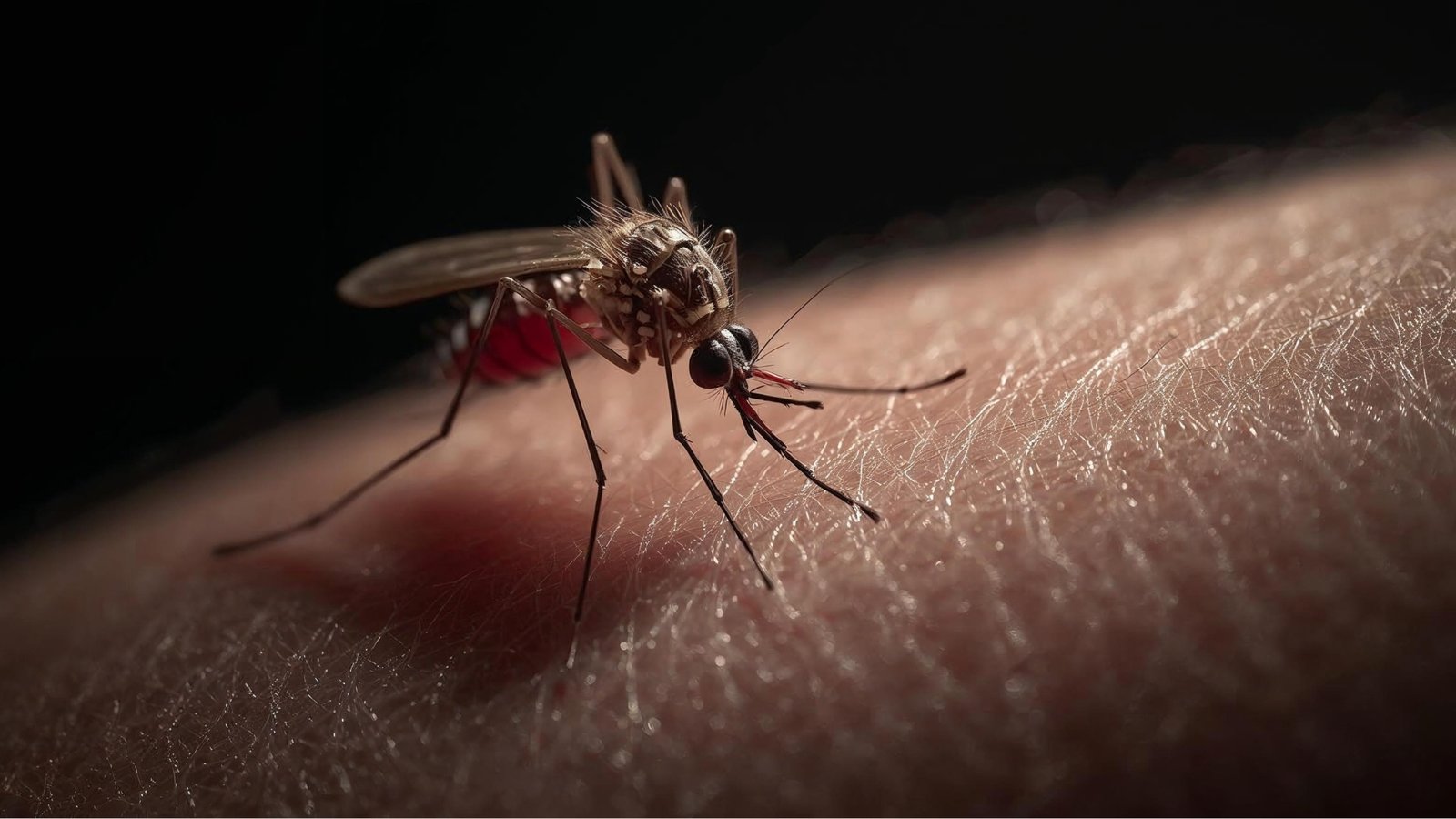
Jamestown Canyon virus is a mosquito-spread virus found across much of the northern and eastern parts of the country. Most people who are infected never feel sick. When illness does happen, it usually starts as fever, headache, and fatigue, and sometimes cold-like respiratory symptoms. In a smaller number of cases it can move to the brain and its surrounding tissue and cause serious neuroinvasive disease. There is no vaccine and no specific antiviral drug, so care focuses on relieving symptoms and, in severe cases, hospital support. Unlike most mosquito-borne illnesses in the California serogroup, it tends to affect adults more than children.
The short version
– Spread by the bite of infected mosquitoes, not from person to person.
– Many infections cause no symptoms at all.
– Typical illness: fever, headache, tiredness, sometimes cough or sore throat.
– Severe cases can involve meningitis or encephalitis.
– No vaccine, no specific medicine. Treatment is supportive.
– Reported mostly in adults, and increasingly recognized through surveillance.
What it is
Jamestown Canyon virus is a member of the California serogroup of the genus Orthobunyavirus, in the family Peribunyaviridae. That serogroup includes several related mosquito-borne viruses in North America, the best known of which is La Crosse virus.
The virus circulates throughout much of temperate North America. Human cases remain relatively uncommon, but reports have been rising over the last two decades, concentrated in the northcentral and northeastern parts of the country. It was first isolated in 1961 from Culiseta inornata mosquitoes at Jamestown Canyon in Colorado, which is how it got its name.
How you get it
You get Jamestown Canyon virus from the bite of an infected mosquito. It is not contagious and cannot spread directly from one person to another.
The virus is maintained in nature by a cycle between mosquitoes and animals. White-tailed deer are considered important amplifying hosts, meaning the virus builds up in their blood and mosquitoes pick it up when they feed. Infected mosquitoes can then pass the virus to people and other animals through later bites. Antibodies have also been found in other large mammals, which points to a broad ecological reservoir.
A wide range of mosquitoes can carry the virus rather than a single species. It has been detected in Aedes, Ochlerotatus, Culiseta, Culex, and Coquillettidia mosquitoes. This mix of vectors, active from spring through fall, is one reason the virus is so widely distributed.
Symptoms
Many people infected with Jamestown Canyon virus have no symptoms. When symptoms do appear, they usually begin a few days to two weeks after the bite of an infected mosquito.
Common early symptoms include:
- Fever
- Headache
- Fatigue
Some people also have respiratory symptoms such as cough, sore throat, or a runny nose, which is somewhat unusual among mosquito-borne illnesses and can make the infection look like a common cold at first.
In a smaller share of cases the infection becomes neuroinvasive, meaning it affects the nervous system. This can take the form of meningitis (inflammation of the membranes around the brain and spinal cord) or encephalitis (inflammation of the brain itself). Warning signs of severe disease include a stiff neck, confusion, severe headache, balance problems, and weakness. Neuroinvasive illness often requires hospital care, and deaths, while rare, have occurred, primarily in people with weakened immune systems.
Who is at higher risk
Anyone who spends time where infected mosquitoes are active can be exposed, so risk rises with time spent outdoors in wooded and rural areas during mosquito season.
A notable feature of Jamestown Canyon virus is that reported illness has been found mostly in adults. In surveillance studies, the median age of patients has fallen in the middle of adult life (for example, a median of 54 years in one enhanced-surveillance study, with most patients over 40). This is the reverse of the pattern seen with La Crosse virus, another California serogroup virus, which causes most of its recognized illness in children. People with weakened immune systems appear to be at higher risk of the most serious outcomes.
When to see a doctor
Contact a healthcare provider if you develop a high fever with a severe or persistent headache, a stiff neck, confusion, drowsiness, seizures, sudden weakness, or trouble with balance, especially after spending time outdoors in an area where mosquitoes are active. These can be signs of neuroinvasive disease and need prompt medical evaluation.
Diagnosis and treatment
Jamestown Canyon virus infection is diagnosed with laboratory testing, not by symptoms alone, because the early illness looks like many other viral infections. Testing typically looks for virus-specific IgM antibodies in blood or cerebrospinal fluid, with confirmation by a neutralizing-antibody test (such as plaque reduction neutralization testing) done through public health or reference laboratories. Confirmation matters because antibodies to related California serogroup viruses can cross-react, and IgM can persist for months.
There is no vaccine to prevent Jamestown Canyon virus and no specific antiviral medicine to treat it. Care is supportive. For mild illness that means rest, fluids, and over-the-counter medicine for fever and aches. People with severe or neuroinvasive disease may need to be hospitalized for intravenous fluids, pain control, breathing support, and close nursing care.
How to protect yourself
Because there is no vaccine, avoiding mosquito bites is the best protection. The same steps that guard against other mosquito-borne illnesses apply here.
- Use an EPA-registered insect repellent and follow the label directions. [placeholder link: repellent guide]
- Wear long sleeves and long pants when mosquitoes are active, and treat clothing or gear with permethrin if appropriate. [placeholder link: clothing and permethrin]
- Limit time outdoors when mosquitoes that bite during the day and at dusk are most active, and take extra care in wooded and rural areas. [placeholder link: peak mosquito hours]
- Install or repair window and door screens to keep mosquitoes out of your home. [placeholder link: home screening]
- Empty standing water from buckets, planters, tires, gutters, and other containers around your property each week to reduce mosquito breeding. [placeholder link: standing water and yard control]
Sources
- Centers for Disease Control and Prevention. About Jamestown Canyon Virus. https://www.cdc.gov/jamestown-canyon/about/index.html (accessed 2026-07-20). Supports: spread by infected mosquitoes and not person to person; symptoms of fever, headache, fatigue, and respiratory symptoms; no vaccine or specific medicine; supportive treatment.
- Centers for Disease Control and Prevention. Symptoms of Jamestown Canyon. https://www.cdc.gov/jamestown-canyon/signs-symptoms/index.html (accessed 2026-07-20). Supports: many infections are asymptomatic; onset a few days to two weeks after the bite; severe disease can include encephalitis.
- Centers for Disease Control and Prevention. Transmission of Jamestown Canyon Virus. https://www.cdc.gov/jamestown-canyon/php/transmission/index.html (accessed 2026-07-20). Supports: mosquito-to-animal-to-mosquito cycle; deer as amplifying hosts; mosquitoes transmit to people.
- Centers for Disease Control and Prevention. Clinical Signs and Symptoms of Jamestown Canyon Virus Disease (for healthcare providers). https://www.cdc.gov/jamestown-canyon/hcp/clinical-signs/index.html (accessed 2026-07-20). Supports: about half of reported cases hospitalized; deaths rare and primarily in immunocompromised patients; diagnostic testing approach.
- Centers for Disease Control and Prevention. Historic Data (2011-2024), Jamestown Canyon Virus. https://www.cdc.gov/jamestown-canyon/data-maps/historic-data.html (accessed 2026-07-20). Supports: an average of roughly 23 neuroinvasive disease cases reported per year (2011-2022); reporting increasing over time.
- Centers for Disease Control and Prevention. West Nile Virus and Other Nationally Notifiable Arboviral Diseases, United States, 2023. MMWR Morb Mortal Wkly Rep. https://www.cdc.gov/mmwr/volumes/74/wr/mm7421a1.htm (accessed 2026-07-20). Supports: 27 Jamestown Canyon virus disease cases reported in 2023 as part of national arboviral surveillance.
- Shepard JJ, Armstrong PM. Jamestown Canyon virus comes into view: understanding the threat from an underrecognized arbovirus. J Med Entomol. 2023;60(6):1242. https://academic.oup.com/jme/article/60/6/1242/7321675 (accessed 2026-07-20). Supports: classification as a California serogroup Orthobunyavirus in family Peribunyaviridae; distribution across temperate North America, concentrated in the northcentral and northeastern states; rising reports over the last two decades.
- Matkovic E, et al. Enhanced Arboviral Surveillance to Increase Detection of Jamestown Canyon Virus Infections, Wisconsin, 2011-2016. https://www.ncbi.nlm.nih.gov/pmc/articles/PMC6367605/ (accessed 2026-07-20). Supports: median patient age 54 (range 10-84) with most patients over 40 and few under 20; adult predominance contrasting with La Crosse virus; neuroinvasive proportion; IgM plus neutralizing-antibody confirmation for diagnosis.
Related
- [placeholder: La Crosse encephalitis virus]
- [placeholder: West Nile virus]
- [placeholder: Eastern equine encephalitis]
- [placeholder: California serogroup viruses overview]
- [placeholder: Mosquito repellents that work]
- [placeholder: Reducing mosquito breeding around your home]
This page is for general education and is not medical advice. If you think you may have a mosquito-borne illness, contact a licensed healthcare provider. Last reviewed 20 July 2026.