The short answer
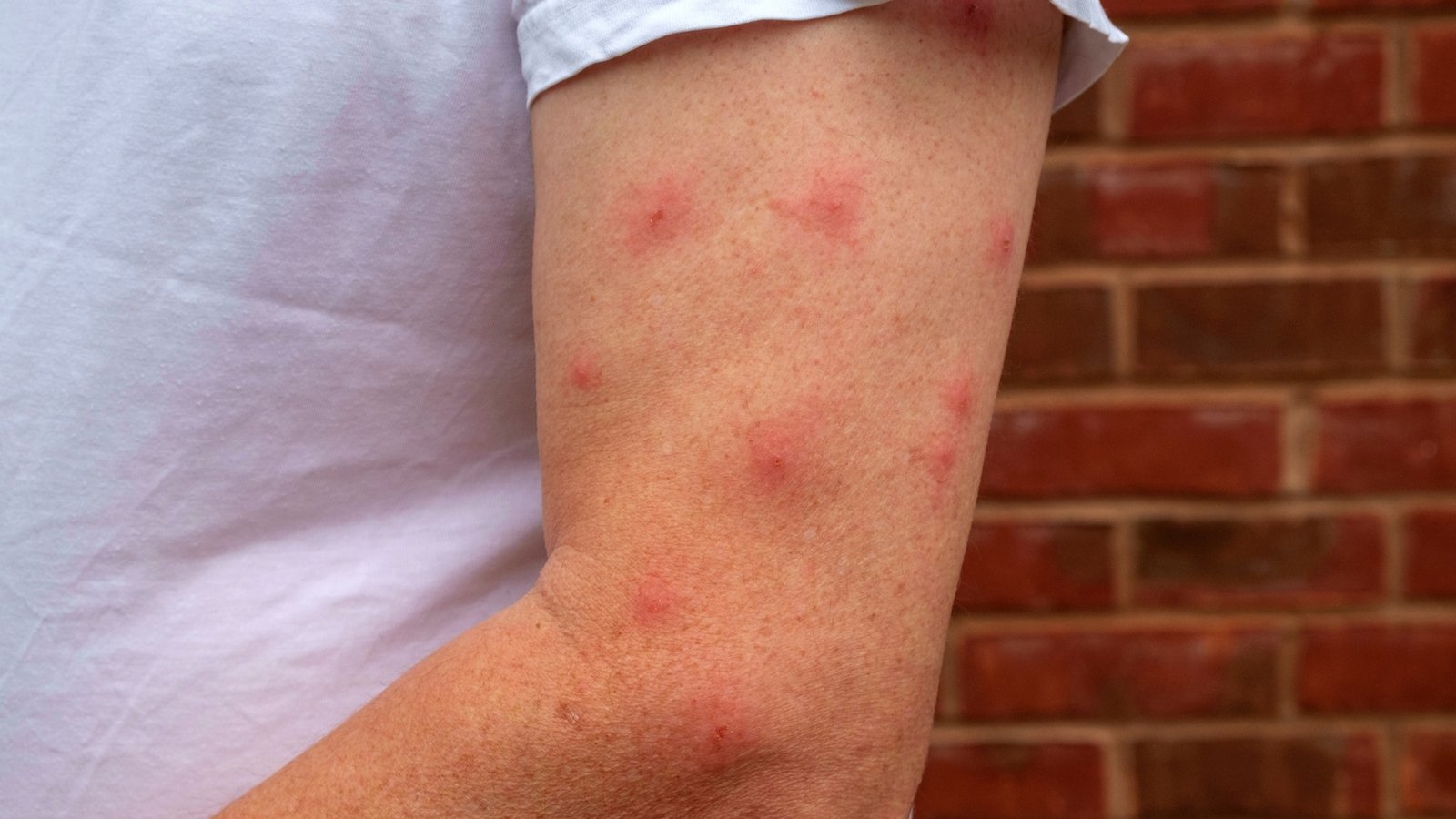
Almost every mosquito bite heals on its own. It itches, swells into a small bump, and fades over a few days with nothing more than an ice pack and the willpower not to scratch. That is the normal story, and it is the story for the vast majority of bites.
Medical care matters in three situations, and they are worth knowing before you need them:
See a doctor or seek emergency care if you notice:
– Signs of a skin infection at the bite: spreading redness, warmth, pus, a red streak, or fever.
– A severe allergic reaction: hives spreading over your body, swelling of the lips, tongue, or throat, or trouble breathing. This is a 911 emergency.
– Signs of a mosquito-borne illness: fever with a bad headache, a stiff neck, confusion, or muscle weakness in the days or weeks after being bitten.
The rest of this page walks through each of these so you can tell an ordinary itchy bump from something that needs attention.
Signs of a skin infection at the bite
A mosquito bite itself is not an infection. The redness, swelling, and itch you feel in the first day or two are your immune system reacting to proteins in mosquito saliva, not bacteria. The problem starts when scratching breaks the skin and lets bacteria in.
The CDC advises against scratching for exactly this reason, and recommends washing a bite with soap and water and using an ice pack for the itch. If you do break the skin, keep it clean and covered.
Watch for these signs that a bite has become infected:
- Redness that keeps spreading outward from the bite over a day or two, rather than shrinking.
- Warmth and increasing pain in the skin around the bite.
- Pus or fluid draining from the spot.
- A red streak running from the bite toward your body, for example up an arm or leg toward the armpit or groin.
- Fever developing along with any of the above.
A red streak deserves special mention. It can be a sign of lymphangitis, an infection moving into the lymph system. The Merck Manual describes it as red, warm, tender streaks that stretch from the infected area toward a group of lymph nodes, often with fever and chills, and warns that this kind of infection can spread quickly. A spreading red streak is a reason to be seen the same day, not to wait and watch.
For ordinary spreading redness and warmth without a streak, contact your healthcare provider promptly. This can be cellulitis, a bacterial skin infection that is very treatable with antibiotics when caught early.
Signs of a severe allergic reaction
Large, itchy, swollen bites are common and, on their own, are not dangerous. Some people react strongly to mosquito saliva and get big areas of swelling, redness, and warmth, sometimes with hard lumps or blisters. Cleveland Clinic calls this a large local reaction, informally known as skeeter syndrome, and it is uncomfortable but not an emergency. Mayo Clinic notes that these stronger reactions are more common in children, in adults bitten by a mosquito species they have not been exposed to before, and in people with immune system disorders. Rarely, a strong reaction can come with a low-grade fever, widespread hives, or swollen lymph nodes.
A true whole-body allergic reaction to a mosquito bite (anaphylaxis) is very rare. Cleveland Clinic notes it has been reported only very rarely. But because it is life-threatening when it happens, everyone should know the signs.
Call 911 right away if, after a bite, you develop any of these:
– Hives spreading over much of your body
– Swelling of the face, lips, mouth, tongue, or throat
– Trouble breathing or swallowing, wheezing
– Dizziness, fainting, or a feeling that something is very wrong
These are the signs of anaphylaxis. Do not wait to see whether they pass, and do not drive yourself. If you have a prescribed epinephrine auto-injector, use it and then call 911.
Signs of a mosquito-borne illness
Most bites carry no disease at all. But mosquitoes can spread viruses such as West Nile, and knowing the pattern to watch for takes the guesswork out of it. The key is timing: illness shows up days to weeks after the bite, not right away, and it looks like a fever, not a skin problem.
West Nile is the most common mosquito-borne illness in the country. According to the CDC, symptoms usually begin 2 to 14 days after an infected bite. About 1 in 5 infected people develop a fever with headache, body aches, joint pain, vomiting, diarrhea, or a rash. Most recover on their own. A small number develop a serious illness affecting the brain and nervous system.
Seek medical care promptly if, in the days or weeks after being bitten, you develop a fever together with any of these:
– A severe headache or a stiff neck
– Confusion or disorientation
– Muscle weakness, tremors, or trouble with balance
– A seizure
These can point to the serious neuroinvasive form of West Nile or a related illness, and they need urgent evaluation.
Dengue is less common here but is a concern after travel to areas where it spreads. The CDC warns that severe dengue is a medical emergency, and that its warning signs (belly pain, repeated vomiting, bleeding from the gums or nose, blood in vomit or stool) often appear in the 24 to 48 hours after the fever goes away, just when a person seems to be improving. If you have a fever after travel to a dengue-risk area, tell a healthcare provider.
The simple rule: a fever in the days or weeks after mosquito exposure, especially with neurological symptoms, is worth a call to a provider. For the details on individual viruses, see the disease pages linked below.
Who should be more cautious
The same bite can be trivial for one person and serious for another. Some groups have a higher chance of severe illness from a mosquito-borne virus and should have a lower threshold for seeking care:
- Older adults, especially over about 60. Age is the single largest risk factor for severe West Nile disease.
- People who are immunocompromised. The CDC notes that a weakened immune system, including from organ transplant or immunosuppressive medicines, raises the risk of serious illness from mosquito-borne viruses.
- People with chronic conditions such as diabetes, cancer, high blood pressure, or kidney disease.
- Pregnant people, who should be especially careful about prevention.
- Young children, who can have stronger local reactions and cannot always describe how they feel.
If you or someone you care for is in one of these groups, treat fever or neurological symptoms after a bite as a reason to call a provider sooner rather than later. See who is most at risk from mosquito-borne disease for more.
Emergency versus routine care
Not every worrying bite is a 911 call, and not every 911-worthy symptom starts at the bite. Here is how to sort them.
Call 911 or go to the emergency room now for:
- Trouble breathing or swallowing, wheezing, or swelling of the lips, tongue, or throat
- Hives spreading rapidly over the body, with dizziness or fainting
- Confusion, a seizure, a stiff neck with high fever, or sudden severe weakness
- A red streak spreading quickly with high fever and feeling very unwell
Contact a healthcare provider (same day or next day) for:
- Spreading redness, warmth, or pus at a bite, or a red streak without other emergency signs
- A fever in the days or weeks after being bitten, especially with headache or body aches
- Large local swelling that is worsening or not helped by home care
- Any bite symptom you are unsure about, particularly in a higher-risk person
Home care is usually enough for an ordinary itchy, swollen bump with no fever, no spreading redness, and no breathing or neurological symptoms. Wash it, ice it, and leave it alone. See our guide on how to treat a mosquito bite.
When in doubt, calling a provider or a nurse line is always reasonable. Describing your symptoms to a professional is quicker than second-guessing them.
Sources
- Centers for Disease Control and Prevention. About Mosquito Bites. https://www.cdc.gov/mosquitoes/about/about-mosquito-bites.html. Accessed 20 Jul 2026. (Wash bites with soap and water, use an ice pack, do not scratch; watch for signs of infection such as spreading redness, warmth, and a red streak, and contact a provider if symptoms worsen or fever develops.)
- Mayo Clinic. Mosquito bites: Symptoms and causes. https://www.mayoclinic.org/diseases-conditions/mosquito-bites/symptoms-causes/syc-20375310. Accessed 20 Jul 2026. (More severe reactions, including blisters, widespread hives, low-grade fever, and swollen lymph nodes, are more common in children, in adults not previously exposed to a mosquito species, and in people with immune system disorders; contact a provider if bites come with fever, headache, body aches, or signs of infection.)
- Cleveland Clinic. Skeeter Syndrome. https://my.clevelandclinic.org/health/diseases/23289-skeeter-syndrome. Accessed 20 Jul 2026. (Skeeter syndrome is a large local inflammatory reaction; anaphylaxis has been reported very rarely; call 911 for difficulty breathing or swallowing, swelling of the face, mouth, tongue, or throat, or hives over much of the body.)
- Merck Manual Consumer Version. Lymphangitis. https://www.merckmanuals.com/home/skin-disorders/bacterial-skin-infections/lymphangitis. Accessed 20 Jul 2026. (Red, warm, tender streaks stretch from an infected area, such as an insect bite, toward regional lymph nodes, often with fever and chills, and infection can spread rapidly.)
- Centers for Disease Control and Prevention. Symptoms of West Nile. https://www.cdc.gov/west-nile-virus/signs-symptoms/index.html. Accessed 20 Jul 2026. (Symptoms usually begin 2 to 14 days after an infected bite; about 1 in 5 develop a febrile illness; seek care for high fever, neck stiffness, confusion, tremors, or muscle weakness.)
- Centers for Disease Control and Prevention. Symptoms of Dengue and Testing. https://www.cdc.gov/dengue/signs-symptoms/index.html. Accessed 20 Jul 2026. (Severe dengue is a medical emergency; warning signs such as belly pain, vomiting, and bleeding often begin in the 24 to 48 hours after fever subsides.)
- Centers for Disease Control and Prevention. Vector-Borne Viral Diseases and People Who Are Immunocompromised. https://www.cdc.gov/vector-borne-diseases/risk-factors/immunocompromised-people.html. Accessed 20 Jul 2026. (People with a weakened immune system can have a higher risk of serious illness from viruses spread by mosquitoes.)
Related
- How to treat a mosquito bite
- Who is most at risk from mosquito-borne disease
- West Nile virus
- Dengue
- Skeeter syndrome and allergic reactions to bites
- Why mosquito bites itch
Educational reference only. This is not medical advice and cannot diagnose you. If you have symptoms after a mosquito bite, contact a healthcare professional. In an emergency, call 911.
Last reviewed 20 July 2026.