Short answer
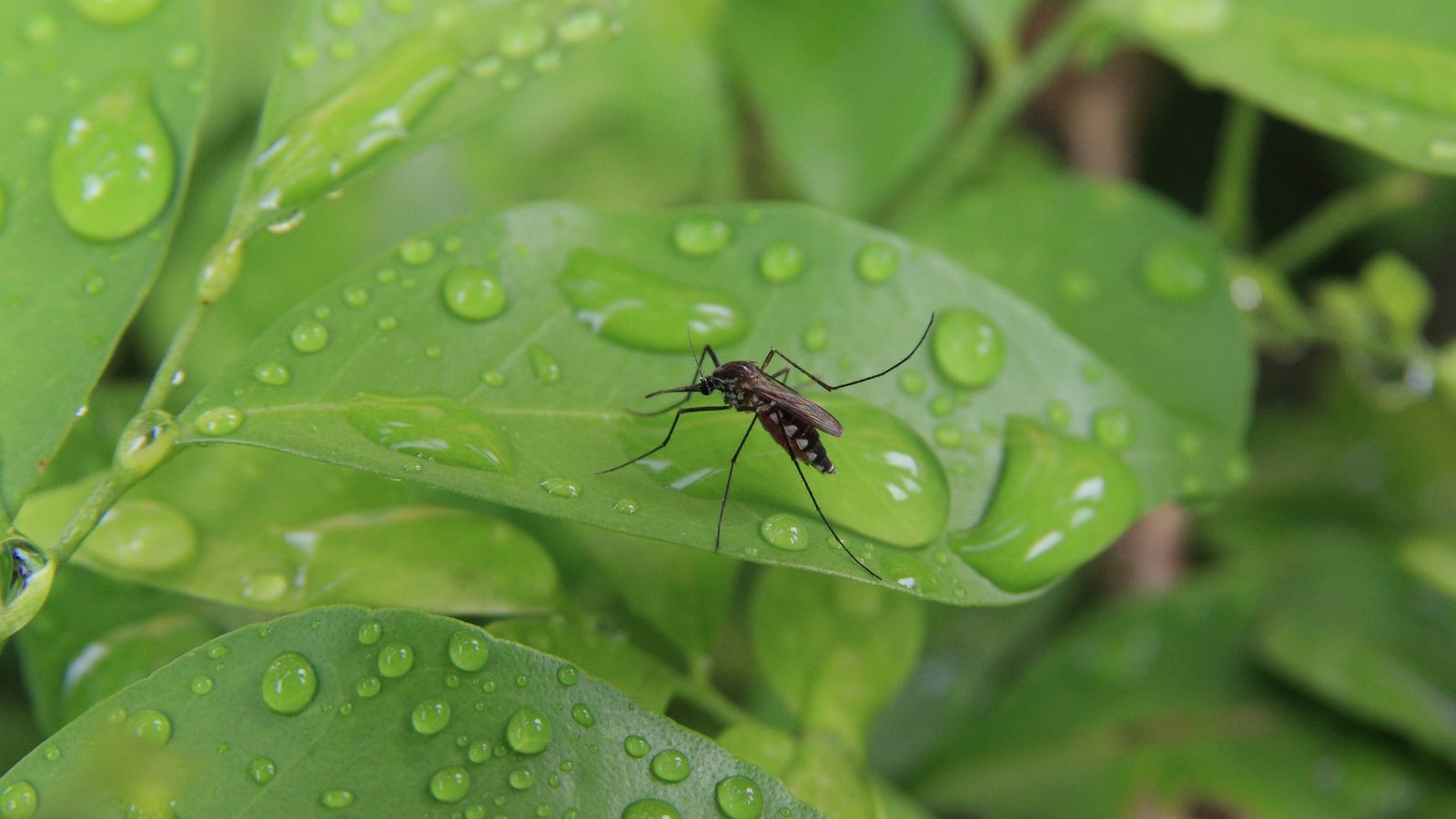
A hard freeze kills most active adult mosquitoes and effectively ends the biting season. It does not wipe out the species. Mosquitoes are cold-blooded and stop feeding once temperatures fall below about 50 F, and vector-control programs treat the first hard frost of fall as the point when mosquito activity and mosquito-borne disease risk drop off (Sources 4, 5, 6). The reason the biting returns every spring is simple: cold-hardy eggs and hibernating adults survive the winter in sheltered spots the freeze never reaches, then start the cycle again when warmth returns (Sources 4, 5, 7).
What a hard frost does
Weather forecasters use temperature thresholds to describe a cold night. A light frost forms when the air falls below about 36 F, a freeze occurs at 32 F or below, and a hard freeze is reached when the temperature drops to about 28 F or lower, cold enough to destroy most seasonal vegetation (Sources 1, 2).
Those same thresholds track what happens to mosquitoes. A light frost near freezing slows adults and grounds them for the night, but on the warm days that often follow it they can fly and bite again, so a single light frost may not end activity (Sources 4, 5). A hard freeze at or below about 28 F is a different event. Exposed active adults cannot survive a sustained hard freeze, and that is the freeze that closes out the active season. As one state vector program puts it, “the risk is expected to continue until the first hard frost in October” (Source 6).
What survives the frost
A hard freeze ends the season for active adults, but not for the life stages built to wait out winter. Two strategies carry mosquito populations through the cold (see Mosquito overwintering and diapause explained).
Some species overwinter as eggs. Aedes mosquitoes deposit eggs in the fall that do not hatch until the following spring, and those eggs are winter-hardy, hibernating as embryos (Sources 4, 5). Laboratory work on the Asian tiger mosquito (Aedes albopictus) found that diapausing eggs from a temperate population tolerated temperatures as low as about -10 C (roughly 14 F) for extended exposures (Source 9).
Other species overwinter as adults. Mated females in the genera Culex and Anopheles enter buildings, cellars, culverts, and other sheltered areas and stay dormant until warmer weather arrives (Sources 4, 7). A field study across hibernation sites found that Culex pipiens and Anopheles adults survived best in cool, stable shelters, with the highest survival where mean temperatures stayed below about 7 C (Source 8). These sheltered females carry the population, and in the case of Culex the disease exposure, into the next year.
The lag before it is truly over
The first frost on the calendar does not always mean the last mosquito of the year. A light frost can be followed by mild days, and warm spells can rouse dormant adults out of their shelters. Connecticut’s mosquito program notes that overwintering adults “are occasionally seen during a midwinter warm spell,” returning to hiding once temperatures fall again (Source 4). This is why activity can flicker back after an early cold night and why control programs wait for a sustained hard freeze, not the first patch of frost, before treating the season as finished (Source 6).
Frost dates by region
When that first frost arrives depends on where you live. The average date of the first fall frost comes earlier in the north and later in the south. Across the Northeast, the Northeast Regional Climate Center reports the average first-frost date ranging from mid-September in the coldest northern areas to early November farther south (Source 3). The same north-to-south gradient holds broadly across the country, so the biting season closes weeks earlier in northern states than along the southern tier (see Regions). In the warmest southern areas, a hard freeze may be brief or infrequent, which is one reason mosquito activity can persist later into the year there.
Sources
- National Weather Service, Northern Indiana, Fall Frost and Freeze Information (frost near 36 F, freeze at 32 F, hard freeze near 28 F). https://www.weather.gov/iwx/fallfrostinfo (accessed 2026-07-20)
- NOAA National Weather Service Glossary (freeze at 32 F or below; frost below 32 F; killing freeze ends the growing season). https://www.weather.gov/ggw/GlossaryF (accessed 2026-07-20)
- Northeast Regional Climate Center, Cornell University, First Frost (average first fall frost ranges from mid-September to early November, earlier in the north). https://www.nrcc.cornell.edu/services/blog/2009/10/06_first_frost/index.html (accessed 2026-07-20)
- Connecticut Mosquito Management Program, Ecology (Culex and Anopheles adults overwinter dormant in sheltered areas; Aedes deposit fall eggs that hatch in spring; adults seen during midwinter warm spells). https://portal.ct.gov/Mosquito/Ecology/Ecology (accessed 2026-07-20)
- Connecticut Mosquito Management Program, FAQs (mosquitoes are cold-blooded and do not generally feed below 50 F; some adults hibernate before the first frost; other species have winter-hardy eggs that hibernate as embryos). https://portal.ct.gov/mosquito/faqs/mosquito-faqs (accessed 2026-07-20)
- Connecticut Mosquito Management Program, Press Room, Risk of Mosquito-Borne Diseases Continues (risk expected to continue until the first hard frost in October). https://portal.ct.gov/mosquito/press-room/2023-press-releases/risk-of-mosquito-borne-diseases-continues (accessed 2026-07-20)
- Defense Health Agency, Where Do Mosquitoes Go During the Winter (overwintering females shelter in protected sites; Aedes egg diapause; dormancy pauses development until warmth returns). https://dha.mil/News/2025/02/21/14/50/Where-Do-Mosquitoes-Go-During-the-Winter (accessed 2026-07-20)
- Journal of Medical Entomology, Oxford University Press, peer-reviewed study of overwintering Culex pipiens and Anopheles messeae (adults hibernate in cellars and barns; highest survival at hibernation sites with mean temperature below about 7 C). https://academic.oup.com/jme/article/59/6/2013/6706838 (accessed 2026-07-20)
- Thomas et al., low-temperature threshold for egg survival in a European strain of Aedes albopictus, peer-reviewed (diapausing eggs tolerated about -10 C for extended exposures). https://www.ncbi.nlm.nih.gov/pmc/articles/PMC3403971/ (accessed 2026-07-20)
Related
- Mosquito overwintering and diapause explained
- Where mosquitoes go in winter
- When mosquito season ends
- Regions overview
Educational note: This page is a general science reference and is not medical, pest-control, or public-health advice. For local mosquito-borne disease risk and the timing of the first frost in your area, consult your state or local health department and mosquito-control program.
Last reviewed 20 July 2026.