Short answer
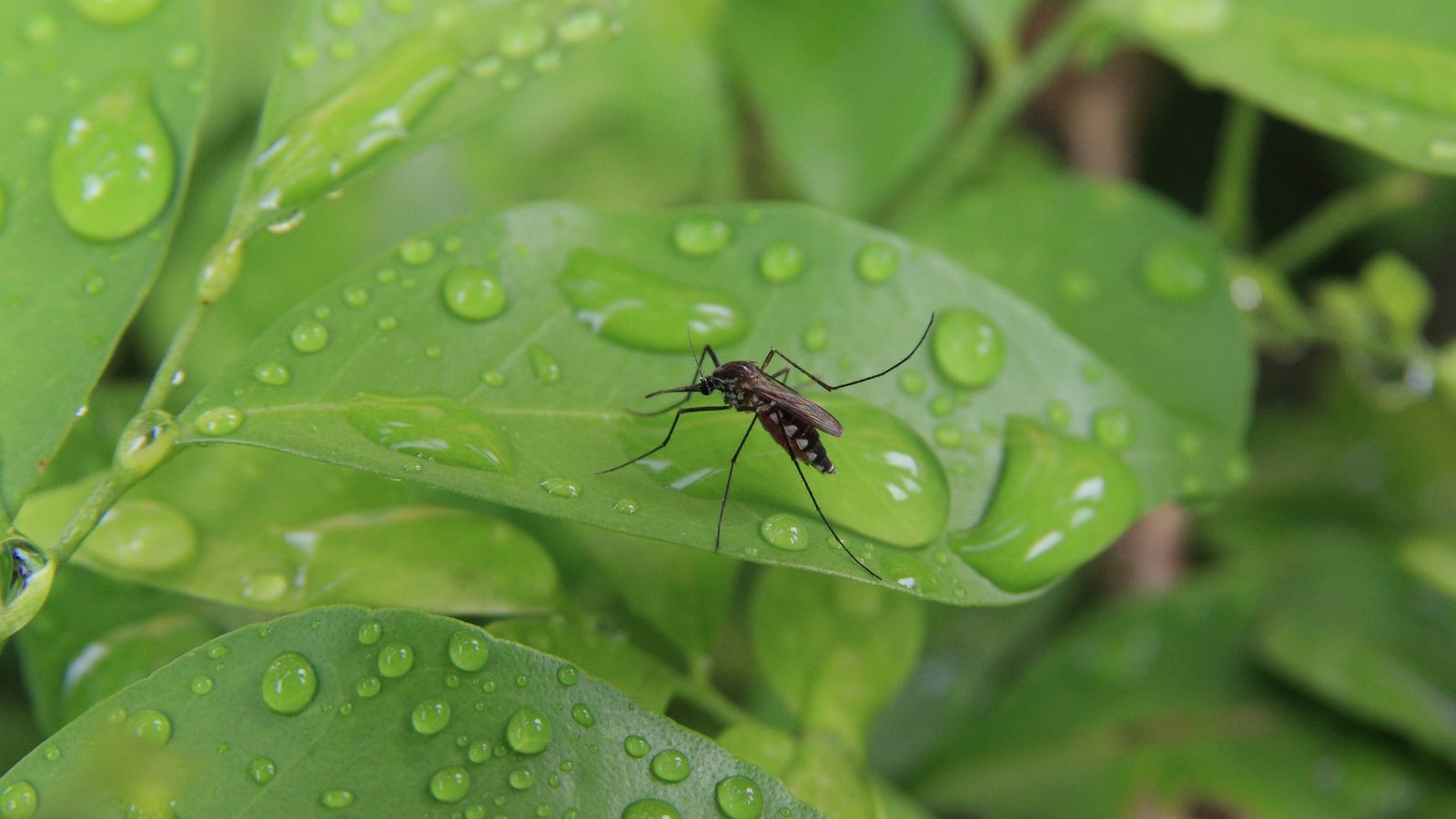
Mosquitoes do not simply die out when cold weather arrives. Many species survive winter through diapause, a programmed dormancy that pauses development and reproduction. Diapause is triggered mainly by shortening day length in late summer and fall, often reinforced by falling temperatures. Depending on the species, the winter is passed as a dormant adult female, a dormant egg, or a dormant larva. When day length and warmth return in spring, development resumes and the population rebuilds (Sources 1, 2, 4).
What diapause is
Diapause is a hormonally controlled pause in development, not the same thing as freezing to death or a simple response to cold. It is programmed in advance. In the northern house mosquito (Culex pipiens), the short day lengths of late summer program females to enter a reproductive diapause marked by an arrest in ovarian development and the buildup of large fat reserves (Source 1).
The key trigger is photoperiod, the length of the daily light period. Shortening days signal that winter is coming, and in many species that signal alone is enough to switch on diapause, with cooling temperatures making the switch more likely or more complete (Sources 1, 4). Because the response is set off before harsh conditions arrive, diapause is best understood as anticipation rather than reaction.
The pause is run by the insect’s hormones. In Culex pipiens, insulin signaling and the downstream factor FOXO help govern the diapause state and its fat storage, and juvenile hormone is involved in ending diapause and restarting reproduction (Source 1). This internal control is why diapausing mosquitoes stay dormant even during a warm spell in midwinter instead of waking too early (Source 2).
Diapause by life stage
Different mosquitoes overwinter in different stages, and the diapausing stage is a defining feature of each group.
Adult-diapausing Culex. In Culex pipiens, inseminated females from the last generation of the season stop seeking blood, feed on carbohydrates such as nectar to build up their fat body, and enter hibernation in fall. They pass the winter in diapause and do not become active during brief periods of warm winter weather. Hibernating females are common in basements, outbuildings, and subterranean enclosures (Sources 1, 2).
Egg-diapausing Aedes. In the Asian tiger mosquito (Aedes albopictus), it is the mother that reads the season. When exposed to short autumnal day lengths, females produce diapause eggs, and development inside those eggs arrests at the pharate larva stage within the egg shell. These eggs wait out the winter and hatch when favorable conditions return (Source 4).
Larval diapause in some species. A number of mosquitoes overwinter as dormant larvae. The pitcher plant mosquito (Wyeomyia smithii), which develops in the water held by pitcher plant leaves, is a classic example whose larval diapause is initiated, maintained, and ended by photoperiod. The exact instar that diapauses varies with geography, with more northern populations tending to arrest at an earlier larval stage than southern ones (Source 6).
How they survive the cold
Surviving winter takes more than simply going dormant. Diapausing mosquitoes prepare physically for months of cold and scarcity.
The most important preparation is energy storage. Diapausing Culex females accumulate large fat reserves before winter, drawing on carbohydrate meals rather than blood, and those reserves fuel the long dormant period (Sources 1, 2). Diapause eggs of Aedes albopictus likewise carry increased lipid content compared with non-diapause eggs (Source 4).
Shelter matters as well. Overwintering Culex females move into protected, humid, relatively stable sites such as basements, culverts, and other subterranean spaces, and they relocate within those sites to keep from drying out (Source 2).
Cold tolerance itself increases during diapause. In Aedes albopictus, cold acclimation and diapause each lowered the temperature that eggs could survive, together shifting the lower lethal temperature of eggs from about minus 8 degrees Celsius to about minus 12 degrees Celsius, and diapause eggs also showed enhanced resistance to drying out (Source 4). In the field, diapause eggs had higher overwinter survival than non-diapause eggs at multiple sites, showing that these changes translate into real winter survival (Source 4).
Why it matters for disease and control
Overwintering is not just a survival curiosity. It shapes when mosquito-borne disease appears and when control efforts pay off.
For West Nile virus, overwintering can carry the virus from one year into the next. During the winter after the 1999 outbreak, researchers collected 2,383 adult mosquitoes from overwintering sites in New York City and found West Nile viral RNA in three pools of Culex, with live virus isolated from one of them. The authors concluded that virus persistence in overwintering Culex pipiens contributes to maintaining West Nile virus through the winter so it can restart local transmission in spring (Source 3).
How the virus reaches those overwintering females is itself tied to diapause. Because diapause-destined females stop taking blood meals, passing virus from an infected mother to her offspring (vertical transmission) is a likely route for the virus to enter the overwintering generation. Field studies of California Culex documented vertical transmission of West Nile virus, with a rate of about 26 percent detected from infected females to their larval offspring in one study (Source 5).
For control, timing follows biology. The window before females enter overwintering sites, and the early spring window as they emerge and resume blood feeding and egg laying, are points where reducing the surviving population has outsized effect on the coming season (Sources 2, 3). Removing or treating overwintering habitat, such as container water where Aedes eggs wait and the sheltered sites where Culex females hibernate, targets the mosquitoes that would otherwise seed next year’s population (Sources 2, 4).
Sources
- Sim C, Denlinger DL. Insulin signaling and FOXO regulate the overwintering diapause of the mosquito Culex pipiens. Proceedings of the National Academy of Sciences. https://www.pnas.org/doi/10.1073/pnas.0802067105 (peer-reviewed; short day length programs reproductive diapause, ovarian arrest, large fat reserves, insulin/FOXO control, juvenile hormone in diapause termination; accessed 2026-07-20; publisher page returned HTTP 403, statements drawn from the indexed abstract summary).
- Rutgers Center for Vector Biology. Culex pipiens Linnaeus, species profile. https://vectorbio.rutgers.edu/outreach/species/pip2.htm (university outreach; inseminated females build fat body on carbohydrates, hibernate in fall, pass winter in diapause without waking during warm spells, shelter in basements and subterranean sites, lose interest in blood meals; accessed 2026-07-20).
- Nasci RS, et al. West Nile Virus in Overwintering Culex Mosquitoes, New York City, 2000. Emerging Infectious Diseases, Centers for Disease Control and Prevention. https://wwwnc.cdc.gov/eid/article/7/4/01-7426_article (CDC journal; 2,383 overwintering adults collected, three Culex pools positive for viral RNA, live virus isolated from one pool, overwintering persistence maintains virus through winter; accessed 2026-07-20).
- Photoperiodic Diapause and the Establishment of Aedes albopictus (Diptera: Culicidae) in North America. PubMed Central. https://pmc.ncbi.nlm.nih.gov/articles/PMC5013814/ (peer-reviewed; short autumnal day length induces mothers to produce diapause eggs arresting as pharate larvae, critical photoperiod concept, cold acclimation and diapause lower egg lethal temperature from about minus 8 to minus 12 degrees Celsius, increased lipid and desiccation resistance, higher overwinter survivorship of diapause eggs at field sites; accessed 2026-07-20).
- Experimental and Natural Vertical Transmission of West Nile Virus by California Culex (Diptera: Culicidae) Mosquitoes. Journal of Medical Entomology. https://academic.oup.com/jme/article/50/2/371/854630 (peer-reviewed; diapause-destined females do not take blood meals so vertical transmission is a likely infection route, about 26 percent vertical transmission detected from infected females to larval progeny; accessed 2026-07-20; statements drawn from the indexed abstract summary).
- Quantitative Trait Loci Associated with Photoperiodic Response and Stage of Diapause in the Pitcher-Plant Mosquito, Wyeomyia smithii. PubMed Central. https://pmc.ncbi.nlm.nih.gov/articles/PMC1893043/ (peer-reviewed; Wyeomyia smithii overwinters in photoperiod-controlled larval diapause, with northern populations diapausing at an earlier larval instar than southern populations; accessed 2026-07-20).
Related
- Mosquito life cycle explained [placeholder]
- Seasonal mosquito activity and when they return in spring [placeholder]
- West Nile virus and the Culex vector [placeholder]
- Aedes albopictus (Asian tiger mosquito) profile [placeholder]
Educational note: This page is a non-commercial, science-based reference for general education. It is not pest-control advice or medical guidance. For local control decisions or health concerns, consult your state or county mosquito control program or public health department.
Last reviewed 20 July 2026.