The short answer
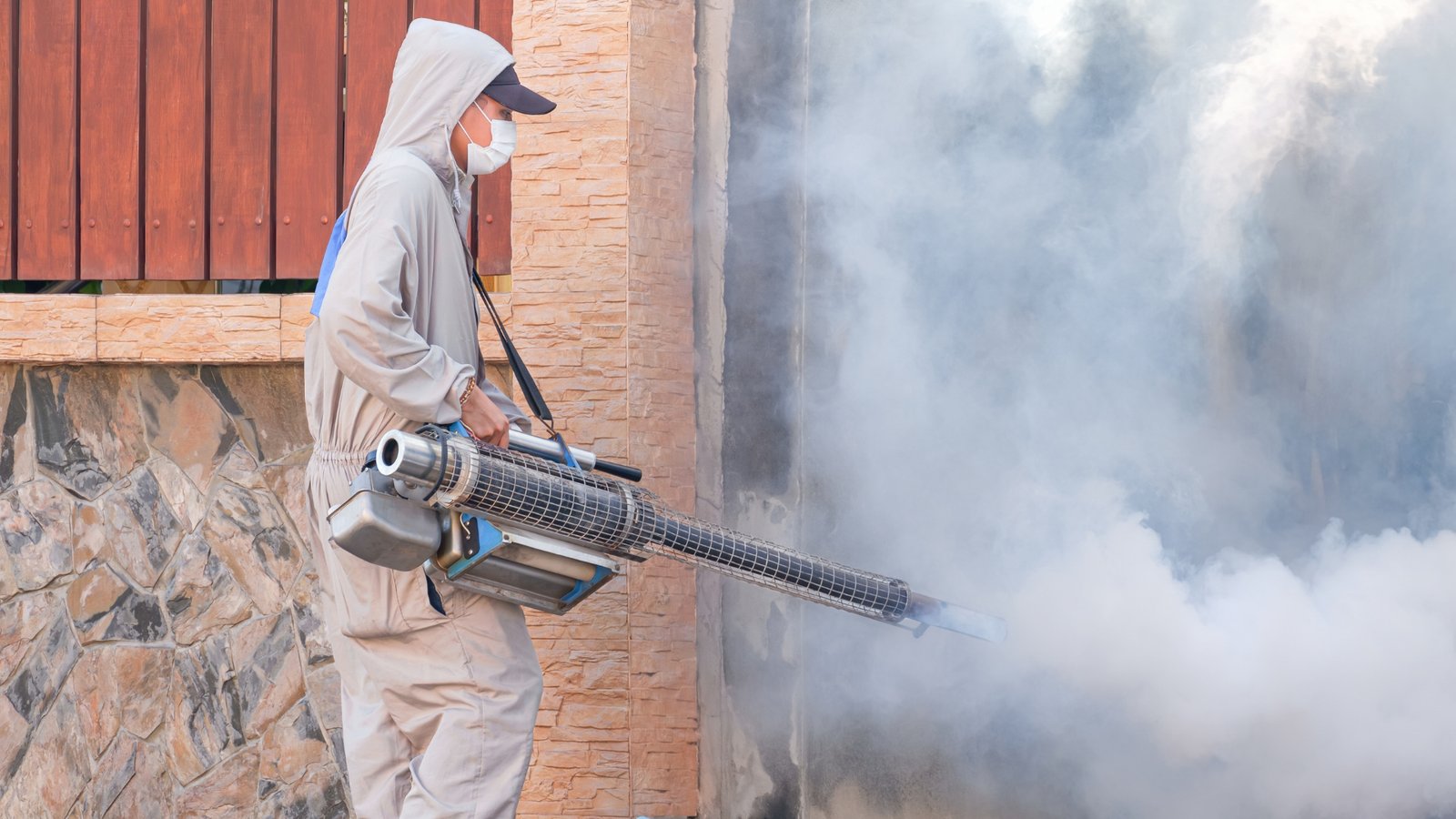
Adulticiding is the spraying of insecticide to kill flying adult mosquitoes. It is a short-term tool, used mainly when disease risk spikes or when nuisance numbers become extreme, not a first line of defense. It knocks down the mosquitoes that are flying at the moment of the spray, and that is all it does. It does not treat the water where the next generation is growing, so the relief is temporary.
The short version: Adulticides are applied as a fine mist that drifts through the air and kills adult mosquitoes on contact. Trained programs use it as a last step, after removing standing water and treating larvae, and most often during a public health emergency such as a West Nile virus outbreak.
How it works
Adulticides are almost always applied as ultra-low-volume (ULV) sprays. A ULV sprayer turns a small amount of liquid insecticide into a cloud of very fine aerosol droplets that stay aloft and drift with the wind. The droplets are sized so that they float long enough to strike a flying mosquito and kill it on contact (EPA, Pesticides Used to Control Adult Mosquitoes). The name “ultra-low volume” describes how little product is used: typically less than 3 ounces of formulated product per acre (EPA, Pesticides Used to Control Adult Mosquitoes).
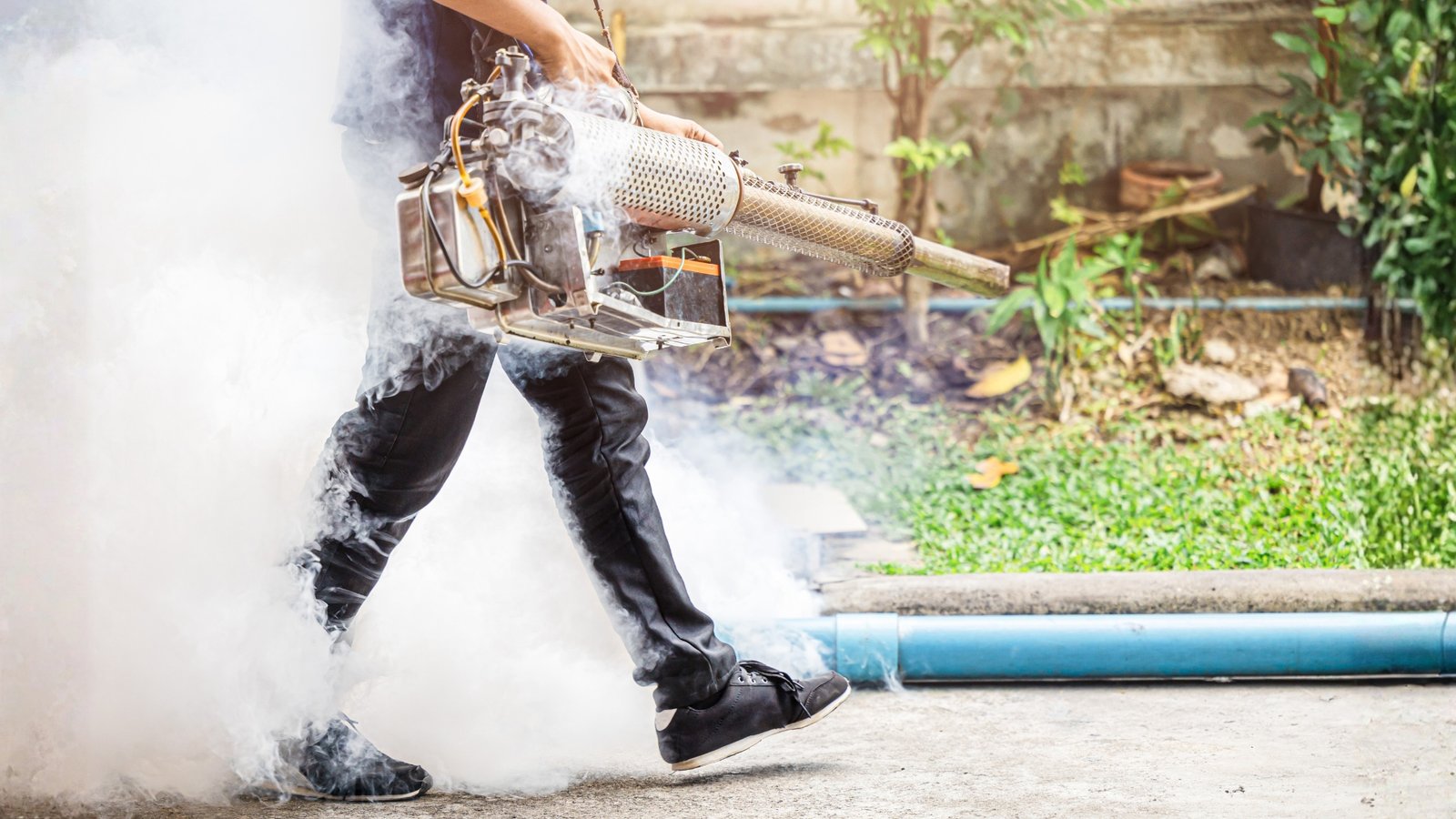
Because the droplets have to physically hit a mosquito in flight, timing matters. Applications are run when the target mosquitoes are actually flying, which for most species means around dusk, after dark, or before dawn (AMCA, Pollinator Protections). The spray is delivered from truck-mounted, ATV-mounted, or aircraft-mounted sprayers over a defined area, then it breaks down and dissipates within a short window rather than leaving a lasting residue.
The active ingredients fall into two main chemical families. The synthetic pyrethroids and natural pyrethrins include permethrin, resmethrin, sumithrin, prallethrin, etofenprox, and pyrethrins; the organophosphates include malathion and naled (EPA, Pesticides Used to Control Adult Mosquitoes). Pyrethroid products are frequently paired with a synergist such as piperonyl butoxide (PBO), which blocks the mosquito’s ability to break the insecticide down (NPIC, Pesticides Used in Mosquito Control).
When it is used
Adulticiding sits at the end of a longer strategy called integrated mosquito management. That approach starts with surveillance (trapping and monitoring to see what is actually out there), then source reduction (removing or draining the standing water where mosquitoes breed), then larviciding (treating the water to kill immature mosquitoes before they can fly). Adulticiding is the step programs reach for when those measures are not enough on their own (AMCA, Mosquito Control).
There are two situations that typically justify it. The first is a public health response: when surveillance shows infected mosquitoes and a rising risk of disease such as West Nile virus, spraying is the only method that can rapidly cut the number of infected biting adults across a wide area (AMCA, Mosquito Control). The second is nuisance relief, usually after flooding or heavy rain produces extreme numbers of mosquitoes from breeding sites that cannot be reached or drained (CDC, Integrated Mosquito Management).
It is treated as a last resort for practical reasons. Adult mosquitoes rest in hard-to-reach places, so it is difficult to hit enough of them, and the method is expensive in labor and equipment and more likely to affect non-target insects if done carelessly (AMCA, Mosquito Control). Removing standing water and killing larvae is generally the more effective and economical way to control mosquitoes, which is why those steps come first.
How effective it is
Spraying works on the mosquitoes that are in the air when the droplets pass through. It gives a fast knockdown of the adult population present at that moment, and when the timing and weather are right that knockdown can be substantial (AMCA, Mosquito Control).
What it does not do is stop new mosquitoes from arriving. The spray does not reach the eggs and larvae developing in nearby water, so a fresh wave of adults emerges over the following days and replaces the ones that were killed (CDC, Integrated Mosquito Management, as reported in search results). That is why adulticiding is understood as temporary. A single application buys a short reprieve; lasting control comes from cutting off the breeding sites so fewer adults are produced in the first place. In practice, programs use spraying together with larval control rather than on its own.
Safety
The products used for adult mosquito control are registered by the EPA specifically for this use, and they are applied at very low rates. Because ULV spraying puts out such small quantities of active ingredient over a large area, typically less than 3 ounces per acre, the EPA states that these products “can be used for public health mosquito control programs without posing risks of concern to the general population or to the environment when applied according to the pesticide label,” including for children and pregnant women (EPA, Pesticides Used to Control Adult Mosquitoes).
Pollinators are a common concern, and timing is the main safeguard. Applications are run before dawn or after dusk, which targets mosquitoes when they are most active and avoids day-active pollinators; bees are in their hives at night, and the low doses used break down within hours (AMCA, Pollinator Protections). Beekeepers who are notified of a scheduled application can also cover hives with a breathable material during the spray window (AMCA, Pollinator Protections).
If your area announces spraying, there are simple, sensible steps residents can take during the application. Staying indoors while the spray truck passes, closing windows, and bringing in pets and children’s toys reduces unnecessary contact, and beekeepers should let the mosquito control program know where colonies are located so applicators can plan around them (AMCA, Pollinator Protections). Your local mosquito control district or health department publishes the specific guidance and schedule for your neighborhood.
Backyard foggers vs community programs
The spraying done by a mosquito control district is not the same as the consumer foggers and misting systems sold for home use. Community programs are run by trained applicators using EPA-registered products, calibrated equipment, surveillance data, and timing chosen to protect pollinators and hit the target species. Backyard foggers put those same decisions in the hands of a homeowner, with very different trade-offs around effectiveness, drift, and non-target insects. We cover those trade-offs separately. See our guide to backyard foggers and misting systems
Sources
- U.S. Environmental Protection Agency. Pesticides Used to Control Adult Mosquitoes. https://www.epa.gov/mosquitocontrol/pesticides-used-control-adult-mosquitoes. Accessed 20 Jul 2026. (ULV application; less than 3 ounces per acre; kill on contact; list of active ingredients; registered without posing risks of concern when applied per label, including children and pregnant women.)
- U.S. Environmental Protection Agency. Bystander Exposures: Ultra Low Volume Adulticides. https://www.epa.gov/pesticide-science-and-assessing-pesticide-risks/bystander-exposures-ultra-low-volume-adulticides. Accessed 20 Jul 2026. (Small droplet sizes stay in the air to increase contact with flying insects; targets adult flying insects; bystander exposure routes.)
- American Mosquito Control Association. Mosquito Control. https://www.mosquito.org/mosquito-control/. Accessed 20 Jul 2026. (Integrated mosquito management hierarchy: surveillance, source reduction, larviciding, adulticiding; adulticiding is the only method to rapidly reduce infected mosquito numbers; expensive and reserved for when other efforts are insufficient.)
- American Mosquito Control Association. Pollinator Protections. https://www.mosquito.org/pollinator-protections/. Accessed 20 Jul 2026. (Applications run before dawn or after dusk to avoid day-active pollinators; low doses break down within hours; beekeeper notification and hive covering.)
- Centers for Disease Control and Prevention. Integrated Mosquito Management. https://www.cdc.gov/mosquitoes/php/toolkit/integrated-mosquito-management-1.html. Accessed 20 Jul 2026 (page returned HTTP 403; content from CDC search-result text). (Adulticiding used only when necessary as part of integrated management; source reduction and larval control are primary; new adults emerge to replace those killed.)
- National Pesticide Information Center (Oregon State University). Pesticides Used in Mosquito Control. https://npic.orst.edu/pest/mosquito/mosqcides.html. Accessed 20 Jul 2026. (Adulticide active ingredients including pyrethrins, permethrin, resmethrin, sumithrin, and malathion; used in fogging and spraying to control adult mosquitoes.)
Related
- Backyard foggers and misting systems
- How to remove standing water around your home
- Larvicides: treating mosquitoes before they fly
- Integrated mosquito management
- West Nile virus
Educational reference only. This page explains how public mosquito control works and is not a recommendation to apply any pesticide yourself. Follow the guidance of your local mosquito control district or health department, and always read and follow pesticide labels.
Last reviewed 20 July 2026.