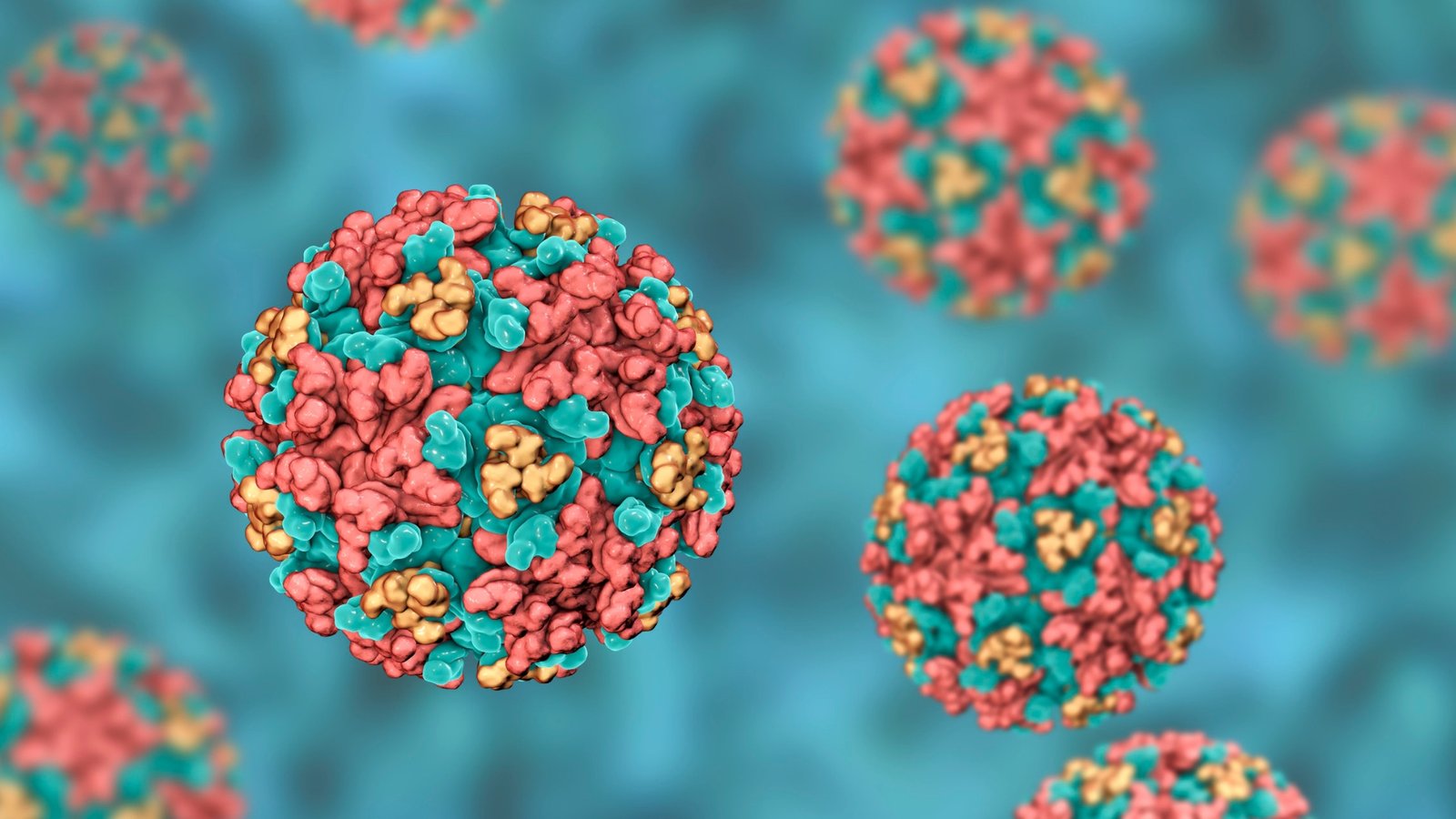
A rare mosquito-borne virus that can infect the brain and spinal cord, caused by eastern equine encephalitis virus (EEEV).
The short answer
Eastern equine encephalitis, usually shortened to EEE, is one of the rarest mosquito-borne diseases reported in the country and also one of the most serious. On average, about 11 human cases are reported each year. Most people who are infected never feel sick at all. But in the small share of people who go on to develop swelling of the brain (encephalitis), roughly a third die, and about half of the survivors are left with lasting neurological problems. You catch it from the bite of an infected mosquito, not from another person and not from a horse.
The short version: EEE is rare, but when it becomes a severe brain infection it is one of the deadliest mosquito-borne illnesses. There is no human vaccine and no specific cure, so avoiding mosquito bites in affected regions is the only real protection.
What it is
Eastern equine encephalitis is an illness caused by eastern equine encephalitis virus (EEEV), a virus spread to people through the bite of an infected mosquito. The name comes from the disease it causes in horses, which are highly vulnerable to it. In people, the virus can cause a range of illness from none at all to a systemic fever, and in a minority of cases it invades the central nervous system and causes meningitis (inflammation of the membranes around the brain and spinal cord) or encephalitis (inflammation of the brain itself).
What makes EEE stand out is not how common it is, because it is not common, but how severe it can be. Among the people who develop the neuroinvasive form, the case-fatality rate is high and long-term disability among survivors is frequent. That combination is why public health agencies take even a single local case seriously.
How you get it
EEE spreads through mosquito bites. It is not passed from person to person through everyday contact, and you cannot catch it from an infected horse.
The virus lives in a natural cycle between birds and one particular mosquito. That enzootic (animal-cycle) vector is Culiseta melanura, a mosquito that breeds in freshwater hardwood swamps and feeds almost entirely on birds. Because it rarely bites mammals, Culiseta melanura keeps the virus circulating among birds but does not often infect people directly.
Human and horse infections happen when a different mosquito acts as a “bridge.” These bridge vectors feed on both infected birds and on mammals, carrying the virus out of the swamp cycle and into people, horses, and other animals. Most bridge species belong to the Aedes, Coquillettidia, and Culex groups, with Coquillettidia perturbans among the species most often linked to elevated virus activity.
People and horses are considered dead-end (incidental) hosts. They can become seriously ill, but they do not build up enough virus in their blood to pass it back to biting mosquitoes, so they do not keep the cycle going.
What does not transmit it:
- Casual contact with an infected person (coughing, touching, sharing food)
- Contact with an infected horse or other animal
- The bird-feeding swamp mosquito Culiseta melanura biting you directly is uncommon, because it prefers birds
There are rare documented exceptions to the mosquito-only route, including transmission through organ transplantation, but these are unusual and do not change the everyday picture: for the general public, EEE comes from a mosquito bite.
Symptoms
Most people infected with EEEV have no apparent illness at all.
When symptoms do occur, they tend to fall into two patterns:
- Systemic (whole-body) illness: fever, chills, muscle and joint aches, and general malaise. This form often lasts a week or two and resolves.
- Neuroinvasive illness (meningitis or encephalitis): fewer than 5% of infected people progress to this severe form. Signs can include fever, headache, vomiting, diarrhea, seizures, behavioral changes, drowsiness, and, in the worst cases, coma.
The incubation period, meaning the time from an infected bite to the first symptoms, is usually 4 to 10 days. It can be longer in people whose immune systems are weakened.
The severe form is where EEE earns its reputation. Among people who develop severe eastern equine encephalitis, about one third die. Of those who survive, roughly half are left with ongoing neurological problems that can range from mild brain dysfunction to serious intellectual disability, personality changes, seizures, paralysis, and cranial nerve dysfunction. Some people with severe lasting damage need long-term care.
Who is at higher risk
Anyone bitten by an infected mosquito in an affected area can get EEE, but the risk of developing the severe form is not spread evenly. People over 50 and children under 15 appear to be at the greatest risk of severe disease when infected.
Beyond age, the practical risk factors are about exposure: spending time outdoors near freshwater swamps and wetlands in affected regions, during the season when infected mosquitoes are active. In the northern part of the country, outbreaks tend to cluster in late summer through early fall. Regions where EEE activity is reported include the Northeast, the Gulf Coast, and the Great Lakes area.
When to see a doctor: EEE itself is rare, but its early severe symptoms are a medical emergency. Seek care right away for a high fever with a severe headache, a stiff neck, confusion, seizures, sudden drowsiness or trouble waking, or any behavioral change, especially in the late-summer and fall mosquito season or after known mosquito exposure in an affected area. Tell the clinician about recent outdoor or wetland exposure. Because there is no specific cure, prompt supportive care matters.
Diagnosis and treatment
EEE is usually diagnosed through blood or spinal-fluid tests that look for antibodies the body makes against the virus, often confirmed by a public health or reference laboratory. Doctors typically consider it in someone with unexplained encephalitis or meningitis during mosquito season in an area where the virus is active.
There is no specific antiviral treatment for EEE. Care is supportive, which means treating the symptoms and complications: hospitalization, fluids, breathing support if needed, medication to control seizures, and management of brain swelling. Supportive care can be lifesaving, but it does not cure the infection, and outcomes for the severe form remain serious.
On vaccines, the status is important and often misunderstood: there is no vaccine licensed for use in people. A veterinary vaccine does exist for horses, and equine medicine groups recommend it as a core vaccine for horses in affected areas, but that vaccine is for horses only and does nothing for humans. Protecting yourself from EEE therefore comes down to avoiding mosquito bites, not vaccination.
How to protect yourself
Because there is no human vaccine and no specific cure, bite prevention is the whole game. Focus your effort on the late-summer-to-fall season and on time spent near wetlands in affected regions.
- Use an EPA-registered insect repellent on exposed skin and follow the label. See choosing a repellent.
- Wear long sleeves and long pants when you are outdoors in mosquito habitat, and consider permethrin-treated clothing for extended time outside.
- Limit time outdoors when local mosquitoes are most active, and take extra care near freshwater swamps and wooded wetlands.
- Keep mosquitoes out of your home with intact window and door screens.
- Reduce standing water around your property so mosquitoes have fewer places to breed. See getting rid of standing water.
- Pay attention to local public health advisories and mosquito surveillance alerts, which flag when and where EEE virus has been detected.
- If you keep horses, ask your veterinarian about the equine EEE vaccine. It protects the animal, not you, so keep up your own bite prevention regardless.
Sources
- Centers for Disease Control and Prevention. About Eastern Equine Encephalitis Virus. https://www.cdc.gov/eastern-equine-encephalitis/about/index.html. Accessed 20 Jul 2026. (Average of about 11 human cases reported per year; most infected people have no illness; roughly one third of severe cases die and about half of survivors have neurologic sequelae; people over 50 and under 15 at greatest risk.)
- Centers for Disease Control and Prevention. Clinical Signs and Symptoms of Eastern Equine Encephalitis. https://www.cdc.gov/eastern-equine-encephalitis/hcp/clinical-signs/index.html. Accessed 20 Jul 2026. (Incubation period of 4 to 10 days; fewer than 5% of infected people progress to meningitis or encephalitis; symptom list.)
- Centers for Disease Control and Prevention. Transmission of Eastern Equine Encephalitis Virus. https://www.cdc.gov/eastern-equine-encephalitis/php/transmission/index.html. Accessed 20 Jul 2026. (Bird-mosquito cycle with Culiseta melanura; bridge vectors in Aedes, Coquillettidia, and Culex genera; rare organ-transplant transmission.)
- Centers for Disease Control and Prevention. Symptoms, Diagnosis, and Treatment of Eastern Equine Encephalitis. https://www.cdc.gov/eastern-equine-encephalitis/symptoms-diagnosis-treatment/index.html. Accessed 20 Jul 2026. (No vaccine for use in humans; no specific treatment, clinical management is supportive.)
- Centers for Disease Control and Prevention. Guidelines for Eastern Equine Encephalitis Virus Surveillance and Control. https://www.cdc.gov/eastern-equine-encephalitis/php/surveillance-and-control-guidelines/. Accessed 20 Jul 2026. (Culiseta melanura breeds in freshwater hardwood swamps and feeds almost exclusively on birds; northern outbreaks occur late summer through early fall; Coquillettidia perturbans abundance linked to elevated virus activity.)
- American Association of Equine Practitioners. Eastern and Western Equine Encephalomyelitis Vaccination Guidelines. https://aaep.org/resource/eastern-western-equine-encephalomyelitis-vaccination-guidelines/. Accessed 20 Jul 2026. (A vaccine for horses exists and is recommended as a core equine vaccine.)
- Vander Kelen P, Lindsey NP, et al. Eastern Equine Encephalitis. StatPearls, NCBI Bookshelf. https://www.ncbi.nlm.nih.gov/books/NBK557692/. Accessed 20 Jul 2026. (Supporting detail on neurologic sequelae in survivors and dead-end host status of humans and horses.)
Related
- West Nile virus
- Western equine encephalitis
- La Crosse encephalitis
- Culiseta and swamp-breeding mosquitoes
- Choosing an insect repellent
- When is mosquito season?
Educational reference only. This is not medical advice. If you or someone you care for has symptoms of a serious infection, contact a licensed healthcare professional or emergency services. Last reviewed 20 July 2026.