The short answer
Cache Valley virus is a mosquito-spread virus that rarely makes people sick, with fewer than 10 human cases ever documented in this country. When it does cause human illness, it can range from a fever with headache up to serious inflammation of the brain and its surrounding membranes. It is far better known in animals, where it is a leading cause of pregnancy loss and birth defects in sheep. There is no human vaccine and no drug that cures it, so care is supportive and prevention comes down to avoiding mosquito bites. Because laboratories rarely test for it, the true number of human infections is almost certainly higher than the reported case count.
The short version: A common mosquito virus that seldom infects people but is a major cause of lamb deformities and pregnancy loss in sheep. Human cases are rare, occasionally severe, with no vaccine and no cure. Treatment is supportive. Prevent it by stopping bites.
What it is
Cache Valley virus (CVV) is an orthobunyavirus, part of the Bunyamwera serogroup in the family Peribunyaviridae. It was first isolated in 1956 from Culiseta inornata mosquitoes collected in the Cache Valley of Utah, which is where the name comes from.
In people the virus can cause anything from no symptoms at all, to a nonspecific fever, up to neuroinvasive (nervous-system) disease such as meningitis (inflammation of the membranes around the brain and spinal cord) or encephalitis (inflammation of the brain itself). Human disease is rare and, when it happens, hard to recognize, so what doctors know about the full range of illness is still limited.
The virus is widely distributed in mosquito populations across North America and into parts of Central America. Its larger public health and agricultural footprint is in livestock, not humans: CVV is considered one of the most important causes of reproductive loss in the sheep industry on this continent.
How you get it
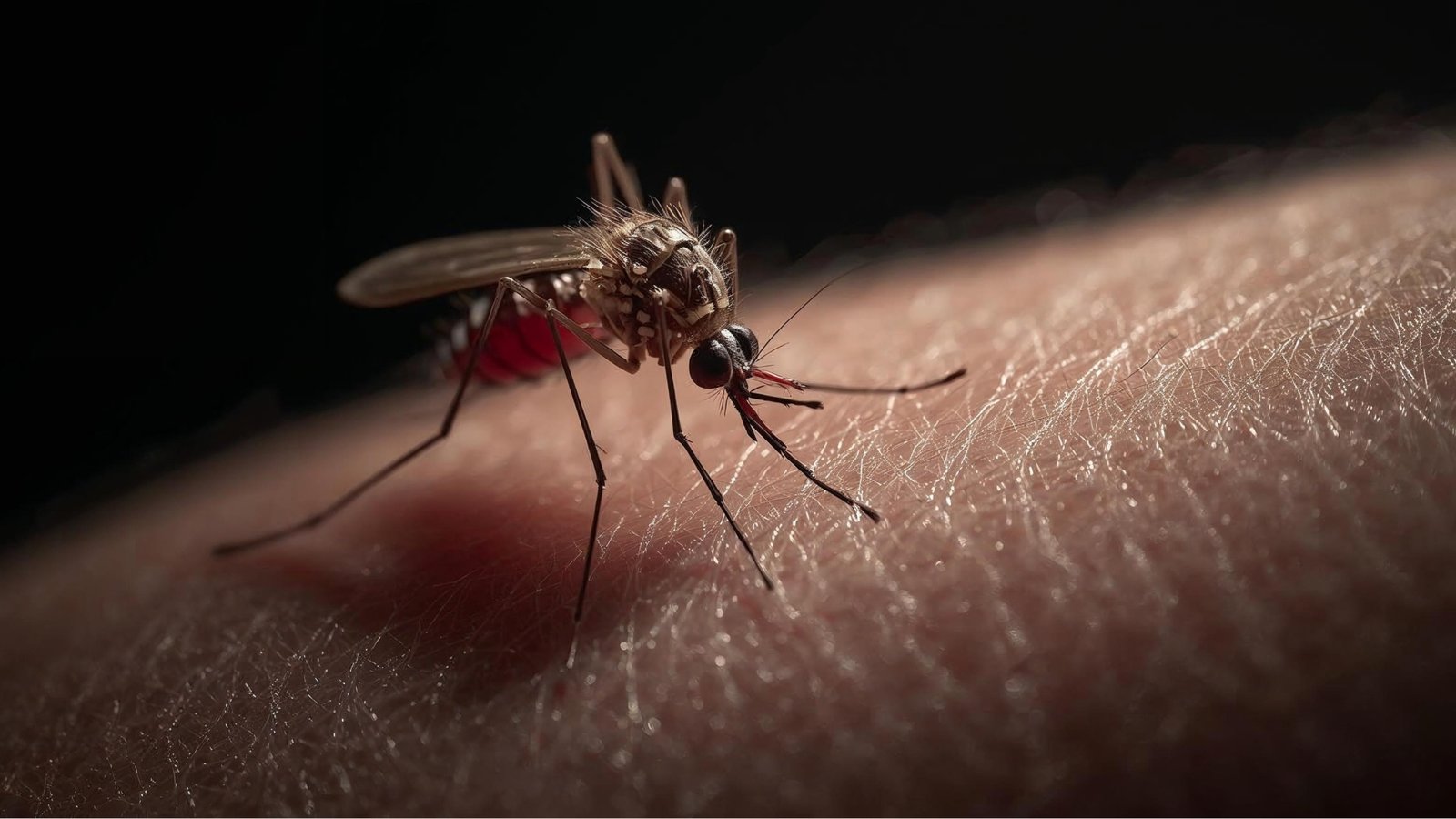
You get Cache Valley virus from the bite of an infected mosquito. It is not spread from person to person by casual contact. One unusual human case was linked to a blood transfusion, but mosquito bites are the ordinary route of infection.
The vectors. CVV has been found in a wide array of mosquito species across several genera, and no single “main” vector has been pinned down. It has been isolated from many mosquitoes that feed on mammals and produce multiple generations a year, including species in the Aedes, Anopheles, Culiseta, and Coquillettidia groups. Anopheles quadrimaculatus and Anopheles punctipennis are thought to play major roles in the transmission cycle, and laboratory work has shown that Aedes species, including the invasive Aedes albopictus and Aedes japonicus, can carry and transmit it.
The transmission cycle. In nature the virus cycles between mosquitoes and mammals. White-tailed deer are considered important reservoir and amplifying hosts: an infected deer carries virus in its blood for roughly 1 to 3 days, long enough for a biting mosquito to pick it up and pass it along. Other wild and domestic mammals, including sheep, are also part of the cycle. In wildlife surveys, deer show high past-infection rates; in one 2023 Arkansas investigation, 11 of 13 culled white-tailed deer (85%) tested positive for antibodies to the virus.
What this means for people. Humans appear to be incidental hosts. Most human exposure produces no illness, and reported disease is rare, but people who spend time where these mosquitoes and mammal hosts overlap are the ones exposed.
Symptoms
Many infections likely cause no symptoms at all. Serologic surveys in areas where the virus circulates have found past-infection rates in people as high as 18%, far more than the handful who have ever been reported sick, which tells you most infections go unnoticed.
When illness does occur, the early symptoms are nonspecific and can include:
- Fever
- Headache
- Nausea and vomiting
- Fatigue
- Sometimes a rash
In the small number of recognized human cases, the illness has ranged from this kind of febrile illness up to neuroinvasive disease, meaning aseptic meningitis or, at the severe end, fatal encephalitis with multiorgan failure. The incubation period in humans is not well established, largely because so few cases have been studied.
Because human data are so limited, the full clinical spectrum, how often infection turns serious, and how often it is fatal, are not yet known.
Who is at higher risk
Human Cache Valley virus disease is rare enough that clear risk groups have not been well defined. What is known:
- Exposure to mosquitoes in areas where the virus circulates is the basic risk. That points to people spending time outdoors in rural and wooded settings where deer, other mammals, and biting mosquitoes are abundant, especially in late summer and fall when mosquito activity peaks in much of the country.
- Severe, neuroinvasive illness has been documented in adults, including a fatal encephalitis case in a young adult in North Carolina in 1995 and a non-fatal meningitis case in a 41-year-old man in Wisconsin in 2003.
It is worth being honest that with fewer than 10 documented human cases, no one can say with confidence who is most likely to become severely ill.
When to see a doctor: Get medical care promptly if you develop a high fever with a severe headache, a stiff neck, confusion, unusual sleepiness, or a seizure, especially after outdoor mosquito exposure in late summer or fall. A stiff neck, disorientation, or seizure can signal inflammation of the brain or its membranes and is an emergency. Call your local emergency number or go to an emergency department.
Diagnosis and treatment
Diagnosis is made by a clinician based on symptoms and exposure history plus laboratory testing, typically looking for antibodies to the virus or for the virus itself in blood or cerebrospinal fluid (spinal fluid). A major reason so few human cases are recorded is that standard laboratories rarely test for Cache Valley virus, so infections are easily missed or attributed to other causes. Testing is usually arranged through public health or specialized reference laboratories.
There is no vaccine for Cache Valley virus in people, and there is no antiviral drug that cures it. Treatment is supportive, meaning care aimed at the symptoms while the body clears the virus. For severe meningeal illness that can include pain control for headache, anti-nausea medicine, and fluids for dehydration, and hospital care when the illness is serious.
How to protect yourself
Because there is no vaccine, prevention means avoiding mosquito bites. The same measures that reduce exposure to other mosquito-borne viruses apply here.
- Use an EPA-registered insect repellent and follow the label directions. See choosing a repellent.
- Wear long-sleeved shirts and long pants when mosquitoes are active, especially outdoors in late summer and fall.
- Treat clothing and gear with 0.5% permethrin (do not apply permethrin directly to skin). See permethrin and clothing treatment.
- Remove standing water around the home weekly so mosquitoes have fewer places to breed.
- Keep window and door screens in good repair and take steps to keep mosquitoes out of the house.
If you raise sheep or goats, talk with a veterinarian about timing breeding to reduce exposure during the vulnerable early weeks of pregnancy, since the virus is an important cause of lamb and kid losses.
Sources
- Centers for Disease Control and Prevention. About Cache Valley. https://www.cdc.gov/cache-valley/about/index.html. Accessed 20 Jul 2026. (Cache Valley virus disease is rare in this country; spread to people by infected mosquitoes; first isolated from Culiseta inornata in Cache Valley, Utah, in 1956; fewer than 10 human cases ever reported; true incidence underestimated because labs rarely test.)
- Centers for Disease Control and Prevention. Clinical Features and Diagnosis of Cache Valley Virus Disease. https://www.cdc.gov/cache-valley/hcp/clinical-features-diagnosis/index.html. Accessed 20 Jul 2026. (Orthobunyavirus, Bunyamwera serogroup; nonspecific early symptoms of fever, headache, nausea, vomiting, fatigue, sometimes rash; presentations from aseptic meningitis to fatal encephalitis; serologic infection rates up to 18% in endemic areas; laboratories rarely test.)
- Centers for Disease Control and Prevention. Treatment and Prevention of Cache Valley Virus Disease. https://www.cdc.gov/cache-valley/hcp/treatment-prevention/index.html. Accessed 20 Jul 2026. (No specific treatment, clinical management is supportive with pain control, antiemetics, and rehydration; no human vaccine available; prevention via EPA-registered repellent, long sleeves and pants, 0.5% permethrin on clothing and gear, indoor mosquito control.)
- Nguyen NL, et al. Second Human Case of Cache Valley Virus Disease. Emerging Infectious Diseases, 2006;12(5). PMC. https://pmc.ncbi.nlm.nih.gov/articles/PMC3374447/. Accessed 20 Jul 2026. (First documented case a fatal, culture-confirmed CVV encephalitis in a young adult in North Carolina in 1995; second case a 41-year-old Wisconsin man in 2003 with aseptic meningitis who recovered; disease rarely diagnosed because labs rarely test.)
- Rogers MB, et al. A One Health Approach to Investigating Cache Valley Virus, Arkansas, USA, July 2023. Emerging Infectious Diseases, 2025;31(6). https://wwwnc.cdc.gov/eid/article/31/6/25-0052_article. Accessed 20 Jul 2026. (Eight human disease cases reported in this country, with likely exposures in North Carolina, Missouri, Wisconsin, Michigan, and New York, plus a transfusion-associated case in Illinois; 11 of 13 culled white-tailed deer (85%) seropositive; sheep seroconverted during pregnancy and produced a stillborn lamb with limb deformities; human cases may be underdiagnosed.)
- Andreadis TG, et al. Spatial-Temporal Analysis of Cache Valley Virus Infection in Anopheline and Culicine Mosquitoes, Northeastern United States, 1997 to 2012. Vector-Borne and Zoonotic Diseases, 2014. PMC. https://www.ncbi.nlm.nih.gov/pmc/articles/PMC4208611/. Accessed 20 Jul 2026. (White-tailed deer as reservoir and amplifying hosts with viremia of 1 to 3 days; Anopheles quadrimaculatus and An. punctipennis likely major vectors; virus isolated from many mammalophilic, multivoltine mosquito species.)
- Chung SI, et al. Cache Valley virus is a cause of fetal malformation and pregnancy loss in sheep. ScienceDirect. https://www.sciencedirect.com/science/article/abs/pii/S0921448803000506. Accessed 20 Jul 2026. (Infection during a susceptible window of gestation causes fetal malformation and pregnancy loss in sheep, including congenital deformities.)
- Yang Y, et al. Cache Valley Virus in Aedes japonicus japonicus Mosquitoes, Appalachian Region, United States. Emerging Infectious Diseases, 2018;24(3). PMC. https://pmc.ncbi.nlm.nih.gov/articles/PMC5823325/. Accessed 20 Jul 2026. (Detection of CVV in the invasive Aedes japonicus mosquito, showing the range of species that can carry the virus.)
Related
- West Nile virus
- La Crosse encephalitis
- Eastern equine encephalitis
- Jamestown Canyon virus
- Remove standing water around your home
- Choosing an insect repellent
Educational reference only. This is not medical advice. If you may have a mosquito-borne illness, contact a healthcare professional. Last reviewed 20 July 2026.