Short answer
Yes, mosquitoes bite dogs and cats. They tend to land on the places where fur is thinnest and skin is easiest to reach, such as the nose, the ears, and the belly. The bite itself is usually minor. It shows up as a small, raised, itchy welt, often less than a centimeter across, and most fade on their own within a few days (Sources 6, 7).
The bite is not the real problem. The danger is what an infected mosquito can carry. Mosquitoes are the only way heartworm spreads to pets, and heartworm disease can be fatal in dogs (Sources 1, 3). That is why a pet’s protection plan should focus far more on heartworm prevention than on the bites themselves.
Where pets get bitten
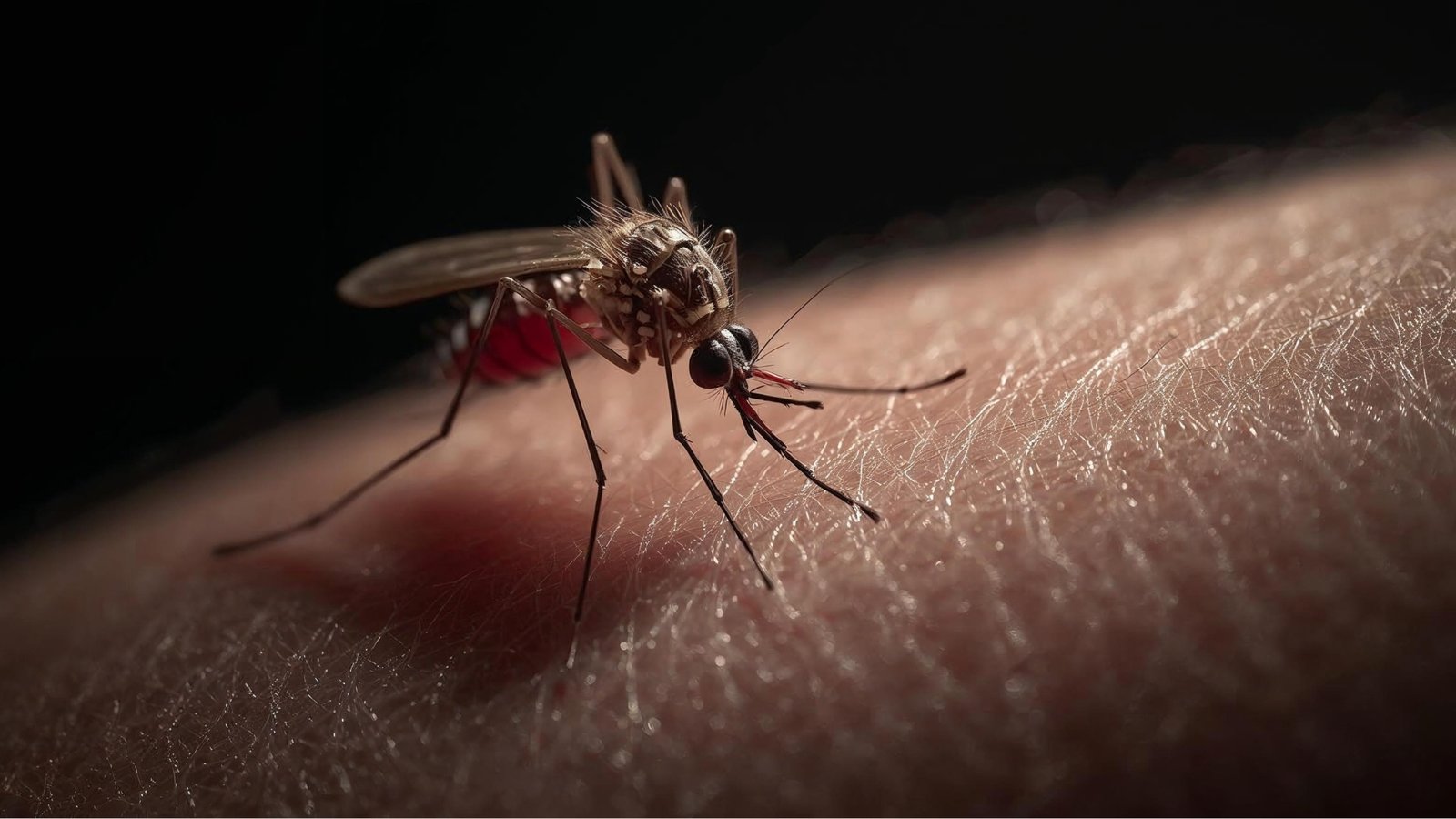
A mosquito feeds by pushing its needle-like mouthpart (the proboscis) through the skin to reach blood. A thick coat gets in the way, so mosquitoes favor the spots where fur is sparse and skin is close to the surface (Source 7).
On dogs and cats, that usually means:
- The nose and muzzle
- The ears
- The belly and inner thighs
- Sparse-furred areas around the eyes
Bites are also simply easier to see on short-haired pets, and harder to spot under a long or dense coat (Source 6). Most pets react little, if at all. Some develop a small welt or scratch at the spot, and pets with more sensitive skin can itch, swell, or lose a little hair from repeated scratching (Sources 6, 7).
The real risk is heartworm
Heartworm is the reason a mosquito matters to a pet owner. The parasite spreads only through a mosquito bite. A pet cannot catch it directly from another animal (Source 1).
Here is how the cycle works. Adult female heartworms living in an infected dog, coyote, fox, or wolf release microscopic young worms, called microfilaria, into the bloodstream. A mosquito draws these up during a blood meal. Over about 10 to 14 days inside the mosquito, they mature into the infective stage. When that mosquito bites again, it deposits the larvae onto a new pet’s skin, and they enter through the bite wound. Inside the new host, the larvae take roughly 6 months to grow into adult heartworms (Source 2).
Dogs are the natural host, where the worms can develop, mate, and reproduce. Cats are an atypical host, and a cat’s immune system kills most larvae before they mature. That is not the same as safety, because in a cat even one or two adult worms can cause serious illness (Source 1).
Heartworm has been diagnosed in all 50 states, and more than a million dogs are estimated to be infected (Sources 2, 3). The reassuring part is that the disease is almost 100 percent preventable with the right care (Source 1).
Prevention rests on a veterinary-prescribed preventive given year-round. These come as monthly chewable pills, monthly topical “spot-on” products, and an injection given every 6 or 12 months (for dogs). Preventives are available only by prescription, and the American Heartworm Society recommends year-round use plus a heartworm test every 12 months (Sources 1, 2, 3). Reducing mosquito exposure helps, but there is no “natural” substitute for a real preventive (Source 3).
For the full picture, see Heartworm in dogs.
Do not use human repellents on pets
Reaching for your own bug spray is a common and serious mistake. DEET, the active ingredient in many human repellents, is not safe for pets. Misuse of DEET-containing products around animals can cause neurological problems, and exposure through the skin, eyes, or mouth can lead to drooling, vomiting, tremors, unsteady walking, and even seizures (Sources 4, 5).
Do not apply any human-only repellent to a dog or cat. Also keep a pet from licking your skin right after you have applied repellent to yourself (Source 5). If you think your pet has been exposed to DEET or another insecticide, contact your veterinarian or the ASPCA Animal Poison Control Center at (888) 426-4435, which is staffed 24 hours a day (Source 4).
Use only products your veterinarian approves for the species in front of you, since something safe for a dog is not automatically safe for a cat (Source 5). For which products are pet-safe and how to lower mosquito exposure around the home, see Mosquitoes and pets.
Soothing a pet’s bite and when to call the vet
For an ordinary bite, the goal is simple: calm the itch and keep your pet from opening the skin. A pet that chews or scratches a bite raw can turn a minor welt into an infection. A loose tee-shirt or an Elizabethan collar (a cone) can stop the scratching while the spot heals (Source 6).
Contact your veterinarian if you notice:
- Constant chewing or scratching that breaks the skin
- Scabbing, excessive swelling, or a foul odor at the site (possible infection)
- Signs of an allergic reaction, such as facial swelling, hives, vomiting, severe diarrhea, or lethargy
A severe allergic reaction (anaphylaxis) can be life-threatening and needs emergency care right away (Source 6). When in doubt, call your veterinarian.
Sources
- American Veterinary Medical Association, “Heartworm disease” (heartworm is transmitted only by mosquitoes and not directly between animals; dogs are the preferred host, cats are an atypical host whose immune system kills most larvae, yet one or two worms can sicken a cat; disease is almost 100 percent preventable; year-round protection, monthly oral or topical products, or injections every 6 or 12 months for dogs). https://www.avma.org/resources-tools/pet-owners/petcare/heartworm-disease (accessed 20 July 2026)
- American Heartworm Society, “Heartworm Basics” (life cycle: microfilaria produced by adult females; 10 to 14 days for larvae to reach the infective stage in the mosquito; roughly 6 months to mature in a new host; diagnosed in all 50 states; test every 12 months and give a preventive year-round). https://www.heartwormsociety.org/pet-owner-resources/heartworm-basics (accessed 20 July 2026)
- American Heartworm Society, “Heartworm Prevention for Dogs” (year-round prevention; monthly chewables, topical spot-on products, and injectable every 6 or 12 months; prescription only; heartworm disease can be fatal and more than a million dogs are estimated to be infected; no “natural” heartworm preventive). https://www.heartwormsociety.org/pet-owner-resources/heartworm-prevention-for-dogs (accessed 20 July 2026)
- ASPCA, “Animal Poison Control” (misuse of DEET-containing products can cause neurological problems in pets; Animal Poison Control Center hotline (888) 426-4435, available 24 hours a day). https://www.aspca.org/pet-care/animal-poison-control (accessed 20 July 2026)
- Zoetis Petcare, “All About Pet-Safe Mosquito Repellents” (reviewed) (avoid all DEET products, especially human-only formulas; exposure can cause drooling, vomiting, tremors, unsteady walking, and seizures; never use human-only repellents on pets; keep pets from licking applied repellent; use veterinarian-approved products). https://www.zoetispetcare.com/blog/article/pet-safe-mosquito-repellents (accessed 20 July 2026)
- PetMD, “Mosquito Bites on Dogs: How to Treat and Prevent” (reviewed by Jamie Lovejoy, DVM) (a bite is a small, less than one centimeter, raised itchy welt; welts are easier to see on short-haired dogs; use a tee-shirt or Elizabethan collar to prevent scratching; allergic signs include facial swelling, vomiting, severe diarrhea, and lethargy, and anaphylaxis can be life-threatening; see a veterinarian for scabbing, excessive swelling, or a foul odor). https://www.petmd.com/dog/general-health/mosquito-bites-on-dogs (accessed 20 July 2026)
- Dogster, “Can Dogs Get Bitten by Mosquitoes? Vet-Approved Signs, Care & Prevention” (bites occur most often on thin-fur areas such as the ears, nose, belly, and around the eyes, where the proboscis can reach skin; sensitive pets may itch, swell, or lose hair from scratching). https://www.dogster.com/dog-health-care/can-dogs-get-bitten-by-mosquitoes (accessed 20 July 2026)
Related
- Heartworm in dogs
- Mosquitoes and pets
- What a mosquito bite looks like
- Treating mosquito bites at home
This page is for general education and is not a substitute for professional veterinary advice. If you are worried about your pet’s bite, health, or a possible toxic exposure, consult a veterinarian.
Last reviewed 20 July 2026.