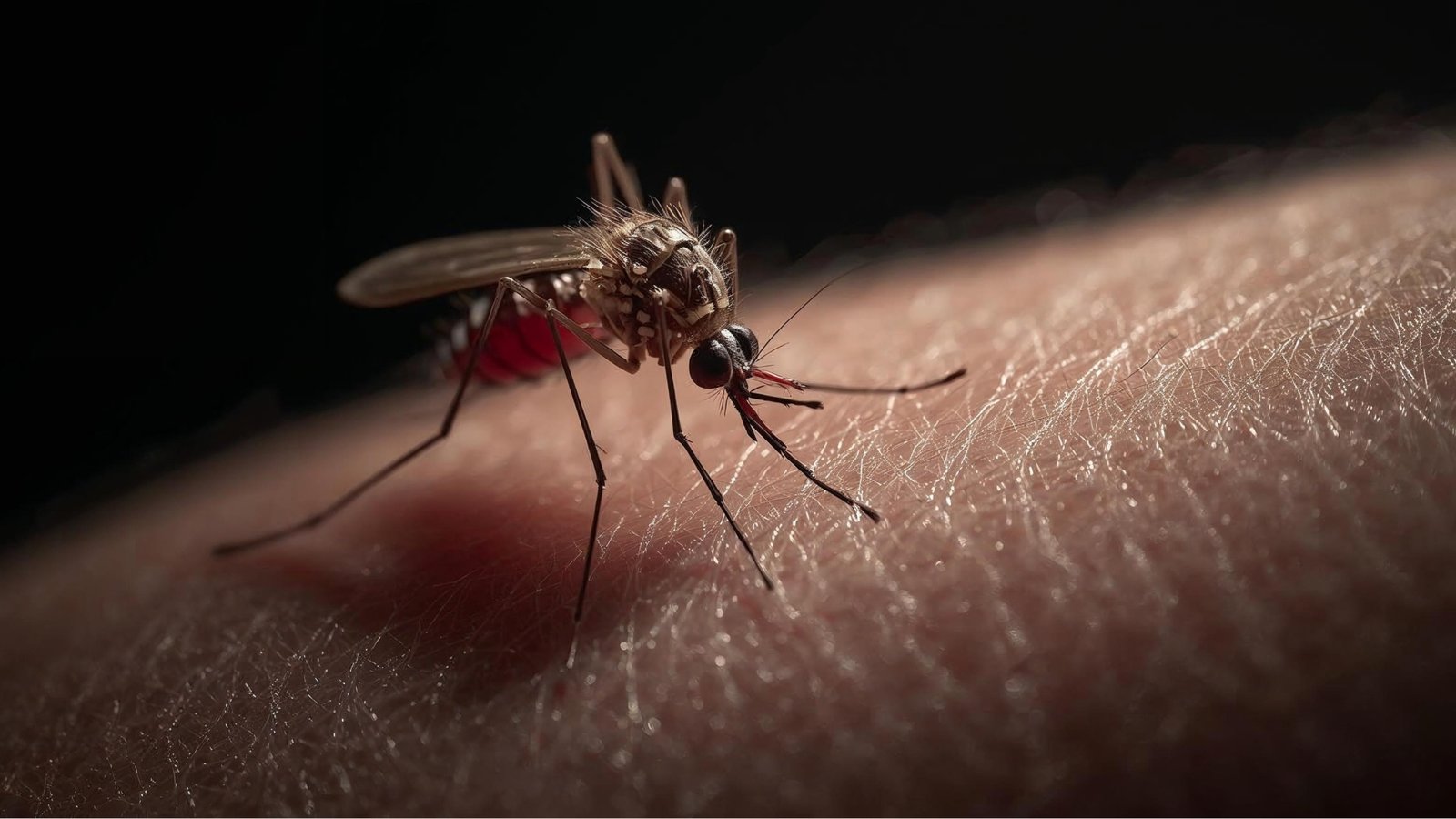
What mosquito bites mean for the animals in your care, and the vet-guided steps that actually protect them.
The short answer
Mosquitoes do not just annoy your animals, they can carry disease to them. For pets, the risk falls into two main buckets. In dogs and cats, the concern is heartworm, a parasite that only mosquitoes can transmit and that lodges in the heart and lungs. In horses, the concern is a group of mosquito-borne viruses that inflame the brain, chiefly West Nile virus and Eastern and Western equine encephalitis.
The reassuring part is that these threats are largely preventable. Dogs and cats are protected by year-round, vet-prescribed heartworm preventives. Horses are protected by vaccines that veterinary groups consider a basic standard of care. On top of that, the same bite-reduction habits that help you, such as removing standing water and limiting exposure at dawn and dusk, help your animals too. One important warning runs through all of it: do not put your own insect repellent on a pet.
Dogs and cats: heartworm
Heartworm disease is caused by a parasitic worm, and mosquitoes are the only way it spreads. As the American Veterinary Medical Association puts it, “Heartworms can only be transmitted by mosquitoes, your pet can’t catch them directly from another animal.” When a mosquito bites an infected animal it picks up microscopic immature worms, which develop inside the mosquito over about 10 to 14 days into a stage that can infect the next animal it bites. Heartworms have been found in all 50 states.
In dogs, the worms can grow to adults that live in the heart and lungs and cause lasting, sometimes fatal damage. In cats, the picture is different. The cat is an atypical host, and according to the American Heartworm Society “most worms in cats do not survive to the adult stage,” with infected cats typically carrying just one to three worms. That does not make cats safe. Even immature worms cause a condition called heartworm associated respiratory disease (HARD), and critically, the drug used to clear heartworms from dogs cannot be used in cats, so prevention is the only protection a cat has.
Prevention for both species means a medication prescribed by your veterinarian, given on a schedule and not skipped. These come as monthly chewables, monthly topicals, or longer-acting injections, and the American Heartworm Society advises owners to “think 12”: test the pet every 12 months and give preventive 12 months a year. Heartworm disease is close to fully preventable with the right care.
For the full picture on how the parasite works, its symptoms, testing, and treatment, see the dedicated dog heartworm page in the Related section below.
Horses: West Nile and equine encephalitis
Horses face a different mosquito-borne danger: viruses that attack the nervous system. A mosquito picks the virus up from infected birds and passes it to the horse. The two main concerns are West Nile virus (WNV) and the equine encephalitis viruses, Eastern (EEE) and Western (WEE).
These are serious illnesses. For horses showing clinical signs of West Nile infection, the American Association of Equine Practitioners (AAEP) puts the case fatality rate at “approximately 33%,” and about 40 percent of survivors still have gait or other after-effects six months later. Eastern equine encephalitis is worse: the AAEP cites mortality of 75 to 95 percent in affected horses, usually within two to three days of the first signs. There is no effective treatment once one of these infections takes hold.
The good news, and the key difference from the human side of these diseases, is that horses have effective vaccines. The AAEP classifies West Nile vaccination as “a core vaccine and an essential standard of care for all horses in North America,” and lists four USDA-licensed West Nile vaccines. It likewise states that “immunizations against EEE and WEE are core prophylaxis for all horses residing in or traveling to North America.” For previously vaccinated adult horses, the standard is annual revaccination in spring, before mosquito season begins. Horses in high-risk situations, or in regions with a long or year-round mosquito season, may need boosters more than once a year. Your veterinarian will set the right schedule.
Do not use human repellents on pets
This one is worth stating plainly: the bug spray in your cabinet is not safe for your dog, cat, or horse. DEET, the active ingredient in many human repellents, is toxic to companion animals. The ASPCA notes DEET “can cause significant clinical signs in companion animals,” and its poison-control specialists warn that problems arise when owners apply human products to pets or when pets get into a container. Reported effects range from drooling and vomiting to eye injury, and with high-concentration products, neurological signs such as “ataxia, disorientation, tremors and seizures.”
Cats are especially vulnerable to many chemicals because of how their livers process compounds, so a product that a dog might tolerate can be dangerous to a cat. Never assume a repellent, spray, or spot-on made for one species is safe for another. Use only mosquito-control products your veterinarian recommends for that specific animal, and follow the label. If you think your pet has been exposed to a human repellent, treat it as a possible poisoning and call your vet.
How to protect your animals
The strongest protection combines vet-prescribed products with plain environmental steps that cut down on mosquitoes:
- Give year-round heartworm preventive to dogs and cats, prescribed by your veterinarian, and keep to the testing schedule.
- Vaccinate horses against West Nile virus and Eastern and Western equine encephalitis on the schedule your vet sets, before mosquito season.
- Remove standing water where mosquitoes breed: buckets, troughs, tires, clogged gutters, tarps, and anything that holds water for more than a few days. Refresh water troughs often.
- Keep animals in during peak biting hours. Mosquito feeding tends to peak around dawn and dusk, so stabling horses and keeping dogs and cats indoors at those times reduces bites.
- Use fans in barns and stalls, since even a light breeze makes it harder for mosquitoes to land on horses.
- Use only vet-approved repellents or spot-ons for each species. Do not substitute human products.
None of the bite-reduction steps replaces the medical protection. Repellents and standing-water control are additions to preventive drugs and vaccines, not stand-ins for them.
When to call your veterinarian
Call your veterinarian if you notice any of the following, and mention recent mosquito exposure:
- In dogs and cats: persistent coughing, tiredness or reluctance to exercise, decreased appetite, weight loss, or in cats, asthma-like attacks or vomiting. Also call to start or restart a heartworm preventive, or if a dose was missed.
- In horses: stumbling, weakness, muscle twitching, a wobbly or uncoordinated gait, circling, drooping lip, fever, or behavior changes. Nervous-system signs in a horse are an emergency; call at once.
- Any pet you believe has been exposed to a human insect repellent or another suspected toxin.
When in doubt, call. Many of these diseases move fast, and early veterinary involvement gives your animal the best chance.
Sources
- American Veterinary Medical Association, “Heartworm disease.” Heartworms are transmitted only by mosquitoes; affect dogs, cats, and ferrets; found in all 50 states; prevented with vet-supplied preventives; almost 100% preventable. https://www.avma.org/resources-tools/pet-owners/petcare/heartworm-disease (accessed 20 July 2026)
- American Heartworm Society, “Heartworm Basics.” Mosquito life-cycle role (10 to 14 days), affects dogs, cats, and ferrets, preventives are prescription-only, and the “think 12” testing and prevention recommendation. https://www.heartwormsociety.org/pet-owner-resources/heartworm-basics (accessed 20 July 2026)
- American Heartworm Society, “Heartworm in Cats.” Cats are atypical hosts, most worms do not reach adulthood, typically one to three worms, HARD, and no approved feline treatment so prevention is the only protection. https://www.heartwormsociety.org/heartworms-in-cats (accessed 20 July 2026)
- American Association of Equine Practitioners, “West Nile Virus Vaccination Guidelines.” WNV is a core vaccine and essential standard of care, four USDA-licensed vaccines, approximately 33% case fatality in horses with clinical signs, 40% of survivors with residual effects at six months, and annual spring revaccination. https://aaep.org/resource/west-nile-virus-vaccination-guidelines/ (accessed 20 July 2026)
- American Association of Equine Practitioners, “Eastern & Western Equine Encephalomyelitis Vaccination Guidelines.” EEE and WEE immunization is core prophylaxis for all horses in North America; annual revaccination before vector season; more frequent for high-risk horses. https://aaep.org/resource/eastern-western-equine-encephalomyelitis-vaccination-guidelines/ (accessed 20 July 2026)
- UC Davis School of Veterinary Medicine, Center for Equine Health, “Eastern Equine Encephalitis (EEE).” EEE is mosquito-borne, mortality of 75 to 95 percent (per AAEP) usually within two to three days of signs, vaccine available but no effective treatment once infection establishes. https://ceh.vetmed.ucdavis.edu/health-topics/eastern-equine-encephalitis-eee (accessed 20 July 2026; page returned 403 to automated fetch, claim taken from search-result snippet of the same URL)
- USDA Animal and Plant Health Inspection Service, “Disease Alert: Equine Encephalitis (EEE/WEE/VEE).” Equine encephalitis viruses and West Nile virus are spread by infected mosquitoes and can cause severe brain inflammation in equids; prevention includes eliminating standing water, using fans, and limiting dawn and dusk exposure. https://www.aphis.usda.gov/livestock-poultry-disease/equine/encephalitides (accessed 20 July 2026; page timed out on automated fetch, claim taken from search-result snippet of the same URL)
- ASPCApro (ASPCA), “Don’t DEET That Dog!” DEET can cause significant clinical signs in companion animals; exposure occurs when owners apply human products to pets or pets access containers; effects include GI upset, eye injury, and, at high concentration, ataxia, disorientation, tremors, and seizures. https://www.aspcapro.org/resource/dont-deet-dog (accessed 20 July 2026)
Related
- Dog heartworm: how the parasite works, symptoms, testing, and treatment
- West Nile virus: the mosquito-borne threat to people and horses
- Eastern equine encephalitis: the rare but deadly brain infection
- How mosquito transmission works: from bite to bloodstream
- Reducing standing water around your home and property
- Peak biting hours: when mosquitoes are most active
This page is general reference information, not veterinary advice. Every animal is different. For diagnosis, prevention products, vaccine schedules, or any concern about your pet’s health, consult a licensed veterinarian.
Last reviewed 20 July 2026.