Short answer
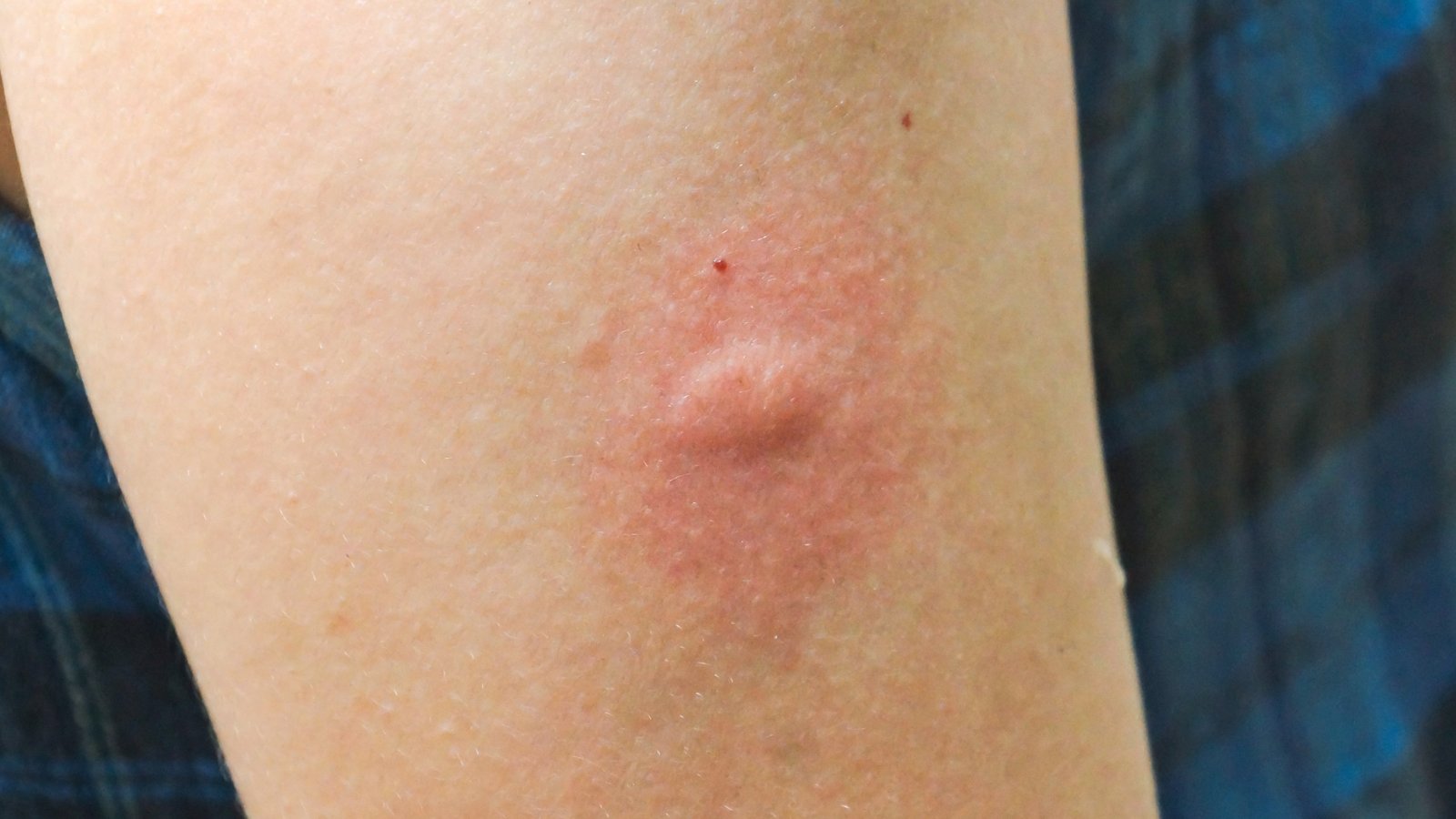
A mosquito bite is usually a round, puffy, reddish or skin-colored bump that shows up within a few minutes of the bite and quickly turns itchy. The bump is soft and raised at first. On many people it looks like a small welt with a slightly pink or red flush around it, and it often has a tiny dot in the center where the mosquito fed (Sources 1, 2, 3).
Most bites are harmless and clear up on their own within a few days (Source 2).
The typical appearance
The classic mosquito bite is a raised bump, sometimes called a wheal, that sits slightly above the surrounding skin. A few things are typical:
- Shape and feel. It is usually round and puffy, soft to the touch, and a bit swollen at the edges (Sources 1, 3).
- A tiny center dot. You can often see a small dark spot in the middle where the mosquito’s mouthparts pierced the skin (Source 2).
- Color. On lighter skin the bump tends to look pink or red. The raised bump may also change color as it develops (Source 2).
- Color on darker skin. Redness can be harder to see on darker skin. Instead of an obvious red flush, the area may look violaceous (purple-tinged), gray, or brown, or it may appear close to the surrounding skin color while still feeling raised and itchy (Source 9).
The itch is the most reliable clue. The bump is your body reacting to proteins in mosquito saliva, and that reaction is what makes it swell and itch (Sources 4, 5).
How it changes over time
A mosquito bite tends to move through a predictable sequence:
- Within minutes. A puffy, reddish bump appears soon after the bite (Sources 1, 3).
- A day or so later. The soft puffy bump often settles into a harder, itchy, reddish-brown bump, and you may notice several of them if you were bitten more than once (Sources 1, 3).
- Over the next few days. The bump gradually flattens, the itch fades, and the mark usually clears on its own. Most bites last only a few days (Source 2).
Scratching can slow this down. Breaking the skin keeps the bump irritated and opens the door to infection (Sources 6, 8).
How it varies from person to person
Not everyone reacts to a mosquito bite the same way, and the difference is mostly about the immune system.
- Children and the newly exposed react more. Young children and people whose immune systems have not yet been desensitized to mosquito saliva tend to react more strongly, with bigger, more noticeable bumps (Sources 4, 5).
- Some barely react. People who have been bitten many times over the years often build up tolerance and may show only a small bump, or almost nothing at all (Source 4).
- Older adults and people with reduced immunity can also fall on the stronger-reacting end (Sources 4, 5).
So two people bitten by the same mosquito on the same evening can end up with very different-looking bumps.
Big or blistering reactions
Some people get more than a small bump. A larger local reaction can bring a wide area of swelling, soreness, and redness around the bite (Source 1).
The strongest version is sometimes called skeeter syndrome, an allergic reaction to proteins in mosquito saliva. It shows up as large, itchy, swollen welts, and the area can feel warm and hard. Small blisters may form. Symptoms often start about 8 to 10 hours after the bite and usually settle within 3 to 10 days. It is most common in young children, whose immune systems have not yet been desensitized to mosquito saliva (Source 4). See our page on large local reactions and skeeter syndrome for more detail. [RELATED: Large local reactions and skeeter syndrome]
When the appearance suggests something else
A plain mosquito bite is itchy but calm. A few signs point to something beyond a normal bite:
- Infection. Watch for a reddish streak spreading out from the bite, blisters, pus or drainage, warmth, or increasing pain. These can signal a skin infection and are worth medical attention (Sources 6, 8).
- Whole-body or severe symptoms. Trouble breathing, swelling of the lips, tongue, or face, a racing heartbeat, dizziness, or vomiting call for emergency care (Source 6).
- It might be a different bite. Bed bug, flea, tick, and other bites can look similar. If the pattern, location, or timing does not fit a mosquito, compare the appearance before assuming. See our comparison pages to tell them apart. [RELATED: Mosquito bites vs other bug bites]
When in doubt, or if a bite is not improving after a few days, a clinician or board-certified dermatologist can take a look (Source 6).
Sources
- Mayo Clinic, Mosquito bites (Symptoms and causes). Puffy reddish bump within minutes; harder itchy reddish-brown bump a day later; larger reactions and who reacts more strongly. https://www.mayoclinic.org/diseases-conditions/mosquito-bites/symptoms-causes/syc-20375310 (accessed 2026-07-20; page returned 403, content confirmed via search result snippet)
- Cleveland Clinic, Mosquito Bites: What They Look Like, Why They Itch and Treatment. Raised circular bump, may change color, small dark spot in the center, bites last a few days. https://my.clevelandclinic.org/health/diseases/17695-mosquito-bites (accessed 2026-07-20)
- CDC, About Mosquito Bites. Puffy reddish bump a few minutes after the bite; hard itchy reddish-brown bump a day or so later. https://www.cdc.gov/mosquitoes/about/about-mosquito-bites.html (accessed 2026-07-20; page returned 403, content confirmed via search result snippet)
- Cleveland Clinic, Skeeter Syndrome. Large itchy swollen welts, warmth, hard lumps, color changes, onset 8 to 10 hours, resolves 3 to 10 days, most common in young children not yet desensitized, plus infection warning signs. https://my.clevelandclinic.org/health/diseases/23289-skeeter-syndrome (accessed 2026-07-20)
- Asthma and Allergy Foundation of America (AAFA), Biting Insect Allergy. Typical reaction of pain, redness, itching, and minor swelling; stronger reactions in children, older adults, and people with impaired or undeveloped immunity. https://aafa.org/allergies/types-of-allergies/insect-allergy/biting-insect-allergy-mosquitoes-flies-kissing-bugs/ (accessed 2026-07-20)
- American Academy of Dermatology (AAD), Bug bites and stings: When to see a dermatologist. Emergency signs and when to seek a dermatologist. https://www.aad.org/public/everyday-care/injured-skin/bites/bug-bites-see-dermatologist (accessed 2026-07-20)
- American Academy of Dermatology (AAD), Tips to prevent and treat bug bites. Itch relief and not scratching. https://www.aad.org/public/everyday-care/injured-skin/bites/prevent-treat-bug-bites (accessed 2026-07-20)
- Cleveland Clinic, Bug Bites and Stings (First Aid). Signs of skin infection, a reddish streak extending from the area, blisters, and pus drainage. https://my.clevelandclinic.org/health/diseases/bug-bites (accessed 2026-07-20)
- Kaur et al., Diagnostic Disparities in Erythema Visibility: A Call to Redefine Inflammatory Assessment in Diverse Skin Tones, Cureus (2025). On darker skin, inflammation may appear violaceous, gray, or brown rather than red. https://pmc.ncbi.nlm.nih.gov/articles/PMC12626340/ (accessed 2026-07-20)
Related
- [RELATED: Large local reactions and skeeter syndrome]
- [RELATED: Mosquito bites vs other bug bites]
- [RELATED: How to stop a mosquito bite from itching]
- [RELATED: How long does a mosquito bite last]
Educational note: This page is for general information and is not medical advice. If a bite worsens, shows signs of infection, or comes with severe or whole-body symptoms, contact a clinician.
Last reviewed 20 July 2026.