The short answer
Two things prevent mosquito bites, and they work best together.
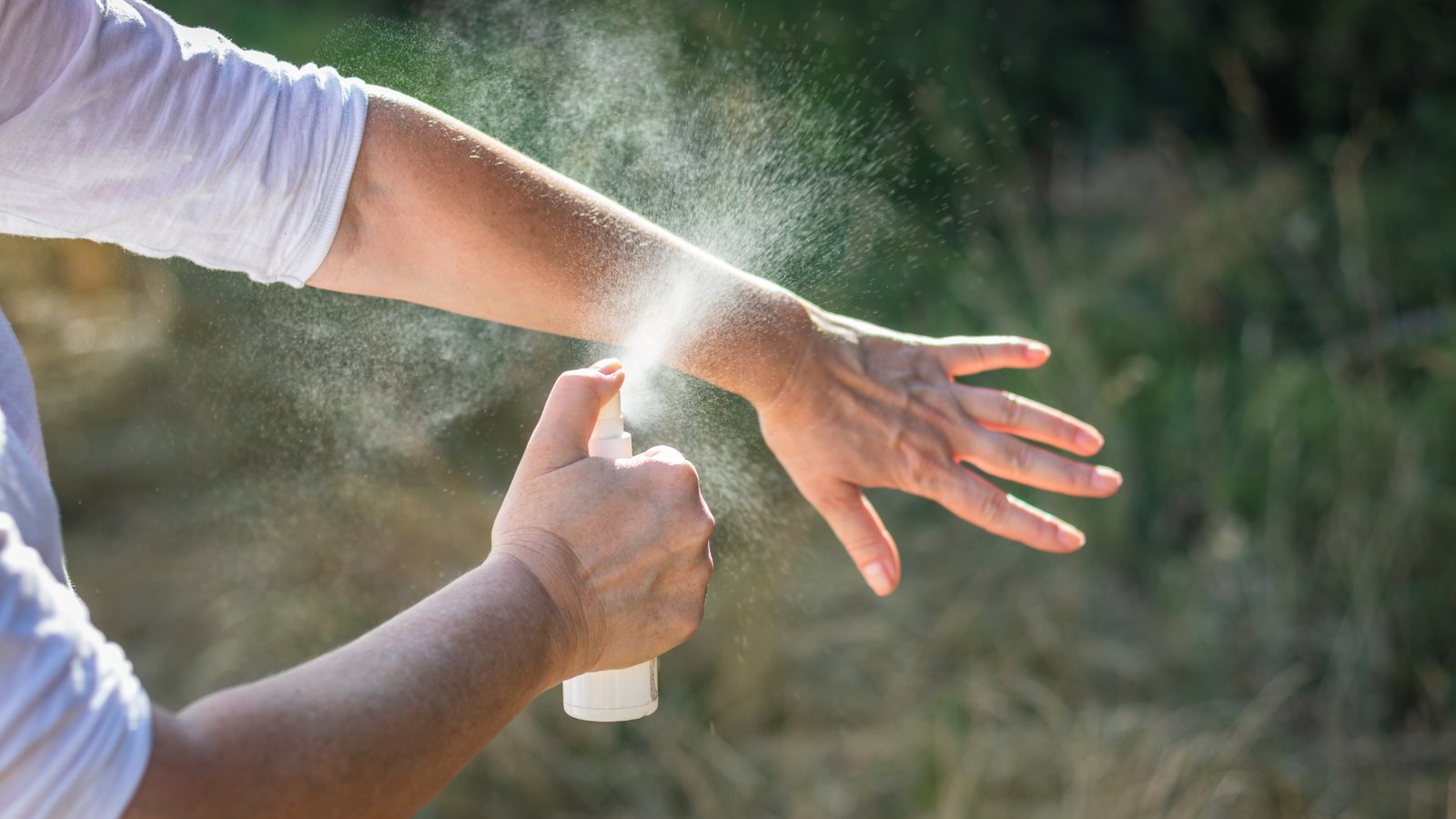
First, stop bites on your body. Put an EPA-registered repellent on exposed skin and wear loose, long clothing. The Environmental Protection Agency (EPA) registers skin-applied repellents only after evaluating them for human safety and effectiveness when used as directed, and the Centers for Disease Control and Prevention (CDC) recommends products with one of these registered active ingredients: DEET, picaridin, IR3535, oil of lemon eucalyptus (OLE), the OLE-derived compound PMD, or 2-undecanone (CDC, Preventing Mosquito Bites; EPA, Skin-Applied Repellent Ingredients). When used as directed, these repellents are considered safe and effective, including for people who are pregnant or breastfeeding (CDC, Preventing Mosquito Bites).
Second, stop mosquitoes from breeding near you. Mosquitoes lay eggs in standing water, so the single most useful yard task is emptying anything that holds water about once a week (CDC, Preventing Mosquito Bites). A repellent protects one person for a few hours. Removing standing water reduces the number of mosquitoes in the first place.
Repellents that work
An EPA-registered repellent has been reviewed for both safety and effectiveness, and the registration number appears on the label. That review is what separates a repellent that works from a product that only claims to (EPA, Skin-Applied Repellent Ingredients). The four ingredients below are the ones CDC names as reliable choices.
- DEET. The most studied repellent, effective against mosquitoes and ticks, and sold in more than 500 registered products (EPA, Skin-Applied Repellent Ingredients). Higher concentration means longer protection, not stronger protection, and NPIC notes that products with more than 50 percent DEET offer no extra protection time (NPIC, Insect Repellents). See DEET: how it works and how to use it.
- Picaridin. A synthetic compound modeled on piperine, the pungent component of black pepper. It repels mosquitoes, biting flies, ticks, fleas, and chiggers, and its duration of action is comparable to some 20 to 30 percent DEET formulations (NPIC, Picaridin Fact Sheet; EPA, Skin-Applied Repellent Ingredients). Skin or eye irritation is possible but uncommon (NPIC, Picaridin Fact Sheet). See Picaridin explained.
- IR3535. Registered in about 45 products and recommended by CDC as an effective active ingredient (EPA, Skin-Applied Repellent Ingredients; CDC, Preventing Mosquito Bites). See IR3535 explained.
- Oil of lemon eucalyptus (OLE) and PMD. OLE is a plant-derived repellent, and PMD is its refined active compound. This is the one plant-based option CDC and EPA place alongside DEET and picaridin (CDC, Preventing Mosquito Bites; EPA, Skin-Applied Repellent Ingredients). Important limit: OLE and PMD products should not be used on children under three years old, per product labeling (EPA, Using Insect Repellents Safely and Effectively; NPIC, Insect Repellents). This is different from “essential oil of lemon eucalyptus” sold as an untested fragrance. See Oil of lemon eucalyptus and PMD.
How to use any of them: apply to exposed skin (not under clothing), reapply on the schedule the label gives, and remember that sweat, water, and rubbing from clothing shorten how long a repellent lasts (NPIC, Insect Repellents). Wash treated skin when you come back indoors (NPIC, Insect Repellents). Protect infants under two months with netting rather than repellent, and follow label age guidance for older children (CDC, Preventing Mosquito Bites; NPIC, Insect Repellents).
Repellent active ingredients at a glance
| Active ingredient | Repels | Duration notes | Age and use notes | Source |
|---|---|---|---|---|
| DEET | Mosquitoes, ticks | Longer with higher percent, but above ~50 percent adds no extra protection time | No EPA age restriction; use netting for infants under 2 months | EPA; NPIC; CDC |
| Picaridin | Mosquitoes, biting flies, ticks, fleas, chiggers | Comparable to some 20 to 30 percent DEET products | Irritation uncommon | NPIC; EPA |
| IR3535 | Mosquitoes | Follow label reapplication timing | CDC-recommended active ingredient | EPA; CDC |
| Oil of lemon eucalyptus / PMD | Mosquitoes | Follow label reapplication timing | Do not use on children under 3 | CDC; EPA |
Numbers put the duration point in context. In a controlled comparison, a formulation with 23.8 percent DEET protected against bites for about five hours (roughly 301 minutes), while DEET-impregnated wristbands provided essentially no protection (Fradin and Day, 2002).
Physical protection
Repellent is only one layer. Putting a barrier between you and the mosquito is just as important.
- Clothing. Wear loose-fitting, long-sleeved shirts and long pants. Loose fabric matters because mosquitoes can bite through fabric pressed against skin (CDC, Preventing Mosquito Bites).
- Permethrin-treated clothing and gear. Permethrin is an insecticide that kills or repels mosquitoes on contact with treated fabric. CDC recommends a 0.5 percent permethrin product to treat clothing, boots, and camping gear, and the treatment keeps working through several washings. Do not apply permethrin directly to skin (CDC, About Permethrin-Treated Clothing and Gear). See Permethrin for clothing and gear.
- Screens and nets. Keep window and door screens in good repair to keep mosquitoes out of living spaces, and use a bed net where mosquitoes get indoors or where you sleep in the open (CDC, Preventing Mosquito Bites).
Around your home
Every mosquito starts in standing water, so the most effective home step is denying them a place to lay eggs. Once a week, empty and scrub, turn over, cover, or throw out anything that holds water: tires, buckets, planters and flowerpot saucers, toys, birdbaths, wading pools, tarps, and clogged gutters (CDC, Preventing Mosquito Bites). Weekly matters because it interrupts the mosquito life cycle before larvae become biting adults. Change birdbath and pet-bowl water often, and keep pool and rain-barrel water covered or circulating.
This one habit does more than any spray to lower the mosquito population around your home. See Source reduction: removing standing water.
What does not work
Plenty of popular products have been tested and failed. Skipping them saves money and, more importantly, saves you from a false sense of protection.
- Repelling plants as decor. A citronella plant, basil, or lavender in a pot releases far too little of any active compound to protect you. The repellent oils only work when extracted and concentrated, not while sitting in soil. A citronella candle likewise showed no measurable effect on mosquito attraction in testing (Rodriguez et al., 2017). See Do repellent plants work?.
- Wristbands and bracelets. DEET-impregnated wristbands provided essentially no bite protection in a controlled trial, and a separate device study found no bracelet caused any significant reduction in mosquito attraction (Fradin and Day, 2002; Rodriguez et al., 2017). A repellent has to cover the skin you want protected, and a band on the wrist does not. See Do repellent wristbands work?.
- Ultrasonic and sound-based devices and apps. Electronic repellents that emit high-pitched sound are marketed to drive mosquitoes away. A Cochrane review of field studies found no evidence that they repel mosquitoes or prevent bites, and a device study described the sonic unit it tested as “the modern equivalent of snake oil” (Cochrane review, Electronic Mosquito Repellents; Rodriguez et al., 2017). Phone apps that claim the same effect rely on the same disproven idea. See Do ultrasonic mosquito repellers work?.
A simple layered plan
You do not need every product on the shelf. You need a few that work, used together.
- On your body: apply an EPA-registered repellent (DEET, picaridin, IR3535, or OLE/PMD) to exposed skin and reapply per the label.
- On your clothes: wear loose long sleeves and pants, and treat outdoor clothing and gear with 0.5 percent permethrin for high-exposure days.
- At your door: keep screens intact, and use a net where mosquitoes get in or where you sleep outdoors.
- In your yard: once a week, empty or cover everything that holds standing water.
- Skip: decorative repelling plants, wristbands, and ultrasonic gadgets and apps.
Layers one and two protect the individual for the next few hours. Layers three and four lower how many mosquitoes reach you at all. Together they do far more than any single product.
Sources
- CDC, Preventing Mosquito Bites (recommended EPA-registered ingredients, clothing, standing-water schedule, safety in pregnancy). https://www.cdc.gov/mosquitoes/prevention/index.html (accessed 20 July 2026; page returned HTTP 403 on direct fetch, claims verified from search-indexed text of the same URL).
- CDC, About Permethrin-Treated Clothing and Gear (0.5 percent permethrin, not for skin, protection through washings). https://www.cdc.gov/mosquitoes/prevention/about-permethrin-treated-clothing-and-gear.html (accessed 20 July 2026; HTTP 403 on direct fetch, claims verified from search-indexed text of the same URL).
- EPA, Skin-Applied Repellent Ingredients (registered active ingredients and product counts). https://www.epa.gov/insect-repellents/skin-applied-repellent-ingredients (accessed 20 July 2026).
- EPA, Using Insect Repellents Safely and Effectively (OLE/PMD not for children under 3, safe use). https://www.epa.gov/insect-repellents/using-insect-repellents-safely-and-effectively (accessed 20 July 2026).
- NPIC, Insect Repellents Fact Sheet (how repellents work, reapplication, washing off, children, DEET above 50 percent adds no extra protection). https://npic.orst.edu/factsheets/repellents.html (accessed 20 July 2026).
- NPIC, Picaridin General Fact Sheet (picaridin origin, pests repelled, duration comparable to 20 to 30 percent DEET, irritation uncommon). https://npic.orst.edu/factsheets/PicaridinGen.html (accessed 20 July 2026).
- Fradin MS, Day JF. Comparative Efficacy of Insect Repellents against Mosquito Bites. New England Journal of Medicine, 2002 (23.8 percent DEET protected about five hours; DEET wristbands gave essentially no protection). https://www.nejm.org/doi/full/10.1056/NEJMoa011699 (accessed 20 July 2026; publisher page returned HTTP 403, figures verified from search-indexed text and the full-text copy hosted at maine.gov).
- Rodriguez SD, et al. Efficacy of Some Wearable Devices Compared with Spray-On Insect Repellents. Journal of Insect Science, 2017 (bracelets caused no significant reduction; sonic device called “snake oil”; citronella candle no measurable effect; 30 percent PMD and 98 percent DEET both strongly effective). https://pmc.ncbi.nlm.nih.gov/articles/PMC5388317/ (accessed 20 July 2026).
- Cochrane review, Electronic Mosquito Repellents for Preventing Mosquito Bites and Malaria Infection (no evidence of a repelling effect in field studies). https://www.cochrane.org/evidence/CD005434_electronic-mosquito-repellents-preventing-mosquito-bites-and-malaria-infection (accessed 20 July 2026).
Explore prevention
- DEET: how it works and how to use it
- Picaridin explained
- IR3535 explained
- Oil of lemon eucalyptus and PMD
- Permethrin for clothing and gear
- Source reduction: removing standing water
- Do repellent plants work?
- Do repellent wristbands work?
- Do ultrasonic mosquito repellers work?
Educational note: This page is general reference information, not medical or pest-control advice. Always read and follow the product label, which is the legally binding instruction for any repellent or pesticide. For guidance on a specific health condition, pregnancy, or a young child, talk with a clinician.
Last reviewed 20 July 2026.