The short answer
Simply growing citronella, marigolds, lavender, basil, or a nursery plant labeled “mosquito plant” does little to nothing to reduce the mosquito bites you get in your yard. The idea is one of the most persistent yard-and-garden myths there is, and controlled testing has not backed it up.
There is a grain of truth buried inside the myth. Some of these plants do contain aromatic oils, and a few of those oils can repel mosquitoes, but only when the oil is extracted or the leaves are crushed and the material is applied to skin. A plant sitting quietly in a pot is not doing that (University of Florida IFAS, source 3; University of Wisconsin-Madison, source 2).
Why growing plants does not protect you
A living plant does not continuously release a cloud of repellent oil into the air around it. The volatile compounds stay largely locked inside the leaf until something releases them, such as crushing, distillation, or heating. Left alone, the plant gives off only trace amounts, far below what would be needed to keep mosquitoes off a person standing nearby.
Extension scientists make this point plainly. The oils in these plants “need to be extracted and used in concentrated forms, like sprays, to be truly effective,” and unless you are extracting the oils and applying them, the plants “are not doing much just sitting in your garden” (University of Florida IFAS, quoting extension agent Liah Continentino, source 3). The University of Wisconsin-Madison mosquito program states the conclusion even more directly: for area repelling by plants, “plants don’t work” (University of Wisconsin-Madison, source 2).
The “citronella plant” confusion
Two very different plants get called “citronella,” and the mix-up drives a lot of the myth.
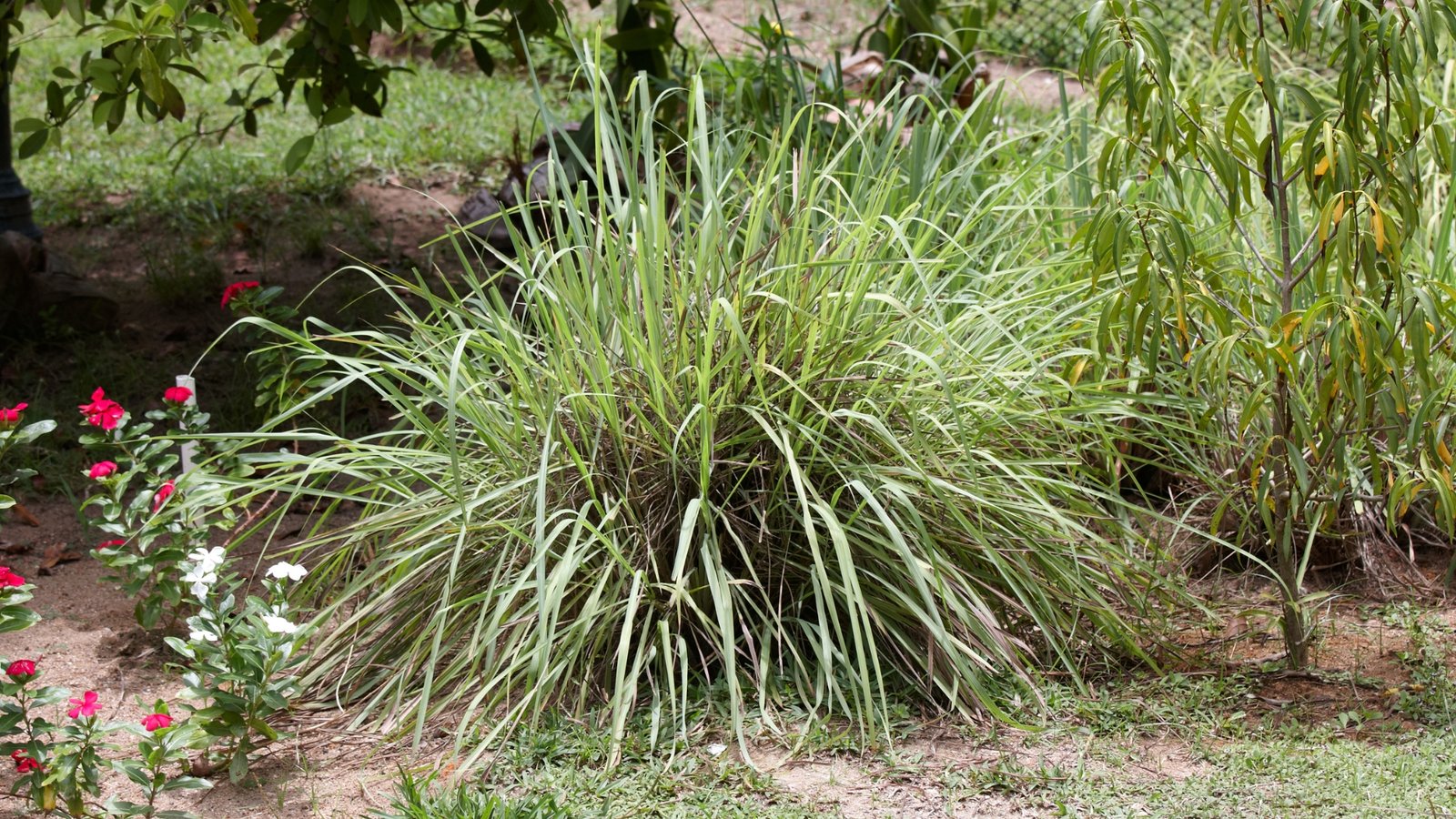
True citronella grass is Cymbopogon (the same genus as lemongrass), a tall tropical grass. Citronella oil is distilled from it and is a recognized repellent ingredient. That is a real plant with a real oil, but the oil has to be extracted first.
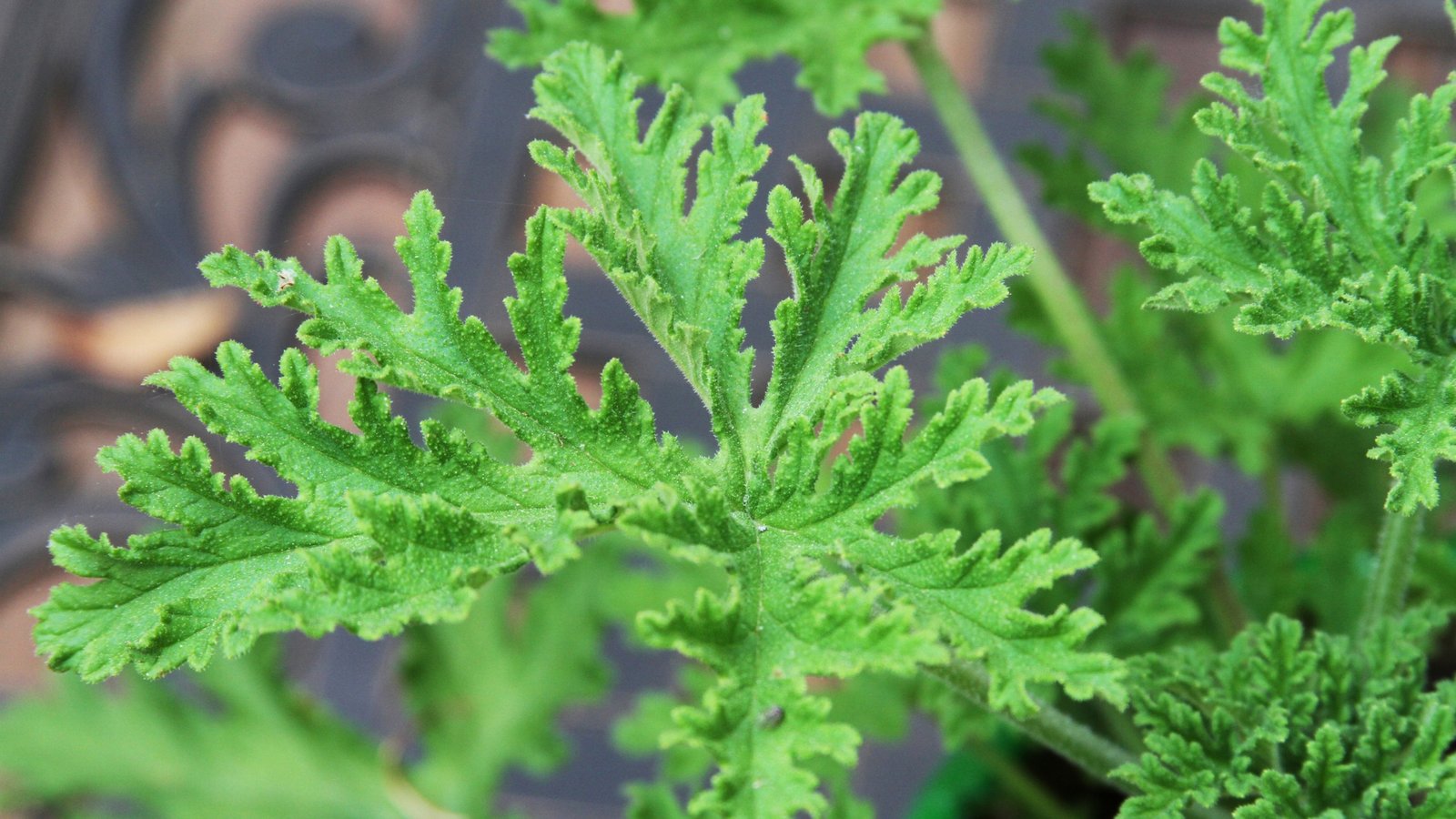
The leafy plant sold in nurseries as a “citronella plant” or “mosquito plant” is something else entirely. It is a scented geranium, Pelargonium, marketed under names like citrosa. It is not citronella grass, and it does not release meaningful repellent into the air. When researchers actually tested the marketed citrosa plant against Aedes mosquitoes in the field, they found no significant difference in bites between people near the plant and people with no plant at all, and they observed mosquitoes landing and resting on the plant itself (Matsuda and colleagues, Journal of the American Mosquito Control Association, 1996, source 1). Later field trials reached the same result (Cilek and Schreiber 1994; Cummins and Craig 1995, cited in University of Wisconsin-Madison, source 2).
What the oils can and cannot do
Crushing a leaf between your fingers and rubbing it on your skin, or using a product built from extracted plant oil, can give brief, partial protection. The key words are brief and partial. Plant-oil repellents tend to evaporate quickly and protect for a short window, and they are generally weaker and shorter-lasting than EPA-registered active ingredients like DEET or picaridin. In one field comparison, the citrosa plant showed no protection while DEET protected for hours (Matsuda and colleagues, 1996, source 1).
There is one real exception among the plant-derived options. Oil of lemon eucalyptus, and its refined active compound PMD, is registered by the EPA and is on the short list of repellents the CDC recommends for preventing mosquito bites, alongside DEET, picaridin, IR3535, and 2-undecanone (CDC, source 4). That is a formulated, tested product, not a plant on a windowsill and not raw essential oil. See our page on oil of lemon eucalyptus (OLE) and PMD for how it works and the under-age-3 restriction.
Marigolds, basil, and the rest
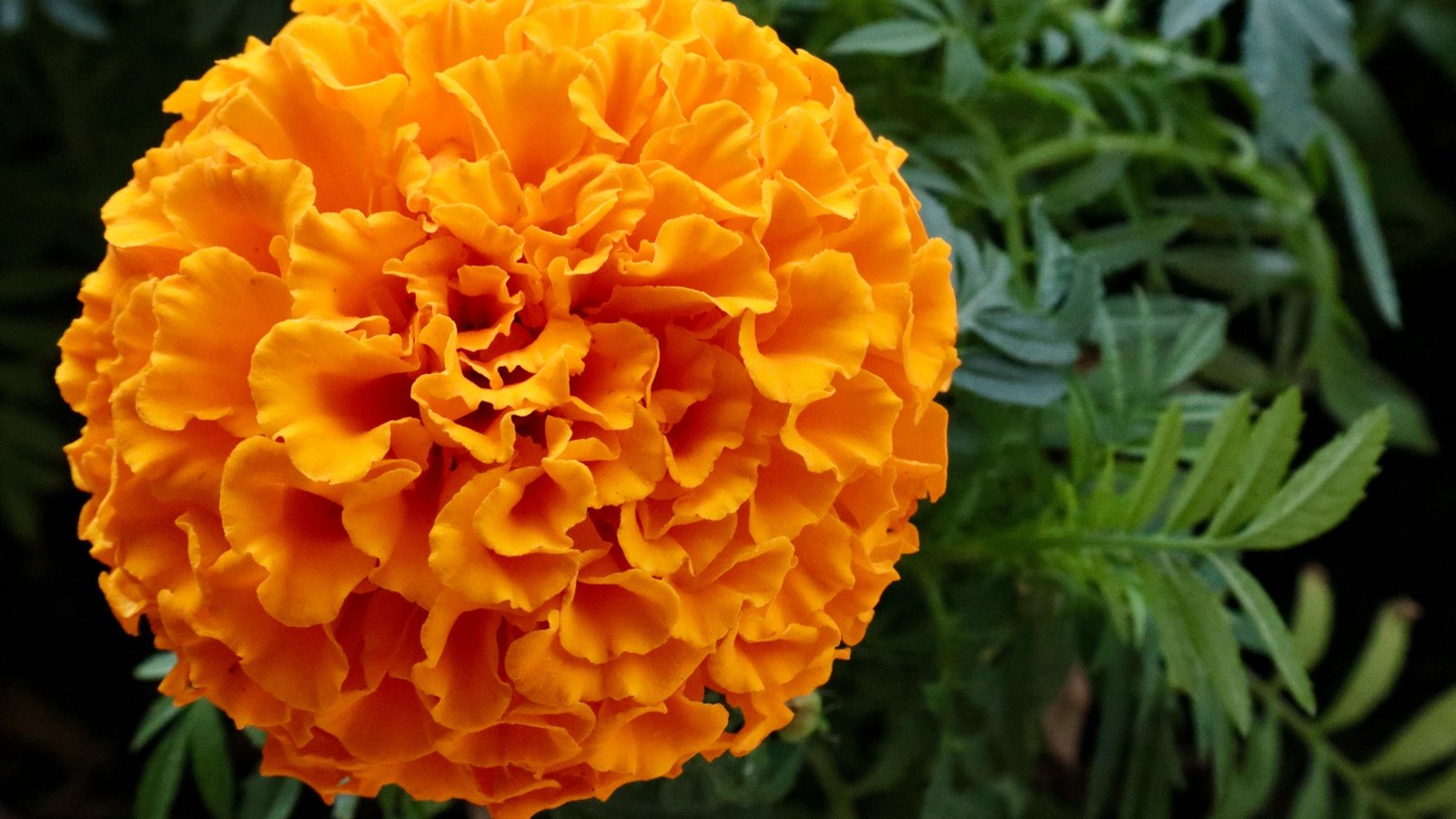
The same logic applies to the rest of the “plant a border and stay bite-free” list. Marigolds, basil, lavender, mint, rosemary, and lemongrass all contain aromatic compounds, and all of them fail the same test: sitting in the ground or in a pot, they do not put out enough airborne oil to protect a person nearby (University of Florida IFAS, source 3; University of Wisconsin-Madison, source 2). Grow them because you like them. Do not grow them expecting a bite-free patio.
What actually works
If your goal is fewer bites, spend your effort where the evidence points:
- Remove standing water. Empty, scrub, or dump anything that holds water for more than a few days: buckets, saucers, tarps, clogged gutters, even bottle caps. This is the single highest-impact step because it stops mosquitoes from breeding in the first place (University of Florida IFAS, source 3).
- Use an EPA-registered repellent on skin when you are outside. Look for DEET, picaridin, IR3535, oil of lemon eucalyptus or PMD, or 2-undecanone on the label (CDC, source 4).
- Cover up. Long sleeves and long pants reduce exposed skin, and permethrin-treated clothing adds protection.
- Reduce resting habitat. Keep grass and dense vegetation trimmed, since adult mosquitoes shelter there during the day.
- Use screens and fans. Window and door screens keep mosquitoes out, and a moving breeze from a fan makes it hard for them to fly and land on you.
Sources
- Matsuda BM, Surgeoner GA, Heal JD, Tucker AO, Maciarello MJ. “Essential oil analysis and field evaluation of the citrosa plant Pelargonium citrosum as a repellent against populations of Aedes mosquitoes.” Journal of the American Mosquito Control Association, 1996, volume 12, issue 1, pages 69 to 74. Peer-reviewed field study finding the marketed citrosa geranium gave no significant reduction in bites. https://pubmed.ncbi.nlm.nih.gov/8723261/ (accessed 2026-07-20)
- University of Wisconsin-Madison, Wisconsin Mosquitoes and Mosquito-Borne Diseases program. “Area Repellants.” University entomology outreach page stating that repelling plants do not work and citing multiple failed field trials of the citrosa plant. https://mosquitosite.russell.wisc.edu/preventing-mosquito-bites/area-repellants/ (accessed 2026-07-20)
- University of Florida Institute of Food and Agricultural Sciences (UF/IFAS). “Florida experts break down the buzz on the myth of mosquito-repelling plants,” 2025. University extension article explaining why growing the plants does not release enough oil to protect you, and what to do instead. https://blogs.ifas.ufl.edu/news/2025/08/06/florida-experts-break-down-the-buzz-on-the-myth-of-mosquito-repelling-plants/ (accessed 2026-07-20)
- Centers for Disease Control and Prevention (CDC). “Preventing Mosquito Bites.” Federal guidance listing the EPA-registered repellent active ingredients recommended for preventing bites, including oil of lemon eucalyptus and PMD. https://www.cdc.gov/mosquitoes/prevention/index.html (accessed 2026-07-20)
Related
- Choosing a repellent
- Oil of lemon eucalyptus (OLE) and PMD
- Permethrin-treated clothing
- Prevention overview
Educational note: This page is for general information about mosquito prevention and is not medical or pest-control advice. For repellent use, follow the product label. For local mosquito control questions, contact your county extension office or mosquito control district.
Last reviewed 20 July 2026.