The short answer
Chikungunya is a viral illness you get from the bite of an infected mosquito, and its hallmark is a sudden high fever paired with severe joint pain. Most people recover within a week or so, but the joint pain can drag on for weeks or even months in some people, which is what makes the disease so miserable. It is rarely fatal, but it can be genuinely debilitating while it lasts. In this country almost all cases are picked up by travelers returning from places where the virus is spreading, with only occasional local transmission. There is no medicine that cures it, so care is supportive, and one FDA-approved vaccine is available for certain travelers and laboratory workers.
The short version: A mosquito-spread virus. Sudden fever plus severe joint pain that can linger for months. Rarely fatal but debilitating. No cure, care is supportive. Mostly travel-related here. One approved vaccine for some travelers and lab workers.
What it is
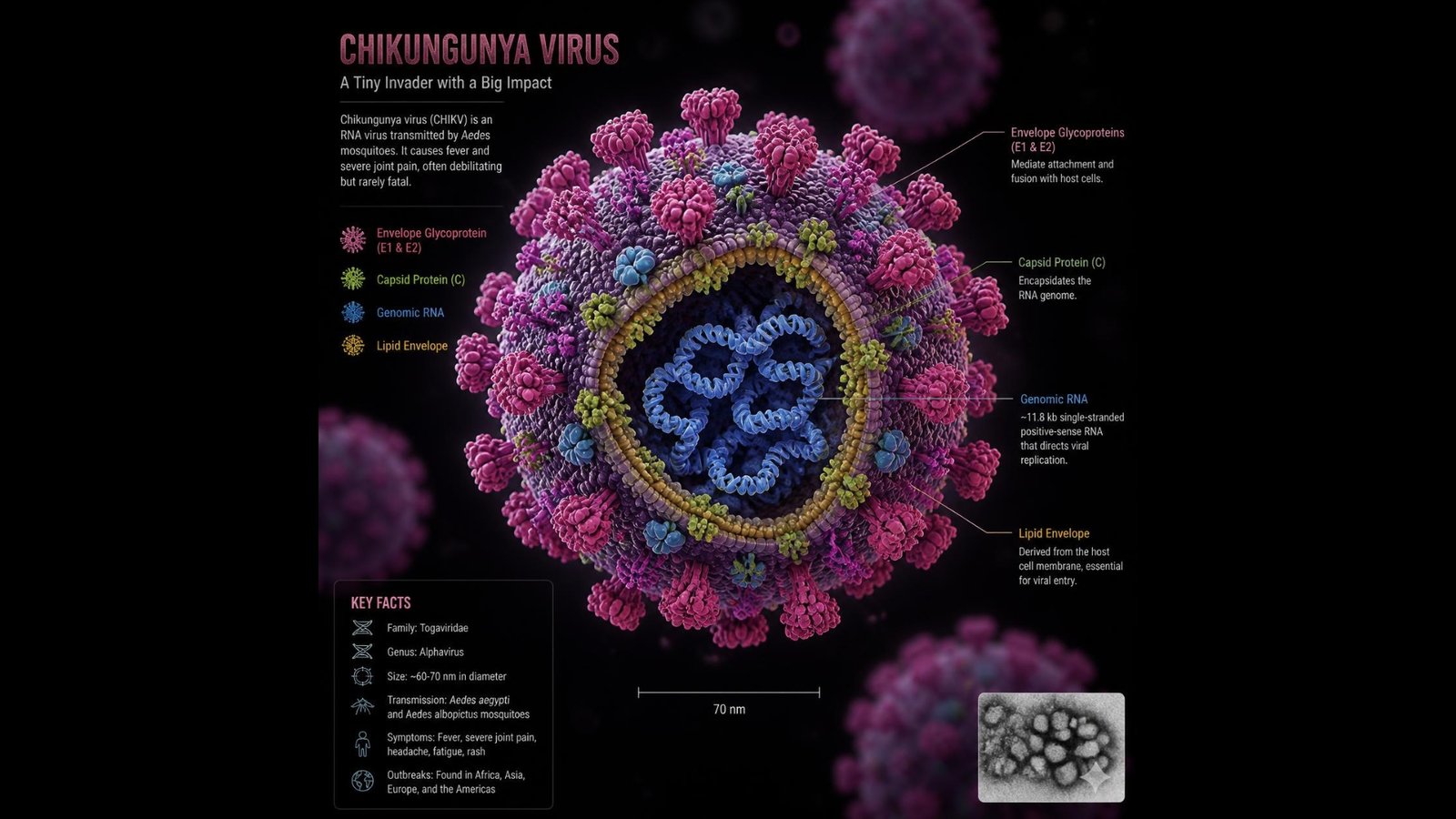
Chikungunya is the disease caused by chikungunya virus (CHIKV), an alphavirus. The name comes from a word in the Kimakonde language meaning roughly “that which bends up,” a reference to the stooped posture of people doubled over with joint pain.
The virus is found across much of the tropical and subtropical world, including parts of the Caribbean, Central and South America, Africa, and Asia. Large outbreaks can spread quickly once the virus reaches a place with the right mosquitoes and enough people who have never been exposed. It is closely related in its spread to dengue and Zika, because the same mosquitoes carry all three, and the early symptoms can overlap.
How you get it
You get chikungunya from the bite of an infected mosquito. You cannot catch it from another person through everyday contact.
The vectors. The virus is spread mainly by two mosquitoes, Aedes aegypti (the yellow fever mosquito) and Aedes albopictus (the Asian tiger mosquito). Both are aggressive daytime biters that live close to people, feed indoors and outdoors, and lay their eggs in small containers of standing water around homes and yards. These are the same two species that transmit dengue and Zika.
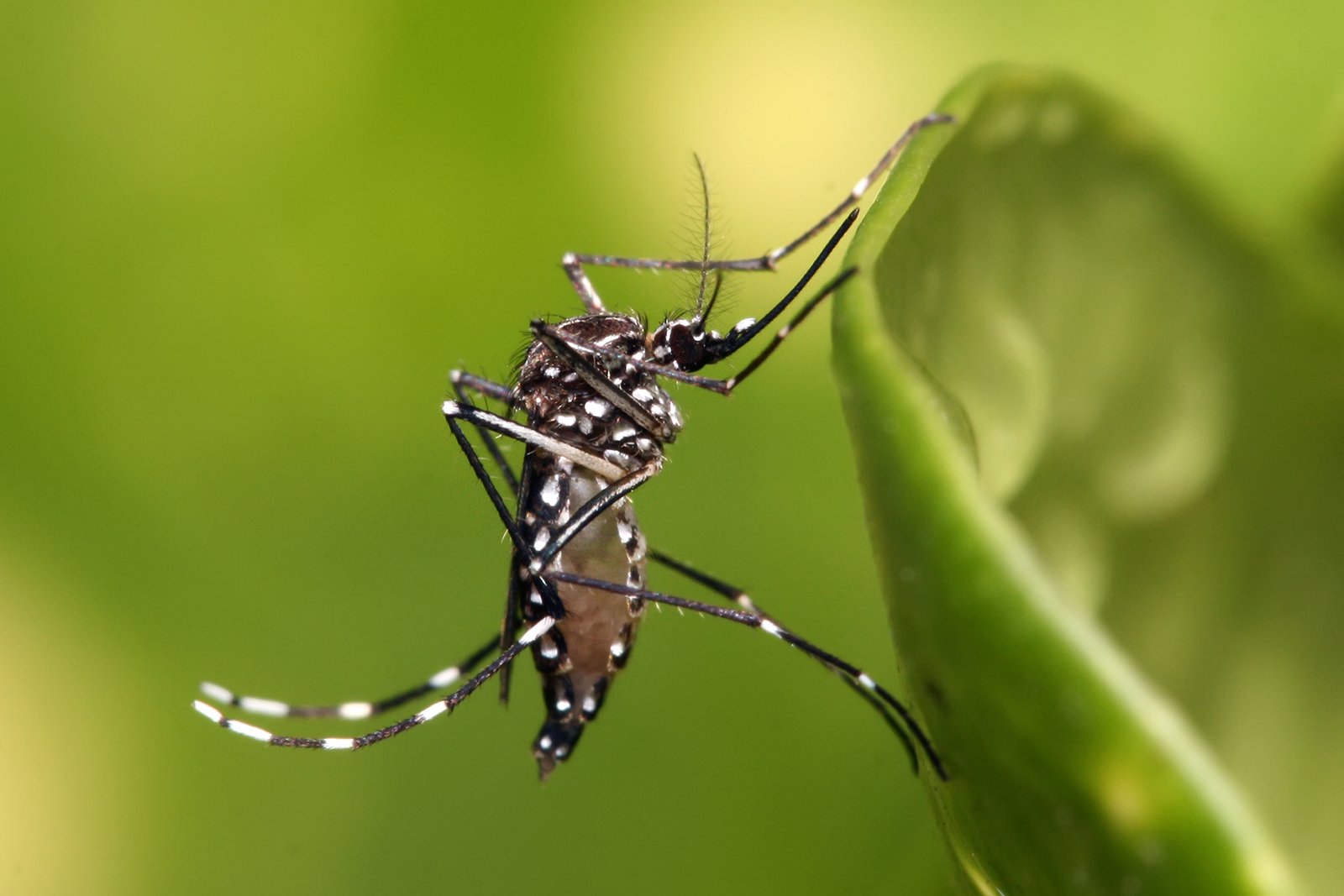
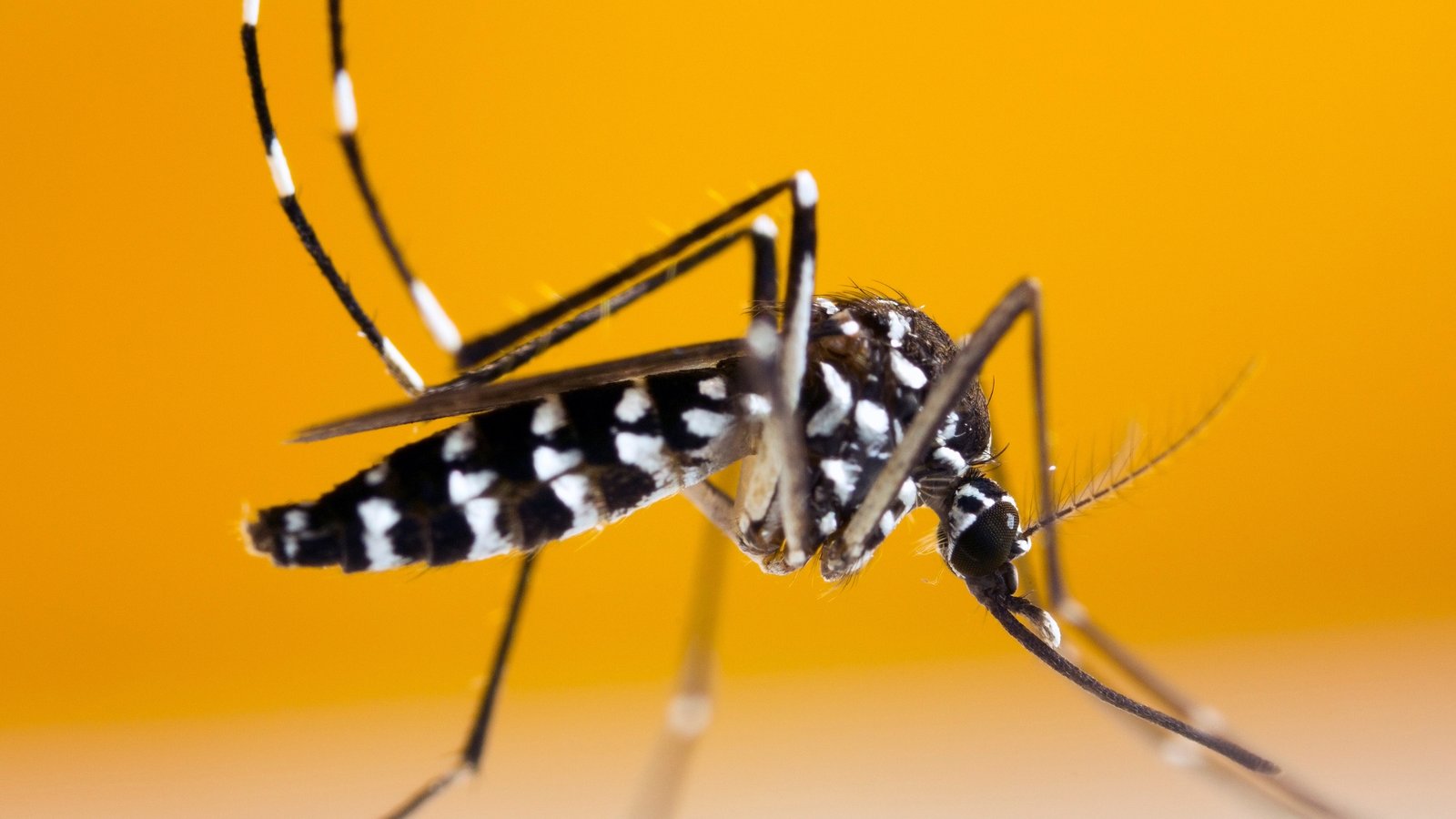
The transmission cycle. A mosquito becomes infected when it bites a person who has virus circulating in their blood. Over several days the virus multiplies inside the mosquito and reaches its salivary glands, and from then on the mosquito can pass the virus to the next person it bites. That person can in turn infect more mosquitoes during the first days of their illness, which is how a local outbreak builds once the virus and the mosquitoes are both present.
What does NOT transmit it. Chikungunya is not spread from one person to another through coughing, sneezing, touching, or sharing food and drink. It is not spread by pets or other animals in the everyday sense. In rare situations the virus can pass from a pregnant woman to her baby around the time of birth, and there have been rare reports of spread through blood or laboratory exposure, but ordinary person-to-person contact does not transmit it.
Symptoms
The hallmark of chikungunya is the combination of sudden fever and severe joint pain. Symptoms usually begin 3 to 7 days after the bite of an infected mosquito.
The two most common symptoms are:
- Fever, often high and abrupt in onset
- Joint pain, which can be intense and disabling and often affects the hands, wrists, ankles, and feet, frequently on both sides of the body
Other symptoms can include:
- Joint swelling
- Muscle pain
- Headache
- Rash
- Fatigue and nausea
Most people start to feel better within about a week. The joint pain is the part that can linger. In some people it persists for weeks or months, and in a minority it can continue for longer, causing ongoing stiffness and discomfort well after the fever and other symptoms have gone. This prolonged, sometimes relapsing joint pain is the feature that sets chikungunya apart from many other mosquito-borne illnesses.
Serious complications and deaths are uncommon. Chikungunya is far more often disabling than deadly, but the toll on daily life during and after the illness can be significant.
Who is at higher risk
Most people who get chikungunya recover, but some groups are at higher risk for severe disease:
- Newborns infected around the time of birth, when a mother is infected at delivery, can develop serious illness.
- Adults older than 65.
- People with underlying medical conditions such as high blood pressure, diabetes, or heart disease.
People in these groups are more likely to have a severe course and are the ones for whom prompt medical attention matters most.
When to see a doctor: See a healthcare professional if you develop a sudden high fever and severe joint pain, especially within about two weeks of traveling to an area where chikungunya, dengue, or Zika spreads. Testing matters because these illnesses look alike early on and are managed differently. Seek care promptly for a newborn, an older adult, or anyone with a chronic health condition who develops these symptoms, and tell the clinician about any recent travel.
Diagnosis and treatment
Diagnosis is made by a clinician based on your symptoms, your travel history, and laboratory testing of blood. Because chikungunya, dengue, and Zika share symptoms and mosquitoes, testing is often what tells them apart, and that distinction changes how you are treated.
Treatment. There is no specific antiviral medicine that cures chikungunya. Care is supportive, meaning it targets the symptoms while your body clears the virus: rest, plenty of fluids, and medicine such as acetaminophen (paracetamol) for fever and pain. One important caution: until dengue has been ruled out, avoid aspirin and other non-steroidal anti-inflammatory drugs (NSAIDs) such as ibuprofen, because of the bleeding risk dengue can carry.
Vaccine. There is one FDA-approved chikungunya vaccine available in this country, VIMKUNYA, made by Bavarian Nordic. It is a single-dose, virus-like-particle vaccine approved in February 2025 for people 12 years of age and older. In April 2025 the CDC’s Advisory Committee on Immunization Practices (ACIP) recommended it for travelers aged 12 and older going to a place with a chikungunya outbreak, for certain other long-term travelers to higher-risk areas, and for laboratory workers who may be exposed to the virus. It is not a routine vaccine for the general public.
A second vaccine, IXCHIQ (a live vaccine made by Valneva), was the first chikungunya vaccine approved in this country, in 2023. Following reports of serious adverse events, the FDA suspended its license in August 2025, and in January 2026 the manufacturer voluntarily withdrew its US applications. As a result, IXCHIQ is no longer available in this country. If you were vaccinated in the past or are researching options, talk with a healthcare professional or a travel clinic about what is currently recommended.
How to protect yourself
Because the mosquitoes that spread chikungunya bite during the day and breed in small pools of standing water near homes, prevention comes down to avoiding bites and removing breeding sites. If you are traveling, plan protection before you go.
- Use an EPA-registered insect repellent and follow the label, including during daytime hours. See choosing a repellent.
- Wear long sleeves and long pants, and treat clothing or gear with permethrin where appropriate.
- Remove standing water around the home at least weekly: empty and scrub buckets, planters, birdbaths, and anything that holds water.
- Clear and address containers, clogged gutters, and old tires where water collects. See container and yard control.
- Keep window and door screens in good repair, and use air conditioning or bed nets where mosquitoes get indoors.
- If you are traveling to an area with chikungunya, ask a travel clinic whether the vaccine is appropriate for you and take extra care to prevent bites for the first week of any illness so you do not infect local mosquitoes.
Sources
- Centers for Disease Control and Prevention. Transmission of Chikungunya Virus. https://www.cdc.gov/chikungunya/php/transmission/index.html. Accessed 20 Jul 2026. (Spread mainly by Aedes aegypti and Aedes albopictus, daytime biters that feed indoors and outdoors and breed in containers; virus replicates in the mosquito before it can transmit; not spread person to person through everyday contact.)
- Centers for Disease Control and Prevention. Symptoms of Chikungunya. https://www.cdc.gov/chikungunya/signs-symptoms/index.html. Accessed 20 Jul 2026. (Symptoms appear 3 to 7 days after the bite; fever and joint pain are the most common; most feel better within a week but joint pain can persist for months.)
- Centers for Disease Control and Prevention. Symptoms, Diagnosis, and Treatment of Chikungunya. https://www.cdc.gov/chikungunya/symptoms-diagnosis-treatment/index.html. Accessed 20 Jul 2026. (No specific medicine to treat chikungunya; supportive care with rest, fluids, and acetaminophen; avoid aspirin and NSAIDs until dengue is ruled out.)
- Centers for Disease Control and Prevention. Chikungunya in the United States. https://www.cdc.gov/chikungunya/data-maps/chikungunya-us.html. Accessed 20 Jul 2026. (Most reported cases are travel-associated; limited local transmission has occurred in Florida and Texas and in the territories of Puerto Rico and the US Virgin Islands.)
- Centers for Disease Control and Prevention. Clinical Signs and Symptoms of Chikungunya Virus Disease. https://www.cdc.gov/chikungunya/hcp/clinical-signs/index.html. Accessed 20 Jul 2026. (Groups at higher risk for severe disease include neonates infected around birth, adults older than 65, and people with underlying conditions such as hypertension, diabetes, or cardiovascular disease.)
- Centers for Disease Control and Prevention. Chikungunya Vaccine Information for Healthcare Providers. https://www.cdc.gov/chikungunya/hcp/vaccines/index.html. Accessed 20 Jul 2026. (ACIP recommends chikungunya vaccination for certain travelers at higher risk of exposure and for certain laboratory workers.)
- US Food and Drug Administration. VIMKUNYA. https://www.fda.gov/vaccines-blood-biologics/vimkunya. Accessed 20 Jul 2026. (VIMKUNYA, a single-dose virus-like-particle chikungunya vaccine from Bavarian Nordic, approved February 2025 for persons 12 years of age and older.)
- Bavarian Nordic (via GlobeNewswire). Bavarian Nordic’s Chikungunya Vaccine Receives Recommendation from U.S. CDC’s Advisory Committee on Immunization Practices (ACIP). https://www.globenewswire.com/news-release/2025/04/16/3062893/0/en/Bavarian-Nordic-s-Chikungunya-Vaccine-Receives-Recommendation-from-U-S-CDC-s-Advisory-Committee-on-Immunization-Practices-ACIP.html. Accessed 20 Jul 2026. (April 2025 ACIP recommendation of VIMKUNYA for travelers aged 12 and older going to areas with an outbreak, certain other travelers, and laboratory workers; single-dose vaccine.)
- Center for Infectious Disease Research and Policy (University of Minnesota). FDA suspends license for chikungunya vaccine Ixchiq over serious safety concerns. https://www.cidrap.umn.edu/chikungunya/fda-suspends-license-chikungunya-vaccine-ixchiq-over-serious-safety-concerns. Accessed 20 Jul 2026. (IXCHIQ was the first FDA-approved chikungunya vaccine, 2023; the FDA suspended its license in August 2025 over serious safety concerns.)
- Valneva. Valneva Provides Update on Chikungunya Vaccine IXCHIQ. https://valneva.com/press-release/valneva-provides-update-on-chikungunya-vaccine-ixchiq/. Accessed 20 Jul 2026. (On 19 January 2026 Valneva voluntarily withdrew its US biologics license application and investigational new drug application for IXCHIQ, so the vaccine is no longer available in this country.)
Related
- Dengue
- Zika
- Aedes aegypti (yellow fever mosquito)
- Aedes albopictus (Asian tiger mosquito)
- Choosing an insect repellent
- Mosquito safety when you travel
Educational reference only. This is not medical advice. If you think you may have a mosquito-borne illness, contact a healthcare professional. Last reviewed 20 July 2026.