The short answer
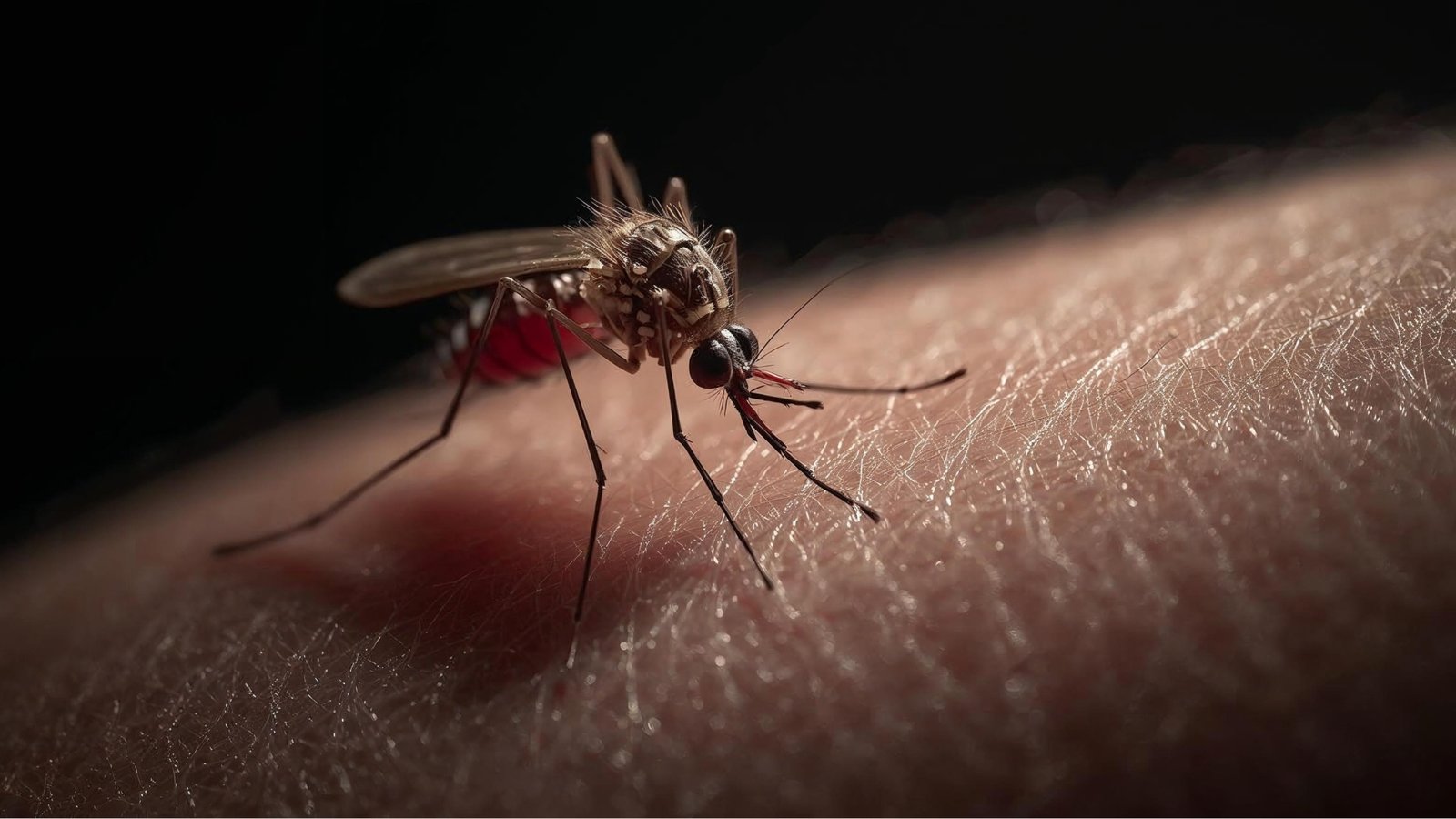
If you always seem to get bitten while the person next to you walks away untouched, you are not imagining it. Female mosquitoes (only females bite, because they need a blood meal to produce eggs) find people by following a stack of signals. They start with the carbon dioxide we breathe out, then close in using body heat, and above all they read the mix of chemicals on our skin. Some people are simply more attractive because of the particular blend of odor compounds their skin produces, and that blend is largely out of their control. In one multi-year study, people who were “mosquito magnets” stayed magnets the whole time (Source 1, Source 2).
So the honest summary is this: a big part of why mosquitoes prefer you comes down to your natural body odor, and you cannot change it much. What you can change is whether you give them an easy landing, which is where repellent comes in.
Carbon dioxide and breath
Carbon dioxide is the long-range beacon. Every time we exhale, we release a plume of it, and a mosquito can pick up that signal from a distance and turn toward it. Sensing carbon dioxide is one of the first things that tells a mosquito a meal is nearby, and it also switches on the insect’s interest in other cues like heat and skin color (Source 2, Source 7).
This is part of why body size matters. Larger adults and people who are breathing harder simply exhale more carbon dioxide, so they put out a stronger plume. It is also one reason children tend to get bitten a little less than the adults around them. The effect is real, but it is coarse: carbon dioxide gets a mosquito into the neighborhood, and finer cues decide who actually gets bitten.
Body odor and skin chemistry
Skin odor is where the real preference is decided, and the strongest evidence points to a family of compounds called carboxylic acids. A 2022 study in the journal Cell, led by researchers at Rockefeller University, had 64 volunteers wear nylon sleeves on their forearms for six hours, then tested how strongly Aedes aegypti mosquitoes were drawn to each worn sleeve. The people who attracted the most mosquitoes had markedly higher levels of carboxylic acids on their skin. These fatty acids sit in our sebum (the oily layer on skin) and are used by skin bacteria to build each person’s distinctive body odor (Source 1, Source 2, Source 3).
Two details make this study worth trusting. First, the preferences were extreme and stable: the most attractive volunteer drew about 100 times as many mosquitoes as the least attractive, and people who were highly attractive stayed that way when tested again over several years. Second, when the researchers engineered mosquitoes that could no longer sense acidic skin compounds, the insects lost much of their ability to tell the difference between people (Source 1, Source 3). That combination, a clear human chemical signal plus the matching mosquito sensor, is why skin odor sits at the center of the answer.
Other real factors
Several other things nudge you up or down the mosquito’s list, mostly by adding heat, carbon dioxide, or odor:
- Body heat. Once a mosquito is close, warmth helps it home in on skin. Mosquitoes use heat as a short-range guide toward a blood meal (Source 7, Source 8).
- Sweat and exercise. Working up a sweat raises your skin temperature, boosts your carbon dioxide output, and leaves lactic acid and other compounds on your skin that mosquitoes track. Lactic acid produced when we sweat is a documented attractant, which is why a run at dusk can make you stand out (Source 7, Source 8).
- Pregnancy. In a study in The Lancet, pregnant women attracted about twice as many Anopheles gambiae mosquitoes as non-pregnant women. Pregnancy raises body temperature and, in later stages, increases the volume of carbon dioxide exhaled, both of which help explain the effect (Source 4).
- Beer. In a small controlled study, the share of mosquitoes landing on volunteers rose significantly after they drank a single beer compared with before. Notably, the effect was not explained by ethanol in sweat or by a rise in skin temperature, so the mechanism is still not fully understood (Source 6).
These are genuine effects backed by published work, but most are modest and situational compared with a person’s baseline skin chemistry.
Blood type and diet
This is where the popular advice gets shaky. The idea that people with type O blood get bitten more traces largely to a 2004 laboratory study, which found that Aedes albopictus landed more often on type O subjects, though the difference was statistically clear only against type A, not the other groups (Source 5). Later reviews describe the blood-type evidence as conflicting and hard to interpret, partly because these experiments are difficult to run cleanly. Treat blood type as a weak and unsettled factor, not a rule. For a fuller look, see the dedicated blood-type page in Related below.
Diet claims (that eating garlic, bananas, or vitamin B either repels or attracts mosquitoes) are even thinner. There is no reliable peer-reviewed support for these, and the alcohol result above is the main diet-related finding that has held up at all. If a food effect exists, it is small next to the carbon dioxide, heat, and skin-odor signals that do the real work.
What you can actually change
The uncomfortable takeaway from the skin-chemistry research is that you cannot do much about the trait that matters most. Your carboxylic acid profile is stable and largely governed by your skin and its resident bacteria, so scrubbing, switching soaps, or changing your diet will not reliably turn a magnet into a non-magnet (Source 1, Source 3).
What does work is denying mosquitoes a target. Use a repellent proven in independent testing, cover skin when you can, and cut down the standing water where mosquitoes breed near your home. Repellent is the practical lever precisely because your natural scent is not. See our repellent and bite-prevention pages in Related for specifics on what to use and how.
Sources
- De Obaldia ME, Vosshall LB, et al. “Differential mosquito attraction to humans is associated with skin-derived carboxylic acid levels.” Cell, 27 October 2022. Primary peer-reviewed study; 64 volunteers, nylon-sleeve assay, carboxylic acids, stability over years. https://www.cell.com/cell/fulltext/S0092-8674(22)01253-3 (accessed 20 July 2026)
- National Institutes of Health, NIH Research Matters. “Skin compounds associated with attractiveness to mosquitoes.” 2022. Government explainer of the Cell study. https://www.nih.gov/news-events/nih-research-matters/skin-compounds-associated-attractiveness-mosquitoes (accessed 20 July 2026)
- Rockefeller University. “Why some people are mosquito magnets.” 2022. University explainer with the 100-fold difference and receptor-knockout detail. https://www.rockefeller.edu/news/33019-why-mosquitoes-bite-some-people-more/ (accessed 20 July 2026)
- Lindsay S, et al. “Effect of pregnancy on exposure to malaria mosquitoes.” The Lancet, 2000 (PubMed 10859048). Pregnant women attracted about twice as many Anopheles gambiae. https://pubmed.ncbi.nlm.nih.gov/10859048/ (accessed 20 July 2026)
- Shirai Y, et al. “Landing Preference of Aedes albopictus on Human Skin Among ABO Blood Groups, Secretors or Nonsecretors, and ABH Antigens.” Journal of Medical Entomology, 41(4):796, 2004. Source of the type-O claim; effect significant only versus type A. https://academic.oup.com/jme/article/41/4/796/885285 (accessed 20 July 2026)
- Shirai Y, et al. “Alcohol ingestion stimulates mosquito attraction.” Journal of the American Mosquito Control Association, 2002 (PubMed 12083361). Landing rate rose after one beer; mechanism not explained by sweat ethanol or skin temperature. https://pubmed.ncbi.nlm.nih.gov/12083361/ (accessed 20 July 2026)
- Smithsonian Magazine. “Why Do Mosquitoes Bite Some People More Than Others?” Explainer covering carbon dioxide, body heat, sweat, and blood type. https://www.smithsonianmag.com/science-nature/why-do-mosquitoes-bite-some-people-more-than-others-your-blood-type-sweat-contents-even-alcohol-consumption-may-make-you-more-attractive-pesky-insects-10255934/ (accessed 20 July 2026)
- Arizona State University, Ask A Biologist. “Why Do Mosquitoes Bite Certain People?” University explainer on carbon dioxide, heat, and lactic acid in sweat. https://askabiologist.asu.edu/mosquito-magnet (accessed 20 July 2026)
Related
- Do mosquitoes prefer certain blood types? [placeholder link]
- Best mosquito repellents and how to use them [placeholder link]
- How to prevent mosquito bites [placeholder link]
- Why do mosquito bites itch? [placeholder link]
Educational note: This page is for general education about mosquito biology and bite prevention. It is not medical advice. If you have a severe reaction to bites or are concerned about mosquito-borne illness, consult a qualified health professional or your local public health authority.
Last reviewed 20 July 2026.