Short answer
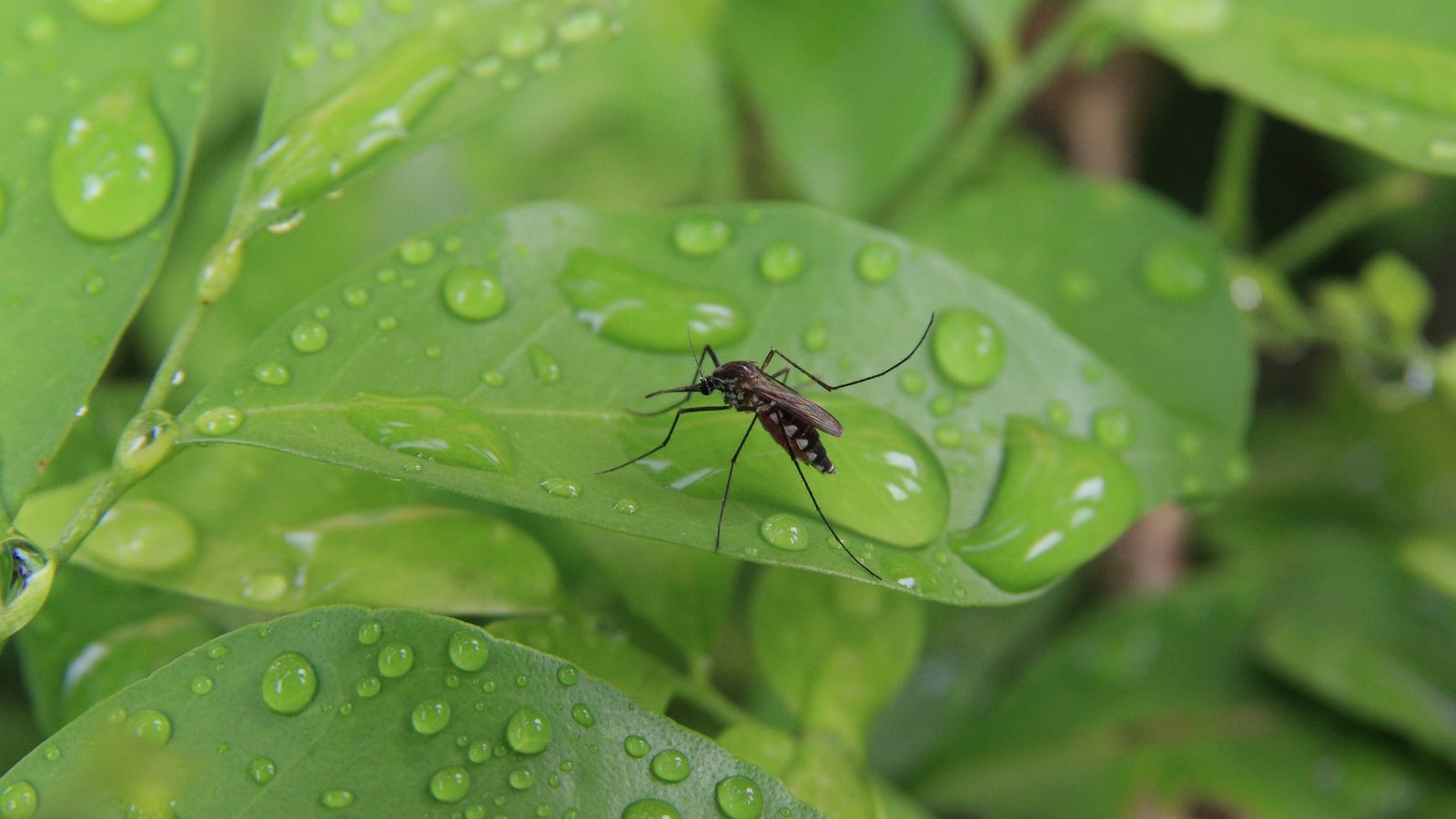
There is no single calendar date. Mosquitoes are cold-blooded, so their season is set by temperature, not by the month. They become active once daytime temperatures stay consistently above roughly 50 degrees Fahrenheit, and that threshold arrives at very different times across the country (Sources 1, 2, 3). In the far south, where temperatures rarely fall below that mark, mosquitoes can be active year-round (Source 3). Through the middle of the country the season generally opens in spring, often around April into May, and in the northern states it tends to begin later, into May and June, as spring warming takes hold. The practical rule is simple: watch the thermometer, not the calendar.
The temperature trigger
Mosquitoes are cold-blooded, so their activity tracks air and water temperature closely. As a working threshold, they do not generally feed when temperatures are below about 50 degrees Fahrenheit, and they become noticeably more active once temperatures rise above that mark (Sources 1, 2). Mosquito control officials use the same 50 degree figure as the point at which mosquitoes go inactive (Source 3).
Fifty degrees is the floor for activity, not the point of peak nuisance. Biting, egg laying, and rapid breeding all ramp up as temperatures climb higher, into the 70s and 80s. Development speeds up with warmth as well, which is why entomologists track heat accumulation using degree days measured above a species-specific baseline temperature to predict when eggs hatch and larvae mature (Source 4). In short, a warm spell above 50 degrees wakes mosquitoes up, and sustained heat is what turns a few early bites into a full season.
Regional timing
Because the season follows temperature, its start slides later as you move north. The pattern breaks down roughly like this:
- Southern and Gulf Coast states: mosquitoes can be active year-round or nearly so, since temperatures rarely stay below 50 degrees for long. In South Florida, for example, mosquito control officials note that species such as Aedes aegypti remain active through fall and winter (Source 3). See the Southeast and Gulf Coast region pages.
- The middle of the country: the season generally opens in spring, often around April into May, as sustained warmth returns. In the Midwest, some of the earliest species already have larvae in the water by mid-April (Source 5). See the Midwest and Mid-Atlantic region pages.
- Northern states: the start tends to come later, into May and June, once spring temperatures hold above the activity threshold. See the Northeast, Great Plains, and Pacific Northwest region pages.
These are general patterns, not fixed dates. A warm, wet early spring can move the start forward, and a cold snap can push it back. For local timing, your state or county mosquito control program is the best guide. Browse all region pages for state-level detail.
Overwintered adults vs new broods
Two very different groups of mosquitoes appear early in the season, and they behave differently.
Some mosquitoes survive winter as adults. Females of several Culex species mate in autumn and then spend the winter in a dormant state called diapause, sheltering in protected spots such as culverts, basements, and hollow logs. These mated females survive the cold and become active again the following spring, typically from late spring into midsummer depending on the species (Sources 5, 6). Because they are already adults, they can be among the first mosquitoes seen and heard once the weather warms.
Other mosquitoes spend winter as eggs. Floodwater species in the genus Aedes and related groups lay eggs on damp soil in low spots that flood intermittently. Those eggs can sit dormant and viable for a long time, and they hatch only after being covered with water, which in spring usually means snowmelt or heavy rain (Sources 5, 7). This is why a wet spring so often brings a sudden, noticeable brood: a single flooding event can hatch large numbers of eggs at once.
Getting ahead of the season
The easiest time to reduce a summer mosquito problem is before it starts. Overwintered eggs and the first broods both depend on standing water, so removing that water early cuts the season off at the source.
A good early-season habit is to empty and scrub anything that holds water at least once a week, including buckets, plant saucers, toys, tarps, clogged gutters, and bird baths (Source 2). Doing this in early spring, before the first broods emerge, keeps the initial population low and makes the whole season easier to manage. For a fuller walkthrough, see source reduction and eliminate standing water.
Sources
- Connecticut Mosquito Management Program (State of Connecticut), “Mosquito FAQs.” https://portal.ct.gov/Mosquito/FAQs/Mosquito-FAQs (accessed 20 July 2026). (Mosquitoes are cold-blooded and do not generally feed in temperatures below 50 degrees F; some adults hibernate before the first frost.)
- Mississippi State University Extension Service, “Tips for Reducing Mosquito Bites.” https://extension.msstate.edu/blog/tips-for-reducing-mosquito-bites (accessed 20 July 2026). (Mosquitoes are most active when the temperature is above 50 degrees Fahrenheit; remove standing water weekly to eliminate breeding habitat.)
- Miami-Dade County (Mosquito Control), “County offers mosquito tips for upcoming cooler months.” https://www.miamidade.gov/global/release.page?Mduid_release=rel1731090677671190 (accessed 20 July 2026). (Fifty degrees Fahrenheit is the point at which mosquitoes become inactive; because South Florida temperatures rarely dip that low, species such as Aedes aegypti remain active during fall and winter.)
- University of Kentucky College of Agriculture, Entomology, “Predicting Insect Development Using Degree Days” (Entfact 123). https://entomology.mgcafe.uky.edu/ef123 (accessed 20 July 2026). (Insect development begins above a species-specific baseline threshold; degree days accumulated above that baseline predict events such as egg hatch.)
- Purdue University Extension, Public Health and Medical Entomology, “Mosquitoes.” https://extension.entm.purdue.edu/publichealth/insects/mosquito.html (accessed 20 July 2026). (Culex and related species over-winter as mated females that become active the following late spring to midsummer; the earliest species have larvae in the water by mid-April; floodwater eggs may hatch after being covered with water following a dry period.)
- Centers for Disease Control and Prevention, “West Nile Virus in Overwintering Culex Mosquitoes, New York City, 2000,” Emerging Infectious Diseases 7(4). https://wwwnc.cdc.gov/eid/article/7/4/01-7426_article (accessed 20 July 2026). (Documents Culex mosquitoes surviving winter as adults in protected overwintering sites.)
- Penn State Extension, “Mosquito Biology and Control.” https://extension.psu.edu/mosquito-biology-and-control (accessed 20 July 2026). (Floodwater and container species can overwinter in the egg stage; eggs may remain dormant and viable on the soil until the area is flooded.)
Related
- Season length: How long does mosquito season last [placeholder link]
- Season end: When does mosquito season end [placeholder link]
- Biology: Mosquito life cycle
- Control: Source reduction
- Control: Eliminate standing water
- Regions index [placeholder link]
Educational note: This page is for general information only and is not medical advice. It is not affiliated with any government agency or product. If you think you may have a mosquito-borne illness, contact a healthcare provider, and consult your state or local health department for current advisories.
Last reviewed 20 July 2026.