The short answer
The vast majority of mosquito bites cause nothing more than an itchy welt that fades in a few days. Getting bitten does not mean you will get sick. Most people who are infected with a mosquito-borne virus never develop any symptoms at all, and most who do have a mild illness that passes on its own.
Serious mosquito-borne illness is uncommon, but it is worth being able to recognize. The pattern to watch for is a fever that shows up days after being bitten, often with headache and body aches, rather than the itching that starts right at the bite itself. The signs that call for emergency care are a small, specific set: a high fever with a severe headache, a stiff neck, confusion, seizures, sudden muscle weakness, or trouble breathing. If those appear, get medical help right away.
The rest of this page walks through the difference between a normal bite and an illness, the symptoms worth noticing, the red flags that mean go now, how long after a bite symptoms can show up, and what to tell a doctor.
Normal bite reactions vs illness
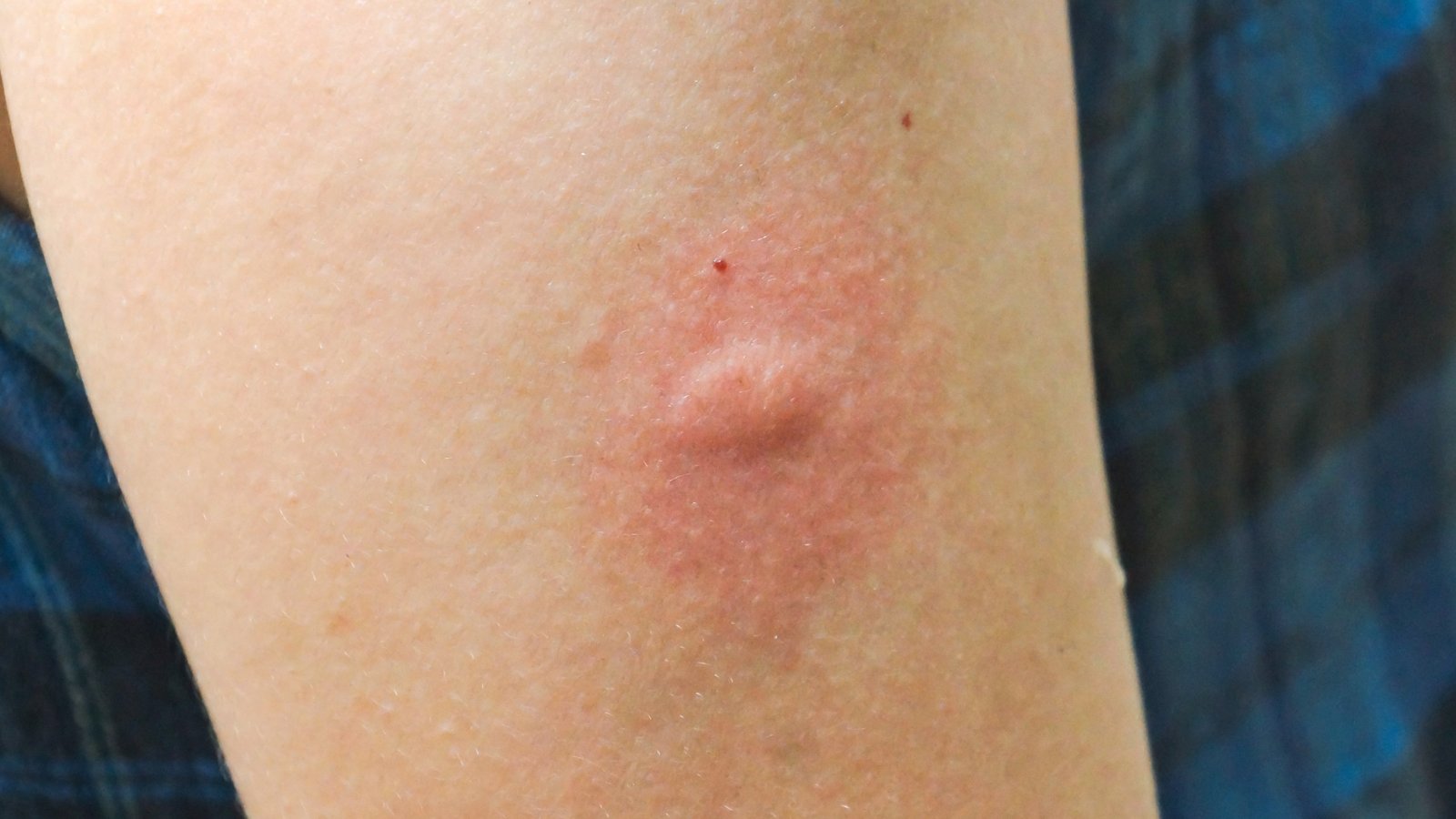
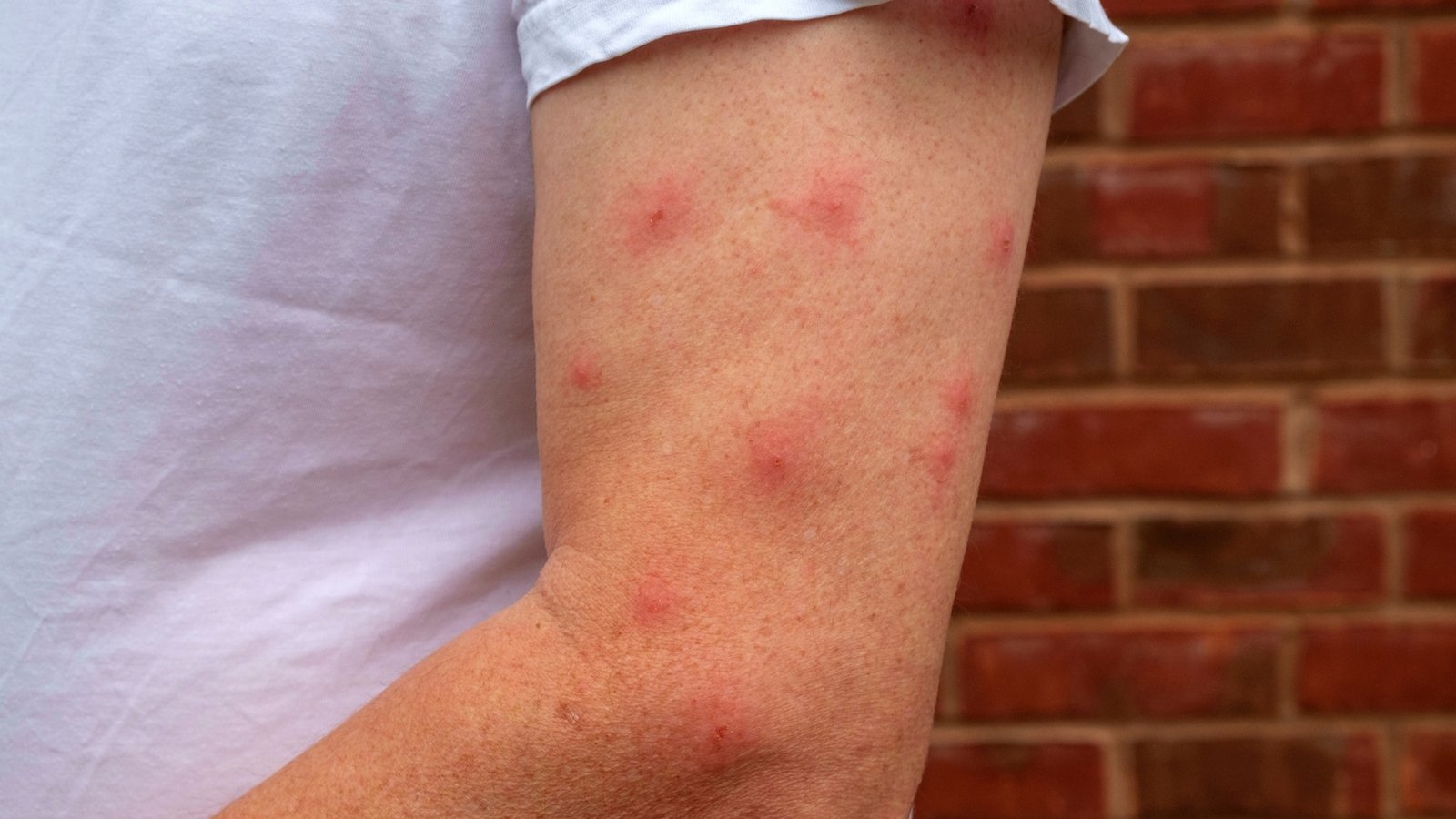
An itchy bump is not an infection. When a mosquito bites, your body reacts to proteins in its saliva. A puffy, reddish bump usually appears within minutes, and a harder, itchy bump can follow a day or so later. According to the CDC, most bites itch for about three to four days, any pinkness lasts three to four days, and swelling can last up to about a week [1]. That whole reaction is your immune system responding to the bite, not a sign that a germ is spreading through your body.
Some people react more strongly than others. Larger areas of swelling, soreness, and redness are common in children and in people bitten by a species their body has not encountered before. A pronounced local reaction, sometimes called skeeter syndrome, can look alarming but is still a localized allergic response to the bite, not a mosquito-borne disease.
Two different things are worth separating:
- A bite that gets infected from scratching. The CDC notes that a bite can become infected if you break the skin. Warning signs are redness that feels warm, or a red streak spreading outward from the bite [1]. This is a skin infection, and a healthcare provider can treat it.
- A mosquito-borne illness. This does not center on the bite mark at all. It tends to show up as a body-wide illness (fever, headache, aches) days later, often after the bite itself has already faded.
If your only symptoms are itching, a bump, and mild local swelling, that is a normal bite. The symptoms below are the ones that point toward something more.
Symptoms that suggest a mosquito-borne illness
The illnesses spread by mosquitoes in the US, most notably West Nile virus, and dengue in travelers and parts of the South, share a broadly similar early picture: a flu-like illness that begins days after exposure, not at the moment of the bite.
For West Nile virus, the most common mosquito-borne infection in the continental US, about 8 in 10 infected people feel nothing at all. About 1 in 5 develop a febrile illness with some combination of fever, headache, body aches, joint pains, vomiting, diarrhea, or a rash. Tiredness and weakness can linger for weeks or months even after a mild case [2].
For dengue, symptoms can include fever plus nausea, vomiting, a rash, and aches, and the pain behind the eyes and in the muscles and joints can be intense [4]. Dengue is mainly a concern for people who have recently traveled to areas where it spreads, and for residents of some southern regions where local transmission occurs.
Symptoms worth taking seriously, especially if they follow recent mosquito exposure:
- Fever that begins days after being bitten
- Headache
- Body aches, joint pain, or muscle pain
- A rash appearing a few days after bites
- Nausea, vomiting, or diarrhea
- Marked fatigue or weakness
Any one of these can have countless ordinary causes. What raises the suspicion of a mosquito-borne illness is the timing (a fever arriving days after being bitten) and the setting (heavy mosquito exposure, recent travel, or an active local outbreak).
Red-flag / emergency signs
A small number of West Nile infections, fewer than 1 in 100, progress to serious disease that affects the brain and nervous system, causing inflammation of the brain (encephalitis) or of the membranes around the brain and spinal cord (meningitis) [2, 3]. This is uncommon, and the risk is higher for adults over 65 and people with weakened immune systems, but it is the reason to know the warning signs.
Get emergency medical care right away if you or someone else has any of the following, particularly during mosquito season or after recent bites or travel:
- High fever with a severe headache
- A stiff neck
- Confusion, disorientation, or stupor
- Seizures or convulsions
- Sudden muscle weakness or paralysis
- Tremors
- Sudden vision loss or numbness
- Trouble breathing
The CDC lists high fever, neck stiffness, muscle weakness, confusion, and tremors among the symptoms of severe West Nile illness and advises seeking medical attention right away if they appear [2]. These signs point to the nervous system being involved, and they are a medical emergency. Do not wait to see if they pass. For dengue, additional danger signs include severe belly pain, persistent vomiting, and any bleeding (gums, nose, or in vomit or stool), which tend to appear as the fever is breaking [4, 5]. Treat those the same way: seek care immediately.
Timing: how long after a bite symptoms can appear
Mosquito-borne illness does not announce itself the day you are bitten. There is an incubation period while the virus multiplies, so the gap between the bite and the first symptoms is a useful clue.
- West Nile virus: symptoms usually begin about 2 to 6 days after the bite, but the range can run from 2 to 14 days, and it can be longer in people with weakened immune systems [3].
- Dengue: symptoms usually begin within 2 weeks of the bite, typically around 5 to 7 days (range about 3 to 10 days) [4, 5].
A practical takeaway: if a fever or the symptoms above show up within roughly two weeks of heavy mosquito exposure or travel, the bite is worth mentioning to a clinician. By contrast, itching and swelling that start right at the bite, within minutes to a day or two, are the normal local reaction and do not follow this incubation pattern.
Because dengue can worsen after the fever appears to break, the CDC notes that dengue warning signs often begin in the 24 to 48 hours after the fever goes away [5]. In other words, starting to feel better is not always the all-clear for dengue, so keep watching for the danger signs during that window.
When to see a doctor and what to tell them
Call a healthcare provider if you develop a fever, a bad headache, body aches, or a rash in the days after being bitten, and go to emergency care immediately for any of the red-flag signs above. There is no specific antiviral medicine for West Nile virus or dengue; care is supportive, aimed at managing symptoms, so timely evaluation matters most for catching the severe cases early [6].
Give the clinician the details that help them connect the dots:
- Recent mosquito bites, and roughly when they happened
- Any recent travel, especially outside the continental US, and where you went (the CDC specifically advises telling your provider about travel if you develop a fever, because of dengue and similar infections) [4]
- When your symptoms started and how they have changed
- Your age and any conditions or medicines that weaken your immune system, since these raise the risk of severe illness
One caution worth repeating: with dengue, avoid aspirin and other NSAIDs (such as ibuprofen) until a provider has ruled it out, because of bleeding risk. Ask a clinician before medicating a fever if dengue is a possibility [4].
If you are healthy, have only an itchy bite, and feel fine otherwise, you almost certainly do not need a doctor. The point of this page is not to worry you over every bite, it is to help you notice the uncommon situation where a fever days later, or a red-flag symptom, means it is time to get checked.
Sources
- CDC, About Mosquito Bites. Normal bite reaction (bump and itching, itching and redness lasting three to four days, swelling up to about a week), treatment, and signs of an infected bite (warmth, spreading red streak). https://www.cdc.gov/mosquitoes/about/about-mosquito-bites.html (accessed 2026-07-20)
- CDC, Symptoms of West Nile. About 8 in 10 infected people have no symptoms; about 1 in 5 develop febrile illness; fewer than 1 in 150 develop severe illness; severe symptoms include high fever, neck stiffness, stupor, disorientation, tremors, convulsions, muscle weakness, vision loss, numbness, and paralysis; seek medical attention right away for severe symptoms; higher risk over age 65. https://www.cdc.gov/west-nile-virus/signs-symptoms/index.html (accessed 2026-07-20)
- CDC, Clinical Signs and Symptoms of West Nile Virus Disease (for healthcare providers). Incubation typically 2 to 6 days, range 2 to 14 days, longer in immunocompromised people; fewer than 1% develop neuroinvasive disease (meningitis, encephalitis, acute flaccid myelitis). https://www.cdc.gov/west-nile-virus/hcp/clinical-signs/index.html (accessed 2026-07-20)
- CDC, Symptoms of Dengue and Testing. Symptoms usually begin within 2 weeks of an infected bite; include fever, nausea, vomiting, rash, aches, pain behind the eyes; see a healthcare provider and tell them about travel; avoid aspirin and NSAIDs. https://www.cdc.gov/dengue/signs-symptoms/index.html (accessed 2026-07-20)
- CDC, Clinical Features of Dengue (for healthcare providers). Incubation about 5 to 7 days (range 3 to 10 days); warning signs of severe dengue (severe abdominal pain, persistent vomiting, mucosal bleeding) usually begin in the 24 to 48 hours after fever resolves. https://www.cdc.gov/dengue/hcp/clinical-signs/index.html (accessed 2026-07-20)
- CDC, West Nile Virus: Symptoms, Diagnosis, and Treatment. No specific medicine to treat West Nile virus; treatment is supportive care focused on symptoms. https://www.cdc.gov/west-nile-virus/symptoms-diagnosis-treatment/ (accessed 2026-07-20)
Related
- Mosquito-borne diseases in the US: an overview [placeholder]
- West Nile virus: what to know [placeholder]
- Dengue and US travelers [placeholder]
- How to treat a mosquito bite [placeholder]
- Who is most at risk from mosquito-borne illness [placeholder]
- Mosquito bite prevention basics [placeholder]
This page is for general information and is not medical advice. It does not replace evaluation by a qualified healthcare provider. If you are worried about your symptoms, contact a clinician, and for any emergency red-flag sign, seek emergency care right away.
Last reviewed 20 July 2026.