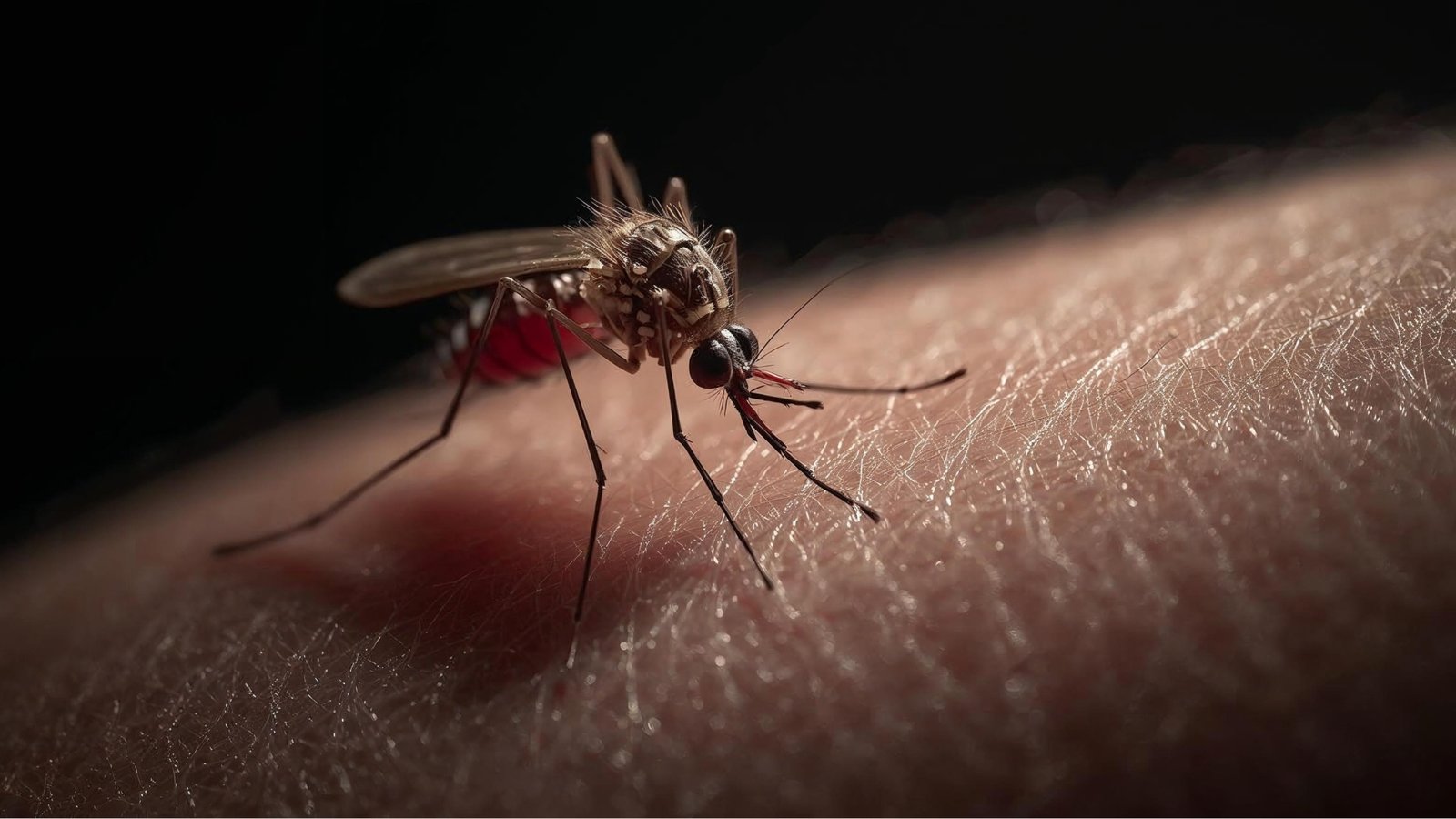
Short answer
South Carolina’s Lowcountry coast produces heavy broods of saltmarsh mosquitoes that emerge from the tidal marshes and push inland to bite. In the freshwater swamps of the coastal plain, eastern equine encephalitis (EEE) circulates quietly among birds, and in 2025 it caused the state’s first human EEE death in more than 20 years (Source 1). Away from the coast, the main human disease risk statewide is West Nile virus, which recent research suggests is far more common in parts of South Carolina than the national picture would imply (Sources 3, 8). Most bites are a nuisance, but the state’s mix of coastal marsh, warm humid air, and inland swamp gives mosquitoes a long and productive season.
Mosquito season
Mosquito season in South Carolina is long, running from spring through late fall. The state’s public health surveillance calendar is a useful proxy: the Department of Public Health accepts dead birds for West Nile testing from mid-March through the end of November, which brackets the months when mosquitoes are active and virus is circulating (Source 2).
Warmth, humidity, and standing water drive the population. Water only needs to sit stagnant for about five days to become a breeding site, and some species can develop in as little as a tablespoon of water; the trip from egg to biting adult takes roughly eight to ten days in warm weather, and a single female can lay 50 to 200 eggs at a time (Source 4). South Carolina summers supply plenty of heat and rain, so the season opens in spring, intensifies through the hot, humid summer, and continues well into the fall until sustained cool weather slows the insects down. On the coast, tide cycles add a second rhythm: high tides and heavy rain flood the upper saltmarsh and trigger large, synchronized broods of saltmarsh mosquitoes (Source 6).
The mosquitoes you meet
South Carolina is home to many mosquito species. The Home and Garden Information Center at Clemson notes the state hosts over 50 species, and a single Lowcountry county can hold most of that diversity: Beaufort County alone reports 53 species across nine genera (Sources 4, 5). Four groups matter most.
Saltmarsh mosquitoes (Aedes sollicitans and relatives). The eastern saltmarsh mosquito lays its eggs on moist ground at the upper edges of grassy salt marshes, where high tides and rain later flood them into hatching (Source 6). These are strong fliers. A brood generally moves inland less than five miles before returning toward the coast, which is far enough to make them a serious biting pest for coastal neighborhoods well back from the water (Source 6). They bite mainly in the evening twilight but will attack during the day if disturbed, and the species is a recognized vector of eastern equine encephalitis and dog heartworm (Source 6). Learn more on the Aedes sollicitans species page.
Asian tiger mosquito (Aedes albopictus). This is the mosquito most people swat in their own yards. It bites during the day, favors shade, and breeds in artificial containers: tires, buckets, planter trays, birdbaths, and clogged gutters (Source 4). Because container-breeding mosquitoes fly only a short distance from where they hatch, a backyard biting problem is usually being produced in that same yard or a neighbor’s. See the Aedes albopictus species page.
Culex mosquitoes. Culex species are the primary vectors of West Nile virus. They prefer stagnant, organic-rich water, are most active from dusk into the night, and pick up the virus by feeding on infected birds before passing it to people one to two weeks later (Source 2). See the Culex quinquefasciatus species page.
Culiseta melanura. This swamp-dwelling mosquito keeps EEE circulating in the freshwater swamps of the coastal plain. It feeds almost exclusively on birds, so it rarely bites people directly; instead, other “bridge” mosquitoes that feed on both birds and mammals carry the virus to humans and horses (Source 7). Read more on the Culiseta melanura species page.
Disease risk
Most mosquito bites in South Carolina are an itchy nuisance, not a health emergency. Two viruses are worth taking seriously.
West Nile virus. This is the main human disease risk statewide. West Nile was first detected in South Carolina in 2003, and it has become well established (Source 3). As of August 2024, the Department of Public Health had confirmed eight human West Nile cases across the state that year, including two in Charleston (Source 8). Research led by the Arnold School of Public Health at the University of South Carolina points to unusually heavy local exposure: in a 2023 study centered on downtown Columbia neighborhoods in Richland County, 22 percent of participants carried antibodies to West Nile virus, compared with a national average of about 2 percent, more than ten times higher; 5 percent showed signs of recent infection, and 3 percent of the mosquito pools tested were positive for the virus (Source 3). The study was prompted in part by a 2022 death of a Richland County resident and was published in the American Journal of Tropical Medicine and Hygiene (Source 3). Most people infected with West Nile have no symptoms, but a small share develop fever and body aches, and in rare cases the virus causes serious neurological illness such as encephalitis (Source 2). More on the West Nile virus page.
Eastern equine encephalitis (EEE). EEE is rare but among the most severe mosquito-borne illnesses. In South Carolina the virus lives in the freshwater swamps of the coastal plain, cycling between birds and Culiseta melanura (Source 7). Horses are a sensitive early warning: in 2025 the Department of Public Health detected 10 EEE-positive horses across six counties (Aiken, Colleton, Horry, Jasper, Orangeburg, and Sumter) from mid-July through August (Source 1). That same season, a Beaufort County resident died of EEE, the state’s first confirmed human EEE death since 2003 and its first human case since 2020 (Source 1). Roughly 30 percent of people who develop severe EEE die, and many survivors have lasting neurological problems (Source 1). There is no vaccine and no specific treatment for either West Nile or EEE in people, which is why bite prevention is the practical defense (Source 1). See the EEE page.
South Carolina’s public health agencies also list La Crosse encephalitis and St. Louis encephalitis among viruses that local mosquitoes can potentially carry, though these are far less commonly reported than West Nile (Source 4).
Local control
Mosquito control in South Carolina is organized locally, and the coastal counties carry the heaviest load. Beaufort County has run a dedicated mosquito control program since 1974, serving the Lowcountry and Sea Islands with an integrated approach: surveillance of larvae, adults, and mosquito-borne disease, followed by ground and aerial treatment (Source 5). The program flies fixed-wing OV-10 Bronco aircraft and MD-500 helicopters at low altitude to reach the large, hard-to-access marshes where saltmarsh broods develop (Source 5).
The Lowcountry saltmarsh is the central challenge. The marshes are vast, tidal, and mostly unreachable on foot, and the mosquitoes they produce fly for miles, so control depends on aircraft, larvicides applied to standing water, and constant surveillance rather than on treating individual yards. Coverage varies by county, and inland or rural areas may have little organized control, so checking with your county about what is offered locally is worthwhile. Whatever the county does, removing standing water at home remains the most effective step against the container-breeding mosquitoes that bite in yards (Source 4).
Protect yourself
- Remove standing water weekly. Empty or discard containers that hold water: tires, buckets, planter trays, toys, birdbaths, and pet bowls, and keep gutters clear. Water sitting for five days or more can breed mosquitoes (Source 4).
- Use an EPA-registered repellent. Products containing DEET, picaridin, or oil of lemon eucalyptus are effective; apply before going outside (Source 1).
- Consider permethrin-treated clothing for time spent outdoors, especially near marshes and swamps (Source 1).
- Cover up. Wear long sleeves and long pants in the evening and in shaded areas where the Asian tiger mosquito bites during the day (Sources 1, 4).
- Keep mosquitoes out of the house. Install or repair window and door screens.
- Take extra care in the coastal plain. If you spend time near freshwater swamps or tidal marshes, be especially consistent with repellent and covering up, since this is where EEE and heavy saltmarsh broods occur (Sources 1, 6).
Sources
- South Carolina Department of Public Health, “DPH Confirms First Human Eastern Equine Encephalitis Death in South Carolina in More Than 20 Years” (19 September 2025). First human EEE death in the state since 2003 and first human case since 2020 (a Beaufort County resident), 10 EEE-positive horses in 2025 across Aiken, Colleton, Horry, Jasper, Orangeburg, and Sumter counties, roughly 30 percent fatality for severe EEE, no vaccine or treatment, and repellent and clothing guidance. https://dph.sc.gov/news/dph-confirms-first-human-eastern-equine-encephalitis-death-south-carolina-more-20-years (accessed 20 July 2026).
- South Carolina Department of Public Health, “Residents Can Help DPH Track West Nile Virus by Submitting Dead Birds for Testing” (16 March 2026). Bird surveillance results (2024: 30 birds tested from 12 counties, 6 positive; 2025: 23 birds from 12 counties, 0 positive), the mid-March through November testing window, the bird-to-mosquito-to-human transmission cycle, and West Nile symptoms. https://dph.sc.gov/news/residents-can-help-dph-track-west-nile-virus-submitting-dead-birds-testing (accessed 20 July 2026).
- University of South Carolina, Arnold School of Public Health, “West Nile virus more than ten times higher in South Carolina compared to national average” (2026). Columbia (Richland County) 2023 study: 22 percent seroprevalence versus about 2 percent nationally, 5 percent recent infection, 3 percent of mosquito pools positive, the 2022 Richland County death that prompted the study, first South Carolina detection in 2003, published in the American Journal of Tropical Medicine and Hygiene. https://sc.edu/study/colleges_schools/public_health/about/news/2026/west_nile_virus_nolan_epid.php (accessed 20 July 2026).
- Clemson Cooperative Extension, Home and Garden Information Center, “Importance of Reducing Mosquito Breeding Sites.” Over 50 mosquito species in the state, water breeding after about five days of stagnation, egg-to-adult development in roughly 8 to 10 days, 50 to 200 eggs per batch, common container breeding sites, Bti for water features, and the list of viruses local mosquitoes can potentially vector (including West Nile, EEE, La Crosse, and St. Louis encephalitis). https://hgic.clemson.edu/hot-topic/importance-of-reducing-mosquito-breeding-sites/ (accessed 20 July 2026).
- Beaufort County Mosquito Control. 53 mosquito species across nine genera in the county, program operating since 1974 serving the Lowcountry and Sea Islands, integrated mosquito management with larval, adult, and disease surveillance, and low-altitude ground and aerial treatment using OV-10 Bronco aircraft and MD-500 helicopters. https://www.beaufortcountysc.gov/mosquito-control/index.html (accessed 20 July 2026).
- Rutgers Center for Vector Biology, “Aedes sollicitans (Walker).” Eastern saltmarsh mosquito egg-laying on moist ground at the upper saltmarsh, broods flooded to hatch by high tides and rain, inland movement generally less than five miles, primarily evening (twilight) biting with daytime attacks when disturbed, and its role as a vector of eastern equine encephalitis, Venezuelan equine encephalitis, and dog heartworm. https://vectorbio.rutgers.edu/outreach/species/sp7.htm (accessed 20 July 2026).
- CDC, “Eastern Equine Encephalitis: Causes and How It Spreads.” EEE virus maintained in freshwater swamps between the bird-feeding mosquito Culiseta melanura and passerine birds, with bridge-vector mosquitoes (some Aedes, Coquillettidia, and Culex species) carrying the virus to humans and horses. https://www.cdc.gov/eastern-equine-encephalitis/cause-and-spread/index.html (accessed 20 July 2026; facts drawn from the search result summary of CDC EEE transmission pages).
- The Post and Courier, “Charleston has 2 West Nile virus cases as mosquito-borne disease spreads.” Eight confirmed human West Nile cases in South Carolina as of August 2024, including two in Charleston. https://www.postandcourier.com/health/west-nile-mosquito-charleston-malaria/article_010d4c44-6619-11ef-ad4f-072dafb9e0fa.html (accessed 20 July 2026; case figures drawn from the search result summary of this article).
Related
- Aedes sollicitans (eastern saltmarsh mosquito)
- Aedes albopictus (Asian tiger mosquito)
- Culex quinquefasciatus (southern house mosquito)
- Culiseta melanura
- West Nile virus
- Eastern equine encephalitis (EEE)
- Mosquito repellents that work
This guide is for general education and is not medical advice. If you have symptoms you are worried about, contact a healthcare provider or your county health department.
Last reviewed 20 July 2026.