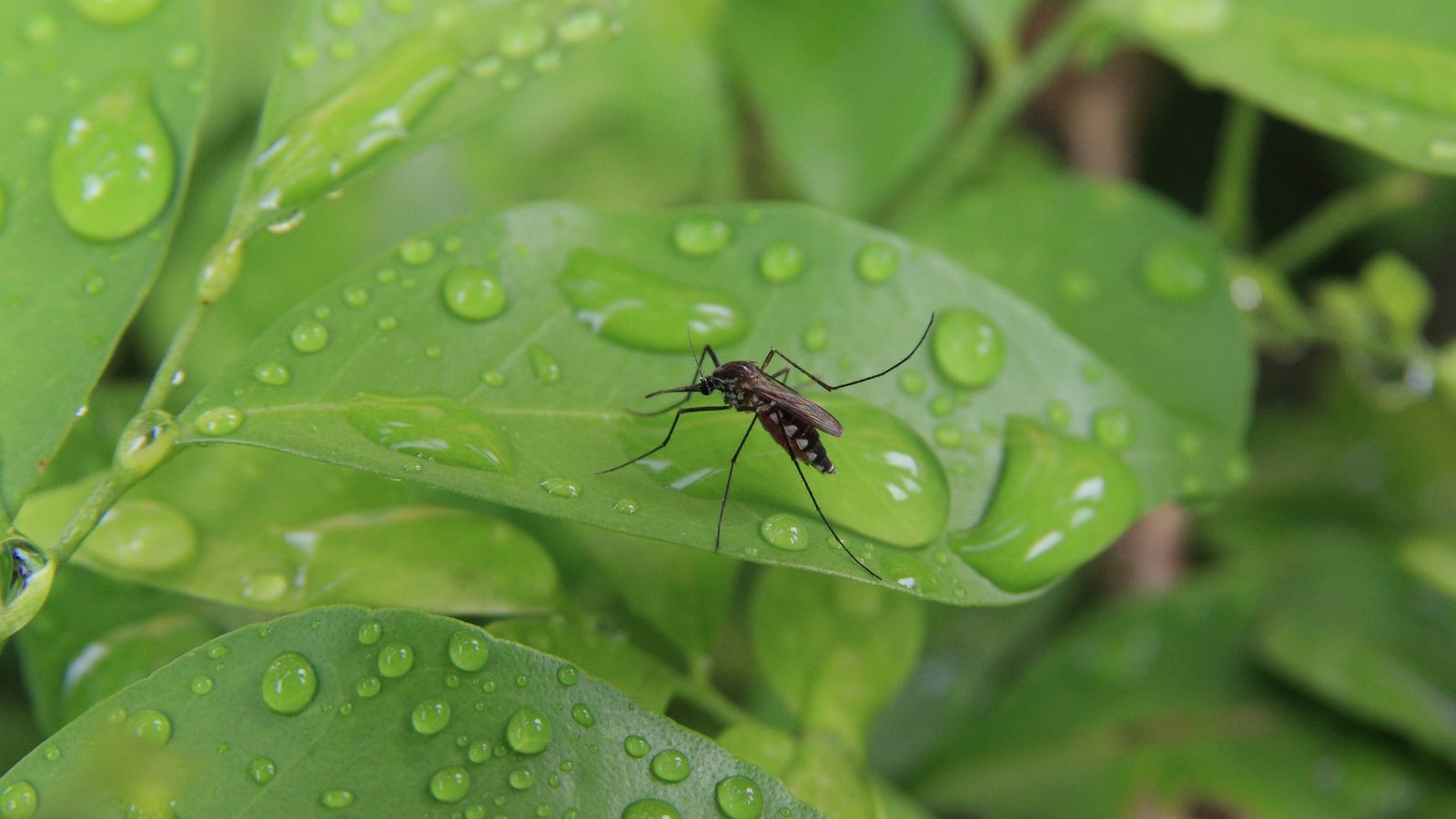
Short answer
North Carolina is really two mosquito states in one. On the coastal plain in the east, salt marshes produce clouds of aggressive saltmarsh mosquitoes, and the swamps carry eastern equine encephalitis (EEE), a rare but severe disease. In the Appalachian mountains of the west, the tree-hole mosquito spreads La Crosse encephalitis, which mostly strikes children and gives the state one of the higher La Crosse case counts in the country. Statewide, from the mountains to the coast, the mosquito you are most likely to swat in your own yard is the Asian tiger mosquito (Aedes albopictus) (Sources 1, 2, 4, 7). West Nile virus turns up across the state as well but causes only a handful of human cases in a typical year (Source 4).
Mosquito season
Mosquito season in North Carolina is long, running from spring through fall. Warmer temperatures in spring wake mosquitoes up, and state health officials mark May as Tick and Mosquito Awareness Month and begin urging residents to take precautions then (Source 5). Biting builds through the hot, humid summer and continues into the fall until sustained cool weather slows the insects down.
The disease season tracks the same curve. In the mountains, the great majority of La Crosse cases (more than 94 percent) fall between late June and early October (Source 2). EEE detections in the east typically run from midsummer into the fall, with human infections reported from July through December (Source 3). The practical takeaway is to plan for a biting and disease season measured in months, not weeks, with the peak risk arriving in the second half of summer.
The mosquitoes you meet
North Carolina is home to dozens of mosquito species. Four are worth knowing.
Asian tiger mosquito (Aedes albopictus). This is the dominant yard biter across the whole state. In a statewide container-mosquito survey that sampled 18 counties from the mountains to the coast in 2016, Aedes albopictus was by far the most common species collected, making up about 81 percent of specimens (Source 7). It bites during the day, favors shade, and breeds in artificial containers such as tires, buckets, planter trays, and clogged gutters. Because it flies only a short distance from where it hatches, the biting problem in a yard is usually being produced in that same yard or a neighbor’s. Learn more on the Aedes albopictus species page.
Saltmarsh mosquitoes (Aedes species) on the coast. Along the eastern shoreline, salt marshes and brackish pools produce large broods of saltmarsh mosquitoes. These are strong fliers that can travel well inland from the marshes where they hatch, which is why coastal counties see sudden, intense biting pressure after high tides and heavy rain. They are a major nuisance driver behind organized mosquito control in the east. See the saltmarsh mosquito species page.
Eastern tree-hole mosquito (Aedes triseriatus). This native, woodland mosquito is the primary vector of La Crosse virus in the western mountains. It breeds in water that collects in tree holes and in artificial containers in shaded, hardwood-forest yards, and it keeps the virus circulating among small mammals such as chipmunks and squirrels (Source 8). Two invasive relatives, Aedes albopictus and Aedes japonicus, have also been shown to carry La Crosse virus and may add to transmission in the region (Source 8). Read more on the Aedes triseriatus species page.
Culiseta melanura. This swamp-dwelling mosquito maintains the EEE virus in the coastal plain. It feeds almost exclusively on birds and keeps the virus circulating in freshwater swamps, but because it rarely bites people it is not the mosquito that infects humans directly; other bridge mosquitoes carry the virus from birds to people and horses (Sources 4, 9). See the Culiseta melanura species page.
Disease risk
Most mosquito bites in North Carolina are an itchy nuisance, not a health emergency. Three viruses are worth understanding, and they sort out geographically.
La Crosse encephalitis (the west). La Crosse virus is the most common mosquito-borne disease acquired within North Carolina, and it is concentrated in the mountains (Sources 1, 4). A study of state residents found 355 cases from 2000 through 2020, an average of about 17 cases per year, with the vast majority (92 percent) occurring in 19 western North Carolina counties; Buncombe, Jackson, Transylvania, and Haywood counties reported the most (Source 2). The disease falls hardest on children: the median age of cases was 9 years, and 79 percent were 18 or younger (Source 2). Most patients were hospitalized (92 percent), and the case-fatality rate was low at 1.4 percent, with no La Crosse deaths reported in the state in 2024 (Sources 2, 4). Nationally, La Crosse is a leading cause of arboviral encephalitis in children, and cases cluster in the Appalachian region (Source 8). More on the La Crosse encephalitis page.
Eastern equine encephalitis (the coastal plain). EEE is rare in people but among the most severe mosquito-borne illnesses. In North Carolina the virus is most active in the eastern part of the state, where it circulates between birds and swamp mosquitoes; horses in the coastal and, to a lesser degree, piedmont counties are affected almost every year, often fatally (Source 3). Human cases are uncommon: 12 human EEE cases were reported in North Carolina from 2003 through 2020, with infections occurring from July through December (Source 3). There is no specific antiviral treatment, which is why bite prevention matters where the virus is active. See the EEE page.
West Nile virus (statewide). West Nile virus is found across North Carolina but causes relatively few human cases in most years, and only neuroinvasive West Nile disease is reportable in the state (Source 4). In 2024, cases were reported from scattered counties including Columbus, Buncombe, Rutherford, and Cleveland (Source 6). As with the others, most people infected have no symptoms, a smaller share develop fever and flu-like illness, and a small percentage go on to serious neurological disease; older adults and people with weakened immune systems face the highest risk (Sources 4, 5). More on the West Nile virus page.
Local control
Organized mosquito control in North Carolina is limited and uneven, and it is concentrated where the nuisance and disease pressure is greatest: the coastal counties in the east. There, local programs respond to the heavy saltmarsh mosquito broods and to EEE activity with surveillance and treatment. In much of the rest of the state, including many mountain and piedmont areas, there is little or no organized public program, and control falls to individual property owners and towns. Because coverage varies so much by county, the level of public control near your home depends heavily on where you live. Checking with your county health department or environmental health office is the way to learn what, if anything, is offered locally.
State and university guidance stresses that individual-level control is difficult, because many species breed in cryptic sites and strong fliers like the saltmarsh mosquitoes move in from a distance, so reducing bites often takes both neighborhood cooperation and personal protection (Source 7).
Protect yourself
- Remove standing water weekly. Empty or discard containers that hold water: tires, buckets, planter trays, toys, and tarps. Change birdbath and pet-bowl water regularly and keep gutters clear. This “Tip and Toss” habit is the single most effective step against container-breeding mosquitoes like the Asian tiger mosquito (Sources 5, 7).
- Use an EPA-registered repellent. Products containing DEET or picaridin are effective; apply before going outside (Source 5).
- Treat clothing and gear with permethrin. A 0.5 percent permethrin product on clothing adds protection but should not be applied to skin (Source 5).
- Cover up. Wear long sleeves and long pants outdoors, especially in shaded areas during the day when the Asian tiger mosquito bites (Sources 5, 7).
- Keep mosquitoes out of the house. Install or repair window and door screens and use air conditioning where available (Source 5).
- Take extra care in the mountains with children. In western counties where La Crosse virus circulates, be especially consistent with repellent and covering up for children playing in and around shaded, wooded yards (Source 2).
- Take extra care near coastal swamps. If you spend time near salt marshes and freshwater swamps in the east, be consistent with protection, since this is where saltmarsh mosquitoes and EEE are found (Sources 3, 7).
Sources
- North Carolina Department of Health and Human Services, “La Crosse Encephalitis.” La Crosse virus is the most common mosquito-borne disease acquired in North Carolina, occurs mainly in the western part of the state, and primarily affects children. https://epi.dph.ncdhhs.gov/cd/diseases/lac.html (accessed 20 July 2026; page did not return content to automated fetch, facts drawn from the search result summary of this page).
- Boyce RM et al., “Endemic La Crosse Virus Neuroinvasive Disease in North Carolina Residents: 2000-2020,” North Carolina Medical Journal. 355 cases over 2000 to 2020, about 17 per year, 92 percent in 19 western counties (Buncombe, Jackson, Transylvania, Haywood highest), median age 9, 79 percent aged 18 or younger, 92 percent hospitalized, 1.4 percent case-fatality rate, more than 94 percent of cases late June to early October. https://ncmedicaljournal.com/article/118585-endemic-la-crosse-virus-neuroinvasive-disease-in-north-carolina-residents-2000-2020 (accessed 20 July 2026).
- North Carolina Department of Health and Human Services, “Eastern Equine Encephalitis.” EEE most common in eastern North Carolina, 12 human cases 2003 to 2020 with infections July through December, and near-annual, often fatal cases in unimmunized horses in coastal and piedmont counties. https://epi.dph.ncdhhs.gov/cd/diseases/eee.html (accessed 20 July 2026; page did not return content to automated fetch, facts drawn from the search result summary of this page).
- North Carolina Department of Health and Human Services, “North Carolina Endemic Mosquito-Borne Disease Annual Report 2024.” La Crosse virus is the most common arbovirus in the state and occurs mainly in the west, EEE is transmitted among birds by the black-tailed mosquito (Culiseta melanura), only neuroinvasive West Nile, EEE, and La Crosse disease is reportable, and no La Crosse deaths were reported in 2024. https://www.dph.ncdhhs.gov/epidemiology/communicable-disease/surveillancesummaryendemicmosquitoborne2024finalpdf/open (accessed 20 July 2026; PDF summary content, key figures cited from the report’s stated summary points).
- North Carolina Department of Health and Human Services, “NCDHHS Urges North Carolinians to Fight the Bite to Prevent Tick- and Mosquito-Borne Diseases” (5 May 2026). May as Tick and Mosquito Awareness Month, West Nile, EEE, and La Crosse as the primary locally acquired diseases, most infections asymptomatic, and prevention guidance (DEET or picaridin repellent, 0.5 percent permethrin on clothing, screens and air conditioning, and weekly Tip and Toss of standing water). https://www.ncdhhs.gov/news/press-releases/2026/05/05/ncdhhs-urges-north-carolinians-fight-bite-prevent-tick-and-mosquito-borne-diseases (accessed 20 July 2026).
- Spectrum News (Charlotte), “Three hospitalized with West Nile virus in N.C. county” (27 August 2024), and CBS17 coverage of 2024 North Carolina West Nile activity. 2024 human West Nile cases reported from Columbus County and single cases in Buncombe, Rutherford, and Cleveland counties. https://spectrumlocalnews.com/nc/charlotte/news/2024/08/27/three-hospitalized-with-west-nile-virus-in-nc-county (accessed 20 July 2026).
- Reiskind MH et al., “A Statewide Survey of Container Aedes Mosquitoes in North Carolina, 2016,” Journal of Medical Entomology. Aedes albopictus was the most common and widespread species, about 81 percent (n = 54,458) of specimens across 18 counties from the mountains to the coast; individual control is difficult because of cryptic breeding sites and far-flying species. https://pubmed.ncbi.nlm.nih.gov/30380070/ (accessed 20 July 2026; also https://academic.oup.com/jme/article-abstract/56/2/483/5149325).
- CDC, “La Crosse Virus in Aedes japonicus japonicus Mosquitoes in the Appalachian Region, United States,” Emerging Infectious Diseases. La Crosse virus is maintained in hardwood forests by the eastern tree-hole mosquito (Aedes triseriatus) using small-mammal hosts, it is a leading cause of pediatric arboviral encephalitis, and invasive Aedes albopictus and Aedes japonicus are competent vectors. https://wwwnc.cdc.gov/eid/article/21/4/14-0734_article (accessed 20 July 2026).
- CDC, “Guidelines for Eastern Equine Encephalitis Virus Surveillance and Control.” Culiseta melanura is the principal enzootic vector, maintaining EEE virus between birds in freshwater swamps, and rarely bites people, so bridge mosquitoes are needed to transmit the virus to humans and horses. https://www.cdc.gov/eastern-equine-encephalitis/php/surveillance-and-control-guidelines/ (accessed 20 July 2026).
Related
- Aedes albopictus (Asian tiger mosquito)
- Saltmarsh mosquito (Aedes)
- Aedes triseriatus (eastern tree-hole mosquito)
- Culiseta melanura
- La Crosse encephalitis
- Eastern equine encephalitis (EEE)
- West Nile virus
- Mosquito repellents that work
This guide is for general education and is not medical advice. If you have symptoms you are worried about, contact a healthcare provider or your county health department.
Last reviewed 20 July 2026.