Short answer
New Jersey runs one of the oldest and most organized mosquito-control systems in the country. The state passed the nation’s first law for organized mosquito control in 1912, and today it supports dense, statewide surveillance backed by research at Rutgers (Sources 1, 3). Along the coast, tidal marshes produce heavy broods of saltmarsh mosquitoes that bite hard and travel far inland. In yards and neighborhoods, container-breeding species take over through the summer. The main disease concern is West Nile virus, which is detected in mosquitoes across nearly every county each year, with rarer and more serious eastern equine encephalitis (EEE) appearing occasionally in the southern part of the state (Sources 2, 9).
Mosquito season
Mosquito activity in New Jersey generally runs from spring through the first hard frost, with the heaviest biting pressure in the warm months. Some species overwinter as adults and become active early, while others emerge from eggs and larvae as temperatures climb and hold. Coastal saltmarsh broods can surge after high tides and heavy rain flood the marsh surface, sometimes producing sudden, intense waves of biting adults.
Disease risk follows its own calendar. West Nile virus activity in mosquitoes and people typically builds through the summer and peaks from roughly mid-August into September, though warm years can shift the curve earlier. In 2024, New Jersey recorded human West Nile cases with symptom onset in early July, which state health officials noted was earlier than the usual pattern (Source 2).
The mosquitoes you meet
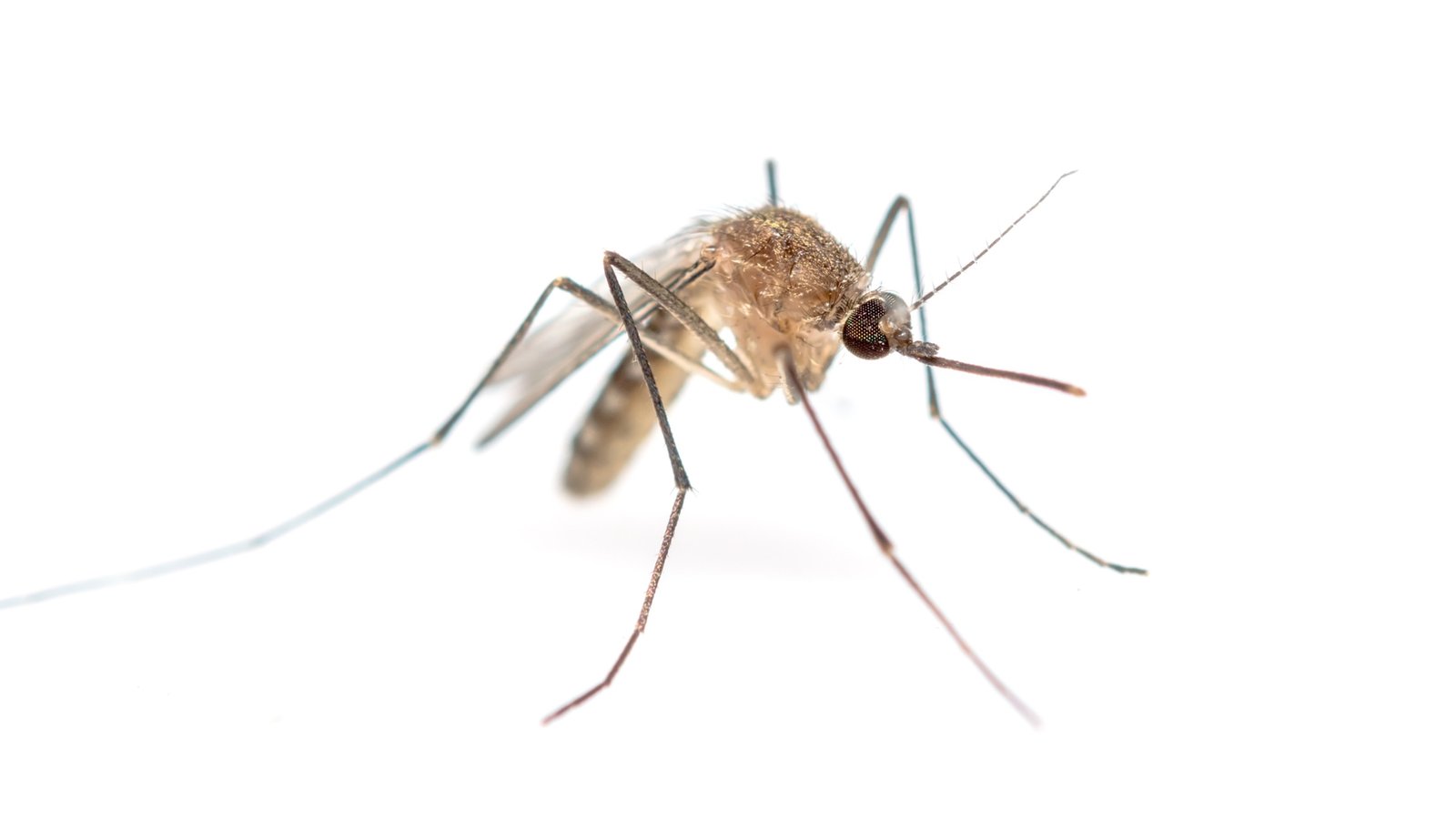
New Jersey is home to a large and varied mosquito fauna. The Rutgers Center for Vector Biology documents 63 mosquito species in the state (Source 5). A few matter most for daily life and disease.
Saltmarsh mosquito (Aedes sollicitans). This is the dominant biting mosquito of the coastal marshes and one of the classic pests that drove New Jersey to build its control system in the first place. It is an aggressive daytime and evening biter, and adults can migrate well inland from the marsh in search of hosts (Source 6). It is also considered a probable vector of eastern equine encephalitis in coastal New Jersey (Source 10). See our species guide for more.
Culex mosquitoes (house mosquitoes). The Culex group, including the northern house mosquito, is the primary driver of West Nile virus transmission in the state. These mosquitoes breed in stagnant, organically rich water such as catch basins, ditches, and neglected containers, and they build up in numbers through late summer when West Nile risk is highest (Source 2). See our species guide for more.
Asian tiger mosquito (Aedes albopictus). This container-breeding species was first found in New Jersey in Monmouth County in 1995 and is now established across much of the state (Source 7). It is a persistent backyard biter that lays eggs in artificial containers such as tires, buckets, flowerpots, and clogged gutters, which makes it hard to control because its habitat is scattered across private property (Source 7). See our species guide for more.
Disease risk
West Nile virus. West Nile is the most consistent mosquito-borne disease concern in New Jersey. In 2024, the state reported 8 human West Nile cases as of late August, including 2 deaths among older adults, in Bergen, Camden, Cumberland, Hudson, Mercer, Middlesex, and Union counties. The virus was detected in 702 mosquito pools that season, described by the state as higher than average, with the most intense mosquito activity in the northeastern counties (Source 2). Most people infected with West Nile have no symptoms, but a small share develop serious neuroinvasive disease, and risk rises with age. See our West Nile virus page for more.
Eastern equine encephalitis (EEE). EEE is rare in New Jersey but far more severe than West Nile, with a high fatality rate among those who develop illness. In 2024, one human EEE case was reported in Atlantic County, in a person under 18 who was hospitalized and later discharged, alongside an EEE-positive horse in the same county (Source 2). New Jersey health officials treat EEE as a recurring, if uncommon, threat concentrated in the state’s southern cedar-swamp and coastal regions (Source 8). See our EEE page for more.
Historical significance. New Jersey holds a notable place in the history of mosquito-borne disease. The state experienced the largest recorded EEE outbreak of its era in 1959, involving 33 human cases of encephalitis (Source 11). Events like this, together with decades of coastal saltmarsh nuisance, helped make New Jersey a national center for mosquito research and control.
Local control
New Jersey’s mosquito-control system is one of the most developed in the country, and it is old. The state legislature approved the nation’s first law establishing organized county mosquito control in 1912, and county commissions and agencies have operated under state health statutes ever since (Sources 1, 3). New Jersey has 21 counties, and mosquito control is carried out at the county level, in some counties through an autonomous mosquito extermination commission and in others through a county government agency (Source 3).
This local network is tied together by research and surveillance. The Rutgers Center for Vector Biology, part of the New Jersey Agricultural Experiment Station, conducts statewide adult-mosquito surveillance, identifies species, and supports the county programs with data and guidance (Sources 4, 5). County programs combine source reduction, larval control in ditches and marshes, catch-basin treatment, and targeted adult control, informed by trap counts and virus testing. For residents, the county mosquito control program is the right first contact for a persistent problem, standing water on public land, or questions about spraying.
Protect yourself
The same basic steps cut your risk whether the concern is coastal saltmarsh broods or backyard Culex and tiger mosquitoes.
- Use an EPA-registered repellent (for example one containing DEET, picaridin, or oil of lemon eucalyptus) and follow the label.
- Dump and drain standing water around your home at least weekly. Empty buckets, flowerpot saucers, tarps, toys, and pet dishes, and clear clogged gutters, which are prime tiger-mosquito habitat.
- Keep window and door screens in good repair.
- Cover up with long sleeves and pants during peak biting periods, especially near marshes and at dawn and dusk when many species feed.
- Contact your county mosquito control program about standing water on public property or recurring heavy activity.
Sources
- New Jersey Agricultural Experiment Station (Rutgers), History of Mosquito Control at Rutgers. Establishes New Jersey’s early leadership in organized mosquito control. https://njaes.rutgers.edu/mosquito/history.php (accessed 2026-07-20)
- New Jersey Department of Health, news release, “State Officials Urge Residents to Take Precautions Against Mosquito-Borne Illnesses,” 30 August 2024. Source for 2024 West Nile case counts, deaths, counties, 702 positive mosquito pools, and the Atlantic County EEE case. https://www.nj.gov/health/news/2024/approved/20240830.shtml (accessed 2026-07-20)
- Rutgers Center for Vector Biology, “The Organization of Professional Mosquito Control in New Jersey.” Source for the 1912 statute and the commission/agency structure. https://vectorbio.rutgers.edu/outreach/mosqorgs.htm (accessed 2026-07-20)
- Rutgers Center for Vector Biology, home page and surveillance overview. Describes statewide surveillance and the Center’s role. https://vectorbio.rutgers.edu/ (accessed 2026-07-20)
- Rutgers Center for Vector Biology, “New Jersey’s 63 Mosquito Species.” Source for the count of species documented in the state. https://vectorbio.rutgers.edu/outreach/species/njspp.php (accessed 2026-07-20)
- Rutgers Center for Vector Biology, species profile, Aedes sollicitans (Walker). Source for saltmarsh mosquito behavior and inland migration. https://vectorbio.rutgers.edu/outreach/species/sp7.htm (accessed 2026-07-20)
- Rutgers Center for Vector Biology, species profile, Aedes albopictus (Skuse). Source for first NJ detection in Monmouth County in 1995 and container-breeding behavior. https://vectorbio.rutgers.edu/outreach/species/albo.htm (accessed 2026-07-20)
- New Jersey Department of Health, Communicable Disease Service, Eastern Equine Encephalitis (EEE) topic page. Background on EEE risk in New Jersey. https://www.nj.gov/health/cd/topics/eee.shtml (accessed 2026-07-20)
- New Jersey Department of Environmental Protection, Fish & Wildlife, Mosquitoes. State overview of mosquito ecology and control in New Jersey. https://dep.nj.gov/njfw/mosquitoes/ (accessed 2026-07-20)
- U.S. Fish & Wildlife Service, species profile, Saltmarsh Mosquito (Aedes sollicitans). Notes its role as a probable EEE vector in coastal New Jersey. https://www.fws.gov/species/saltmarsh-mosquito-aedes-sollicitans (accessed 2026-07-20)
- Armstrong PM and Andreadis TG, “Ecology and Epidemiology of Eastern Equine Encephalitis Virus in the Northeastern United States: An Historical Perspective,” Journal of Medical Entomology, vol. 59, no. 1. Source for the 1959 New Jersey outbreak of 33 human cases. https://academic.oup.com/jme/article/59/1/1/6420395 (accessed 2026-07-20)
Related
- Saltmarsh mosquito (Aedes sollicitans) species guide [placeholder]
- Culex / house mosquito species guide [placeholder]
- Asian tiger mosquito (Aedes albopictus) species guide [placeholder]
- West Nile virus [placeholder]
- Eastern equine encephalitis (EEE) [placeholder]
- Neighboring regions: New York, Pennsylvania, Delaware [placeholder]
This guide is educational and is not medical advice. For diagnosis, treatment, or concerns about a mosquito-borne illness, consult a licensed healthcare provider or your local health department.
Last reviewed 20 July 2026.