Short answer
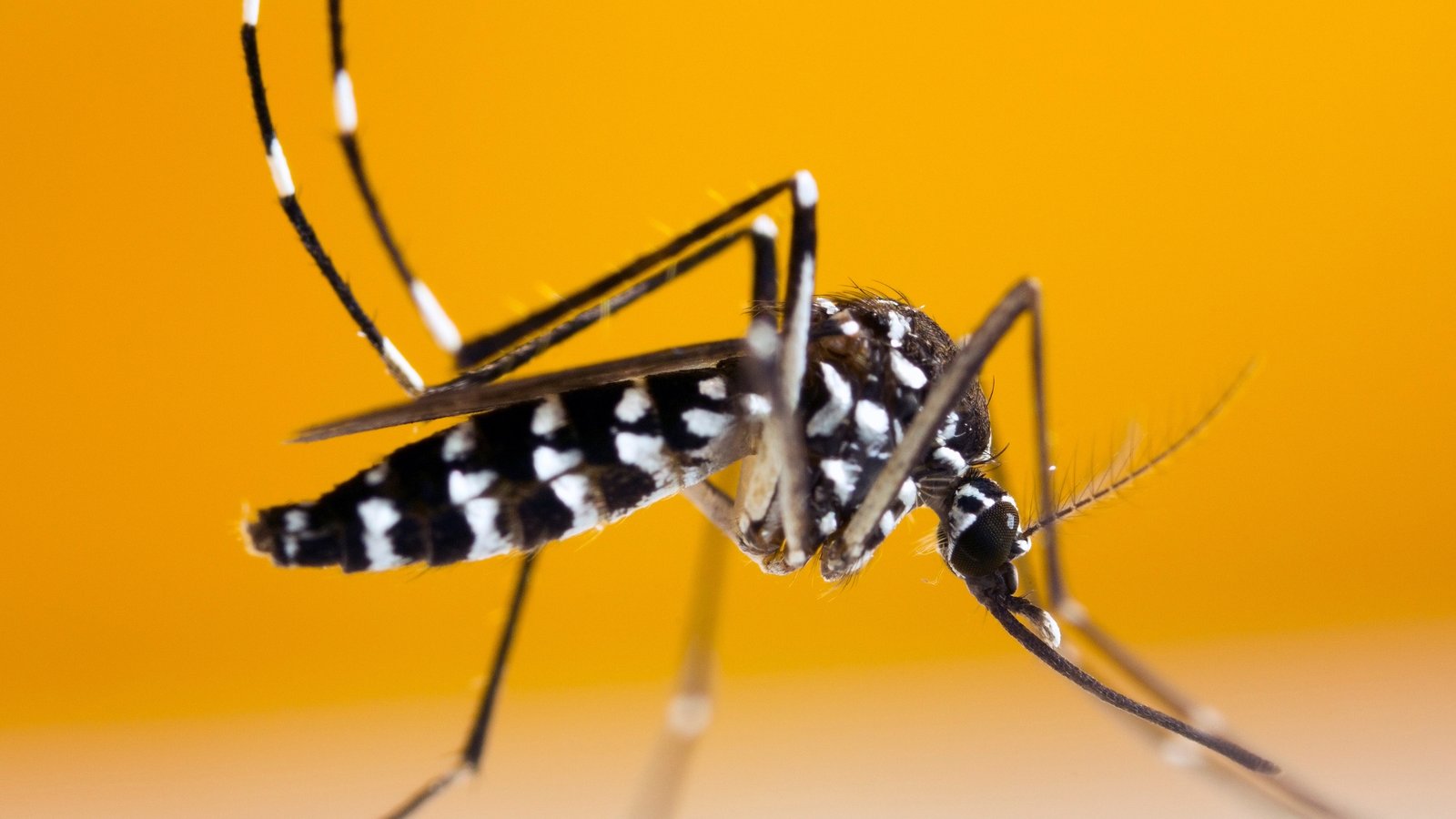
Minnesota has a short but intense mosquito season. The state warms up late and cools down early, so the biting window is compressed into roughly late spring through early fall, but the numbers within that window can be enormous. Most of that volume comes from floodwater nuisance mosquitoes, above all the summer floodwater mosquito (Aedes vexans), whose eggs hatch in large broods after rain. Disease risk is lower but real. West Nile virus is the most common mosquito-borne illness in the state and weighs heaviest in western and central farmland, while La Crosse encephalitis and Jamestown Canyon virus turn up mainly in wooded areas (Sources 1, 5, 7).
Mosquito season
The season is front-loaded by snowmelt and stretched by rain. A few overwintering adults stir on the first warm days of spring, and snowmelt mosquitoes breed in vernal pools and flooded river bottoms early in the year. The Metropolitan Mosquito Control District (MMCD) typically begins field and helicopter work in April, timed to accumulated degree-days above 40 degrees Fahrenheit (Source 4).
The heart of the season is driven by summer floodwater mosquitoes, whose broods depend on rainfall rather than the calendar. An inch or more of rain can trigger a hatch, so a wet stretch in June, July, or August produces a surge a week or two later. Cattail mosquitoes add a mid-summer wave. Activity then declines through fall as temperatures drop toward the first hard frost (Sources 1, 4). In practical terms, expect biting pressure from roughly late spring to early fall, heaviest after rain and around dawn and dusk.
The mosquitoes you meet
Minnesota has about 51 established mosquito species, and roughly half of them bite people or spread disease (Source 1). A handful account for most of what residents notice.
-
Summer floodwater mosquito (Aedes vexans). This is the dominant nuisance mosquito in the state. It lays eggs on moist soil at the edges of ponds, swamps, and wetlands, where they can wait through dry spells; rainfall floods the eggs and they hatch in large broods. It is an aggressive biter and a vector of dog heartworm, with only a minor role in West Nile transmission (Source 1). [Link to species page]
-
Culex tarsalis. A member of the Culex genus, this is the main mosquito that carries West Nile virus to people in Minnesota, and it is most active at dawn and dusk (Sources 3, 6). [Link to species page]
-
Eastern tree-hole mosquito (Aedes triseriatus). The vector of La Crosse encephalitis. It develops in water that collects in tree holes and containers, stays close to wooded and shady areas, rarely traveling more than about 200 yards from where it grew, and bites during the day (Sources 5, 8). [Link to species page]
Disease risk
Mosquito-borne disease in Minnesota is uncommon relative to the sheer nuisance load, but the state tracks it closely because cases occur every year.
-
West Nile virus (WNV) is the most common mosquito-borne disease in the state and is spread mainly by Culex tarsalis. Risk is highest in the western and central portions of Minnesota, where open farmland and prairie provide ideal habitat. In 2024 the Minnesota Department of Health reported 35 human cases, of which 28 (80 percent) were hospitalized and 26 (74 percent) had severe illness affecting the central nervous system, with one death (Sources 6, 7). [Link to West Nile virus page]
-
La Crosse encephalitis is spread by the tree-hole mosquito in wooded areas and primarily affects children; it can cause inflammation of the brain in a small share of those infected. One case was reported in Minnesota in 2024 (Sources 5, 8). [Link to La Crosse encephalitis page]
-
Jamestown Canyon virus may be transmitted by several different Aedes species across the state. Four cases were reported in 2024 (Sources 5, 7). [Link to Jamestown Canyon virus page]
Because these viruses circulate at low levels, human cases of everything other than West Nile tend to appear sporadically rather than in predictable numbers (Source 5).
Local control
The seven-county Twin Cities metro is served by the Metropolitan Mosquito Control District (MMCD), created by the state legislature in 1958. It covers Anoka, Carver, Dakota, Hennepin, Ramsey, Scott, and Washington counties, spanning 189 cities and towns and more than 3 million residents, which makes it one of the larger organized mosquito control programs in the region (Source 2). MMCD monitors and treats larval habitat, runs helicopter operations over wetlands, and tracks Culex populations and West Nile activity through the season (Sources 2, 3, 4). Outside the metro, control is patchier, so personal protection matters more.
Protect yourself
The state health department’s guidance is straightforward and applies statewide (Source 6):
- Use an EPA-registered repellent. Options include DEET (up to 30 percent, which is also considered safe for children over two months of age), picaridin, IR3535, and oil of lemon eucalyptus.
- Wear loose-fitting, light-colored, long-sleeved shirts and pants, and add a head net where mosquitoes are thick.
- Time your caution to the mosquito. Culex tarsalis (West Nile) is most active at dawn and dusk; the tree-hole mosquito (La Crosse) bites during the day in wooded areas.
- Remove standing water around the home. Turn over, cover, or throw out anything that holds water (tires, buckets, flower pots); empty and scrub bird baths, pet bowls, and fountains at least weekly; and keep gutters clear.
Sources
- Metropolitan Mosquito Control District, “Mosquito Facts” (about 51 established Minnesota species; Aedes vexans as the summer floodwater nuisance mosquito and its rainfall-triggered hatching; Culex and West Nile; tree-hole mosquito and La Crosse). https://mmcd.org/mosquito-facts/ (accessed 20 July 2026)
- Metropolitan Mosquito Control District, “Mission and History” (created 1958; seven counties; 189 cities and towns; more than 3 million residents; mission). https://mmcd.org/about/ (accessed 20 July 2026)
- Metropolitan Mosquito Control District, “West Nile Virus” (Culex species including Culex tarsalis; seven-county service area; dawn and dusk activity). https://mmcd.org/west-nile-virus/ (accessed 20 July 2026)
- Metropolitan Mosquito Control District, “Spring Update: Projecting the Mosquito and Tick Season for 2026” (spring onset and snowmelt breeding; field and helicopter work beginning in April; degree-day timing; rainfall-driven floodwater broods; decline into fall). https://mmcd.org/2026/04/02/spring-update-projecting-the-mosquito-and-tick-season-for-2026/ (accessed 20 July 2026)
- Minnesota Department of Health, “Diseases that can be Transmitted by Mosquitoes” (La Crosse spread by the tree-hole mosquito; Jamestown Canyon transmitted by several Aedes species; western Minnesota West Nile transmission cycle). https://www.health.state.mn.us/diseases/mosquitoborne/diseases.html (accessed 20 July 2026)
- Minnesota Department of Health, “Preventing Mosquitoborne Disease” (repellent active ingredients and DEET up to 30 percent; clothing; Culex tarsalis dawn and dusk, Aedes triseriatus daytime; removing standing water; Culex tarsalis as the West Nile vector). https://www.health.state.mn.us/diseases/mosquitoborne/prevention.html (accessed 20 July 2026)
- Minnesota Department of Health, “West Nile Virus Maps and Statistics” (2024 total of 35 cases, 28 hospitalized, 26 neuroinvasive, one death; highest risk in western and central Minnesota farmland and prairie). https://www.health.state.mn.us/diseases/westnile/statistics.html (accessed 20 July 2026)
- Minnesota Department of Health, “La Crosse Encephalitis Fact Sheet” (tree-hole mosquito in wooded and shady areas, rarely flying more than 200 yards; disease affects children; one Minnesota case in 2024). https://www.health.state.mn.us/diseases/lacencephalitis/lc.html (accessed 20 July 2026; page returned HTTP 403, verified via Minnesota Department of Health search result summary)
Related
- [Aedes vexans (summer floodwater mosquito)]
- [Culex tarsalis]
- [Aedes triseriatus (eastern tree-hole mosquito)]
- [West Nile virus]
- [La Crosse encephalitis]
- [Jamestown Canyon virus]
- [Mosquito control districts]
Educational note: This guide is for general education and is not medical advice. If you have symptoms of a mosquito-borne illness, contact a health care provider. For local conditions and control programs, consult the Minnesota Department of Health or your regional mosquito control district.
Last reviewed 20 July 2026.