Short answer
Georgia has a long, humid mosquito season that runs from spring through late fall, and in the warmest southern parts of the state activity can stretch across much of the year. The mosquito most people notice is the Asian tiger mosquito (Aedes albopictus), the dominant daytime biter in yards and neighborhoods across metro Atlanta and the rest of the state. The two disease concerns worth understanding are West Nile virus, which shows up most often in and around urban Atlanta, and eastern equine encephalitis (EEE), a rare but severe illness tied to the swamps of the southern coastal plain (Sources 1, 2, 3, 5).
Mosquito season
Mosquito season in Georgia is long. Across most of the state mosquitoes develop through spring, summer, and fall, and in the warm southern reaches they can develop throughout the year (Source 2). The practical result is a biting season that opens in spring, intensifies through the hot, humid summer, and continues well into the fall until sustained cool weather slows the insects down.
Heat, humidity, and standing water drive the population. Warm nights speed up the mosquito life cycle, and Georgia summers supply plenty of both warmth and the rain that fills containers, ditches, and low ground where larvae grow. In 2026 the broader West Nile season across the country began unusually early, the earliest start on record according to the CDC, with more human cases reported by early July than at the same point in any year since 2004 (Source 5). An early or wet year can shift the calendar, but the general pattern in Georgia is the same: plan for a season measured in months, not weeks.
The mosquitoes you meet
Georgia is home to many mosquito species. Three matter most for the average resident.
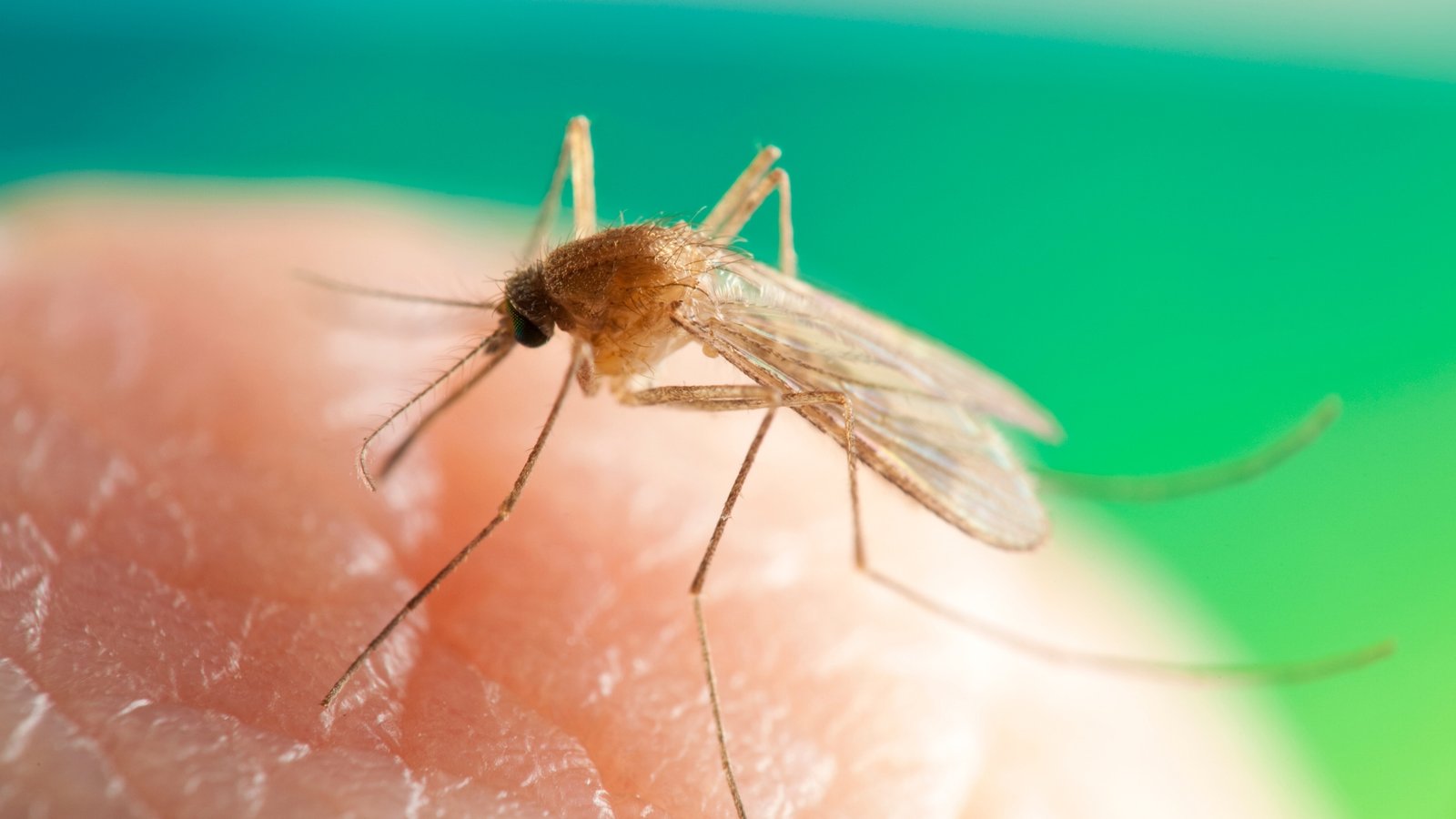
Asian tiger mosquito (Aedes albopictus). This is the mosquito you are most likely to swat in your own yard. It was first found in Georgia in 1994 and is now a common pest in every county in the state (Source 2). It bites during the day, more often in shaded areas, and it breeds in artificial containers: tires, buckets, rain barrels, planter trays, and clogged gutters. Because container-breeding mosquitoes like this one fly only a few hundred feet from where they hatch, the biting problem in a given yard is usually being produced in that same yard or a neighbor’s (Source 2). Learn more on the Aedes albopictus species page.
Southern house mosquito (Culex quinquefasciatus). This is the species behind most West Nile virus transmission in the region. Culex mosquitoes are most active from dusk into the night, and West Nile virus in Georgia is carried primarily by mosquitoes of the Culex genus (Source 1). See the Culex quinquefasciatus species page for detail.
Culiseta melanura. This swamp-dwelling mosquito is the key player in the EEE cycle in southern Georgia. It feeds almost exclusively on birds and keeps the virus circulating in freshwater swamps below the fall line, but because it rarely bites people it is not the mosquito that infects humans directly (Sources 3, 6). Read more on the Culiseta melanura species page.
Disease risk
Most mosquito bites in Georgia are an itchy nuisance, not a health emergency. Two viruses are worth taking seriously.
West Nile virus. This is the most common mosquito-borne disease in the state. From 2018 through 2022, Georgia recorded 81 cases of West Nile virus among state residents (Source 1). More recently, the state documented 54 confirmed cases and 5 deaths in 2024, and health officials noted the true number was likely higher because 24 blood donors later tested positive for the virus (Source 5). Cases cluster in and around urban Atlanta. In July 2026, a mosquito trap in the Grant Park area of Atlanta (Fulton County) tested positive for the virus (Source 5). About 80 percent of people infected with West Nile virus have no symptoms at all; a smaller share develop fever, headache, and body aches, and in rare cases the virus causes serious neurological illness such as encephalitis or meningitis (Source 1). Older adults and people with weakened immune systems face the highest risk of severe disease. More on the West Nile virus page.
Eastern equine encephalitis (EEE). EEE is rare but among the most severe mosquito-borne illnesses. In Georgia the virus lives in the swamps and woodlands below the state’s fall line, the geographic line that separates the hilly Piedmont from the flatter southern coastal plain, and most of south Georgia can be at risk in wet years (Source 6). Human cases are uncommon: a total of 35 human cases were reported in Georgia between 1964 and the late 2010s, including one case in 2018 and two in 2017 (Source 6). Nationally the CDC reports an average of about 11 human EEE cases per year, with an estimated 30 percent case-fatality rate among those who develop neuroinvasive disease and lasting neurologic problems in roughly half of survivors (Source 4). There is no vaccine and no specific antiviral treatment for either West Nile or EEE, which is why bite prevention is the practical defense. See the EEE page.
Local control
Mosquito control in Georgia is organized county by county, and coverage is uneven. Some jurisdictions run well-resourced programs. Chatham County, on the coast, operates a dedicated mosquito control department, and metro-area counties such as Fulton coordinate surveillance and treatment, setting traps, testing collected mosquitoes for virus, and responding to positive results with treatment and neighborhood outreach (Source 5). Other, mostly rural, counties have little or no organized program. Because there is no single statewide spraying service that covers every address, the level of public control near your home depends heavily on which county you live in. Checking with your county board of health or environmental health office is the way to learn what, if anything, is offered locally.
Whatever the county does, source reduction at home remains the most effective step, because the container-breeding mosquitoes that bite you are usually produced within a few hundred feet of where you are standing (Source 2).
Protect yourself
- Remove standing water weekly. Empty or discard containers that hold water: tires, buckets, planter trays, toys, and tarps. Change birdbath and pet-bowl water regularly and keep gutters clear (Source 2).
- Use an EPA-registered repellent. Products containing DEET, picaridin, IR3535, or oil of lemon eucalyptus are effective; apply before going outside, especially at dawn and dusk when Culex mosquitoes are active (Sources 1, 2).
- Cover up. Wear long sleeves and long pants in the evening and in shaded areas where the Asian tiger mosquito bites during the day (Sources 1, 2).
- Keep mosquitoes out of the house. Install or repair window and door screens (Source 1).
- Take extra care in the southern coastal plain. If you spend time near swamps and low-lying woodlands below the fall line, be especially consistent with repellent and covering up, since this is where EEE circulates (Source 6).
Sources
- Georgia Department of Public Health, “West Nile Virus.” Georgia West Nile case totals (81 cases 2018 to 2022), Culex genus as primary vector, roughly 80 percent of infections asymptomatic, and prevention guidance. https://dph.georgia.gov/mosquito-borne-diseases/wnv (accessed 20 July 2026).
- University of Georgia Extension, Department of Entomology, “Controlling Mosquitoes.” Aedes albopictus first found in Georgia in 1994 and now in every county, container breeding, short flight range, seasonal activity, and repellent options. https://ent.uga.edu/extension/controlling-mosquitoes.html (accessed 20 July 2026).
- CDC, “Transmission of Eastern Equine Encephalitis Virus.” Culiseta melanura maintains EEE virus in a bird cycle in freshwater swamps and rarely bites people; bridge vectors move the virus to humans. https://www.cdc.gov/eastern-equine-encephalitis/php/transmission/index.html (accessed 20 July 2026; page returned HTTP 403, facts drawn from the search result summary of this page).
- CDC, “About Eastern Equine Encephalitis Virus.” Average of about 11 human cases per year, an estimated 30 percent case-fatality rate for neuroinvasive disease, and lasting neurologic effects in about half of survivors. https://www.cdc.gov/eastern-equine-encephalitis/about/index.html (accessed 20 July 2026; page returned HTTP 403, facts drawn from the search result summary of this page).
- Georgia Public Broadcasting, “Mosquito trap in Atlanta tests positive for West Nile virus” (8 July 2026). 2026 positive trap in Grant Park (Fulton County), 2024 totals of 54 cases and 5 deaths with 24 positive blood donors, Fulton County control response, and the early 2026 national season. https://www.gpb.org/news/2026/07/08/mosquito-trap-in-atlanta-tests-positive-for-west-nile-virus (accessed 20 July 2026).
- Georgia Farm Bureau, “Georgia horse tests positive for Eastern Equine Encephalitis.” EEE circulates in swamps and woodlands below Georgia’s fall line via bird-feeding Culiseta melanura, with 35 human cases reported in Georgia between 1964 and the late 2010s (one in 2018, two in 2017). https://www.gfb.org/news/ag-news/post/georgia-horse-tests-positive-for-eastern-equine-encaphalitis (accessed 20 July 2026).
Related
- Aedes albopictus (Asian tiger mosquito)
- Culex quinquefasciatus (southern house mosquito)
- Culiseta melanura
- West Nile virus
- Eastern equine encephalitis (EEE)
- Mosquito repellents that work
This guide is for general education and is not medical advice. If you have symptoms you are worried about, contact a healthcare provider or your county health department.
Last reviewed 20 July 2026.