Short answer
California has one of the most developed mosquito surveillance and control systems of any state, run through more than 60 local mosquito and vector control agencies. West Nile virus is the main mosquito-borne disease risk statewide, present every year and capable of causing large outbreaks in bad seasons. On top of that long-standing risk, the state is dealing with a spreading invasion of two container-breeding mosquitoes, Aedes aegypti and Aedes albopictus, that has reached hundreds of cities. Those invasive mosquitoes can transmit dengue, and California has now recorded its first locally acquired dengue cases, which has raised local concern in Southern California (Sources 1, 3, 4, 5).
Mosquito season
California is large enough that there is no single mosquito season. In the warm, low-elevation parts of the state, mosquitoes are active for most of the year.
In the Central Valley and the southern coastal and desert regions, activity typically runs from spring through late fall and can extend into winter during mild years. West Nile virus transmission in these areas usually peaks from July through September, when temperatures are highest and the mosquitoes that carry it are most abundant (Sources 1, 6).
In the far north, along the coast, and in the Sierra Nevada and other mountains, the season is shorter and is compressed into the warmer months. Higher elevations freeze in winter, which ends mosquito activity until spring.
The invasive Aedes mosquitoes complicate this picture. Because they breed in small artificial containers close to homes and bite aggressively during the day, they can create a biting nuisance in urban neighborhoods well into the fall, separate from the evening-biting mosquitoes people are used to (Source 3).
The mosquitoes you meet
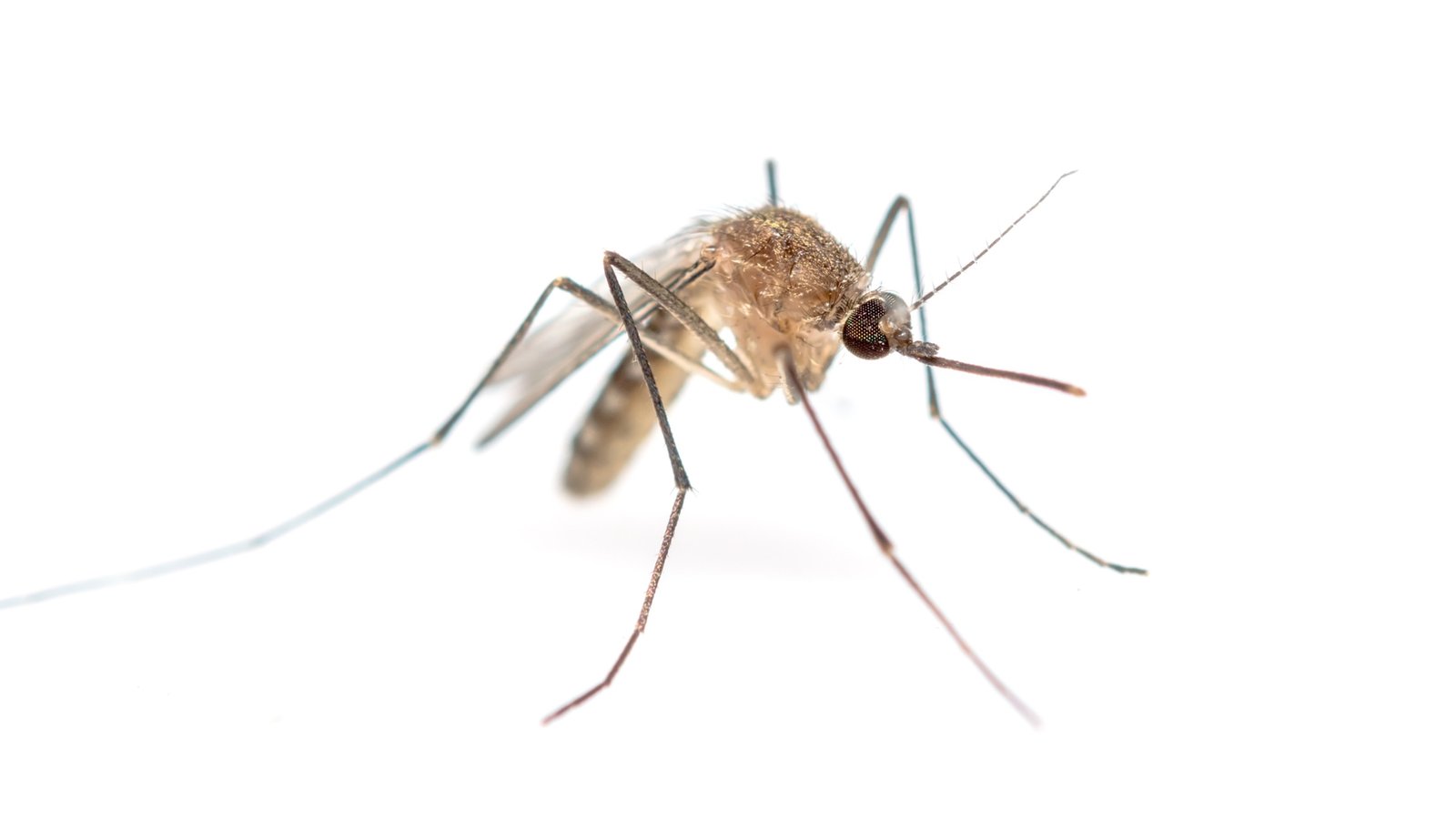
California has dozens of mosquito species. A few matter most for biting and disease.
- Culex tarsalis (western encephalitis mosquito) is the primary driver of West Nile virus transmission in the Central Valley and rural California. It breeds in standing water in agricultural and wetland settings and bites in the evening and at night. [Link to species: species-culex-tarsalis]
- Culex quinquefasciatus (southern house mosquito) is the main West Nile virus vector in Southern California and in cities. It breeds in polluted standing water such as neglected pools, catch basins, and containers, and bites at dusk and after dark. [Link to species: species-culex-quinquefasciatus]
- Aedes aegypti (yellow fever mosquito) is the invasive species now spreading through many California cities. It is a small black-and-white mosquito that breeds in tiny containers of water and bites during the day, often around the ankles. It is the species of greatest concern for local dengue transmission. [Link to species: species-aedes-aegypti]
- Aedes albopictus (Asian tiger mosquito) is a second invasive container-breeder, present in a small number of counties. It can also transmit dengue and related viruses. [Link to species: species-aedes-albopictus]
(Sources 3, 6)
Disease risk
West Nile virus is the dominant mosquito-borne disease risk in California. It has been detected in the state every year since it arrived in 2003. Since then, California has recorded 8,367 human cases and 417 deaths through mid-2026, more than any other single reporting period would suggest from a quiet year alone (Source 1). The burden varies sharply by year. In 2014, one of the worst seasons on record, the state reported 801 human cases (Source 6). In 2025, California reported 117 human cases and 11 deaths. As of 17 July 2026, 2 human cases had been reported for the current year, with the summer peak still ahead (Source 1). Most people infected with West Nile virus have no symptoms, but a small share develop severe neuroinvasive disease, which can be disabling or fatal, and risk rises with age.
Locally acquired dengue is a newer and smaller, but real, risk. As invasive Aedes aegypti has spread, California has recorded its first cases of dengue transmitted within the state rather than acquired during travel. In October through December 2023, the first known locally acquired dengue infections in California were identified in Pasadena, in Los Angeles County (Source 4). The following year, from August through November 2024, a total of 14 locally acquired dengue cases were identified in Los Angeles County, with Aedes aegypti the dominant mosquito found near the case households (Source 5). These numbers are far below West Nile virus totals, and dengue remains rare in California, but the appearance of any local transmission is a significant change and is being watched closely by public health agencies. [Link to disease pages: disease-west-nile-virus, disease-dengue]
Local control
California runs an unusually extensive network of local mosquito and vector control. The Mosquito and Vector Control Association of California represents more than 60 local agencies and districts that carry out surveillance and control across the state (Source 7). These districts trap and test mosquitoes, monitor dead birds and sentinel chickens for West Nile virus, treat standing water and storm drains, and respond to invasive Aedes detections and to disease cases.
Statewide surveillance data feed into the California West Nile Virus website and CDPH, which report human cases, infected mosquito samples, dead birds, and other indicators through the season (Sources 1, 2). This is why California can often flag rising West Nile virus activity in a given area before human cases climb. To find the agency for a specific address, residents can look up their local mosquito and vector control district, which handles reports of standing water, neglected pools, and heavy biting.
Protect yourself
The same steps reduce risk from both West Nile virus and invasive Aedes mosquitoes.
- Use an EPA-registered insect repellent. Products with DEET, picaridin, IR3535, or oil of lemon eucalyptus are effective when used as directed (Source 8).
- Dump standing water weekly. Empty and scrub containers, flowerpot saucers, buckets, birdbaths, and anything that holds water. Invasive Aedes need only a small amount of water to breed, so even bottle caps and plant trays matter (Source 3).
- Keep mosquitoes out of the house. Repair window and door screens and keep them closed.
- Cover up during peak biting times. Wear long sleeves and pants when practical. Remember that invasive Aedes bite during the day, while the West Nile virus mosquitoes bite mostly at dusk and after dark.
- Report problems. Contact your local mosquito and vector control district about neglected pools, standing water, or unusual daytime biting.
Sources
- California West Nile Virus Website, statewide surveillance totals (https://westnile.ca.gov/) [accessed 2026-07-20]. Current-year and prior-year human case and death counts, and cumulative totals since 2003.
- California Department of Public Health, West Nile Virus (https://www.cdph.ca.gov/Programs/CID/DCDC/Pages/WestNileVirus.aspx) [accessed 2026-07-20]. State program overview and surveillance.
- California Department of Public Health, Aedes aegypti and Aedes albopictus Mosquitoes (https://www.cdph.ca.gov/Programs/CID/DCDC/pages/Aedes-aegypti-and-Aedes-albopictus-mosquitoes.aspx) [accessed 2026-07-20]. Invasive Aedes distribution, first detection in 2013, and county spread.
- Centers for Disease Control and Prevention, Notes from the Field: First Locally Acquired Dengue Virus Infections, Pasadena, California, October to December 2023, MMWR (https://www.cdc.gov/mmwr/volumes/73/wr/mm7342a4.htm) [accessed 2026-07-20]. First locally acquired dengue cases in California.
- Centers for Disease Control and Prevention, Investigation of and Response to Autochthonous Dengue, Los Angeles County, California, August to November 2024, Emerging Infectious Diseases (https://wwwnc.cdc.gov/eid/article/32/5/25-1812_article) [accessed 2026-07-20]. Fourteen locally acquired dengue cases; Aedes aegypti dominant near case households.
- Snow, et al., West Nile virus in California, 2003 to 2018: A persistent threat, PLOS Neglected Tropical Diseases (https://journals.plos.org/plosntds/article?id=10.1371%2Fjournal.pntd.0008841) [accessed 2026-07-20]. Long-term trends, primary vectors, and the 801-case 2014 season.
- Mosquito and Vector Control Association of California (https://www.mvcac.org/) [accessed 2026-07-20]. Represents more than 60 local mosquito and vector control agencies statewide.
- Centers for Disease Control and Prevention, Prevent Mosquito Bites (https://www.cdc.gov/mosquitoes/prevention/index.html) [accessed 2026-07-20]. EPA-registered repellent active ingredients and bite-prevention guidance.
Related
- Related: West Nile virus
- Related: Dengue
- Related: Culex tarsalis
- Related: Culex quinquefasciatus
- Related: Aedes aegypti
- Related: Aedes albopictus
This guide is educational and is not medical advice. For diagnosis or treatment, consult a licensed healthcare provider, and for local mosquito problems contact your mosquito and vector control district.
Last reviewed 20 July 2026.