The short answer
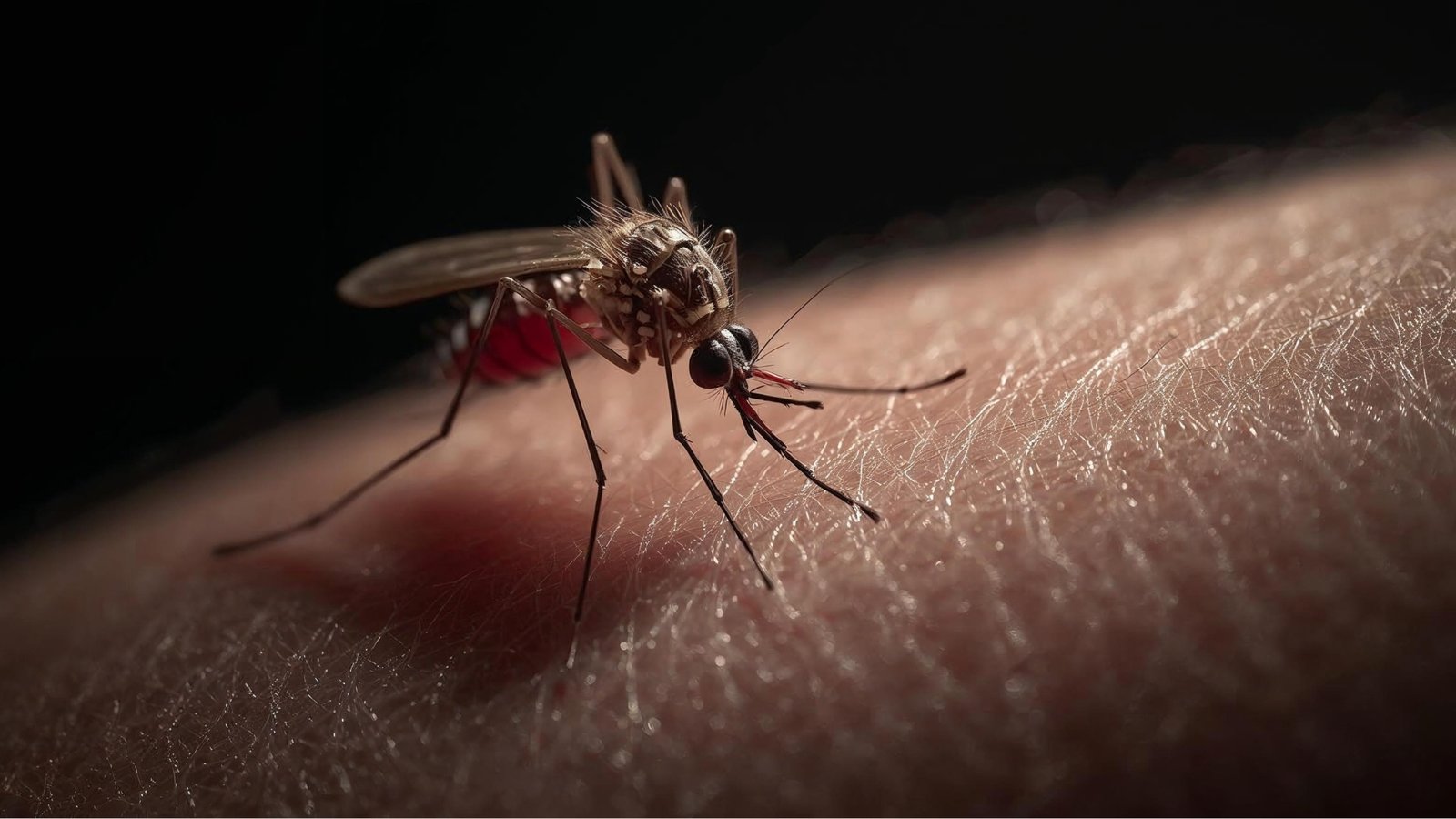
Yes, in principle a single mosquito bite can transmit a virus. That is how mosquito-borne diseases spread, one bite at a time. But the odds that any one bite makes you sick are very low, and the overwhelming majority of bites carry no pathogen at all.
Two things have to line up for a bite to infect you. The mosquito has to be carrying a pathogen, and that pathogen has to be one that can make people ill. Most mosquitoes are carrying nothing. Even in a place with active virus circulation, only a small fraction of the local mosquitoes are infected at any given time. So the realistic risk from the bite you got last night is close to zero. It is worth taking everyday precautions, but a single bite is not usually a reason to worry.
Why the risk per bite is low
Three filters sit between a bite and an infection, and each one removes most of the risk.
First, species. There are roughly 200 mosquito species in the country, and only a handful transmit disease to people. West Nile virus, the most common mosquito-borne infection here, is spread mainly by Culex mosquitoes. Dengue, Zika, and yellow fever depend on Aedes species. If the mosquito that bit you is not one of these vectors, it cannot pass those viruses to you no matter what.
Second, infection rate. Even among vector species, most individual mosquitoes are not infected. Studies of West Nile virus during outbreaks have measured minimum infection rates on the order of a fraction of a percent of mosquitoes tested, rising to a few percent only in the most intense local transmission (CDC-linked epidemiology reviews). In plain terms, you would have to be bitten by a lot of the right kind of mosquito, in the right place, at the right time, before the numbers turned against you.
Third, local transmission has to be present. A virus can only be in the mosquitoes if it is already circulating in the area, usually in a wildlife reservoir such as birds for West Nile virus. Where there is no active transmission, there is no virus in the mosquito, and the bite is just an itchy bump.
Put those filters together and it is clear why the risk from one bite is small. And even if you are infected, illness is not guaranteed. For West Nile virus, roughly 8 in 10 infected people never develop any symptoms at all (CDC).
When a single bite matters more
The odds shift when the surrounding conditions change. A single bite carries more weight if:
- You are in an area and season with active transmission. Late summer and early fall are the peak months for West Nile virus in most of the country. A bite during a local outbreak is not the same as a bite in the dead of winter.
- You are in a higher-risk group. People over 60 and those with weakened immune systems, diabetes, cancer, or organ transplants face a much greater chance of severe illness if they are infected with West Nile virus (CDC). For them, any infection is more consequential.
- You have traveled to an endemic area. Dengue is common in Puerto Rico and many tropical destinations, where a much larger share of mosquitoes may carry the virus. In 2024 Puerto Rico reported thousands of dengue cases and declared a public health emergency (CDC MMWR). In the continental states, locally acquired dengue has stayed limited to sporadic cases in a few states such as Florida, Hawaii, Texas, Arizona, and California (CDC). Most dengue diagnosed on the mainland is travel-associated.
None of this makes one bite a crisis. It means the context around the bite, where and when it happened and who you are, matters more than the bite itself.
What raises your overall risk
Your real exposure is not one bite, it is the total number of bites you take from the right mosquitoes over a whole season. Two factors drive that total.
- Volume of bites. Each bite is a small independent chance. Spending evenings outdoors unprotected through peak season, in a yard with standing water and lots of mosquitoes, stacks many small chances on top of each other. That is where the cumulative risk actually lives, not in any single bite.
- Location. Where you live and travel sets the ceiling on your risk. West Nile virus has been found in nearly every mainland state, but activity varies enormously year to year and county to county. Eastern equine encephalitis is rare, with an average of about 11 human cases a year nationwide, concentrated in eastern and Gulf Coast states (CDC). Geography decides which diseases are even on the table.
The practical implication is reassuring. You lower your season-long risk with the same simple habits every day, and you do not need to react to individual bites.
The practical takeaway
Do not panic over one bite. The math is on your side. Most mosquitoes carry nothing, most bites transmit nothing, and even most infections cause no illness.
Do use everyday prevention, because it lowers the cumulative risk that actually matters:
- Use an EPA-registered insect repellent with DEET, picaridin, IR3535, oil of lemon eucalyptus (OLE), para-menthane-diol (PMD), or 2-undecanone, and follow the label (CDC, EPA).
- Wear loose, long-sleeved shirts and pants when mosquitoes are active.
- Repair screens and dump standing water around your home to reduce breeding sites (CDC).
Do watch for symptoms if you are in a higher-risk group or you were bitten in an area with active transmission. Most mosquito-borne illness in the country shows up as fever with headache, body aches, and sometimes a rash, typically within a few days to two weeks of the bite.
When to see a doctor
See a healthcare provider promptly if, within about two weeks of mosquito exposure, you develop:
- Fever with severe headache, a stiff neck, confusion, muscle weakness, tremors, seizures, or trouble staying awake. These can signal neuroinvasive disease and need urgent care. About 1 in 150 people infected with West Nile virus develop this severe form (CDC).
- High fever after recent travel to a dengue-endemic area, especially with severe belly pain, persistent vomiting, or any bleeding. Dengue can worsen quickly and warrants medical evaluation (CDC).
If you are simply dealing with an itchy bite and feel well, you do not need a doctor. Watchful waiting and ordinary prevention are enough.
Sources
- CDC, About West Nile Virus. Roughly 8 in 10 infected people have no symptoms, about 1 in 5 develop febrile illness, and about 1 in 150 develop severe neuroinvasive disease; higher-risk groups include people over 60 and those with certain medical conditions. https://www.cdc.gov/west-nile-virus/about/index.html (accessed 2026-07-20)
- CDC, West Nile Virus (main topic page). West Nile virus is the leading cause of mosquito-borne disease in the continental states and is spread mainly by Culex mosquitoes. https://www.cdc.gov/west-nile-virus/index.html (accessed 2026-07-20)
- PMC, Epidemiology and Transmission Dynamics of West Nile Virus Disease. Measured minimum infection rates in mosquitoes on the order of a fraction of a percent, rising to a few percent during intense transmission; Culex as primary vector with a bird reservoir. https://pmc.ncbi.nlm.nih.gov/articles/PMC3320478/ (accessed 2026-07-20)
- CDC, Preventing Mosquito Bites. Recommends EPA-registered repellents, long sleeves and pants, screen repair, and removing standing water. https://www.cdc.gov/mosquitoes/prevention/index.html (accessed 2026-07-20)
- US EPA, DEET. DEET is an EPA-registered repellent effective against mosquitoes when used as directed. https://www.epa.gov/insect-repellents/deet (accessed 2026-07-20)
- CDC Health Alert Network, Dengue Virus Infections in the United States (HAN 00523). Local transmission on the mainland has been limited to sporadic cases in states such as Florida, Hawaii, Texas, Arizona, and California; most mainland dengue is travel-associated. https://www.cdc.gov/han/php/notices/han00523.html (accessed 2026-07-20)
- CDC MMWR, Dengue Outbreak and Response, Puerto Rico, 2024. Thousands of dengue cases reported in Puerto Rico in 2024 with transmission above the epidemic threshold. https://www.cdc.gov/mmwr/volumes/74/wr/mm7405a1.htm (accessed 2026-07-20)
- CDC, About Eastern Equine Encephalitis Virus. An average of about 11 human cases per year nationwide, concentrated in eastern and Gulf Coast states; roughly 30 percent of severe cases are fatal. https://www.cdc.gov/eastern-equine-encephalitis/about/index.html (accessed 2026-07-20)
- CDC Yellow Book, Mosquitoes, Ticks, and Other Arthropods. Bite-avoidance guidance for travelers, including repellents and protective clothing. https://www.cdc.gov/yellow-book/hcp/environmental-hazards-risks/mosquitoes-ticks-and-other-arthropods.html (accessed 2026-07-20)
Related
- West Nile virus: symptoms, risk, and prevention [placeholder]
- Dengue and travel: what to know before you go [placeholder]
- Which mosquito species spread disease [placeholder]
- How long after a bite do symptoms appear [placeholder]
- Who is at higher risk from mosquito-borne illness [placeholder]
- Everyday mosquito bite prevention that works [placeholder]
This page is for general education and is not medical advice. If you are concerned about symptoms after a mosquito bite, contact a healthcare provider. Last reviewed 20 July 2026.