The short answer
The Pacific Northwest is really two mosquito regions in one. West of the Cascades, in the wet, mild country around Seattle, Portland, and the coast, mosquitoes are common in summer but mosquito-borne disease risk is relatively low. East of the Cascades, in the drier, heavily irrigated valleys of central and eastern Washington, eastern Oregon, and southern Idaho, the picture changes. There, warm summers and large-scale irrigation feed strong populations of Culex tarsalis, the main rural carrier of West Nile virus in the interior West, and real West Nile activity shows up most years.
So the honest answer depends on where you are. On the wet side of the mountains, mosquitoes are mostly a nuisance. In the irrigated Columbia Basin and the eastern high desert, West Nile virus is a genuine, if usually low-level, seasonal risk (Washington State Department of Health; Oregon Health Authority).
Mosquito season here
Mosquito season in the Pacific Northwest is a summer season. West of the Cascades, mosquitoes become active in late spring and stay out through the warm months, with mosquito development possible in any standing water that lasts more than about four days (Multnomah County, Oregon).
In the dry interior, the season runs longer and the disease-carrying mosquitoes peak in the hottest part of it. Washington’s earliest West Nile detections have occurred in May and the latest in October, so the window of possible transmission stretches across most of the summer and into fall (Washington State Department of Health). The key vector, Culex tarsalis, is generally most abundant in the heat of July and August, which is when human risk is highest in eastern Washington, eastern Oregon, and southern Idaho (Idaho health districts).
The mosquitoes you meet
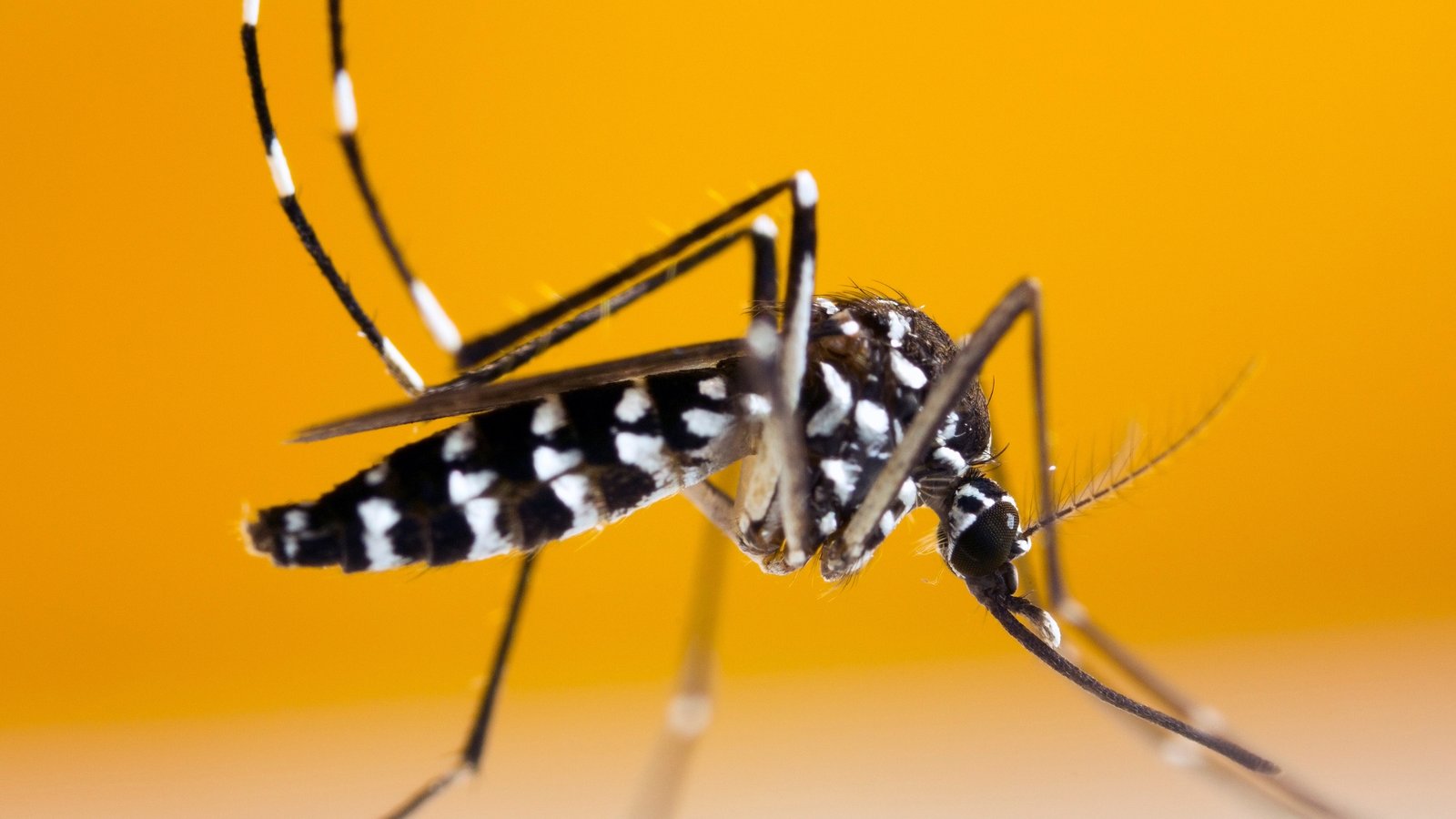
A handful of groups account for most of what you will encounter.
Culex mosquitoes are the ones that matter most for disease. Washington monitors both Culex pipiens and Culex tarsalis as West Nile virus vectors (Washington State Department of Health). Culex tarsalis is the classic mosquito of irrigated farmland and rural wetlands in the dry interior, while Culex pipiens is more of a house-and-container mosquito found in towns on both sides of the mountains (Multnomah County, Oregon). Culex mosquitoes bite mainly from dusk to dawn.
Floodwater Aedes are the aggressive nuisance biters of the wet lowlands. Species such as Aedes vexans and Ochlerotatus sticticus lay eggs on ground that later floods, including river bottoms and wildlife refuges around the lower Columbia and Willamette, and they hatch in large numbers, usually in spring (Multnomah County, Oregon). They are not important West Nile carriers, but they are the mosquitoes most likely to drive you indoors on a summer evening near a river.
Snowmelt Aedes are the mountain mosquitoes. As high-country snow melts through spring and early summer, snowmelt Aedes emerge from temporary pools in the Cascades and the Blue Mountains and can be abundant and persistent, biting during the day rather than only at dusk. They are a nuisance to hikers and campers rather than a meaningful disease risk.
For more detail on each mosquito, see the linked species pages [link: Culex species], [link: Aedes species].
Disease risk
West Nile virus is the mosquito-borne disease that matters in the Pacific Northwest, and its risk is strongly geographic. Most people who are infected have no symptoms. About 20 percent develop a fever with headache, body aches, joint pain, vomiting, diarrhea, or rash, and roughly 1 in 150 infected people develop severe neuroinvasive illness affecting the brain and nervous system (Washington State Department of Health).
The risk is concentrated on the dry side of the Cascades. In Washington, the virus is found most often in south-central and eastern parts of the state, and the historical record is dominated by the irrigated Columbia Basin counties such as Yakima, Benton, Grant, and Franklin (Washington State Department of Health). Washington’s worst year on record was 2009, with 38 human cases statewide, of which Yakima County alone accounted for 21 (Washington State Department of Health). In most years the statewide total is much lower, on the order of a handful of cases, and recent seasons have again centered on eastern counties such as Walla Walla, Franklin, and Yakima (Washington State Department of Health).
Oregon follows the same east-of-the-Cascades pattern. Human cases are uncommon and cluster in the eastern part of the state and the high desert. In 2023, for example, West Nile activity in eastern Oregon was concentrated in Baker and Malheur counties, with positive mosquito pools and presumptive human cases reported there (Oregon Health Authority). Southern Idaho sees the same dynamic: in 2024 the first human West Nile cases of the year were reported in Ada and Canyon counties in the southwest of the state (Central District Health, Idaho).
The wet coast and the western valleys carry a much lower burden. Mosquitoes are still a summer nuisance there, but sustained West Nile transmission is far less common than in the irrigated interior.
For the full picture on symptoms, testing, and prevention, see the disease page [link: West Nile virus].
Local control and what to do
The most useful thing most people can do is remove standing water, because mosquitoes can breed in water that stands for only a few days (Multnomah County, Oregon).
- Empty, drain, or cover anything that holds water: buckets, plant saucers, tires, toys, and clogged gutters.
- Change the water in bird baths, decorative ponds, and animal water troughs about once a week (Central District Health, Idaho).
- Keep window and door screens in good repair so mosquitoes stay outside.
- Use an EPA-registered insect repellent when outdoors, and take extra care from dusk to dawn, when Culex mosquitoes bite most (Central District Health, Idaho).
- In the mountains, expect daytime biting from snowmelt mosquitoes and cover exposed skin.
Public vector control is strongest in the irrigated interior, where it is needed most. Local mosquito control and abatement districts in the Columbia Basin and eastern valleys set traps, test mosquitoes for West Nile virus, and treat breeding areas through the summer (Oregon Health Authority; Washington State Department of Health). Reporting standing water and requesting help from your county or district vector control program helps them target treatment where risk is real.
Sources
- Washington State Department of Health. “West Nile Virus.” (Culex pipiens and Cx. tarsalis as monitored vectors; virus found most often in south-central Washington; earliest detections in May, latest in October; symptom breakdown, roughly 20 percent symptomatic and about 1 in 150 severe.) https://doh.wa.gov/you-and-your-family/illness-and-disease-z/west-nile-virus (accessed 2026-07-20)
- Washington State Department of Health. “Historical West Nile Virus Activity.” (Eastern Washington and Columbia Basin counties dominate the record; 2009 peak of 38 human cases statewide with 21 in Yakima County.) https://doh.wa.gov/data-and-statistical-reports/diseases-and-chronic-conditions/west-nile-virus/historical-west-nile-virus-activity (accessed 2026-07-20)
- Washington State Department of Health. “West Nile Virus Data.” (Recent-season human cases concentrated in eastern Washington counties including Walla Walla, Franklin, and Yakima.) https://doh.wa.gov/data-and-statistical-reports/diseases-and-chronic-conditions/west-nile-virus (accessed 2026-07-20)
- Oregon Health Authority, Public Health Division. “West Nile Virus.” (West Nile surveillance in Oregon and where activity is tracked.) https://www.oregon.gov/oha/ph/diseasesconditions/diseasesaz/westnilevirus/pages/wnile.aspx (accessed 2026-07-20)
- Oregon Health Authority. “Eastern Oregon counties see jump in mosquitoes with West Nile virus” (public health bulletin, August 2023). (2023 activity concentrated in Baker and Malheur counties, eastern Oregon; positive mosquito pools and presumptive human cases.) https://content.govdelivery.com/accounts/ORDHS/bulletins/36a5981 (accessed 2026-07-20)
- Central District Health, Idaho. “First human infections of West Nile virus in Idaho this year.” (First 2024 human cases in Ada and Canyon counties; prevention guidance including weekly water changes, screens, repellent, and dusk-to-dawn caution.) https://cdh.idaho.gov/first-human-infections-of-west-nile-virus-in-idaho-this-year/ (accessed 2026-07-20)
- Multnomah County, Oregon. “Mosquitoes.” (Culex pipiens; floodwater species Aedes vexans and Ochlerotatus sticticus in spring; mosquitoes develop in standing water lasting more than four days; mosquitofish season May to August.) https://www.multco.us/health/staying-healthy/pest-prevention-and-control/mosquitoes (accessed 2026-07-20)
Related
- [link: Culex species]
- [link: Aedes species]
- [link: West Nile virus]
- [link: Mosquito season]
- [link: Regions overview]
Educational note: This page is for general information and is not medical advice. If you have symptoms of a mosquito-borne illness, contact a healthcare provider or your local health department.
Last reviewed 20 July 2026.