The short answer
You do not need a fancy system to keep mosquitoes off a backyard party. A few days of prep plus a handful of day-of steps make a real difference. In the days before, walk the yard and empty every container holding water, because that is where the next batch of biting mosquitoes is growing (CDC 1). On the day itself, set up oscillating fans where people will sit, because mosquitoes are weak fliers and a steady breeze keeps them off (AMCA 3). Put out an EPA-registered repellent for guests who want it (EPA 4). If you choose to fog the yard, do it well before anyone arrives, and know that the relief is short-lived (MSU 7). Timing helps too: schedule around dusk if you can, since that is when many backyard mosquitoes bite hardest.
The rest of this page explains each step and why it works.
In the days before
The single most effective thing you can do happens before the party, not during it. Mosquitoes lay eggs in standing water, and the common backyard biters develop from egg to adult in about a week in warm weather. Clear the water now and you shrink the population that would otherwise be looking for guests.
Walk the whole yard and empty, scrub, turn over, cover, or throw out anything that holds water at least once a week: buckets, toys, planter saucers, tarps, wheelbarrows, trash-can lids, birdbaths, and clogged gutters (CDC 1, CDC 2). Scrubbing matters because eggs stick to container walls, so a quick dump alone can leave them behind (CDC 2). For rain barrels and other water you want to keep, cover them tightly, or screen the opening with mesh finer than an adult mosquito (CDC 2). The University of Maryland Extension suggests checking for water twice a week during mosquito season, since it only takes a few days of standing water to produce adults (UMD 6).
This step is the foundation. For the full method, see the source-reduction guide linked under Related.
The day of
Layer a few simple measures where people will actually gather.
Set up oscillating fans around the seating and food areas. Mosquitoes are relatively weak fliers, so a large fan on a deck or patio is a genuinely useful low-tech deterrent (AMCA 3). Moving air also scatters the carbon dioxide and body odors that mosquitoes home in on, so pointing a fan across the space where people stand works better than aiming it at one chair. See the fans-and-airflow page under Related for placement.
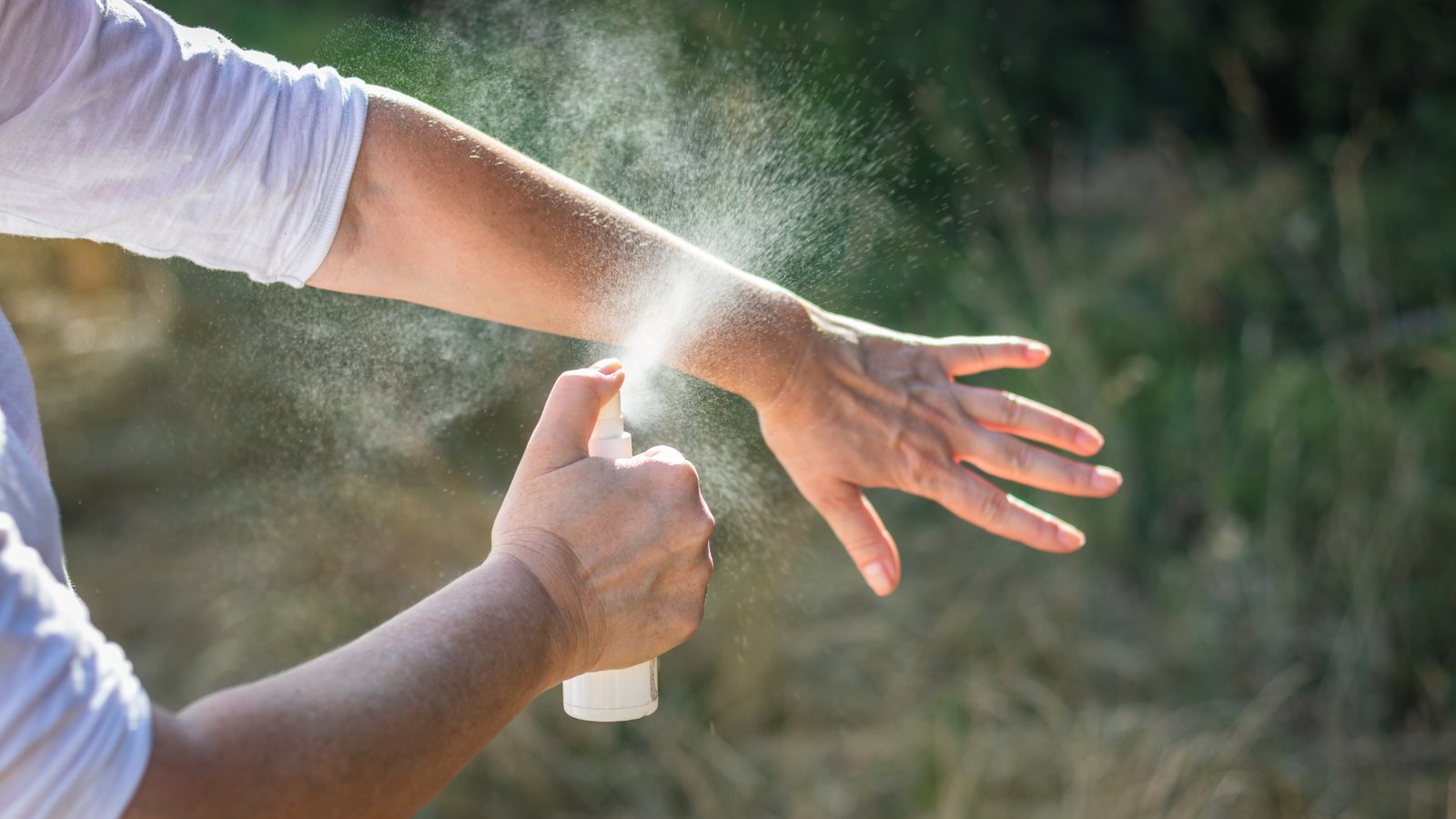
Offer repellent. Set out one or more EPA-registered repellents and let guests apply their own. Products registered by the EPA have been tested for both safety and effectiveness against mosquitoes, and registered active ingredients include DEET, picaridin, IR3535, and oil of lemon eucalyptus (EPA 4, EPA 5). The EPA’s online search tool lets you pick a product by how long you need protection to last (EPA 4). A basket of repellent by the door is an easy, low-pressure way to cover guests who want it.
If you choose to fog, do it well before guests arrive, not during the event. A backyard fog or space spray kills the adult mosquitoes present at the moment it is applied, and the relief is temporary because new mosquitoes move back in (MSU 7). It is optional, not necessary, and it comes with a real trade-off: the insecticide can drift onto flowering plants a hundred meters or more away and harm bees and butterflies, and residues can stay toxic to pollinators for days or weeks (MSU 7). If you fog, follow the product label exactly, keep it away from blooming plants, and spray in the early morning or late evening when pollinators are not foraging (MSU 7). Source reduction and fans do the heavier lifting; treat fogging as an extra, not the plan.
Light the space. As the sun goes down, put lighting where people move and gather. This is a comfort and safety step rather than a mosquito-control one, and it pairs naturally with running the fans through the evening.
What does not work
A few popular products give far less protection than their marketing suggests, so do not build your plan around them.
Citronella candles and torches have only a mild, local effect. The American Mosquito Control Association notes that citronella candles have a mild repellent effect but do not offer significantly more protection than other candles that produce smoke, and their reach is small and easily undone by a breeze (AMCA 3). They can be part of the ambiance, but they will not protect a whole yard.
Bug zappers, mosquito traps, and “mosquito-repelling” plants are also poor bets. The University of Maryland Extension advises against relying on bug zappers, mosquito traps, or plants marketed as repelling mosquitoes, and states plainly that no plants have been scientifically found to keep mosquitoes away (UMD 6). Zappers kill mostly harmless and beneficial night-flying insects while catching very few mosquitoes, and some traps can draw more mosquitoes into an area (UMD 6). See the plants-myth and bug-zapper pages under Related for the full picture.
If mosquitoes are bad in your area
If your yard is heavily infested despite clearing water and running fans, the mosquitoes may be breeding somewhere off your property, such as a neighbor’s containers, a storm drain, a ditch, or standing water in a shared space. Do the source reduction you can control, coordinate with neighbors on theirs, and contact your local mosquito control or health department, which can identify breeding sites and larval sources that a single yard cannot reach (CDC 2). For a specific evening event, lean harder on the day-of layers: more fans across the seating area, repellent available for everyone, long sleeves and pants for anyone comfortable wearing them, and scheduling to avoid peak biting hours.
Sources
- Centers for Disease Control and Prevention, “Preventing Mosquito Bites.” Recommends EPA-registered repellents, removing standing water, window and door screens, and protective clothing. https://www.cdc.gov/mosquitoes/prevention/index.html (accessed 2026-07-20).
- Centers for Disease Control and Prevention, “Mosquito Control at Home.” Once a week empty, scrub, turn over, cover, or throw out items that hold water; tightly cover or screen water storage containers. https://www.cdc.gov/mosquitoes/mosquito-control/mosquito-control-at-home.html (accessed 2026-07-20).
- American Mosquito Control Association, “FAQs.” Mosquitoes are relatively weak fliers, so a large fan on a deck is a useful low-tech option; citronella candles have a mild repellent effect but no more than other smoke-producing candles. https://www.mosquito.org/faqs/ (accessed 2026-07-20).
- U.S. Environmental Protection Agency, “Find the Repellent That Is Right for You.” EPA registration means safety and effectiveness against mosquitoes were tested; search tool filters by pest, protection time, and active ingredient. https://www.epa.gov/insect-repellents/find-repellent-right-you (accessed 2026-07-20).
- U.S. Environmental Protection Agency, “Skin-Applied Repellent Ingredients.” Registered active ingredients include DEET, picaridin, IR3535, oil of lemon eucalyptus, catnip oil, and 2-undecanone. https://www.epa.gov/insect-repellents/skin-applied-repellent-ingredients (accessed 2026-07-20).
- University of Maryland Extension, “Controlling Mosquitoes.” Advises against bug zappers, mosquito traps, and repellent plants; no plants scientifically found to repel mosquitoes; check for standing water twice weekly; use EPA-registered repellents (DEET, picaridin, oil of lemon eucalyptus). https://extension.umd.edu/resource/controlling-mosquitoes (accessed 2026-07-20).
- Michigan State University Extension, “Potential impact of mosquito and nuisance insect sprays on pollinators.” Fog or mist can drift onto flowering plants 100 meters or more away; residues can be toxic to pollinators for days to weeks; spraying in late evening when bees are not foraging reduces but does not eliminate harm. https://www.canr.msu.edu/news/potential-impact-of-mosquito-and-nuisance-insect-sprays-on-pollinators (accessed 2026-07-20).
Related
- Source reduction: emptying standing water around the home [placeholder link: /prevention/source-reduction]
- Fans and airflow for outdoor mosquito control [placeholder link: /prevention/fans-and-airflow]
- The “mosquito-repelling plants” myth [placeholder link: /myths/repellent-plants]
- Do bug zappers reduce mosquito bites? [placeholder link: /myths/bug-zappers]
Educational note: This page is general reference information, not pest-control, medical, or legal advice. Follow all product labels, and consult your local mosquito control or health department for guidance specific to your area and to any disease risk where you live.
Last reviewed 20 July 2026.