The short answer
All three eat mosquitoes. None of them meaningfully controls the mosquito population around your home.
This is one of the most durable ideas in backyard pest folklore: put up a bat house or a purple martin colony, welcome the dragonflies, and the mosquitoes take care of themselves. The animals are real, they are worth having, and they do catch mosquitoes now and then. But when researchers actually examine what these predators eat and how fast mosquitoes reproduce, the pest-control promise falls apart. Diet studies repeatedly show mosquitoes make up a tiny share of what bats and martins eat, and even genuine mosquito hunters like dragonflies cannot keep pace with how quickly mosquitoes replace themselves.
The honest takeaway: encourage bats, martins, and dragonflies because they are beneficial parts of a healthy landscape, not because they will clear your yard of biting mosquitoes. For that, the boring methods work and the wildlife does not.
Bats
Bats are efficient insect eaters, and a single bat can catch a lot of flying insects in a night. The problem is which insects. When scientists analyze bat diets, mosquitoes turn out to be a minor item, not a staple.
A study of five insectivorous bat species in eastern Australia used DNA analysis of bat droppings to see what the animals had actually eaten. Only the two smallest species ate mosquitoes at all, and even for the little forest bat, mosquitoes showed up in the droppings of just over half the individuals sampled, alongside larger, more energy-rich prey. The authors calculated that one of these small bats would need to eat roughly 600 mosquitoes in a night to meet its energy needs on a mosquito-only diet, which helps explain why bats prefer bigger, more profitable insects like moths and beetles (Gonsalves et al., 2013). A separate diet analysis of the little brown bat, a common species, found its stomach contents were about 71 percent small moths and only around 1.8 percent mosquitoes (Whitaker and Lawhead, 1992, as cited by University of Georgia extension).
The famous line that “a bat eats 1,000 mosquitoes an hour” traces back to a 1960 laboratory study of bat echolocation, not feeding in the wild. Bats were placed in a room with nothing to catch but mosquitoes, and the fastest single bat captured about ten per minute during short sessions. Multiplying that best-case rate out gives roughly 600 per hour, later rounded up to 1,000. It was never a measurement of what bats eat on a normal night with a full menu of insects available (VDCI). Real bats hunt whatever is most worth catching, and mosquitoes rarely top that list.
Purple martins
Purple martins are the classic example of a mosquito-control claim built on marketing rather than data. For decades, sellers of martin houses have repeated that a single bird eats around 2,000 mosquitoes a day. Diet studies do not support it.
The 2,000-a-day figure appears to originate from a 1966 writeup by J.L. Wade, who reasoned that the birds’ fast metabolism must require enormous mosquito intake, even though he found no mosquito remains when he examined their stomachs (Purple Martin Conservation Association, via Backyard Chirper). Actual diet work tells a consistent story. An early analysis of more than two hundred martin stomachs collected across the country reported no mosquitoes at all, finding beetles, flies, and butterflies instead (University of Georgia extension). Over a seven-year study at the Purple Martin Conservation Association’s own headquarters, researchers did not turn up a single mosquito in the martins’ diet, and broader diet studies put mosquitoes at less than 2 percent (Purple Martin Conservation Association, via Birds and Blooms).
The reason is partly a schedule mismatch. Martins feed during the day and often high in the air, while many mosquitoes are most active at dusk and after dark and tend to stay low near the ground. Martins eat plenty of other flying insects, including dragonflies, midges, mayflies, beetles, moths, and flying ants. They are lovely birds to host. They are not a mosquito plan.
Dragonflies
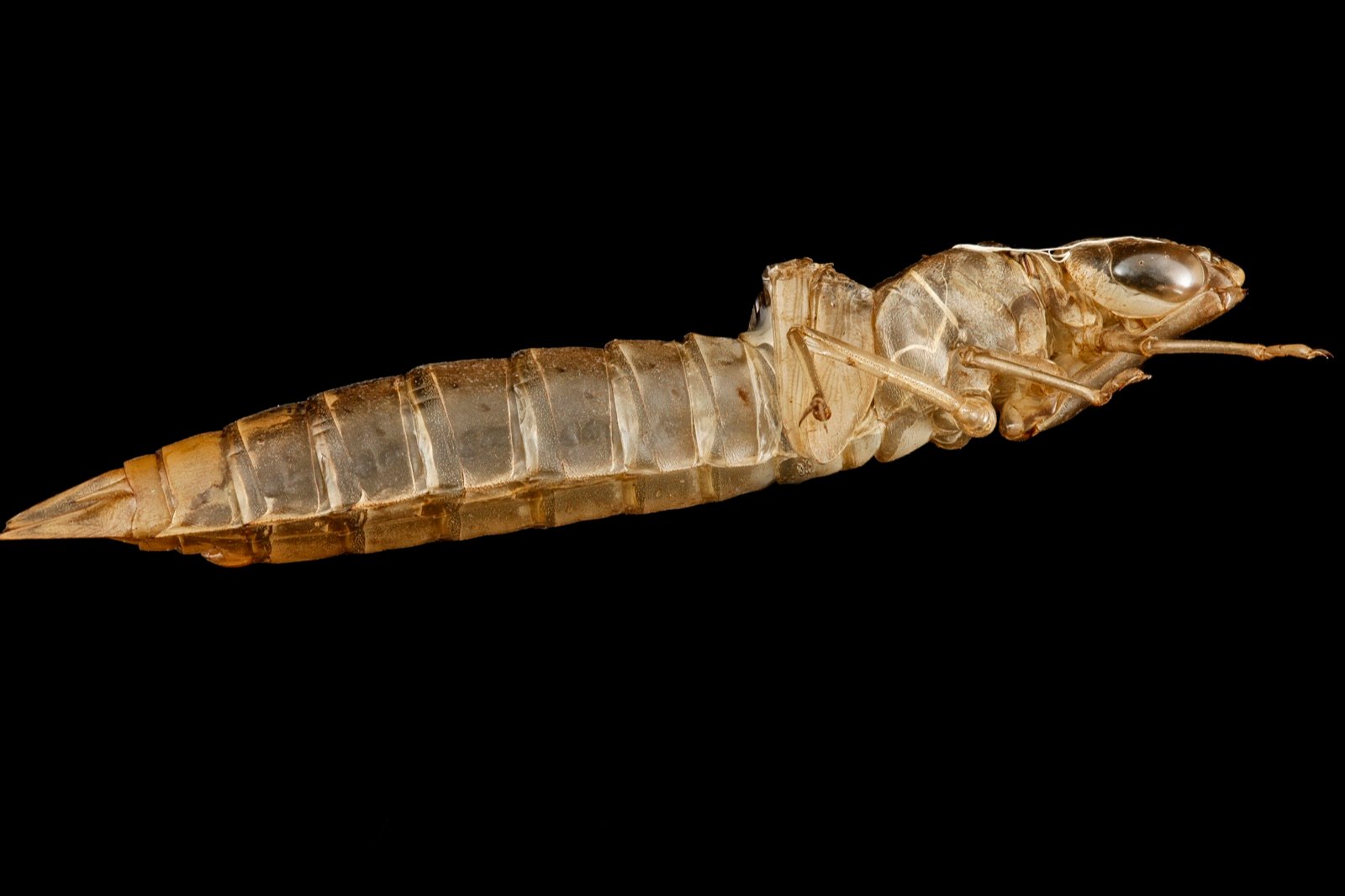
Dragonflies are the one honest predator in this group. Unlike bats and martins, dragonflies target mosquitoes at two life stages. The aquatic young, called nymphs or naiads, live underwater and eat mosquito larvae, while the winged adults hawk small flying insects, including adult mosquitoes, out of the air. Under ideal laboratory conditions where mosquito larvae are the only food, a single dragonfly nymph can eat around 40 larvae a day (Collier Mosquito Control District).
Because the predation is genuine, dragonflies can matter in the right setting. A meta-analysis of dragonfly and damselfly predation concluded they can provide effective biological control of mosquitoes in stable, longer-lasting water bodies such as ponds and rice fields, where predator and prey populations have time to establish (Priyadarshana et al., 2023). The catch is the setting. Dragonflies develop slowly, spending months underwater, while mosquitoes can go from egg to biting adult in under a week. In the small, temporary pools and containers where backyard mosquitoes actually breed, dragonfly nymphs rarely get established before the mosquitoes have already emerged. That is why dragonflies do not clear a yard even though they truly do eat mosquitoes: they are partners in a functioning wetland, not a control tool you can point at your property (Collier Mosquito Control District).
Why predators do not solve the problem
The common thread is math. Mosquitoes reproduce far faster than any predator can eat them.
A single female mosquito can lay a hundred or more eggs per batch and produce several batches in her life, and in warm weather the larvae can become biting adults in under a week. Local mosquito production can reach staggering densities. Even a predator that ate mosquitoes exclusively, at top speed, all night, could not keep up with a population that replaces itself that quickly (Collier Mosquito Control District). Add the fact that bats and martins strongly prefer other, larger insects, and that dragonflies breed too slowly for temporary water, and the shortfall is not close. Predation trims the edges of a mosquito population. It does not control it.
This is why importing or attracting a predator almost never delivers the promised relief. The animals go where the best food and habitat are, not where you want fewer bites, and the mosquitoes simply out-breed whatever gets eaten.
What actually works
Mosquito control that works starts below the biting adult, at the water where mosquitoes breed. The most effective and lowest-impact step for a homeowner is source reduction: finding and emptying standing water on a regular schedule, because mosquitoes cannot develop without it. Tip out anything that holds water, from buckets and toys to clogged gutters, tarps, and plant saucers (University of Georgia extension; American Mosquito Control Association).
For standing water you cannot drain, such as rain barrels or ornamental ponds, EPA-registered larvicides kill mosquito larvae before they emerge and are a standard part of integrated mosquito management (American Mosquito Control Association). Professionals combine surveillance, source reduction, larvicides, and, when needed, targeted treatment of adults, and this layered approach, not wildlife, is what actually lowers mosquito numbers to tolerable levels.
See our guides on source reduction and larvicides for the specifics [related links below].
Sources
- Gonsalves, L., et al. (2013). “Mosquito Consumption by Insectivorous Bats: Does Size Matter?” PLOS ONE. (DNA diet analysis of five eastern Australian bat species; only the two smallest ate mosquitoes; a small bat would need roughly 600 mosquitoes per night on a mosquito-only diet; mosquitoes were a minor dietary component.) https://journals.plos.org/plosone/article?id=10.1371%2Fjournal.pone.0077183 (accessed 2026-07-20)
- Reeves, W., University of Georgia extension. “Bats and Purple Martins, Don’t Control Mosquitoes.” (Little brown bat diet about 71 percent small moths and around 1.8 percent mosquitoes, citing Whitaker and Lawhead, 1992; more than two hundred martin stomachs with no mosquitoes; mosquitoes under 2 percent of martin diet.) https://www.walterreeves.com/insects-and-animals/bats-dont-control-mosquitoes/ (accessed 2026-07-20)
- Vector Disease Control International (VDCI). “Debunking Myths: Bats for Mosquito Control.” (Origin of the “1,000 mosquitoes an hour” claim in a 1960 echolocation lab study with mosquitoes as the only prey; best-case rate extrapolated and rounded up.) https://www.vdci.net/blog/debunking-myths-bats-for-mosquito-control/ (accessed 2026-07-20)
- Purple Martin Conservation Association, via Backyard Chirper. “Myth of Purple Martins and Mosquitoes.” (Origin of the 2,000-per-day figure in a 1966 writeup by J.L. Wade, based on metabolism reasoning rather than observed mosquito remains.) https://backyardchirper.com/blog/myth-of-purple-martins-and-mosquitoes/ (accessed 2026-07-20)
- Purple Martin Conservation Association, via Birds and Blooms. “Do Purple Martins Eat Mosquitoes?” (Seven-year study at PMCA headquarters found no mosquitoes in the diet; broader studies put mosquitoes at less than 2 percent; martins eat dragonflies, midges, beetles, and other larger insects.) https://www.birdsandblooms.com/birding/attracting-birds/purple-martins-eat-mosquitoes/ (accessed 2026-07-20)
- Priyadarshana, T.S., et al. (2023). “A meta-analysis reveals that dragonflies and damselflies can provide effective biological control of mosquitoes.” Journal of Animal Ecology. (Dragonfly and damselfly predation can be effective in stable, longer-lasting water bodies such as ponds and rice fields; much less useful in small, temporary habitats.) https://besjournals.onlinelibrary.wiley.com/doi/full/10.1111/1365-2656.13965 (accessed 2026-07-20)
- Collier Mosquito Control District. “Partners, Not Heroes: The Real Role of Dragonflies in Mosquito Control.” (A single dragonfly nymph eats about 40 mosquito larvae per day under optimal lab conditions; dragonflies develop over months while mosquitoes mature in under a week; local mosquito densities can be enormous, so predation cannot keep pace.) https://cmcd.org/partners-not-heroes-the-real-role-of-dragonflies-in-mosquito-control/ (accessed 2026-07-20)
- American Mosquito Control Association. “Mosquito Control.” (Integrated mosquito management: source reduction as the critical first step, EPA-registered larvicides for water that cannot be eliminated, and layered control to reduce numbers to tolerable levels.) https://www.mosquito.org/mosquito-control/ (accessed 2026-07-20)
- University of Georgia extension, CAES Field Report. “Mosquito Control Around the Home.” (Eliminating standing water and treating unavoidable water sources as the practical homeowner approach.) https://fieldreport.caes.uga.edu/publications/C1266/mosquito-control-around-the-home/ (accessed 2026-07-20)
Related
- Source reduction: finding and eliminating standing water [related link placeholder]
- Larvicides for water you cannot drain [related link placeholder]
- Do mosquito-repelling plants work? [related link placeholder]
- Bug zappers and mosquito traps: what the evidence shows [related link placeholder]
Educational note: This page is an independent, non-commercial reference summarizing published research and public-health guidance. It is not pest-control advice for a specific property, and it does not endorse any product or service. For an infestation or disease-risk concern, consult your local mosquito control district or a licensed professional.
Last reviewed 20 July 2026.