The short answer
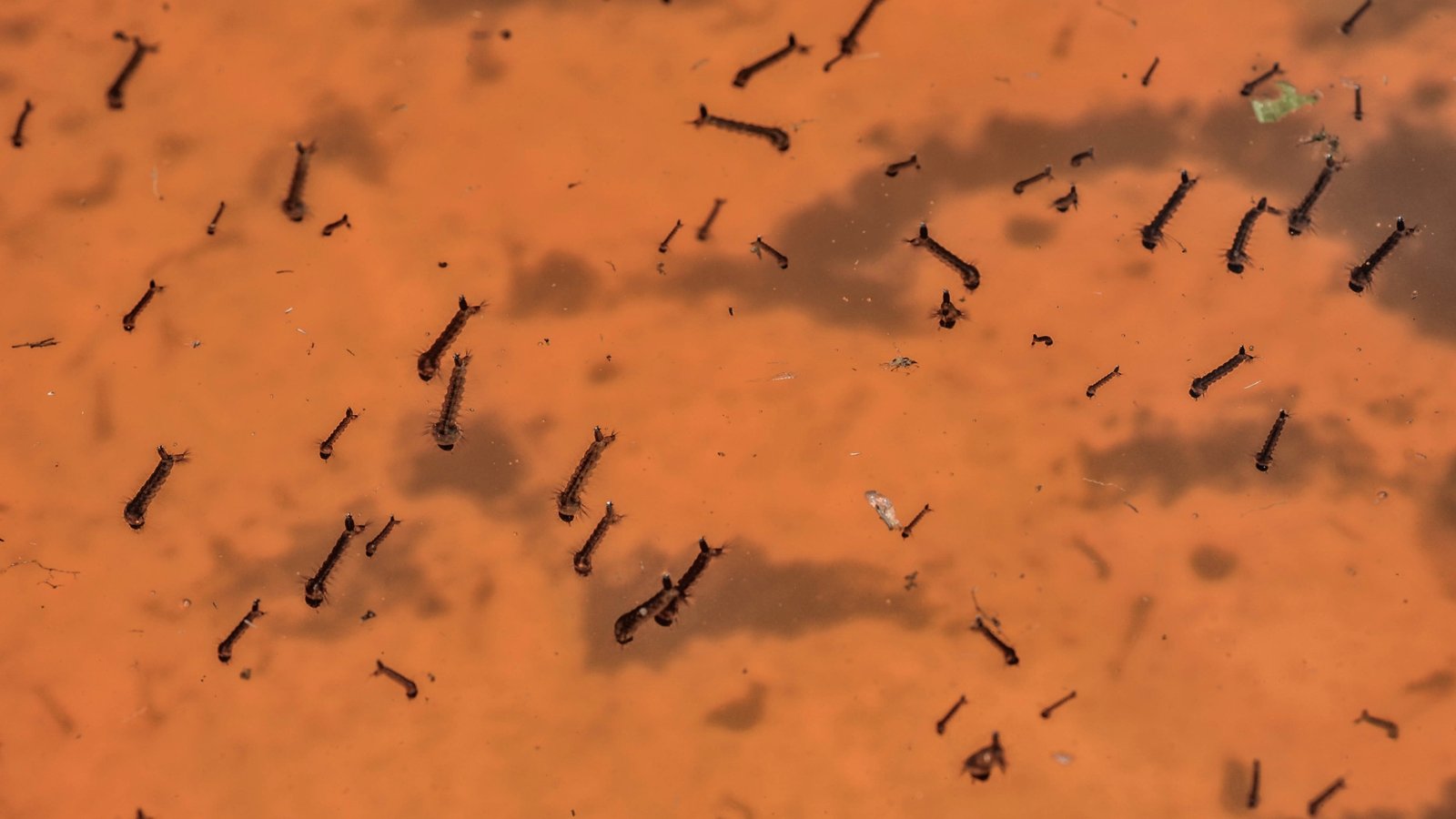
The most effective natural mosquito control is not a product at all. It is removing the standing water where mosquitoes lay eggs and grow. No spray, plant, or gadget matches a yard that gives larvae nowhere to develop. Eliminating breeding water is the most basic form of source reduction, and public agencies and university programs treat it as the foundation of any control effort (UC IPM; EPA).
Among products that carry a “natural” or “organic” label, one stands out for having both a genuine natural origin and strong, tested effectiveness: BTI. BTI is a naturally occurring soil bacterium (Bacillus thuringiensis subspecies israelensis) that kills mosquito larvae in water and is approved for use in organic farming (EPA). Almost everything else marketed as natural, including essential oil yard sprays, garlic sprays, and “mosquito-repelling” plants, either does very little or works only for minutes at a time.
So a natural plan that actually works looks like this: dump the water first, treat water you cannot drain with BTI, and use physical barriers and a proven skin repellent for the mosquitoes that remain.
What actually counts as natural and works
Three approaches are both reasonably described as natural and supported by evidence.
Source reduction (removing standing water). Mosquitoes need standing water to complete their life cycle, and some species breed in as little as a teaspoon. The single most effective thing you can do is find and empty containers every week. The EPA specifically recommends emptying and changing the water in bird baths, fountains, wading pools, rain barrels, and potted plant trays at least once a week, and clearing rain gutters, old tires, buckets, plastic covers, and toys (EPA). This costs nothing, uses no chemicals, and removes mosquitoes before they can fly or bite.
BTI larvicide. For water you cannot drain or dump, such as a rain barrel, an ornamental pond edge, a clogged ditch, or a tree hole, BTI is the natural option that works. BTI is a biological, naturally occurring bacterium found in soils (EPA). Its spores produce toxins that specifically target and only affect the larvae of mosquitoes, black flies, and fungus gnats, so it does not harm other insects, including honey bees (EPA). The EPA states that BTI has no toxicity to people and is approved for use in organic farming operations, and that there is no documented resistance to BTI even in populations treated for decades (EPA). It is sold to homeowners as floating “dunks” and granules. BTI kills larvae in the water, so it prevents the next generation rather than chasing adults.
Physical barriers. Keeping mosquitoes off your body and out of your home is low-tech and effective. The EPA and CDC recommend keeping window and door screens in good repair and wearing long-sleeved shirts, long pants, and socks (EPA). Because mosquitoes are weak fliers, moving air from a fan on a porch or patio also makes it harder for them to land. None of this kills mosquitoes, but it reliably reduces bites without any spray.
Essential oil yard sprays and garlic sprays
These are the products most often sold as natural yard treatments, and the honest assessment is that the evidence for them is weak and any effect is short-lived.
University of Maryland Extension notes that for the essential oils commonly used in barrier sprays, including garlic oil, lemongrass oil, and citronella oil, there is little to no research showing their effectiveness against mosquitoes in the United States (University of Maryland Extension). Part of the reason is regulatory: the EPA classifies many of these essential oils as minimum risk pesticides, which means no testing of their effectiveness is required before they go to market (University of Maryland Extension). A product being sold does not mean it has been shown to work.
There is also a basic chemistry problem. Most essential oils are highly volatile, so they can offer protection for a short period and then vaporize completely (University of Maryland Extension). That is the opposite of what you want from a yard treatment meant to last for days or weeks. Commercial garlic sprays sometimes advertise weeks of protection, but the peer-reviewed support for those durations, as opposed to marketing claims, is limited.
This does not mean these sprays do literally nothing in the moment, and some people feel they help. But if you are choosing where to spend effort, source reduction and BTI will do far more for the same money and time.
Plant-based repellents for skin
Plant-derived does not automatically mean weak. One plant-based repellent has real, tested evidence behind it: oil of lemon eucalyptus (OLE), and its active compound PMD.
Oil of lemon eucalyptus is recognized by the CDC and registered by the EPA as an effective repellent, and refined OLE and PMD products can provide several hours of protection against mosquitoes (CDC Yellow Book). This is the natural-origin repellent that health agencies actually recommend, and it is the sensible choice if you want to avoid synthetic DEET.
Two cautions matter. First, there is an important difference between an EPA-registered OLE or PMD product and pure lemon eucalyptus essential oil sold as an aromatherapy oil. The unrefined essential oil has not been tested or registered as a repellent and should not be relied on for protection (CDC Yellow Book). Second, PMD is generally not recommended for children under three years old. Other botanical repellents, such as citronella and various essential oil blends, tend to protect for a much shorter time and need frequent reapplication. For a fuller comparison of repellent ingredients and how long each lasts, see the repellents page (link below).
Mosquito-repelling plants
Growing citronella grass, marigolds, lavender, basil, or the so-called “mosquito plant” will not clear mosquitoes from your yard. This is one of the most persistent myths in mosquito control.
Colorado State University Extension notes that none of the commonly named plants will repel mosquitoes simply by growing in a landscape, and a University of Maryland Extension entomologist has said there is no plant species shown to repel mosquitoes just by being present, including marigolds (Colorado State University Extension; University of Maryland Extension). UF/IFAS Extension makes the same point: plants like eucalyptus, citronella, mint, basil, lavender, and marigold do contain oils that can deter mosquitoes, but those compounds have to be extracted and used in concentrated form, such as a spray, to do anything useful (UF/IFAS Extension). The oils stay locked in the leaves unless the leaves are crushed. A living plant on the patio releases almost nothing into the air.
Plant what you enjoy. Just do not count on it for bite protection. For a longer treatment of this myth, see the related myth page (link below).
A realistic natural plan for a yard
If you want a natural, low-chemical approach that actually reduces mosquitoes, do these in order.
- Walk the property once a week and dump every bit of standing water. Saucers under pots, buckets, tarps, toys, wheelbarrows, clogged gutters, and tire swings. This is the highest-value step and it is free (EPA).
- Treat the water you cannot drain with BTI. Rain barrels, ornamental ponds, low spots that stay wet, and tree holes. Reapply on the schedule the product label gives (EPA).
- Fix your barriers. Repair window and door screens, and run a fan in seating areas where you spend evenings (EPA).
- Protect skin with a proven repellent when you go out. Oil of lemon eucalyptus or PMD is the natural-origin option that health agencies recommend for several hours of protection (CDC Yellow Book).
- Skip the money pits. Essential oil and garlic yard sprays and repelling-plant landscaping can round out the ambiance, but do not treat them as your control strategy.
Done consistently, this is a genuinely natural program, and it will outperform any shelf full of “organic” sprays.
Sources
- U.S. Environmental Protection Agency, “BTI for Mosquito Control.” https://www.epa.gov/mosquitocontrol/bti-mosquito-control (accessed 2026-07-20). BTI as a naturally occurring soil bacterium, specificity to mosquito, black fly, and fungus gnat larvae, no toxicity to people, approval for organic farming, and no documented resistance.
- U.S. Environmental Protection Agency, “Tips to Prevent Mosquito Bites.” https://www.epa.gov/insect-repellents/tips-prevent-mosquito-bites (accessed 2026-07-20). Weekly emptying of water-holding containers, list of container types, screens in good repair, and long-sleeved protective clothing.
- University of Maryland Extension, Maryland Grows, “Essential Oils for Mosquito Control.” https://marylandgrows.umd.edu/2018/05/14/essential-oils-for-mosquito-control/ (accessed 2026-07-20). Little to no U.S. research on garlic, lemongrass, and citronella barrier sprays; EPA minimum risk pesticide classification and lack of required effectiveness testing; volatility and short duration of essential oils.
- CDC Yellow Book, “Mosquitoes, Ticks, and Other Arthropods.” https://www.cdc.gov/yellow-book/hcp/environmental-hazards-risks/mosquitoes-ticks-and-other-arthropods.html (accessed 2026-07-20; page returned HTTP 403 on direct retrieval, content drawn from CDC search listing). Oil of lemon eucalyptus and PMD recognized and EPA-registered, several hours of protection, distinction between registered OLE/PMD products and untested pure lemon eucalyptus essential oil, and the under-three age caution for PMD.
- Colorado State University Extension, PlantTalk Colorado, “Plants that repel mosquitoes.” https://planttalk.colostate.edu/topics/insects-diseases/1400-20-plants-repel-mosquitoes (accessed 2026-07-20). No commonly named plant repels mosquitoes merely by growing in a landscape.
- University of Florida IFAS Extension, “Florida experts break down the buzz on the myth of mosquito-repelling plants” (2025). https://blogs.ifas.ufl.edu/news/2025/08/06/florida-experts-break-down-the-buzz-on-the-myth-of-mosquito-repelling-plants/ (accessed 2026-07-20). Plant oils must be extracted and concentrated to deter mosquitoes; growing the plant does not.
- University of California Statewide IPM Program (UC IPM), “Mosquitoes / Home and Landscape.” https://ipm.ucanr.edu/home-and-landscape/mosquitoes/ (accessed 2026-07-20). Source reduction and eliminating standing water as the foundation of integrated mosquito management.
Related
- Mosquito repellents: what works and how long (placeholder link)
- Do mosquito-repelling plants work? (myth page placeholder link)
- BTI dunks and larvicides: how to use them (placeholder link)
- Removing standing water: a room-by-room and yard checklist (placeholder link)
Educational note: This page is for general reference and is not medical, pest control, or professional advice. For disease risk in your area or a persistent mosquito problem, contact your local mosquito control district or health department.
Last reviewed 20 July 2026.