Short answer
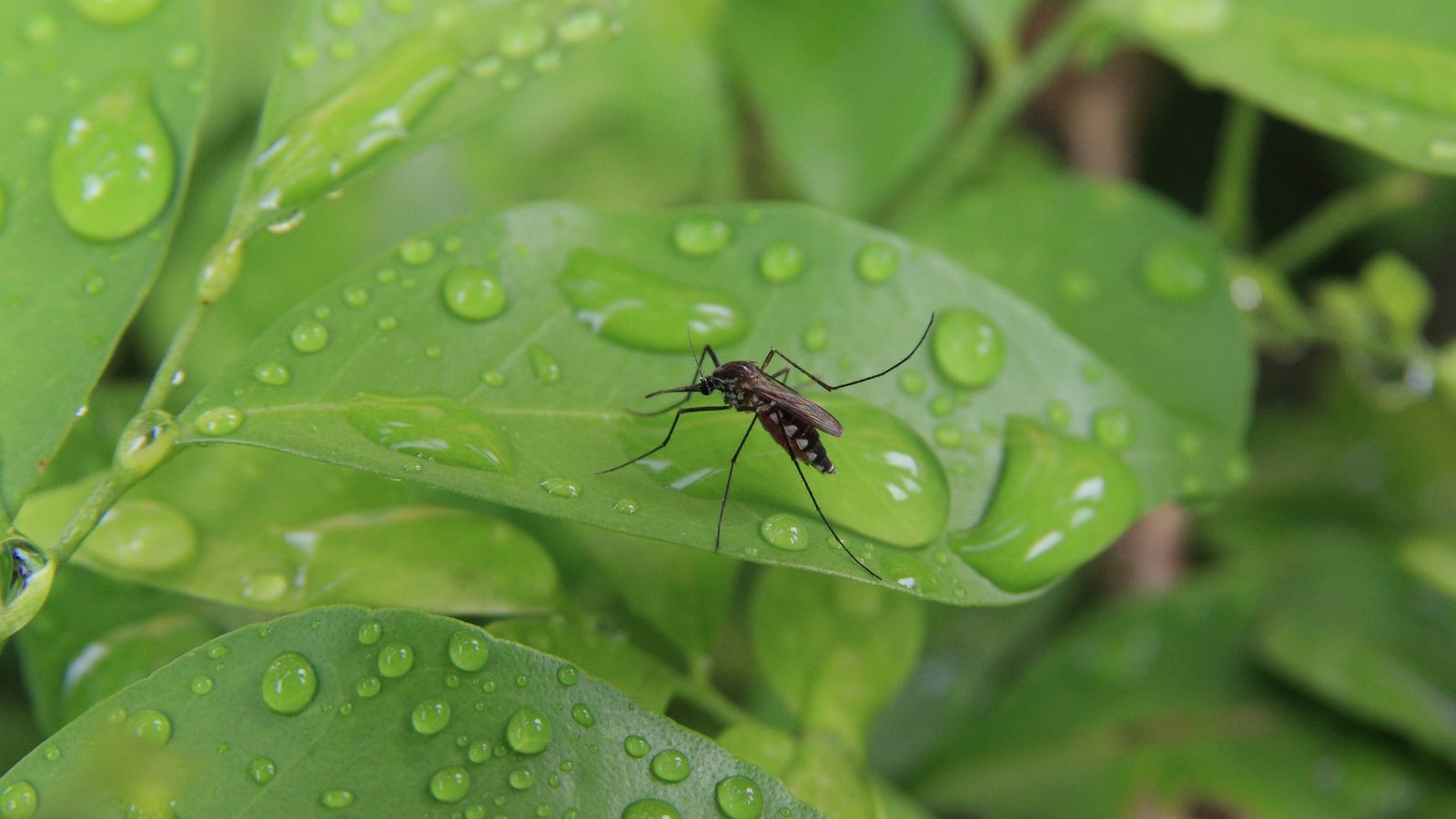
Heavy rain and flooding trigger large broods of floodwater mosquitoes. Their eggs sit in damp soil and low spots for months or even years, then hatch all at once when water covers them. The adults usually show up about one to two weeks later. These early floodwater mosquitoes are mostly aggressive nuisance biters that carry little disease risk. The bigger disease concern comes later, when leftover water sits and turns stagnant. That standing water favors the Culex mosquitoes, which are the main spreaders of West Nile virus. So the pattern after a storm is a fast wave of nuisance biters first, followed by a slower buildup of the mosquitoes that matter more for disease (Sources 1, 3, 4, 5).
Why rain causes a surge
Floodwater mosquitoes do not lay their eggs in water. The females lay them on damp soil and in low-lying areas that collect water from time to time. Those eggs are built to wait. They can survive for months or even years until the right conditions arrive. When heavy rain floods the ground, water covers the eggs and triggers them to hatch, often all at the same time (Source 3).
That synchronized hatch is why a storm can be followed by a sudden wall of mosquitoes. Under normal warm-season temperatures, the newly hatched larvae develop quickly, and adults typically emerge about one to two weeks after the rain (Source 3). This lag is the reason the worst biting often comes not during the storm but a week or two afterward, once the water has receded and people assume the danger has passed.
Nuisance broods vs disease risk
The first mosquitoes off the line after a flood are floodwater species, and the group includes some famously painful biters. The gallinipper (Psorophora ciliata), a very large floodwater mosquito, delivers a painful bite but does not play a major role in spreading disease (Source 3). In general, these early nuisance mosquitoes do not spread the germs that make people sick, and public health agencies do not expect a jump in mosquito-borne illness simply because floodwater broods are biting (Source 1).
The disease picture changes as the water ages. Culex mosquitoes, the primary carriers of West Nile virus, breed best in stagnant water with a heavy organic content, such as catch basins, clogged ditches, storm drains, and water-filled containers (Sources 4, 5). Fresh floodwater is not their preferred home, but the pools, buckets, and blocked drains left behind after a storm slowly turn into exactly the stale, polluted water they favor. This is why the mosquitoes that can spread viruses tend to increase in the weeks after a flood rather than in the first days (Source 1). The nuisance wave is loud and early; the disease risk is quieter and later.
After a hurricane or major flood
Adult mosquitoes generally do not survive a hurricane’s high winds, but the storm sets up an enormous hatch. Immediately after a hurricane, nuisance mosquitoes hatch, and an increase in nuisance or floodwater mosquito populations is expected in the weeks that follow (Source 1). These broods can be intense enough to interfere with cleanup and recovery work.
When the affected area is large, public agencies sometimes respond with aerial spraying. Aircraft fitted with special nozzles release a very small amount of insecticide, roughly one to two tablespoons per acre, as ultra-low-volume droplets that float in the air and kill adult mosquitoes on contact (Source 6). Aerial spraying is only one part of the solution, but it is the one method that can rapidly cut mosquito numbers across a large area, and it was used this way after major flooding events (Source 6). Mosquito control professionals may also use ground-applied insecticides to bring numbers down in affected communities (Source 1).
For residents, the key task once it is safe is to check the property for new standing water. Storms leave behind fresh containers, tarps, clogged gutters, and low spots full of water, and each one can become a breeding site. Removing that water is the single most effective thing a household can do, alongside using repellent and keeping window and door screens in good repair (Source 1).
What to do after it rains
Do not wait a week to clean up water. Floodwater and container mosquitoes develop fast in warm weather, so the goal is to empty standing water before a new generation can finish growing. After any heavy rain, walk the property and dump every container that is holding water within a few days: buckets, planters, toys, tarps, trash-can lids, and flowerpot saucers.
Make it a habit, not a one-time task. Once a week, empty and scrub, turn over, cover, or throw out any item that holds water, including tires, buckets, planters, toys, pools, birdbaths, flowerpot saucers, and trash containers (Source 2). Weekly is the right rhythm because it stays ahead of the egg-to-adult cycle. Emptying and scrubbing also removes eggs stuck to container walls, not just the water. This kind of source reduction does more to lower your long-term risk than any spray, because it removes the places the next brood would come from.
Sources
- Centers for Disease Control and Prevention (CDC), “What to Do After a Hurricane or Flood.” Federal public health guidance on nuisance floodwater mosquitoes hatching after storms, the two-week rise in disease-capable mosquitoes, and standing-water removal. https://www.cdc.gov/mosquitoes/response/index.html (accessed 20 July 2026; page returned an automated-access block, content confirmed from the live search result summary of the same URL).
- Centers for Disease Control and Prevention (CDC), “Mosquito Control at Home.” Weekly empty-and-scrub guidance for containers that hold water. https://www.cdc.gov/mosquitoes/mosquito-control/mosquito-control-at-home.html (accessed 20 July 2026).
- University of Florida IFAS Extension, Okaloosa County, “When the Rain Brings the Giants.” University extension article on floodwater mosquito egg biology, the one-to-two-week emergence lag, and the gallinipper’s painful but low-disease bite. https://blogs.ifas.ufl.edu/okaloosaco/2026/06/24/when-the-rain-brings-the-giants/ (accessed 20 July 2026).
- Illinois Department of Public Health, “Primary WNV Mosquito Vector Control.” State health guidance describing how the Culex house mosquito breeds in stagnant, organic-rich water, catch basins, ditches, and containers. https://dph.illinois.gov/topics-services/diseases-and-conditions/west-nile-virus/vector-control.html (accessed 20 July 2026).
- University of Georgia College of Agricultural and Environmental Sciences (CAES) Field Report, “West Nile virus remains a concern despite drought conditions.” Identifies Culex as the primary West Nile vector breeding in stagnant water, storm drains, and catch basins. https://fieldreport.caes.uga.edu/news/west-nile-virus-risk-drought-conditions/ (accessed 20 July 2026).
- Texas Department of State Health Services (DSHS), “Questions about Aerial Mosquito Control.” State guidance on how aerial ultra-low-volume spraying is used to rapidly reduce adult mosquitoes over large areas after flooding events. https://www.dshs.texas.gov/news-alerts/questions-about-aerial-mosquito-control (accessed 20 July 2026).
Related
- [Mosquito season by region] (placeholder)
- [West Nile virus and Culex mosquitoes] (placeholder)
- [How to get rid of standing water: source reduction] (placeholder)
- [Floodwater mosquitoes and the gallinipper] (placeholder)
Educational note: This page is a non-commercial reference summary drawn from public health and university extension sources. It is for general information and is not medical, pest-control, or emergency advice. For a specific mosquito problem or health concern, contact your local mosquito control district or health department.
Last reviewed 20 July 2026.