The short answer
Malaria is a serious disease caused by tiny parasites called Plasmodium, which spread to people through the bite of an infected Anopheles mosquito. The illness usually starts with fever, chills, and flu-like aches. One type in particular, Plasmodium falciparum, can turn severe and life-threatening quickly, so malaria is treated as a medical emergency until it is ruled out. The good news is that malaria is both preventable and curable with prescription medicines.
In the states, malaria is not something you catch in most backyards. Roughly 2,000 cases are diagnosed here each year, and almost all of them are picked up while traveling to parts of the world where malaria spreads. A small number of locally acquired cases did happen in 2023, the first mosquito-transmitted cases on home soil in about 20 years, but these were rare and contained.
The short version: Malaria is a parasite spread by Anopheles mosquitoes, not a virus. Nearly all cases counted in the states come from travel abroad. Symptoms are fever and flu-like illness, and P. falciparum can become deadly fast. Malaria is preventable with the right precautions and curable with prescription antimalarial drugs. If you feel feverish after traveling to a malaria area, get medical care and mention your trip.
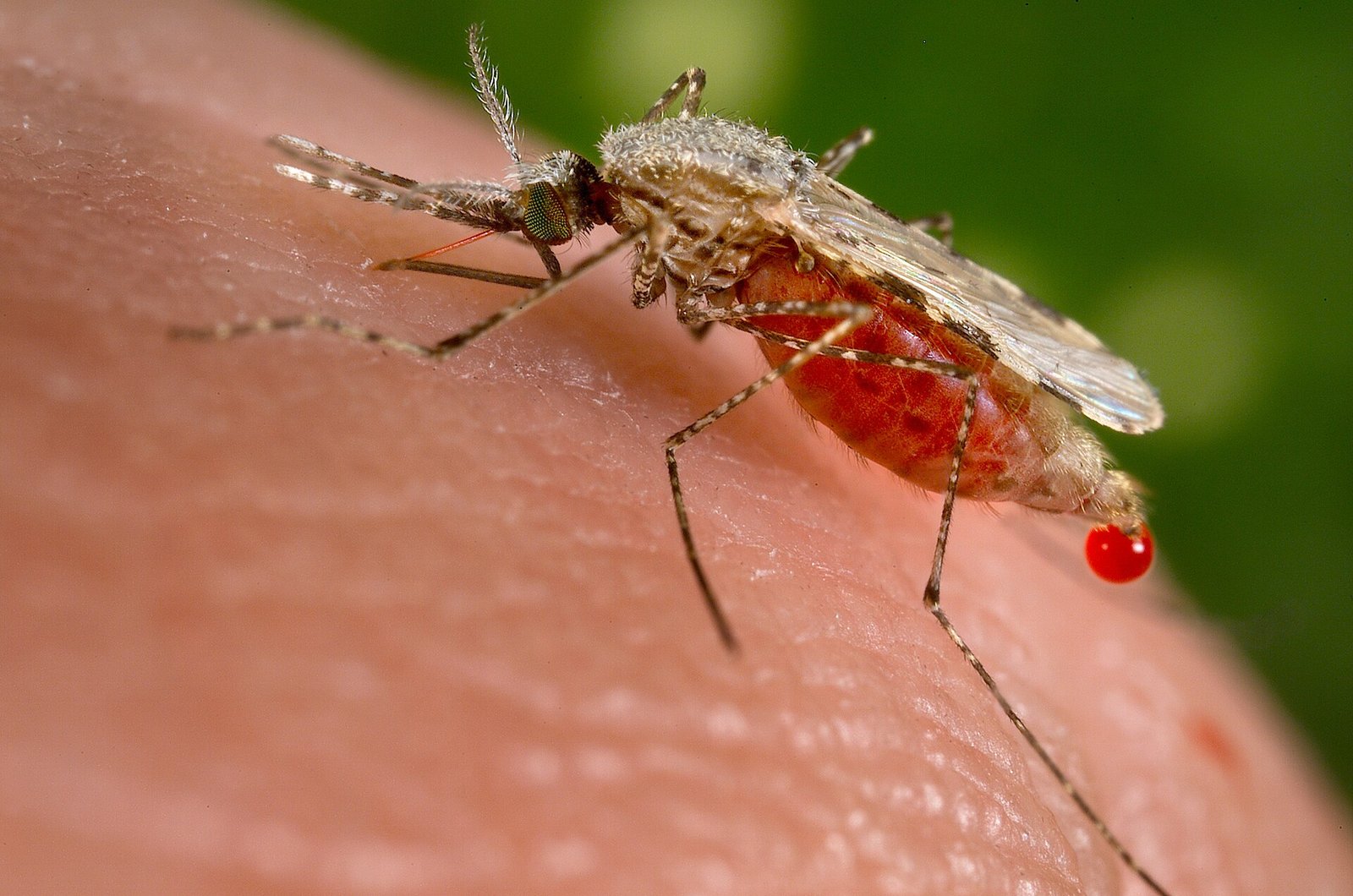
Anopheles mosquitoes carry malaria. The mosquito shown here is Anopheles stephensi, an Asian species pictured to illustrate the genus and its characteristic head-down resting posture. It is not a mosquito native to the states.
What it is
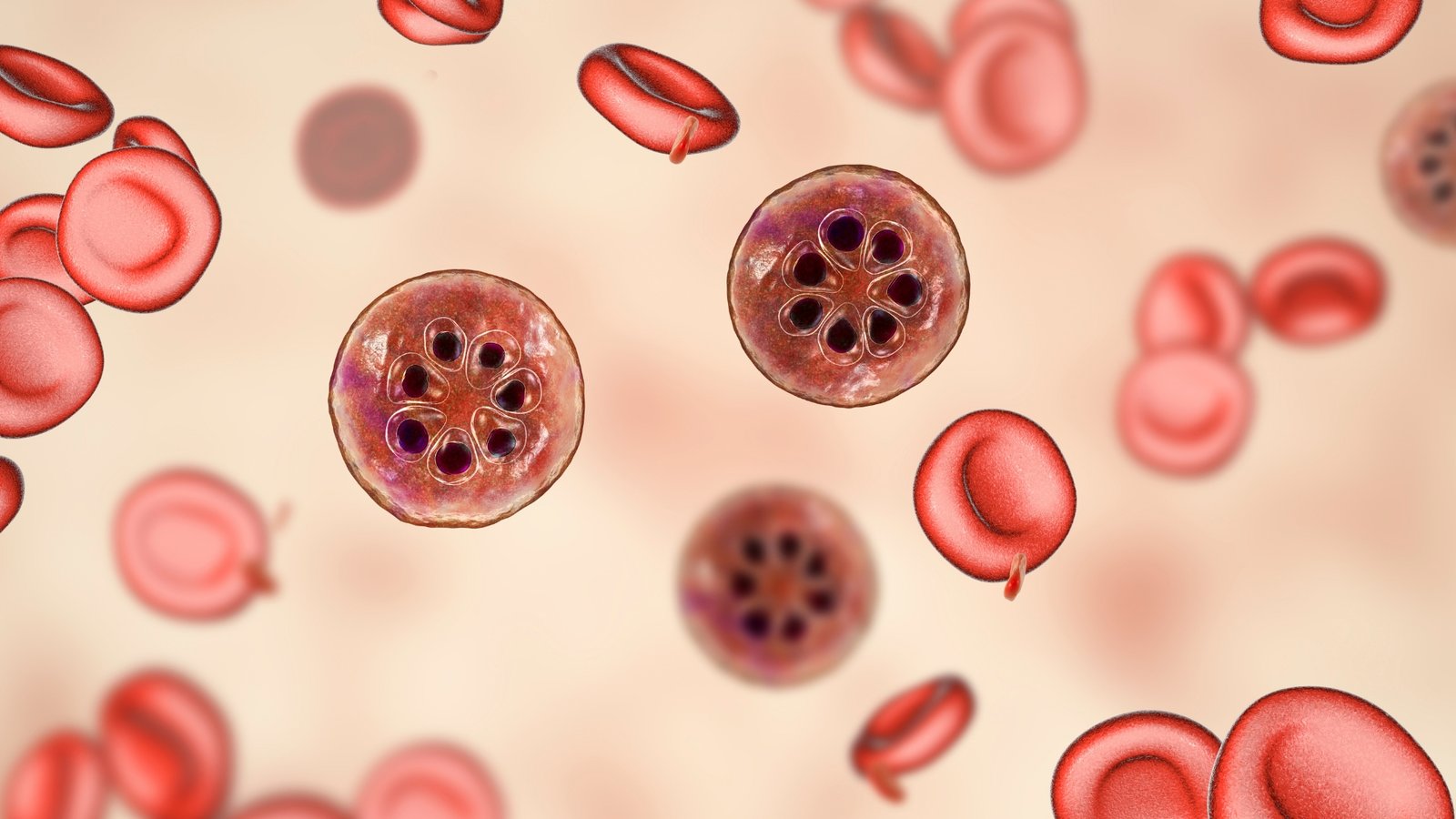
Malaria is a parasitic infection, not a virus or a bacterium. It is caused by single-celled parasites of the genus Plasmodium. Five species are known to infect people: Plasmodium falciparum, Plasmodium vivax, Plasmodium ovale, Plasmodium malariae, and Plasmodium knowlesi.
The species matters a great deal:
- P. falciparum and P. knowlesi can cause rapidly progressive, severe illness and death. P. falciparum is the deadliest and the most common cause of malaria worldwide, especially in sub-Saharan Africa.
- P. vivax, P. ovale, and P. malariae are less likely to cause severe disease, but P. vivax and P. ovale can hide in the liver and cause relapses months or even years later if not specifically treated.
Malaria was once common across large parts of the country. A national campaign brought it under control, and malaria was declared eliminated from the states in 1951. The Anopheles mosquitoes that can carry it were never fully removed, though, which is why the rare local case is still possible when someone infected abroad is bitten by a local mosquito that then bites others.
How you get it
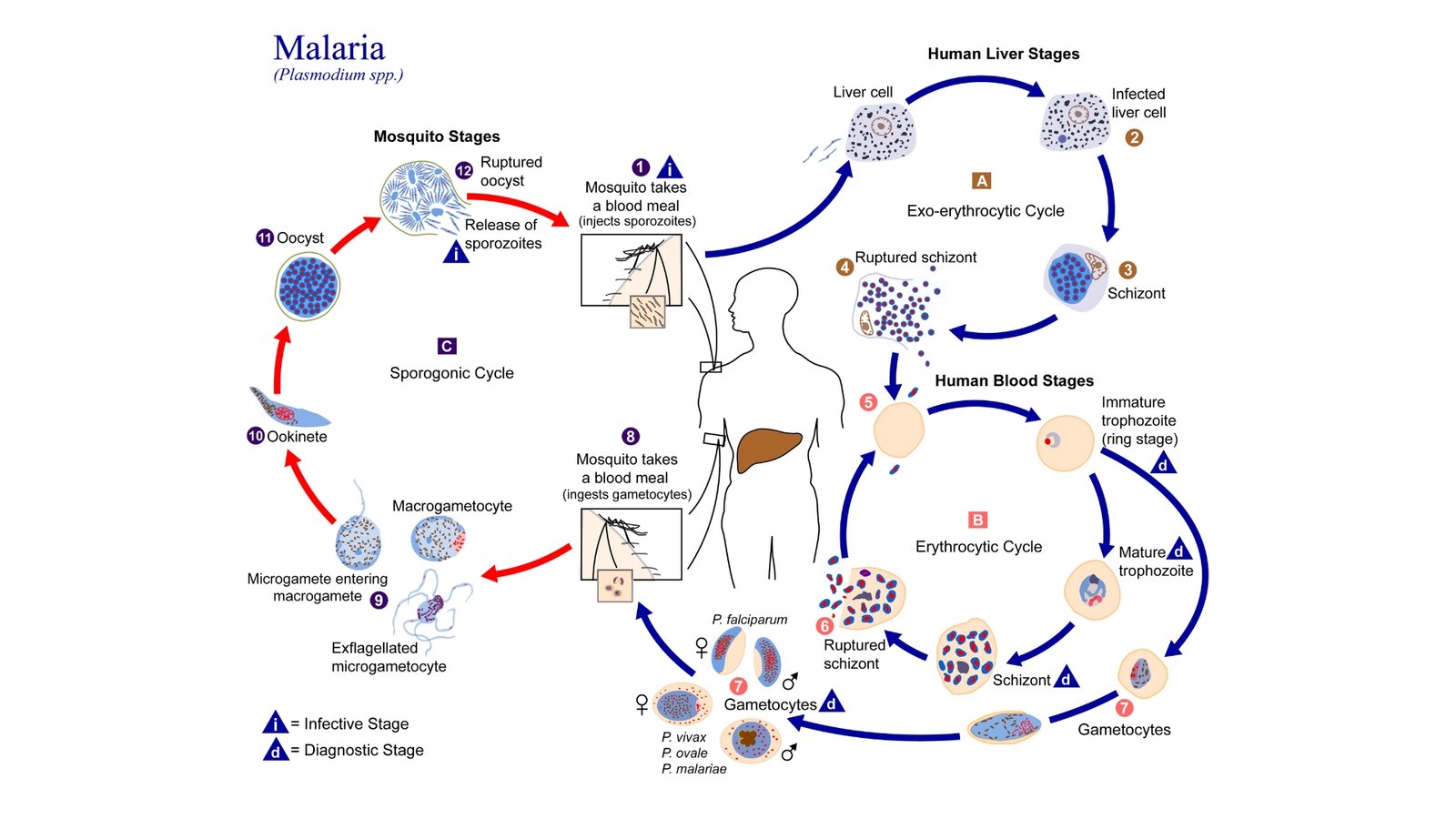
You get malaria when an infected female Anopheles mosquito bites you and passes Plasmodium parasites into your bloodstream. Anopheles mosquitoes typically bite between dusk and dawn, which is different from the day-biting Aedes mosquitoes that spread dengue and Zika.
The cycle works like this: a mosquito bites a person who already has malaria parasites in their blood, the parasites develop inside the mosquito over several days, and the mosquito then injects them into the next person it bites. Inside the human body the parasites travel to the liver, multiply, and then infect red blood cells, which is what brings on the waves of fever and chills.
Almost every case counted in the states is imported by travel. Of the roughly 2,000 cases diagnosed here each year, the large majority are in people who were recently in a malaria-endemic region. In a representative year of surveillance, about 93 percent of cases with a known place of acquisition were acquired in Africa, with smaller shares from Asia, the Caribbean and the Americas, and elsewhere. Many of these travelers were visiting friends and relatives in their countries of origin.
What does NOT spread malaria: You cannot catch malaria from casual contact, coughing, sneezing, sharing food, or touching someone who is sick. It is not spread person to person through the air. Uncommonly, malaria can pass through blood transfusion, organ transplant, shared needles, or from a pregnant person to their baby, but the ordinary route by far is the bite of an Anopheles mosquito.
Symptoms
Malaria symptoms usually appear about 7 to 30 days after an infected mosquito bite. The shortest incubation is most often seen with P. falciparum and the longest with P. malariae. Some types, and some cases where a person took partial preventive medicine, can surface months after travel, so malaria should stay on the list even for a fever that begins weeks after a trip.
The illness is often described as flu-like. Common symptoms include:
- Fever, sometimes coming in waves with shaking chills and sweats
- Headache
- Muscle and body aches
- Fatigue and a general feeling of being unwell
- Nausea, vomiting, or diarrhea
Because these symptoms are so general, malaria is easy to mistake for the flu or another common illness. That is exactly why recent travel history is such an important clue.
Severe malaria is a medical emergency. P. falciparum in particular can deteriorate rapidly and unpredictably. Severe malaria can involve the brain (cerebral malaria, with confusion, seizures, or coma), acute kidney injury, severe anemia, acute respiratory distress, and death. Because things can worsen within hours, suspected malaria is treated urgently rather than watched at home.
Who is at higher risk
In the states, the people most at risk are travelers going to or returning from places where malaria spreads, particularly sub-Saharan Africa, parts of South Asia, Southeast Asia, Oceania, and parts of Central and South America. Within that group, some face added risk:
- Travelers who do not take preventive antimalarial medicine, or who take it incorrectly
- People visiting friends and relatives in their country of origin, who sometimes wrongly assume they are still immune from childhood
- Pregnant travelers, in whom malaria tends to be more severe
- Young children
- People without a working spleen and those with weakened immune systems
Growing up in a malaria-endemic country does not give lasting immunity once you have lived away from it. Anyone traveling to a malaria area should plan prevention regardless of where they were born.
When to see a doctor: If you develop a fever or flu-like illness during or after travel to an area where malaria spreads, see a healthcare provider promptly and tell them exactly where and when you traveled, even if it was weeks or months ago. Do not wait to see if it passes. If you have a high fever with confusion, trouble breathing, seizures, very dark urine, or you simply feel severely ill after such travel, seek emergency care right away. Malaria can become life-threatening quickly.
Diagnosis and treatment
Malaria is diagnosed with a blood test. The long-standing gold standard is examining a drop of blood under a microscope (a blood smear), which both confirms malaria and identifies the species, information that directly guides treatment. A rapid diagnostic test that detects malaria antigens (BinaxNOW is FDA approved for use by clinical laboratories in the states) can give a fast answer, and because parasites are sometimes present at low levels early on, smears may be repeated over 12 to 24 hour intervals before malaria is ruled out.
Treatment: Malaria is curable with prescription antimalarial drugs. The right medicine depends on the Plasmodium species, how severe the illness is, where the infection was acquired (because drug resistance varies by region), and factors like pregnancy. Severe malaria is treated urgently, usually in the hospital with intravenous medicine. Infections with P. vivax and P. ovale also need a second, anti-relapse medicine to clear parasites that can otherwise stay dormant in the liver and cause the illness to return. Malaria treatment should always be directed by a clinician, not self-managed.
Prevention for travelers: People traveling to malaria areas can take preventive prescription medicine, called chemoprophylaxis, before, during, and after the trip. Options include atovaquone-proguanil, doxycycline, mefloquine, tafenoquine, and, in regions where the parasite is still sensitive to it, chloroquine. The best choice and the exact schedule depend on the destination, so this is a conversation to have with a travel-health provider or clinician well before departure. Preventive medicine works best alongside steps to avoid bites.
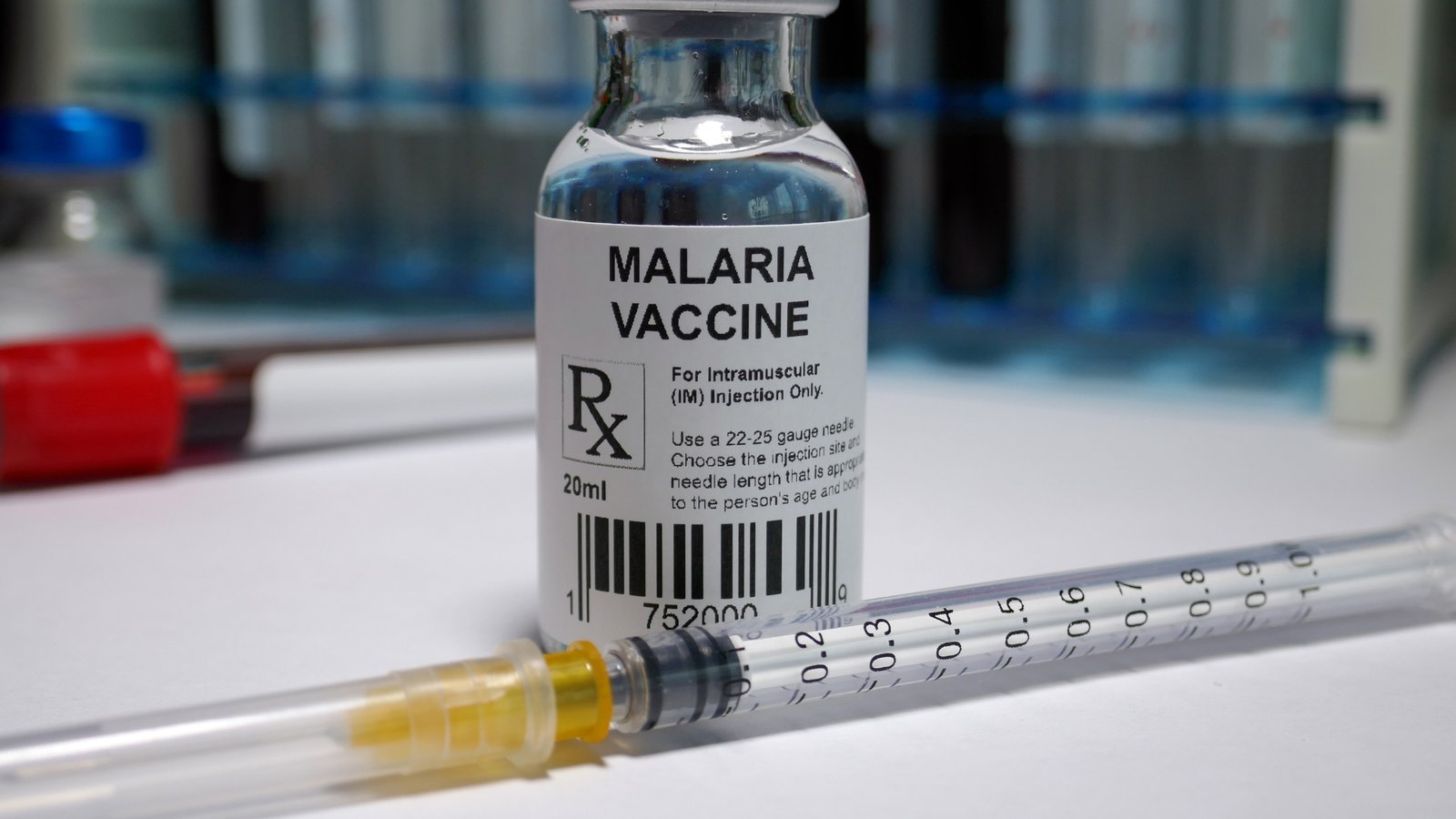
Vaccine status: Two malaria vaccines, RTS,S (Mosquirix) and R21/Matrix-M, are recommended by the World Health Organization to protect young children against P. falciparum malaria in endemic regions, and they are being rolled out through routine childhood immunization in many African countries. These vaccines are aimed at children who live where malaria spreads constantly. They are not part of routine malaria prevention for travelers, and there is no malaria vaccine given as a standard travel shot in the states. For travelers, prevention rests on antimalarial medicine plus bite protection, not vaccination.
How to protect yourself
If you are traveling to an area where malaria spreads, combine preventive medicine with steps to avoid Anopheles bites:
- Talk to a healthcare provider or travel clinic before your trip about the right preventive antimalarial medicine for your destination, and take it exactly as prescribed, including the doses after you return. See our travel prevention page
- Use an EPA-registered insect repellent and reapply as directed. See our repellent guide
- Cover up with long sleeves and long pants, especially from dusk to dawn when Anopheles mosquitoes bite. See our bite-prevention guide
- Sleep in air-conditioned or well-screened rooms, or under an insecticide-treated bed net, where mosquitoes may get indoors.
- Check current destination-specific malaria guidance before you go, since recommended drugs differ by country. See our travel prevention page
- After returning, watch for fever or flu-like symptoms for at least a month (longer for some types) and tell any provider you see about your travel.
Sources
- Centers for Disease Control and Prevention. About Malaria. https://www.cdc.gov/malaria/about/index.html. Accessed 20 Jul 2026. (Malaria is a serious disease caused by a Plasmodium parasite spread by Anopheles mosquitoes; malaria is preventable and curable; most cases in the states are travel-associated.)
- Centers for Disease Control and Prevention. DPDx: Malaria. https://www.cdc.gov/dpdx/malaria/index.html. Accessed 20 Jul 2026. (Five Plasmodium species infect humans: P. falciparum, P. vivax, P. ovale, P. malariae, P. knowlesi; P. falciparum and P. knowlesi can cause rapidly progressive severe illness.)
- Centers for Disease Control and Prevention. Notes from the Field: Increases in Imported Malaria Cases, Three Southern U.S. Border Jurisdictions, 2023. MMWR. https://www.cdc.gov/mmwr/volumes/73/wr/mm7318a2.htm. Accessed 20 Jul 2026. (About 2,000 malaria cases imported into the states each year, mostly among residents with recent travel to endemic areas; 93 percent of 2019 cases with known acquisition were acquired in Africa; most cases in travelers visiting friends and relatives.)
- Centers for Disease Control and Prevention. Health Alert Network (HAN) 00496: Important Updates on Locally Acquired Malaria Cases Identified in Florida, Texas, and Maryland. https://www.cdc.gov/han/2023/han00496.html. Accessed 20 Jul 2026. (Locally acquired cases in 2023 in Florida, Texas, Arkansas (P. vivax) and Maryland (P. falciparum, unrelated); at least three separate introductions.)
- Centers for Disease Control and Prevention. Health Alert Network (HAN) 00494: Locally Acquired Malaria Cases Identified in the United States. https://www.cdc.gov/han/2023/han00494.html. Accessed 20 Jul 2026. (First locally acquired mosquito-transmitted malaria cases in the states in about 20 years.)
- Blackburn D, et al. Outbreak of Locally Acquired Mosquito-Transmitted (Autochthonous) Malaria, Florida and Texas, May-July 2023. MMWR / PubMed. https://pubmed.ncbi.nlm.nih.gov/37676839/. Accessed 20 Jul 2026. (Locally acquired P. vivax cases in Florida and Texas, 2023.)
- Centers for Disease Control and Prevention. Clinical Features of Malaria. https://www.cdc.gov/malaria/hcp/clinical-features/index.html. Accessed 20 Jul 2026. (Fever and flu-like symptoms including chills, headache, muscle aches; severe malaria features include cerebral malaria, acute kidney injury, severe anemia, ARDS.)
- Centers for Disease Control and Prevention. Malaria. CDC Yellow Book, 2026 edition. https://www.cdc.gov/yellow-book/hcp/travel-associated-infections-diseases/malaria.html. Accessed 20 Jul 2026. (Incubation typically 7 to 30 days, shorter for P. falciparum and longer for P. malariae; symptoms can appear months after travel; P. falciparum is a medical emergency.)
- Centers for Disease Control and Prevention. General Approach to Treatment of Malaria. https://www.cdc.gov/malaria/hcp/clinical-guidance/general-treatment.html. Accessed 20 Jul 2026. (Treatment depends on species, severity, and region of acquisition due to drug resistance; P. vivax and P. ovale require anti-relapse treatment for dormant liver-stage parasites.)
- Centers for Disease Control and Prevention. Malaria Diagnostic Tests. https://www.cdc.gov/malaria/hcp/diagnosis-testing/malaria-diagnostic-tests.html. Accessed 20 Jul 2026. (Blood smear microscopy is the gold standard and identifies species; rapid diagnostic test BinaxNOW is FDA approved for clinical laboratories; repeat smears every 12 to 24 hours before ruling out malaria.)
- Centers for Disease Control and Prevention. Choosing a Drug to Prevent Malaria. https://www.cdc.gov/malaria/hcp/drug-malaria/index.html. Accessed 20 Jul 2026. (Chemoprophylaxis options include atovaquone-proguanil, doxycycline, mefloquine, tafenoquine, and chloroquine; recommended drug and timing differ by country of travel.)
- World Health Organization. Malaria vaccines (RTS,S and R21). https://www.who.int/news-room/questions-and-answers/item/q-a-on-rts-s-malaria-vaccine. Accessed 20 Jul 2026. (WHO recommends RTS,S and R21 malaria vaccines for children living in P. falciparum endemic areas; four-dose schedule from around 5 months of age.)
- World Health Organization. Life-saving malaria vaccines reach children in 17 endemic countries in 2024. https://www.who.int/news-room/feature-stories/detail/life-saving-malaria-vaccines-reach-children-in-17-endemic-countries-in-2024. Accessed 20 Jul 2026. (Malaria vaccines being introduced through routine childhood immunization in endemic African countries.)
- Centers for Disease Control and Prevention. The History of Malaria in the United States (via ASM and CDC). https://asm.org/articles/2023/september/the-history-of-malaria-in-the-united-states. Accessed 20 Jul 2026. (Malaria declared eliminated from the states in 1951; Anopheles mosquitoes remain present.)
Related
- Anopheles mosquitoes
- Dengue
- Zika virus
- Chikungunya
- Travel prevention and mosquito bites abroad
- Choosing and using insect repellent
Educational reference only. This is not medical advice. If you are sick or think you may have malaria, especially after recent travel, contact a licensed healthcare provider promptly, and seek emergency care for any sign of severe illness.
Last reviewed 20 July 2026.