Short answer
No-see-ums, also called biting midges (and known as sand flies or sand gnats in some regions), are tiny biting flies. Their bites are small, intensely burning or stinging, and often appear in clusters. They are most common near water at dawn and dusk. A mosquito bite, by contrast, is usually a larger, puffy, raised welt.
The quickest tells: no-see-um bites tend to come in tight groups of small burning spots, often on exposed skin near a shoreline, marsh, or lake, and you frequently never see the insect that caused them. A single mosquito bite is a rounder, puffier bump that itches rather than burns, and you can often spot the mosquito or hear it.
Side-by-side comparison
| Feature | Mosquito | No-see-um (biting midge) |
|---|---|---|
| Size of insect | Visible flying insect, several millimeters long, often seen or heard | Extremely small, about 1 to 3 mm long, barely visible to the naked eye |
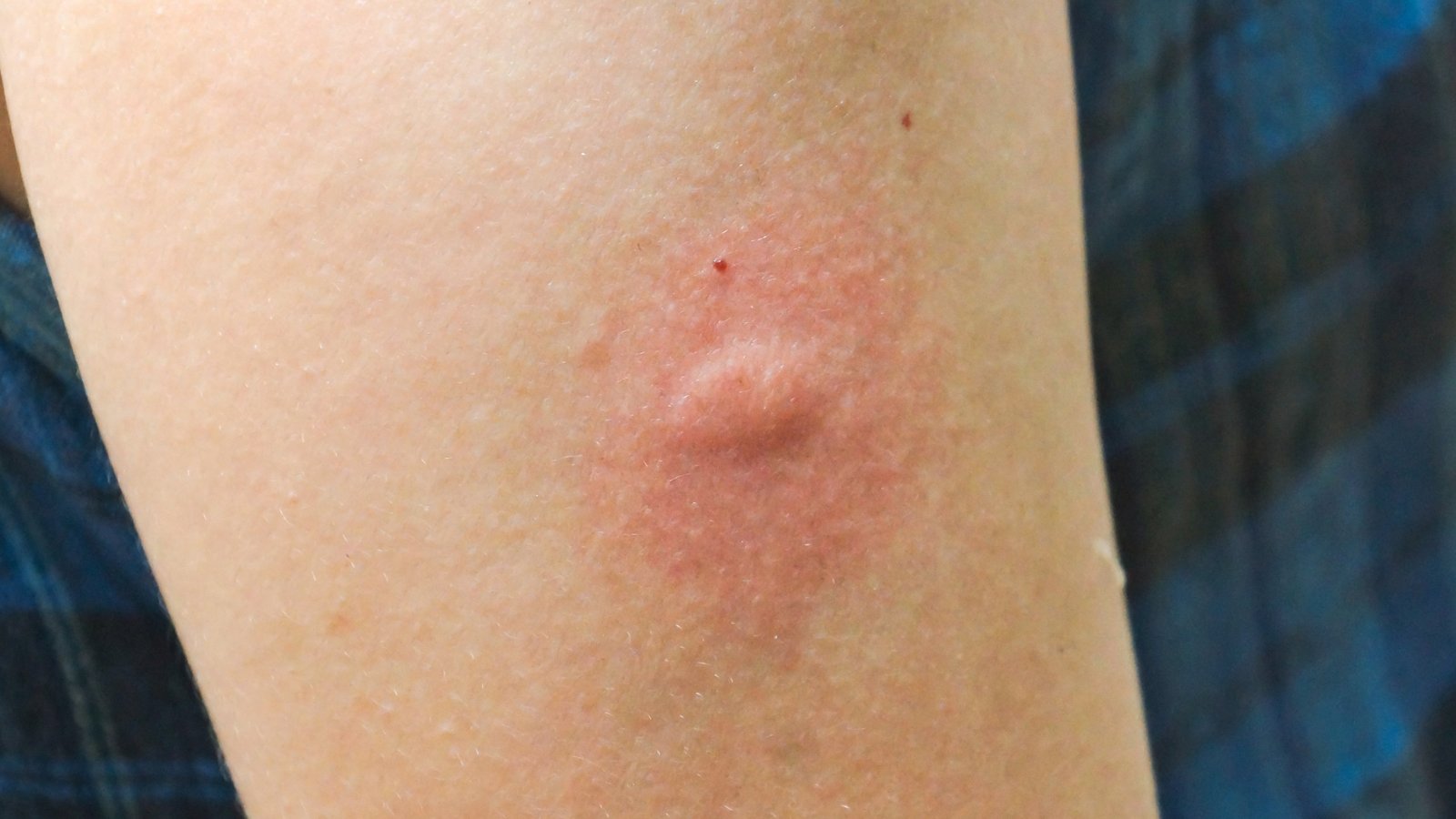
| Bite appearance | Raised, puffy, roughly circular bump, sometimes with a small dark spot in the center | Small red welt (around 1/8 inch across) or a water-filled blister, often several close together |
| Sensation | Itchy, swelling bump | Localized stinging or burning with a defined red area, intense itching |
| Location on body | Any exposed skin | Exposed skin, commonly ankles, hairline, neck, and other uncovered areas |
| Setting | Widespread, yards, standing water, indoors and out | Coastal and lakeside areas: marshes, swamps, mangroves, pond and river banks, beaches |
| Timing | Most active at dusk and dawn | Most active at dusk, night, or morning; some species bite in daylight |
The mosquito bite in brief
A mosquito bite is the raised, itchy bump most people recognize. When a mosquito feeds, it secretes saliva into the skin. The immune system treats that saliva as foreign and releases histamine, which is what makes the bite itch and swell (Cleveland Clinic). The result is usually a small, raised, roughly circular bump, sometimes with a small dark spot at the center where the bite occurred. Most bites fade within a few days.
Reactions vary from person to person. Some people develop larger, hive-like swelling; a pronounced allergic response to mosquito saliva is sometimes called skeeter syndrome (Cleveland Clinic). Mosquitoes are generally most active around dusk and dawn.
The no-see-um bite in brief
No-see-ums are biting midges in the genus Culicoides, a group of very small bloodsucking flies. Adults are tiny, roughly 1 to 3 mm long, and many species measure less than one twenty-fourth of an inch (about 1 mm), which is why they are so easy to miss (UF/IFAS). Only the females bite, feeding on blood from people and animals.
The bite itself produces a localized stinging or burning sensation with a defined red area around each bite (UF/IFAS). Bites often show up as small red welts about 1/8 inch in diameter, or as water-filled blisters, and they can itch intensely (University of Arizona Cooperative Extension). Because a swarm can feed at once, bites frequently appear in clusters. Discomfort may last only minutes to hours, though sensitive people can itch for two to three days (UF/IFAS).
No-see-ums are strongly tied to water. Their larvae develop in coastal marshes, swamps, and mangroves, as well as around springs, ponds, lakes, river banks, and beaches (UF/IFAS; University of Arizona Cooperative Extension). Their extremely small size lets them pass through ordinary window and door screens that would stop a mosquito (UF/IFAS).
How to tell which you have
No single feature is definitive, but a few questions usually settle it:
- Where were you? Bites picked up right along a shoreline, marsh, lake, or beach, especially at dawn or dusk, point toward no-see-ums. Bites in a yard, near standing water, or indoors are consistent with mosquitoes.
- Did you see or hear the insect? Mosquitoes are large enough to see and often to hear. No-see-ums are so small they are frequently never noticed, hence the name.
- What does the bite feel like? A burning or stinging spot, often one of several in a tight cluster, leans no-see-um. A single puffy bump that mainly itches leans mosquito.
- Did screens keep the biters out? If you were bitten indoors or on a porch with ordinary screens in place, that favors no-see-ums, which slip through standard mesh (UF/IFAS).
Prevention differences
Much of the standard advice overlaps: cover exposed skin, use an appropriate repellent, and reduce time outdoors during peak biting hours. The key difference is screening.
Ordinary window and door screens do not exclude biting midges, because the insects are small enough to pass through standard 16 x 16 or 18 x 16 mesh (UF/IFAS; University of Arizona Cooperative Extension). To keep no-see-ums out, a finer mesh is needed; the University of Arizona Cooperative Extension recommends replacing standard screening with a finer 30 x 30 mesh where possible. Tightly woven clothing and fine-mesh head nets also help, since the insects cannot bite through closely woven fabric.
For mosquitoes, standard screens are generally effective, and prevention focuses more on eliminating standing water where larvae develop and on avoiding peak dusk and dawn activity.
For repellent choices and application guidance, see the related prevention pages below.
Sources
- University of Florida IFAS Extension (EDIS), “Biting Midges, No-See-Ums Culicoides spp.” (EENY-349 / IN626). Primary entomology source for midge size, burning bite, coastal and freshwater habitat, biting times, and the fact that regular screens do not exclude biting midges. https://ask.ifas.ufl.edu/publication/IN626 (accessed 2026-07-20)
- Cleveland Clinic, “Mosquito Bites.” Clinical source for mosquito bite appearance, the saliva and histamine itch mechanism, and typical duration. https://my.clevelandclinic.org/health/diseases/17695-mosquito-bites (accessed 2026-07-20)
- University of Arizona Cooperative Extension, “Something’s Biting Me, but I Can’t See It.” Extension source for welt and blister appearance, near-water habitat, standard screen mesh passing midges, and the finer 30 x 30 mesh recommendation. https://extension.arizona.edu/publication/somethings-biting-me-i-cant-see-it (accessed 2026-07-20)
Related
- [Mosquito bite vs other biting insects] (placeholder)
- [No-see-um prevention and screening] (placeholder)
- [Choosing and using insect repellent] (placeholder)
Educational note: This page is for general reference and is not medical advice. If a bite becomes severely swollen, infected, or is accompanied by concerning symptoms, consult a healthcare provider.
Last reviewed 20 July 2026.