Short answer
Appearance alone is not a reliable way to tell a mosquito bite from a flea bite. Both are itchy, reddish bumps, and health and extension sources warn that bites are hard to identify from the skin lesion by itself because other causes can look similar (Source 3). The tell is usually context, where the bites are on your body and what is going on in your home.
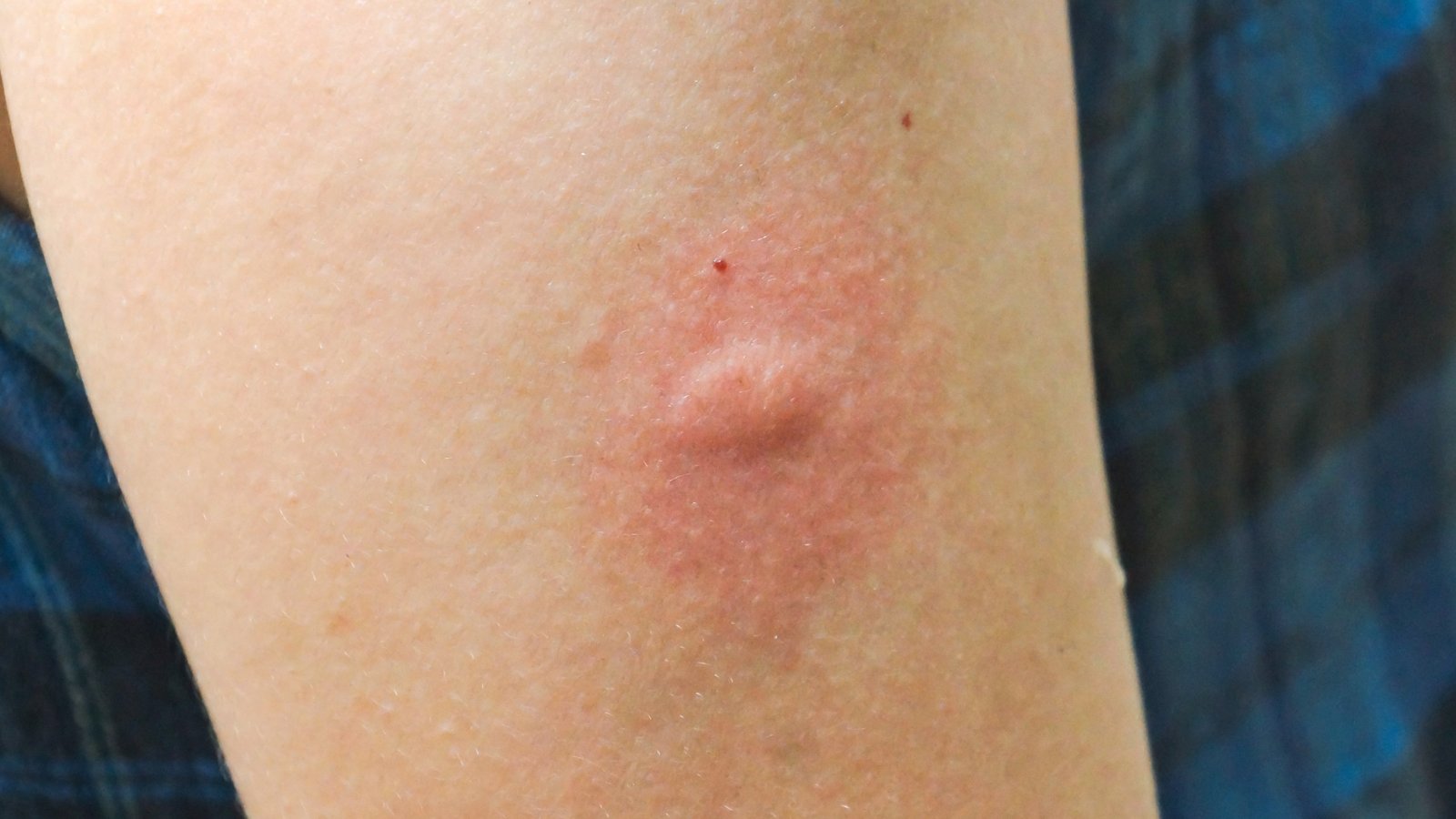
Flea bites cluster low on the body, around the ankles and lower legs, and tend to be small red spots, often with a darker red center inside a lighter ring or halo (Sources 1, 4). They usually mean fleas are in the home, and there is often a pet involved (Source 1). Mosquito bites are puffier and softer, and they show up on exposed skin anywhere the mosquito could reach, not just the lower legs (Sources 2, 5).
Side by side
| Feature | Mosquito | Flea |
|---|---|---|
| Appearance | Puffy, raised, soft bump, sometimes with a small dark dot in the center where the bite occurred (Sources 2, 5) | Small, firm, discolored spot, often a darker red center inside a lighter ring or halo (Sources 1, 4) |
| Size | Often a larger, swollen welt; can grow with a strong reaction (Source 5) | Small; flea bites do not swell as much as mosquito bites (Source 1) |
| Location | Exposed, uncovered skin anywhere the mosquito can reach (Sources 2, 5) | Lower legs, especially feet, calves, and ankles; rarely above the knee (Sources 1, 4) |
| Pattern | Usually scattered, individual bumps (Sources 2, 5) | Often in small clusters or a short line, sometimes two or three in a row (Sources 1, 4) |
| Itch | Itchy, from your body reacting to proteins in mosquito saliva (Source 2) | Itchy and irritated, from your body reacting to flea saliva (Source 1) |
| Other signs | None in the home; tied to being outdoors or near standing water | Fleas on pets or in carpet and bedding; a pet scratching more than usual (Source 1) |
The mosquito bite in brief
A mosquito bite is usually a round, puffy, raised bump that appears within minutes and turns itchy. You can sometimes see a small dark spot in the center where the bite occurred (Source 2). The itch and swelling come from your immune system releasing histamine in response to proteins in mosquito saliva (Source 2).
Mosquito bites land on exposed skin, whatever the mosquito could reach, so they turn up on the face, arms, hands, legs, and ankles rather than clustering in one low band (Sources 2, 5). They tend to be scattered individual bumps rather than tight groups. Some people react more strongly, with a larger area of swelling, soreness, and redness (Source 5).
The flea bite in brief
A flea bite is a small, discolored bump, and a discolored ring or halo often appears around it (Source 1). A small red spot with a lighter center marks where the mouthparts entered the skin (Source 4). Flea bites do not swell as much as mosquito bites (Source 1).
Location is the strongest clue. Flea bites most commonly occur on the legs, especially the feet, calves, and ankles, because fleas jump from the floor, carpet, or a pet onto the lower body (Sources 1, 4). They rarely appear above the knee unless you spend a lot of time sitting or lying down (Source 1). They often show up in small clusters or a short line, sometimes two or three in a row, which reflects repeated feeding rather than a single bite (Sources 1, 4). The bumps are itchy and can stay irritated for five days or more (Source 3).
Flea bites usually mean fleas are living in the home. They hide in carpet, furniture, bedding, and cracks in the floor, and a pet is often the source (Source 1).
How to tell which you have
Since the bumps themselves overlap, check the context.
- Where are they? Bites concentrated on the ankles and lower legs point toward fleas. Bites scattered across exposed skin, including the arms and face, point toward mosquitoes (Sources 1, 2, 4).
- Are they grouped? Small clusters or a short line of two or three lean flea. Isolated, scattered bumps lean mosquito (Sources 1, 4, 5).
- Check your pets. Look for fleas on a pet around the ears, neck, back, and belly, and watch for a pet that is scratching more than normal and seems restless (Source 1).
- Check the home. Fleas hide in carpet, furniture, bedding, and floor cracks. Finding adult fleas on pets or in the home is the most reliable confirmation, more reliable than reading the bites (Sources 1, 3).
- Think about where you were. Mosquito bites usually trace back to time outdoors, near standing water, or a room a mosquito got into. Flea bites trace back to the home environment and pets.
If none of the context fits either one, remember that bed bug, tick, and other bites can look similar too, so it is reasonable to compare more than one before deciding (Source 3).
When to see a doctor
For either bite, seek care if you have an allergic reaction, or if you develop symptoms of a disease carried by the insect, such as fever, headache, or body aches after mosquito bites, or fever and body aches after flea bites (Sources 1, 5). Watch for signs of a skin infection at a scratched bite, including spreading redness, warmth, pus, or increasing pain.
Get emergency care for whole-body or severe symptoms such as trouble breathing, swelling of the lips, tongue, or face, a racing heartbeat, or dizziness. When a bite is not improving after a few days, a clinician or board-certified dermatologist can take a look.
Sources
- Cleveland Clinic, Flea Bites: What They Look Like, Symptoms and Treatment. Small discolored bumps with a discolored ring or halo, less swelling than mosquito bites, most commonly on feet, calves, and ankles, rarely above the knee, appear in a line or cluster, itch from saliva, fleas hide in carpet and bedding, check pets around ears, neck, back, and belly, when to see a doctor. https://my.clevelandclinic.org/health/diseases/21718-flea-bites (accessed 2026-07-20)
- Cleveland Clinic, Mosquito Bites: What They Look Like, Why They Itch and Treatment. Small raised bumps, sometimes a small dark spot in the center where the bite occurred, on exposed skin, histamine causes itch and swelling. https://my.clevelandclinic.org/health/diseases/17695-mosquito-bites (accessed 2026-07-20)
- University of Minnesota Extension, Fleas. Bites are raised, red, itchy bumps typically in clusters on lower legs, symptoms may persist five days or more, it is very challenging to diagnose flea bites from lesions alone because other causes can look similar, and finding adult fleas on pets or in the home is the reliable check. https://extension.umn.edu/biting-insects/fleas (accessed 2026-07-20)
- Purdue University Extension, Public Health and Medical Entomology, Fleas. Bites on humans usually occur on the ankles and calves, and multiple bites more or less in a row are characteristic of repeated feeding by a single flea. https://extension.entm.purdue.edu/publichealth/insects/flea.html (accessed 2026-07-20)
- Mayo Clinic, Mosquito bites (Symptoms and causes). Puffy reddish bump within minutes, harder itchy reddish-brown bump a day later, bites appear as individual bumps on uncovered skin rather than clusters, larger local reactions with more swelling and redness. https://www.mayoclinic.org/diseases-conditions/mosquito-bites/symptoms-causes/syc-20375310 (accessed 2026-07-20; page returned 403, content confirmed via search result snippet)
Related
- [RELATED: What a mosquito bite looks like]
- [RELATED: Mosquito bites vs bed bug bites]
- [RELATED: Mosquito bites vs other bug bites]
- [RELATED: How to stop a mosquito bite from itching]
Educational note: This page is for general information and is not medical advice. Bites are hard to identify from appearance alone. If a bite worsens, shows signs of infection, or comes with severe or whole-body symptoms, contact a clinician.
Last reviewed 20 July 2026.