The short answer
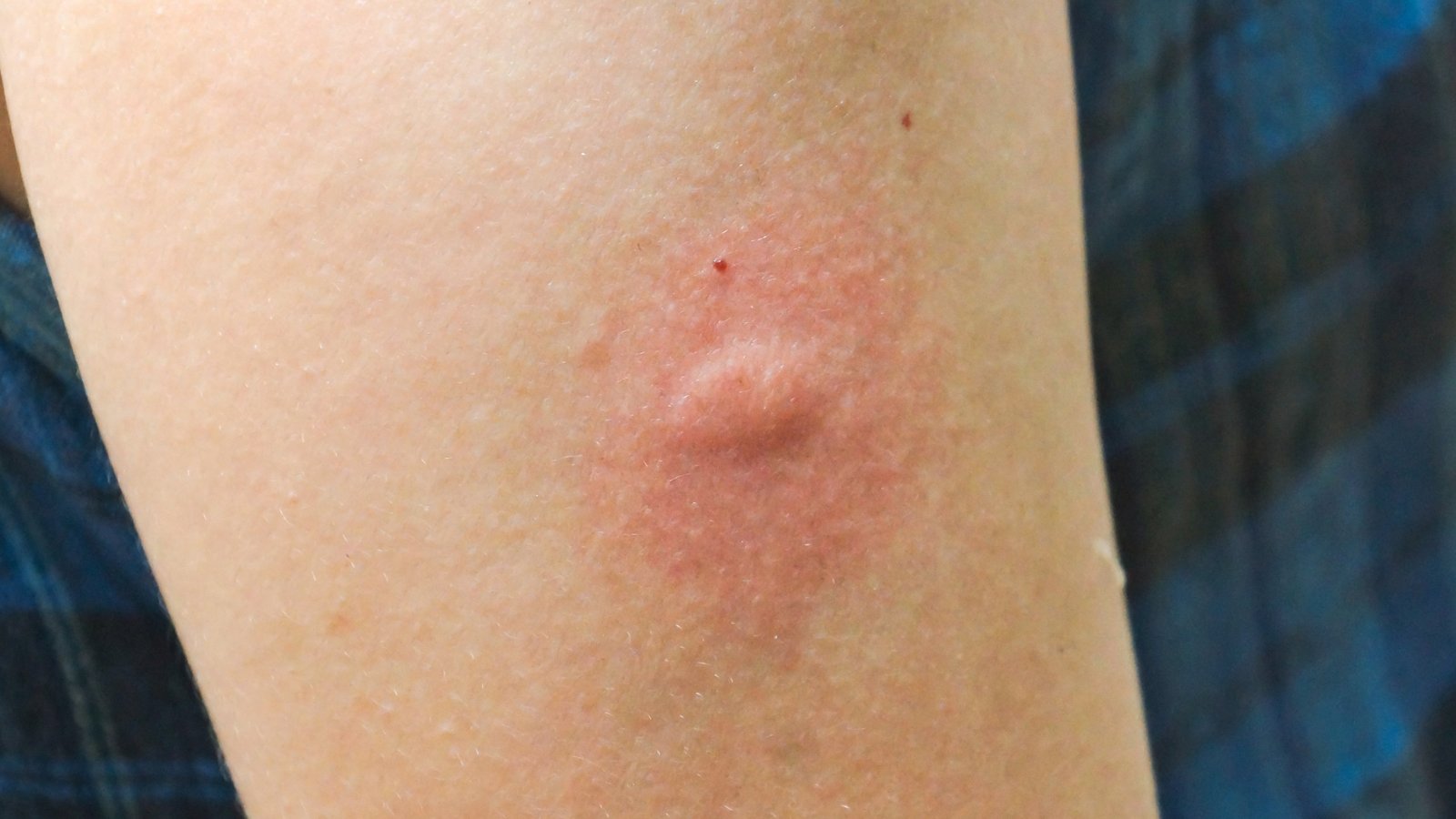
Skeeter syndrome is a large local allergic reaction to mosquito bites. It is not an infection. When a mosquito bites, it injects a small amount of saliva into the skin. In most people that saliva causes a small itchy bump. In people with skeeter syndrome, the immune system overreacts to proteins in the saliva and produces a much bigger reaction: a large area of swelling, warmth, redness, and itching or pain that shows up within hours of the bite.
The allergy specialists at the American Academy of Allergy, Asthma and Immunology (AAAAI) describe it as an uncommonly large or exaggerated reaction to mosquito bites. Because the swollen, hot, red area can look alarming, it is often mistaken for a skin infection. The key point to hold onto is that it is an allergic response, it is not contagious, and it almost always settles on its own.
What it looks like
A skeeter syndrome reaction is bigger and more intense than an ordinary mosquito bite. Common features include:
- A large area of swelling around the bite, sometimes several inches across. Cleveland Clinic notes the swelling can be severe enough to make it hard to move a hand or foot when it crosses a wrist or ankle.
- Skin that is red or shows other color changes, and that feels warm to the touch.
- Hard lumps, strong itching, and sometimes pain or a burning feeling.
- Occasionally a low fever, widespread hives, or swollen lymph nodes, though these are less common.
- In some cases, blisters at the bite site.
The timing is a useful clue. According to Cleveland Clinic, symptoms usually start about eight to 10 hours after the bite and get better within three to 10 days. A peer-reviewed review in the journal that publishes for allergy specialists puts the same window on it: the reaction comes on within hours of the bite and resolves in three to 10 days.
Why it happens
Skeeter syndrome is an allergy to proteins in mosquito saliva. When a mosquito feeds, its saliva delivers a mix of proteins that keep blood flowing while it bites. A published review identifies salivary proteins such as the D7 group as the major allergens across mosquito species. In a susceptible person, the immune system treats these proteins as a threat and mounts an oversized inflammatory response.
Two groups tend to react more strongly:
- Young children. Cleveland Clinic explains that skeeter syndrome is most common in young kids because their immune systems have not yet been desensitized to the proteins in mosquito saliva. Adults can have it too.
- People newly exposed to a local mosquito species. Because tolerance builds up over years of being bitten, a peer-reviewed review notes that larger reactions are seen in people with no previous exposure to the local mosquitoes, for example someone who has recently moved to a new region. Over time, repeated bites from the same species often lead to smaller reactions, a natural desensitization.
The exact biology is still being worked out. The AAAAI notes the mechanism is not fully understood and may involve both IgE and non-IgE immune pathways.
Infection vs allergic reaction
Because a big, hot, red, swollen bite can look like cellulitis (a bacterial skin infection), it helps to know how to tell them apart. The single most useful difference is timing.
- An allergic reaction (skeeter syndrome) appears fast. The AAAAI notes the swelling, heat, redness, and itching develop within hours of the bite. It is usually very itchy.
- A skin infection usually develops later, often a day or more after the bite, and tends to keep spreading and worsening rather than settling. Cellulitis is more painful than itchy, and Cleveland Clinic lists warning signs such as expanding redness, red streaks, blisters, or yellow or pus-like drainage, sometimes with fever or chills.
A practical trick recommended by Cleveland Clinic is to draw a line around the edge of the redness. A skeeter syndrome reaction peaks and then fades within a few days. If the redness, swelling, or blisters keep pushing past that border, that points toward infection and is a reason to contact a doctor. Scratching matters here too: breaking the skin gives bacteria a way in, so an allergic bite that is scratched open can become infected as a second, separate problem.
Treatment
Most skeeter syndrome reactions can be managed at home and will resolve within a week or so. Common measures, drawn from Cleveland Clinic and a peer-reviewed review, include:
- Cool compresses or an ice pack on the bite to bring down swelling and itch.
- Oral antihistamines, such as cetirizine (Zyrtec), fexofenadine (Allegra), or loratadine (Claritin), to reduce the allergic itch and swelling.
- Topical corticosteroid or anti-itch creams, such as hydrocortisone, applied to the bite.
- Trying not to scratch, which lowers the risk of a secondary skin infection.
For severe reactions, Cleveland Clinic notes a doctor may prescribe oral corticosteroids or give a corticosteroid injection. The most reliable long-term strategy is prevention: avoiding bites in the first place, using repellent and protective clothing, remains the most effective approach according to the AAAAI, since allergy shots for mosquito saliva have not been shown to help.
When to see a doctor
Reach out to a healthcare provider if:
- The redness or swelling keeps spreading past its original edge, or the bite is getting more painful, warm, or firm after the first day. This can signal a skin infection that needs antibiotics.
- You see pus, yellow drainage, red streaks moving away from the bite, or you develop a fever or chills.
- The swelling crosses a joint and limits movement of a hand, foot, wrist, or ankle.
- Bites are large and recurring, and you want confirmation of the diagnosis or help managing reactions. An allergy specialist can advise on treatment.
Severe whole-body allergic reactions (anaphylaxis) to mosquito bites are very rare, but get emergency help right away by calling 911 or going to the emergency room if you have trouble breathing, dizziness, weakness, or widespread swelling or hives after bites.
Sources
- American Academy of Allergy, Asthma and Immunology (AAAAI), “Skeeter Syndrome Defined.” Definition as an uncommonly large or exaggerated reaction to mosquito bites; large area of swelling, heat, redness, and itching/pain that mimics an infectious process and develops within hours in susceptible individuals. https://www.aaaai.org/tools-for-the-public/allergy,-asthma-immunology-glossary/skeeter-syndrome-defined (accessed 2026-07-20)
- AAAAI, Ask the Expert, “Mosquito bite large local reactions (Skeeter Syndrome).” Reactions develop within hours; symptoms mimic an infectious process; pathophysiology unclear and may involve IgE and non-IgE mechanisms; avoiding bites is the most effective therapy. https://www.aaaai.org/allergist-resources/ask-the-expert/answers/2026/mosquito (accessed 2026-07-20)
- Cleveland Clinic, “Skeeter Syndrome: Causes, Symptoms and Treatment.” Reaction to proteins in mosquito saliva; large swelling that can limit joint movement; warmth, redness, hard lumps, itch, pain, occasional fever/hives/swollen lymph nodes; symptoms start 8 to 10 hours after the bite and resolve in 3 to 10 days; most common in young kids; antihistamines, hydrocortisone/anti-itch creams, and severe cases may need oral or injected corticosteroids. https://my.clevelandclinic.org/health/diseases/23289-skeeter-syndrome (accessed 2026-07-20)
- Cleveland Clinic Health Essentials, “Cellulitis From an Infected Bug Bite.” Warning signs of infection (expanding redness, red streaks, blisters, pus-like drainage, fever/chills); draw a border around the bite and seek care if it expands past the border; scratching lets bacteria enter the skin. https://health.clevelandclinic.org/cellulitis-from-bug-bite (accessed 2026-07-20)
- “Update on mosquito bite reaction: Itch and hypersensitivity, pathophysiology, prevention, and treatment.” Peer-reviewed review, PubMed Central. https://pmc.ncbi.nlm.nih.gov/articles/PMC9532860/. Accessed 20 Jul 2026. (D7 salivary proteins as major allergens; larger reactions in those with no previous exposure to local mosquitoes; natural desensitization with long-term exposure; skeeter syndrome onset within hours and resolution in 3 to 10 days; treatment with second-generation antihistamines and topical corticosteroids.)
Related
- Why mosquito bites itch [placeholder]
- How to treat a mosquito bite [placeholder]
- Mosquito bite allergy in children [placeholder]
- Cellulitis and infected insect bites [placeholder]
- Mosquito bite prevention and repellents [placeholder]
- Mosquito-borne diseases overview [placeholder]
This page is for general information and education. It is not medical advice and is not a substitute for diagnosis or treatment by a qualified healthcare professional. If you are worried about a bite or reaction, contact a doctor.
Last reviewed 20 July 2026.