The short answer
Yellow fever is a viral disease spread by the bite of an infected mosquito, mainly the yellow fever mosquito (Aedes aegypti). Most people who get infected have no symptoms or a mild, flu-like illness, but a small share go on to a severe stage with high fever, jaundice (the yellowing of skin and eyes that gives the disease its name), and bleeding. There is no specific antiviral drug, so care is supportive. What sets yellow fever apart from most other mosquito-borne diseases is that a single, highly effective vaccine gives lifelong protection.
Yellow fever does not currently circulate in the continental region, and it once caused some of the deadliest epidemics in the country’s history. Today the real-world risk here is almost entirely for travelers heading to parts of South America and sub-Saharan Africa, where the virus is still active.
The short version: Yellow fever is a mosquito-spread virus that ranges from mild to severe (fever, jaundice, bleeding). It no longer circulates locally but is a risk for travelers to parts of Africa and South America. One vaccine dose gives lifelong protection, and some countries require proof of it to enter.
What it is
Yellow fever is caused by the yellow fever virus, a flavivirus in the same broad family as dengue, Zika, and West Nile virus. The “yellow” in its name refers to the jaundice that develops in the most severe cases, when the virus damages the liver.
The virus is found in tropical and subtropical parts of Africa and Central and South America. The World Health Organization identifies dozens of countries across these regions as being at risk, and estimates that tens of thousands of severe infections and deaths still occur each year, the large majority of them in Africa.
Yellow fever does not spread locally in the continental region today. The mosquito that carries it, Aedes aegypti, does live across warmer parts of the country, but the virus itself is not circulating here. Cases counted here are rare and are linked to travel.
How you get it
You get yellow fever when a mosquito carrying the virus bites you. The main urban vector is Aedes aegypti, the yellow fever mosquito, which lives around homes, prefers to feed on people, and bites mostly during the day. In forested areas of Africa and South America, other mosquitoes in the Haemagogus and Sabethes groups spread the virus among monkeys and to people who enter the forest.
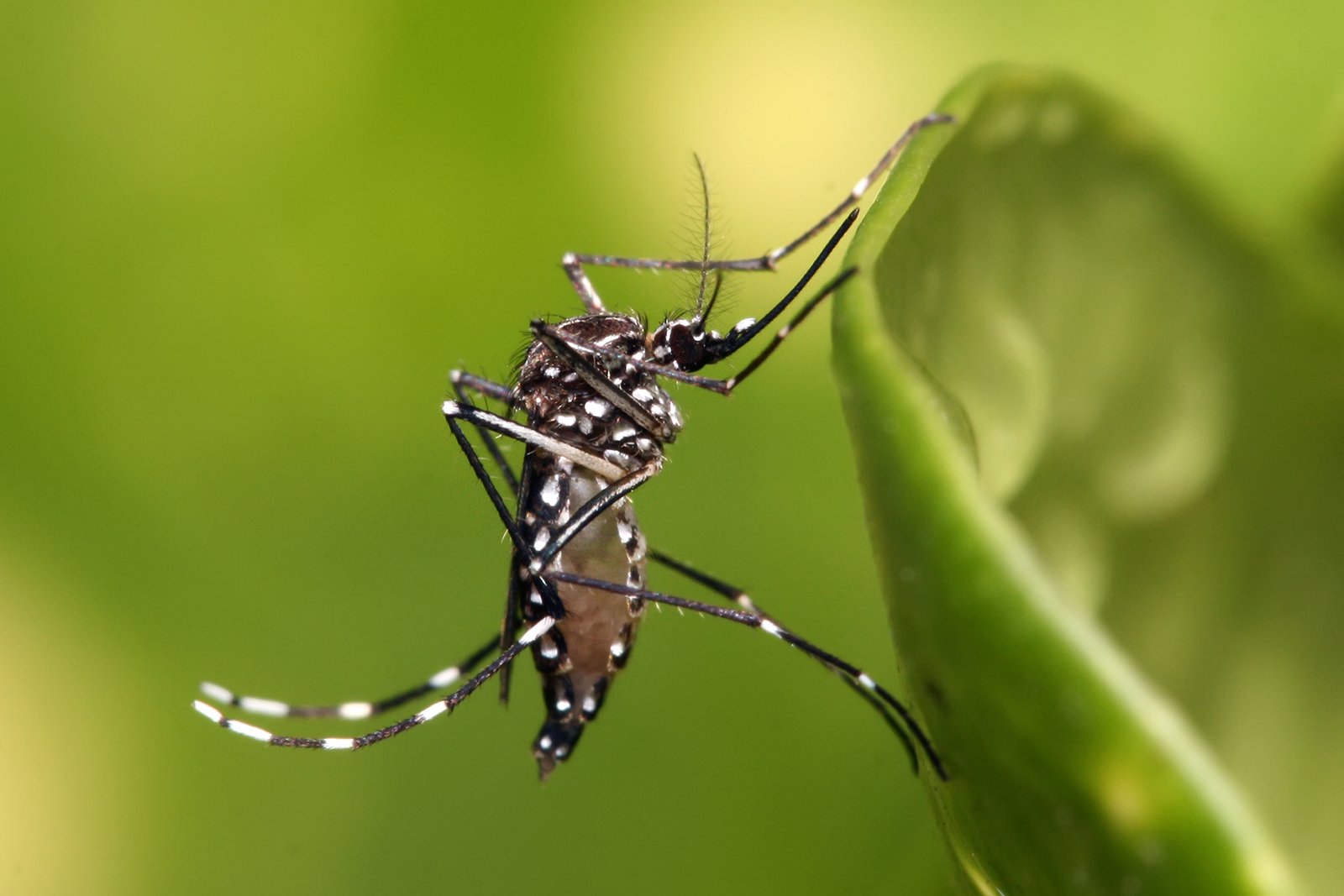
The cycle works the same way as with other mosquito-borne viruses: a mosquito bites an infected person or animal, the virus multiplies inside the mosquito over a period of days, and the mosquito then passes it on when it bites again.
What does NOT spread yellow fever: You cannot catch it from casual contact with a sick person, from coughing or sneezing, or from sharing food. The ordinary route is a mosquito bite.
Symptoms
Most people infected with yellow fever never develop symptoms or have only mild illness. When symptoms do appear, they usually start 3 to 6 days after the bite.
The first phase is nonspecific and looks like many other viral illnesses:
- Sudden fever
- Headache
- General body aches and muscle pain
- Nausea and vomiting
- Weakness and fatigue
These symptoms usually ease within about 3 to 4 days, and most people recover at this point.
However, roughly 15% of people who get sick enter a second, far more dangerous “toxic” phase within about 24 hours of seeming to improve. This severe stage can bring:
- A return of high fever
- Jaundice (yellowing of the skin and the whites of the eyes)
- Abdominal pain and vomiting
- Bleeding from the mouth, nose, eyes, or stomach
- Kidney and liver failure
Severe yellow fever is often fatal. About half of the people who enter the toxic phase die within 7 to 10 days. Those who survive generally recover without major lasting organ damage.
Who is at higher risk
The people most likely to be exposed to yellow fever are unvaccinated travelers going to areas where the virus is active in Africa and South America. Risk depends on the specific destination, the season, how long you stay, and the kinds of activities you do, with rural and forested areas generally carrying more risk than cities.
Certain groups need extra care around the vaccine itself rather than the disease, because the live vaccine is not suitable for everyone (see the vaccine section below). These include infants under 6 months, adults aged 60 and older, pregnant or breastfeeding people, and people with weakened immune systems. Anyone in these groups should discuss travel plans with a clinician well ahead of time.
When to see a doctor: If you develop a fever within about a week of returning from an area where yellow fever spreads, contact a healthcare provider promptly and tell them where you traveled. Seek emergency care right away for warning signs such as yellowing of the skin or eyes, bleeding, or severe abdominal pain. Before any trip to a risk area, see a travel medicine provider four to six weeks ahead so there is time to be vaccinated and to obtain the required documentation.
Diagnosis, treatment, and the vaccine
Diagnosis. Yellow fever is diagnosed with laboratory blood tests, guided by your symptoms and your travel history. Because the early stage overlaps with other illnesses (including dengue, malaria, and other viral fevers), telling your provider exactly where you traveled is essential so they can order the right tests.
Treatment. There is no specific antiviral medicine that cures yellow fever. Care is supportive and focuses on:
- Rest and fluids
- Managing fever and pain
- Treating complications such as liver and kidney failure, and any secondary bacterial infections, usually in a hospital for severe cases
The vaccine. This is where yellow fever differs from most mosquito-borne diseases. A safe, highly effective vaccine exists. It is a live vaccine given as a single dose, recommended for most people aged 9 months and older who are traveling to or living in areas at risk. Protective immunity develops in the great majority of people within about 10 days and in over 99% within a month. Based on evidence reviewed by the World Health Organization, a single dose is now considered to give lifelong protection for most people, and a booster is generally not needed.
In the continental region, yellow fever vaccine is only available through authorized vaccination centers that are registered to give it and to issue the official proof of vaccination. You can find an authorized clinic through the government travel-health clinic locator. Because it is a live vaccine, it is not recommended for certain groups (see risk section above), and a clinician can advise on medical exemptions when travel to a risk area is unavoidable.
How to protect yourself and travel notes
If you are traveling to an area where yellow fever spreads, combine vaccination with everyday bite protection:
- Check current travel notices and the vaccine recommendation for your specific destination before you go. See our travel prevention page
- See a travel medicine provider four to six weeks before departure so there is time for the vaccine to take effect and for paperwork.
- Get vaccinated if recommended, and carry your proof of vaccination. Some countries require an International Certificate of Vaccination or Prophylaxis (ICVP) to enter, and travelers without valid proof may be denied entry, quarantined, or vaccinated at the border. The certificate becomes valid 10 days after vaccination.
- Use an EPA-registered insect repellent and reapply as directed. See our repellent guide
- Wear long sleeves and long pants when mosquitoes are active. Aedes aegypti bites mostly during the day.
- Sleep in screened or air-conditioned rooms, or under a bed net, where mosquitoes are present.
- Remove standing water around lodging where you can, since Aedes aegypti breeds in small containers. See our source-reduction checklist
In history
Yellow fever was once one of the most feared diseases in the port cities of this country. In 1793, an epidemic in Philadelphia, then the national capital, killed roughly 5,000 people, on the order of one in ten residents, and drove thousands more, including federal officials, to flee the city. At the time no one knew that mosquitoes carried the disease.
New Orleans was struck repeatedly through the 1800s. The 1853 epidemic there killed thousands in a single summer. The last yellow fever epidemic in the country occurred in New Orleans in 1905, causing several hundred deaths before it was brought under control.
The connection to mosquitoes was worked out around the turn of the 20th century. The Cuban physician Carlos Finlay proposed in 1881 that a mosquito (now known as Aedes aegypti) spread the disease. His hypothesis was confirmed in 1900 by the U.S. Army Yellow Fever Commission led by Walter Reed, which demonstrated that the bite of an infected mosquito transmitted the virus. That discovery made mosquito control possible and is a major reason the disease no longer circulates here.
Sources
- Centers for Disease Control and Prevention. Yellow Fever Virus. https://www.cdc.gov/yellow-fever/index.html. Accessed 20 Jul 2026. (Yellow fever is a viral disease spread by infected mosquitoes, mainly Aedes aegypti; found in tropical and subtropical Africa and South America; risk for travelers.)
- World Health Organization. Yellow fever (fact sheet). https://www.who.int/news-room/fact-sheets/detail/yellow-fever. Accessed 20 Jul 2026. (Incubation 3 to 6 days; initial symptoms fever, headache, body aches, nausea, vomiting, weakness resolving in 3 to 4 days; about 15% progress to a severe toxic phase with jaundice and bleeding; about 50% of toxic-phase patients die within 7 to 10 days; single dose gives lifelong immunity, protection in 80 to 100% within 10 days and over 99% within 30 days; estimated 31,000 to 82,000 deaths per year; no specific treatment.)
- Centers for Disease Control and Prevention. Clinical Features and Diagnosis of Yellow Fever. https://www.cdc.gov/yellow-fever/hcp/clinical-diagnosis/index.html. Accessed 20 Jul 2026. (Incubation 3 to 6 days; initial nonspecific illness; roughly 15% enter a toxic phase after a brief remission; diagnosis by laboratory blood tests with travel history.)
- Centers for Disease Control and Prevention. Treatment and Prevention of Yellow Fever. https://www.cdc.gov/yellow-fever/hcp/treatment-prevention/index.html. Accessed 20 Jul 2026. (No specific antiviral treatment; care is supportive, including rest, hydration, management of organ failure and secondary infections.)
- Centers for Disease Control and Prevention. Yellow Fever Vaccine. https://www.cdc.gov/yellow-fever/vaccine/index.html. Accessed 20 Jul 2026. (Vaccine recommended for people aged 9 months and older traveling to or living in at-risk areas; single dose provides long-lasting protection.)
- Centers for Disease Control and Prevention, Travelers’ Health. International Certificate of Vaccination or Prophylaxis (ICVP). https://wwwnc.cdc.gov/travel/page/icvp. Accessed 20 Jul 2026. (Some countries require proof of vaccination to enter; travelers without a valid ICVP may be denied entry, quarantined, or revaccinated; certificate valid beginning 10 days after vaccination and valid for the vaccinee’s lifetime.)
- Centers for Disease Control and Prevention, Travelers’ Health. Return of US Licensed Yellow Fever Vaccine (YF-VAX) to the Market. https://wwwnc.cdc.gov/travel/news-announcements/yellow-fever-vaccine-access. Accessed 20 Jul 2026. (Yellow fever vaccine is administered in the continental region only through authorized clinics; a clinic locator is provided.)
- Encyclopedia of Greater Philadelphia. Yellow Fever. https://philadelphiaencyclopedia.org/essays/yellow-fever/. Accessed 20 Jul 2026. (The 1793 epidemic killed roughly 5,000 people, about one in ten residents, between August and November; thousands fled; mosquito transmission was not yet understood.)
- Yellow Fever in Louisiana. 64 Parishes (Louisiana Endowment for the Humanities). https://64parishes.org/entry/yellow-fever-in-louisiana. Accessed 20 Jul 2026. (Repeated 19th-century New Orleans epidemics, including 1853; the 1905 New Orleans outbreak was the last yellow fever epidemic in the country. The page states “several hundred deaths” rather than an exact total.)
- Carlos J. Finlay. Encyclopaedia Britannica. https://www.britannica.com/biography/Carlos-J-Finlay. Accessed 20 Jul 2026. (Finlay proposed mosquito transmission in 1881; confirmed in 1900 by the U.S. Army Yellow Fever Commission led by Walter Reed.)
Related
- Aedes aegypti (yellow fever mosquito)
- Dengue
- Zika virus
- Chikungunya
- Choosing and using insect repellent
- Travel prevention: mosquito-borne disease
Educational reference only. This is not medical advice. If you are sick or think you may have yellow fever, contact a licensed healthcare provider, and seek emergency care for warning signs such as jaundice, bleeding, or severe abdominal pain.
Last reviewed 20 July 2026.