The short answer
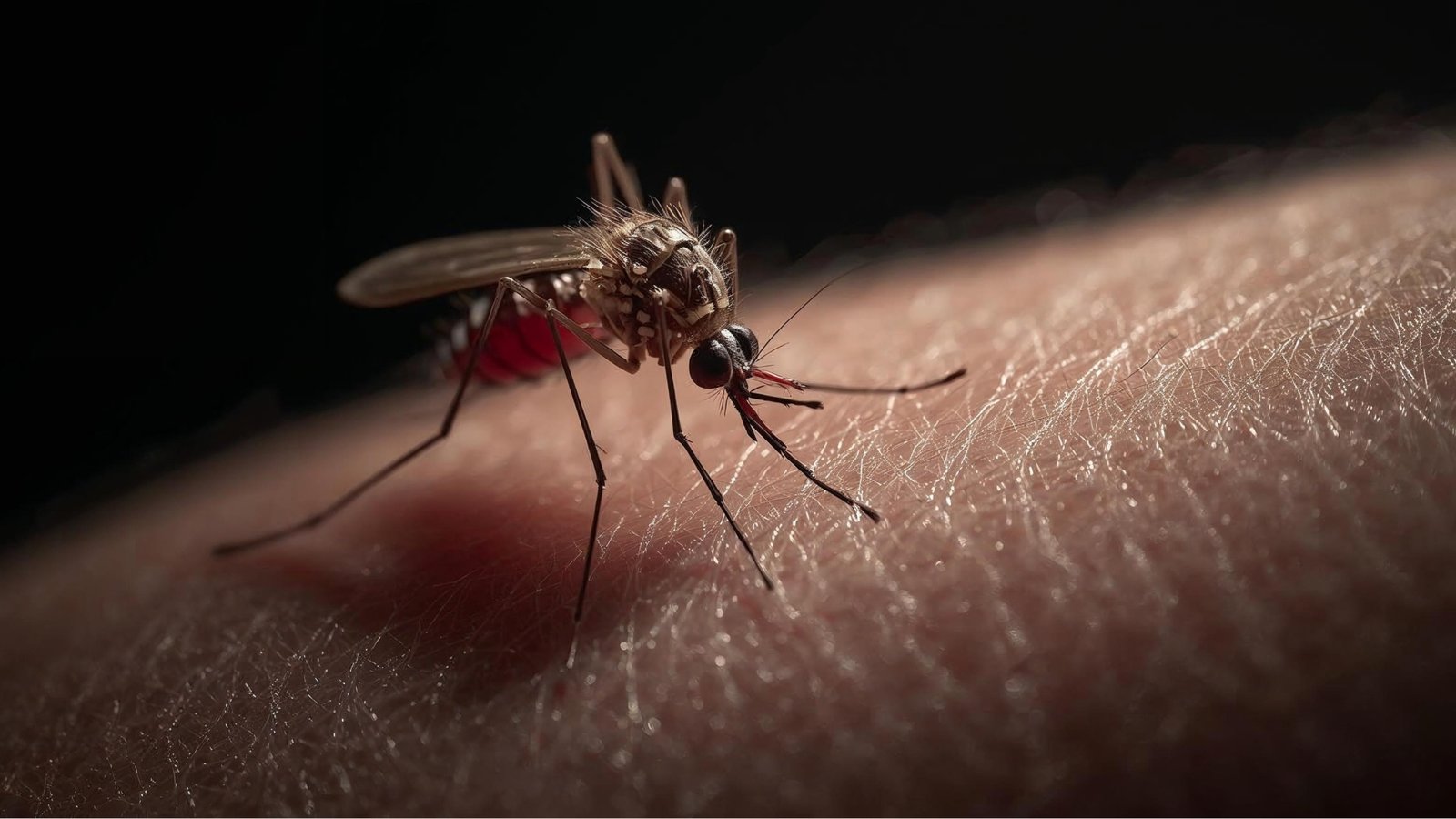
Heartworm disease in dogs is caused by a parasitic worm, Dirofilaria immitis, and dogs get it only from the bite of an infected mosquito. There is no other way for a dog to catch it. Left untreated, the worms grow up to about a foot long and live in the heart, lungs, and nearby blood vessels, where over months to years they can cause lasting damage and, in serious cases, heart failure and death. The good news is that heartworm is almost entirely preventable with a vet-prescribed preventive given year-round, which is far safer, easier, and cheaper than treating a dog that is already infected.
The short version: Mosquitoes spread heartworm. It is a serious, potentially fatal disease, but simple year-round prevention stops it before it starts. Talk to your veterinarian about a preventive and an annual heartworm test.
What heartworm is
Heartworm disease is a serious and potentially fatal condition caused by a worm called Dirofilaria immitis. In an infected dog, adult heartworms live in the heart, the lungs, and the blood vessels that connect them. Mature worms are large, roughly a foot long, and a single dog can carry anywhere from a few worms to several hundred.
The worms cause harm in two ways. Physically, they crowd the heart and pulmonary vessels and interfere with normal blood flow. Over time they also trigger inflammation and damage to the lung arteries and surrounding tissue. Adult heartworms can survive 5 to 7 years inside a dog, so an untreated infection is not a one-time event. It is an ongoing source of injury to the heart and lungs.
The dog is what scientists call a natural host, meaning heartworms inside a dog can grow into adults, mate, and produce offspring. That is different from cats, which are atypical hosts where most worms do not survive to adulthood (more on cats below).
How dogs get it
Every heartworm infection starts with a mosquito. The cycle works like this:
- A mosquito bites an already-infected animal (often another dog, or a wild reservoir animal such as a fox, coyote, or wolf) and takes in microscopic worm larvae called microfilariae that are circulating in the blood.
- Inside the mosquito, those larvae develop into the infective stage over about 10 to 14 days.
- When that mosquito bites your dog, it deposits the infective larvae onto the skin, and they enter the body through the bite wound.
- Once inside a dog, the larvae take roughly 6 months to grow into sexually mature adult heartworms. The adults then settle in the heart and lungs and, if the infection is left alone, begin producing their own microfilariae, which a new mosquito can pick up to continue the cycle.
Because the mosquito is a required middle step, a dog cannot catch heartworm directly from another dog, from shared water bowls, or from contact. It takes a mosquito bite, every time. The roughly 6-month development period is also why a dog can be infected for months before any test turns positive or any sign appears.
Symptoms in dogs
In the early stages, many dogs show few signs or none at all. That is part of what makes heartworm dangerous. A dog can look and act perfectly healthy while worms are maturing inside. Generally, the more worms a dog carries and the longer the infection lasts, the more likely signs are to appear.
As the disease progresses, common signs include:
- A mild but persistent cough
- Reluctance to exercise or tiring easily after moderate activity
- Fatigue
- Decreased appetite
- Weight loss
In advanced disease, dogs can develop heart failure and a swollen belly caused by fluid buildup in the abdomen. In the most severe form, called caval syndrome, a large mass of worms suddenly blocks blood flow through the heart, causing labored breathing and cardiovascular collapse. This is a life-threatening emergency.
Because early infection is usually silent, waiting for symptoms is not a safe way to catch heartworm. That is the reason for annual testing, covered below.
Which dogs are at higher risk
The single biggest risk factor is going without preventive medication. Any unprotected dog that is exposed to mosquitoes can be infected.
Geography matters too. Heartworm has been diagnosed in dogs in every state, and no state is considered heartworm-free, but it is far more common in some regions than others. The highest rates are consistently in the Gulf Coast and southeastern states. In the American Heartworm Society’s incidence survey, the top states for heartworm have long included Mississippi, Louisiana, South Carolina, Arkansas, and Alabama. In Mississippi, nearly 10 percent of dogs tested were positive in that survey year. Warm, humid, mosquito-friendly climates drive those numbers, but because mosquitoes travel and infected animals move between regions, prevention is recommended everywhere, not just in the hot spots.
A brief note on cats: cats can get heartworm too, and it behaves differently in them. Cats are atypical hosts, so most worms never reach adulthood, and cats usually carry very few worms (often just one or two). But even one or two worms can make a cat seriously ill, and importantly there is no approved drug to kill heartworms in cats, which makes prevention the only real protection for them. If you have cats, ask your veterinarian about feline heartworm prevention.
Prevention and treatment
Prevention is straightforward, highly effective, and inexpensive compared to treatment. The American Heartworm Society recommends year-round heartworm prevention for dogs, plus an annual heartworm test. Preventives are available only by prescription and come in several forms: monthly chewable tablets, monthly topical “spot-on” products, and an injectable given every 6 or 12 months. These medicines work by clearing the larval stages a dog may have picked up in the recent past, which is why they must be given on schedule, every time, and year-round. Mosquitoes can be active in mild weather and even make their way indoors, so seasonal-only dosing leaves gaps.
Annual testing goes hand in hand with prevention. The American Heartworm Society recommends yearly heartworm screening for dogs, generally starting around 7 months of age, even for dogs already on a preventive. No preventive is 100 percent effective, and a missed or late dose can open a window for infection. Yearly testing catches problems early, before worms cause lasting damage.
Treatment is possible, and most infected dogs can be treated successfully, but it is expensive, complex, and hard on the dog. It typically involves an antibiotic (doxycycline) and a series of injections of a drug called melarsomine to kill the adult worms, given over several months. Throughout treatment and for weeks afterward, the dog must be kept strictly quiet, with exercise sharply restricted, because physical activity while worms are dying can cause dangerous complications. All of this is why every veterinary organization says the same thing: preventing heartworm is far better, and far cheaper, than treating it.
Can people get heartworm
Heartworm is overwhelmingly a disease of dogs and other animals, not people, but rare human cases do occur. When a person is infected with Dirofilaria immitis, they are what is called a dead-end or accidental host. The worm is not adapted to humans, so the larvae that enter through a mosquito bite almost always die before they can grow into adults or reproduce. A person cannot pass heartworm to anyone else, and infected dogs cannot give it to their owners directly. A mosquito is always required, and even then human infection is uncommon.
When D. immitis does affect a person, it most often shows up in the lungs, a condition called pulmonary dirofilariasis. A dead worm can lodge in a small lung artery and form a nodule. Most people have no symptoms at all, and the nodule is often found by accident on a chest x-ray or scan, where it appears as a small round “coin lesion.” Because coin lesions can also be a sign of cancer, they frequently lead to further testing to rule out something serious, which is how many human cases end up being diagnosed. The infection itself is generally benign.
Sources
-
American Heartworm Society, “Heartworm Basics.” Accessed 20 July 2026. https://www.heartwormsociety.org/pet-owner-resources/heartworm-basics (cause is Dirofilaria immitis; mosquito transmission via microfilariae and 10 to 14 day development of infective larvae; about 6 months for larvae to mature into adults in a new host; adult worms live in heart, lungs, and blood vessels and survive 5 to 7 years in dogs; dogs are natural hosts, cats atypical hosts; foot-long worms; dogs can carry several hundred worms while cats usually carry 6 or fewer)
-
American Heartworm Society, “Heartworm in Dogs.” Accessed 20 July 2026. https://www.heartwormsociety.org/heartworms-in-dogs (dog as natural host and reservoir wildlife such as foxes, coyotes, wolves; symptom progression from none to cough, exercise reluctance, fatigue, decreased appetite, weight loss, swollen belly, and caval syndrome; year-round prevention plus annual testing; treatment is expensive and complex with mandatory exercise restriction; preventives highly effective but not 100 percent)
-
American Heartworm Society, “Heartworm Prevention for Dogs.” Accessed 20 July 2026. https://www.heartwormsociety.org/pet-owner-resources/heartworm-prevention-for-dogs (heartworm spread by mosquitoes and found anywhere mosquitoes exist; year-round prevention recommended; preventive forms include monthly chewables, topical spot-on products, and an injectable every 6 or 12 months; diagnosed in every state; more than a million dogs in the U.S. estimated to have heartworm and disease can be fatal; treatment costly and difficult with months of exercise restriction; annual screening recommended for dogs at least 7 months old)
-
American Veterinary Medical Association, “Heartworm disease.” Accessed 20 July 2026. https://www.avma.org/resources-tools/pet-owners/petcare/heartworm-disease (heartworm can only be transmitted by mosquitoes; risk drops to almost zero with continuous year-round prevention; treatment uses melarsomine plus doxycycline with strict activity restriction; no medication available to eliminate heartworms in cats; people can be infected but only rarely, as dead-end hosts where worms typically die)
-
CDC, DPDx, “Dirofilariasis.” Accessed 20 July 2026. https://www.cdc.gov/dpdx/dirofilariasis/index.html (WebFetch returned HTTP 403; facts taken from CDC search-result text: Dirofilaria immitis most often causes pulmonary disease in humans; humans serve as a dead-end host; dead worms lodge in pulmonary vessels and appear as coin lesions on chest imaging; transmission by mosquito vectors)
-
CDC, “About Dirofilariasis.” Accessed 20 July 2026. https://www.cdc.gov/dirofilariasis/about/index.html (WebFetch returned HTTP 403; facts taken from CDC search-result text: humans are accidental hosts; larvae that migrate to the heart usually die before completing the lifecycle; most human D. immitis infections cause no symptoms and present as an incidental pulmonary nodule; rare in humans)
-
American Heartworm Society, “No State is Heartworm Free” (findings of the 2019 Heartworm Incidence Survey). Accessed 20 July 2026. https://www.heartwormsociety.org/in-the-news/558-ahs-announces-findings-of-2019-heartworm-incidence-survey (highest incidence in Gulf Coast and southeastern states; top states include Mississippi, Louisiana, South Carolina, Arkansas, Alabama; nearly 10 percent of dogs tested positive in Mississippi; no state is heartworm-free)
Related
- Mosquitoes and pets: protecting dogs and cats
- Mosquito bite prevention around the home
- Reducing mosquito breeding sites in your yard
- West Nile virus
- Mosquito species of concern
- When is mosquito season
This page is for general education only and is not veterinary advice. Heartworm testing, prevention, and treatment decisions should be made with a licensed veterinarian who can examine your pet. If you are worried your dog may have heartworm, contact your veterinarian.
Last reviewed 20 July 2026.