The short answer
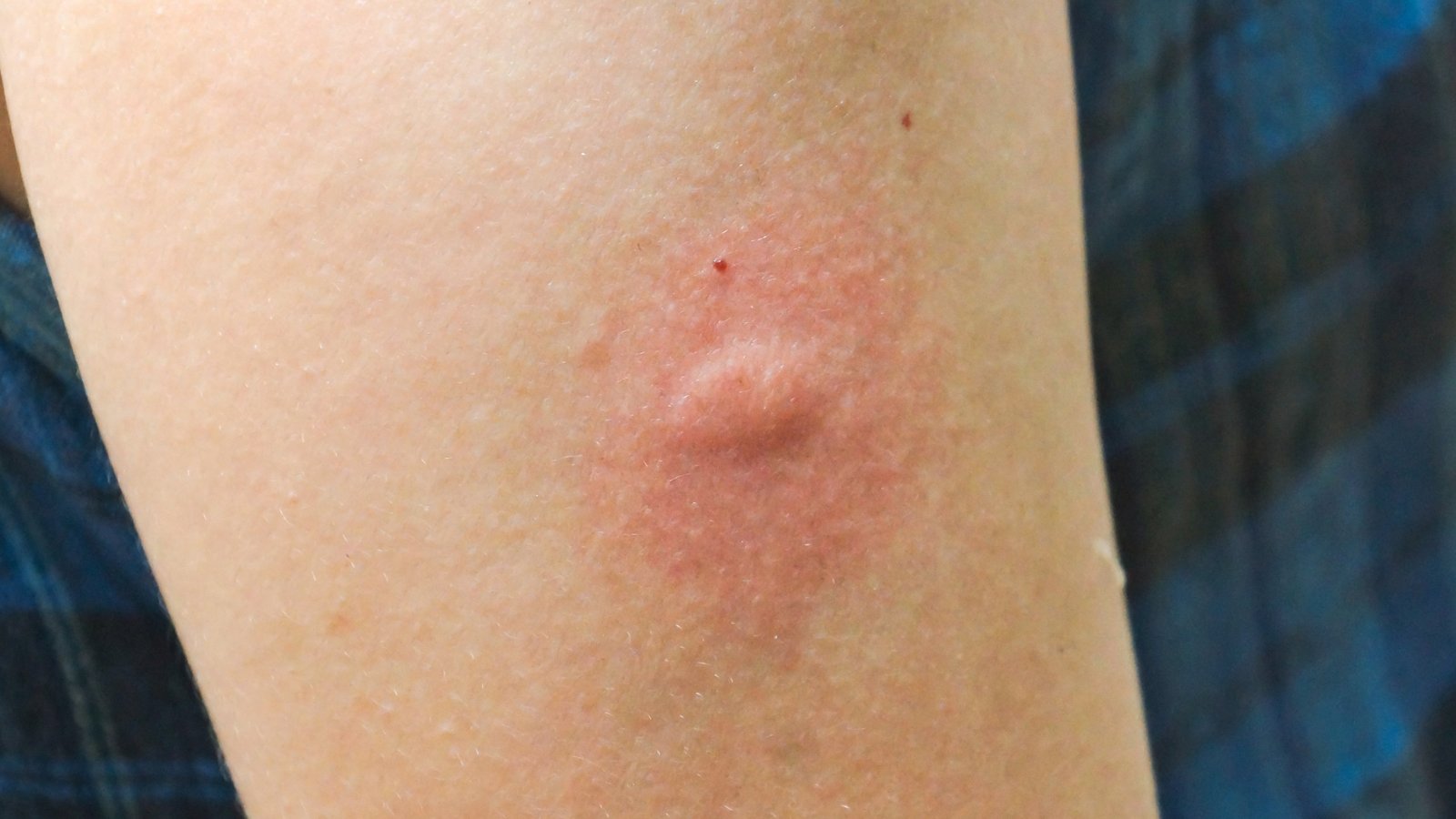
Most mosquito bites heal on their own. The itchy bump you notice today is a normal reaction to proteins in mosquito saliva, and within a few days it fades on its own with no treatment needed. Complications are the exception, not the rule.
When something does go wrong, it usually falls into one of three buckets. The first is a skin infection, almost always the result of scratching an open bite. The second is a strong allergic reaction, ranging from an oversized swollen welt to, very rarely, a whole-body response. The third is a mosquito-borne illness, the rare but serious bucket, where the mosquito passed along a virus or parasite. Each bucket looks different, and each has its own warning signs, which the sections below walk through one at a time.
Skin infection from scratching
The most common complication has nothing to do with the mosquito and everything to do with your fingernails. A mosquito bite itches, you scratch it, and if you scratch hard enough to break the skin you open a door for bacteria to get in. Scratching a bite to the point of bleeding can start a bacterial skin infection (Cleveland Clinic). This is why bites on children, who scratch freely and play outdoors, are the ones that most often get infected.
The bacteria involved are usually the ones already living on skin, mainly streptococcus and staphylococcus (Cleveland Clinic). They can cause cellulitis, an infection that spreads into the deeper layers of skin, or impetigo, a surface infection whose sores ooze and dry into a honey-colored crust (Mayo Clinic).
The signs that a bite has become infected, rather than just staying itchy, include:
- Redness or discoloration that spreads outward well beyond the original bite
- A red streak running away from the bite
- Increasing pain, warmth, swelling, or pus and drainage
- Swollen lymph nodes, chills, or a fever above 100 degrees Fahrenheit (Cleveland Clinic)
A simple home trick is to draw a pen line around the edge of the redness. If the redness pushes past that line over the next few hours, it is spreading and you should be seen (Cleveland Clinic). Skin infections are treated with antibiotics and clear up well when caught early. For a fuller walk-through, see our page on an infected mosquito bite.
Large local and allergic reactions
A separate bucket is allergy. Everyone reacts a little to mosquito saliva, but some people react a lot. A large local reaction, often called skeeter syndrome, is an oversized inflammatory response to the proteins in mosquito spit. Instead of a small bump, the area develops significant swelling, redness, warmth, itching, and sometimes blistering, usually starting about 8 to 10 hours after the bite and resolving over 3 to 10 days (Cleveland Clinic). The swelling can be large enough to make it hard to move a hand or foot if it crosses the wrist or ankle (AAFA).
Because a large local reaction is warm, red, and swollen, it is easy to mistake for a skin infection. The key difference is speed and cause. Skeeter syndrome comes on within hours of the bite and is an allergic response, while infection usually builds over a day or more after scratching (peer-reviewed review, JACI update on mosquito bite reaction). Large local reactions are most common in young children, older adults, and people whose immune systems are still developing or are impaired (Cleveland Clinic, AAFA).
Whole-body allergic reactions are rare. On rare occasions a mosquito bite can trigger anaphylaxis, a serious reaction involving more than one body system, with symptoms such as hives spreading beyond the bite, swelling of the lips, tongue, or throat, wheezing or trouble breathing, dizziness or fainting, and a sense of impending doom (AAFA). Anaphylaxis is a medical emergency. Call 911. Our page on allergic reactions to mosquito bites covers the full spectrum, from oversized welts to systemic reactions.
Mosquito-borne illness
The rare but serious bucket is disease. A mosquito can carry a virus or parasite and pass it along when it feeds. This is uncommon, because most mosquitoes carry nothing and only a handful of species transmit disease to people, but it is the bucket that carries the greatest weight when it does happen.
In the continental states, the most common mosquito-borne infection is West Nile virus, the leading cause of mosquito-borne disease here (CDC). Most people infected with West Nile virus never feel sick at all. About 1 in 5 develop a fever with headache, body aches, joint pain, vomiting, diarrhea, or a rash, and fewer than 1 in 150 develop serious neuroinvasive disease affecting the brain and nervous system (CDC). Other mosquito-borne illnesses in this country include the encephalitis viruses and, mostly through travel, dengue and Zika.
What sets this bucket apart from the first two is the pattern. A skin infection or an allergic reaction is centered on the bite itself. A mosquito-borne illness shows up as a body-wide sickness, typically fever with headache and aches, days to a couple of weeks after the bite, and often with no dramatic change at the bite site at all. For the full picture of which diseases occur where, see our overview of mosquito-borne diseases.
Scarring and lingering marks
After a bite heals, a mark can stay behind. Most of the time this is not a true scar but post-inflammatory hyperpigmentation, a flat dark or discolored spot left where the skin was inflamed. It involves color, not a change in the skin’s texture, and it fades on its own, though slowly, often over several months (Healthline; peer-reviewed review, JACI). These marks tend to be more noticeable and to last longer on darker skin tones.
A true scar, with a change in the skin’s surface, is less common and usually follows scratching or infection. Interrupting the healing process by scratching off a scab destroys the new skin forming underneath and makes both scarring and infection more likely (Healthline). In short, the single best thing you can do to avoid a lasting mark is to leave the bite alone while it heals.
How to lower the chance of complications
All three buckets get smaller with the same handful of habits.
- Do not scratch. This is the biggest lever for the two most common complications, since scratching is what turns a harmless bite into an infection or a lasting mark. Ease the itch instead with a cold compress, calamine lotion, hydrocortisone cream, or an oral antihistamine such as cetirizine, fexofenadine, or loratadine (Mayo Clinic). Keeping fingernails short helps, especially for children.
- Prevent bites in the first place. Fewer bites means fewer chances for anything to go wrong. Use an EPA-registered repellent with DEET, picaridin, IR3535, oil of lemon eucalyptus, para-menthane-diol, or 2-undecanone, wear loose long sleeves and pants when mosquitoes are active, repair window and door screens, and dump standing water around your home (CDC).
- Protect higher-risk people. Young children, older adults, and people with weakened immune systems are the most likely to have large local reactions and the most vulnerable to severe mosquito-borne illness (CDC, AAFA). Be more diligent with repellent and clothing for them, and watch their bites a little more closely.
When to see a doctor
Most bites need no medical care at all. Contact a healthcare provider if:
- A bite shows signs of infection: spreading redness, a red streak, increasing pain, warmth, pus, swollen lymph nodes, chills, or fever (Cleveland Clinic, Mayo Clinic).
- Swelling gets worse rather than better, or a large local reaction is severe or crosses a joint enough to limit movement (Mayo Clinic, Cleveland Clinic).
- Within about two weeks of being bitten you develop fever with headache, body aches, a stiff neck, confusion, muscle weakness, or trouble staying awake, which can signal mosquito-borne illness (CDC).
Call 911 or go to the emergency room for signs of anaphylaxis: swelling of the lips, tongue, or throat, trouble breathing or wheezing, chest tightness, dizziness or fainting, or widespread hives after a bite (AAFA).
Sources
- Cleveland Clinic, Skeeter Syndrome. Large local reaction to proteins in mosquito saliva; swelling, redness, warmth, itching, and sometimes blisters starting about 8 to 10 hours after the bite and resolving in 3 to 10 days; most common in children, older adults, and people with impaired or undeveloped immunity; rarely anaphylaxis. https://my.clevelandclinic.org/health/diseases/23289-skeeter-syndrome (accessed 2026-07-20)
- Cleveland Clinic, What Happens When a Mosquito Bite Gets Infected. Scratching to the point of bleeding opens the skin to bacteria; strep and staph are the most common causes of cellulitis; signs include spreading redness, red streaking, pus, swollen lymph nodes, chills, and fever above 100 degrees Fahrenheit; pen-outline trick to track spread. https://health.clevelandclinic.org/what-happens-when-a-mosquito-bite-gets-infected-and-what-to-do (accessed 2026-07-20)
- Mayo Clinic, Mosquito bites – Symptoms and causes. Normal versus more severe reactions; children, adults bitten by an unfamiliar mosquito species, and people with immune disorders are most likely to have severe reactions; anti-itch options including calamine, hydrocortisone, cetirizine, fexofenadine, loratadine; see a provider if swelling worsens, the site shows signs of infection, or you have fever, headache, and body aches. https://www.mayoclinic.org/diseases-conditions/mosquito-bites/symptoms-causes/syc-20375310 (accessed 2026-07-20; page returned 403, facts drawn from Mayo Clinic search result excerpt)
- Mayo Clinic, Impetigo – Symptoms and causes. Impetigo sores rupture, ooze, and form a honey-colored crust. https://www.mayoclinic.org/diseases-conditions/impetigo/symptoms-causes/syc-20352352 (accessed 2026-07-20)
- Asthma and Allergy Foundation of America (AAFA), Biting Insect Allergy: Mosquitoes, Flies, Kissing Bugs. Normal versus large local reactions; skeeter syndrome swelling can cross joints and limit movement; systemic reactions and anaphylaxis are rare and involve more than one organ system; emergency signs include throat swelling, trouble breathing, dizziness, and slurred speech. https://aafa.org/allergies/types-of-allergies/insect-allergy/biting-insect-allergy-mosquitoes-flies-kissing-bugs/ (accessed 2026-07-20)
- Chen YA et al., Update on mosquito bite reaction (peer-reviewed review, Journal of Allergy and Clinical Immunology / PMC). Immediate wheal peaks in 20 to 30 minutes and delayed papules in 24 to 36 hours; large local reactions and skeeter syndrome resolve in 3 to 10 days and can mimic cellulitis; scratching causes excoriation, scarring, and hyperpigmentation. https://pmc.ncbi.nlm.nih.gov/articles/PMC9532860/ (accessed 2026-07-20)
- CDC, About West Nile Virus. West Nile virus is the leading cause of mosquito-borne disease in the continental states; about 8 in 10 infected people have no symptoms, about 1 in 5 develop febrile illness, and fewer than 1 in 150 develop severe neuroinvasive disease. https://www.cdc.gov/west-nile-virus/about/index.html (accessed 2026-07-20)
- CDC, Clinical Signs and Symptoms of West Nile Virus Disease. About 1 in 5 infected people develop fever with headache, body aches, joint pain, vomiting, diarrhea, or rash; less than 1 percent develop neuroinvasive disease. https://www.cdc.gov/west-nile-virus/hcp/clinical-signs/index.html (accessed 2026-07-20)
- CDC, Preventing Mosquito Bites. Use EPA-registered repellents (DEET, picaridin, IR3535, oil of lemon eucalyptus, para-menthane-diol, 2-undecanone), wear long sleeves and pants, repair screens, and remove standing water. https://www.cdc.gov/mosquitoes/prevention/index.html (accessed 2026-07-20)
- Healthline, Mosquito Bite Scars: Causes, Treatment, and Prevention. Post-inflammatory hyperpigmentation is a flat dark spot that fades slowly over several months; scratching off a scab destroys new skin and makes scarring and infection more likely. https://www.healthline.com/health/how-to-treat-mosquito-bites-to-prevent-scarring (accessed 2026-07-20)
Related
- Infected mosquito bite: signs, treatment, and when it is serious [placeholder]
- Skeeter syndrome: the large local reaction explained [placeholder]
- Allergic reactions to mosquito bites [placeholder]
- Mosquito-borne diseases: the full overview [placeholder]
- How to stop a mosquito bite from itching [placeholder]
- Everyday mosquito bite prevention that works [placeholder]
This page is for general education and is not medical advice. If you are concerned about symptoms after a mosquito bite, contact a healthcare provider. Last reviewed 20 July 2026.