The short answer
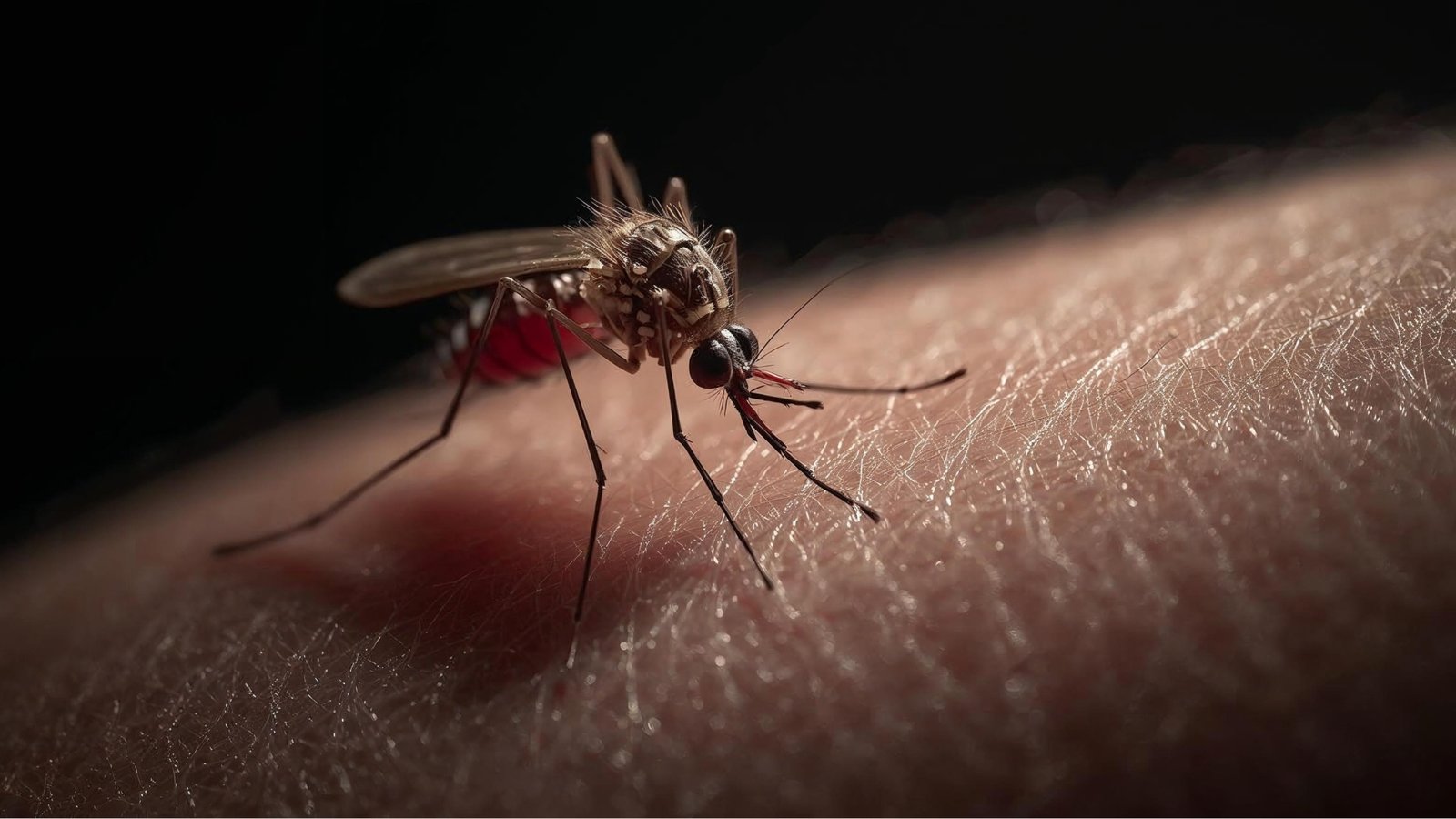
No. You cannot catch a mosquito-borne disease from another person through everyday contact. Illnesses like West Nile virus, dengue, Zika, and the encephalitis viruses spread through the bite of an infected mosquito, not through coughing, sneezing, touching, hugging, kissing, or sharing food and drinks.
So if a friend, coworker, or family member comes down with West Nile virus or dengue, you do not need to worry about catching it from being near them. The mosquito is the link in the chain, not the sick person.
There are a few narrow medical exceptions, covered below, but none of them involve the ordinary contact of daily life.
Why they are not spread person to person the usual way
Most respiratory and stomach illnesses spread because the germ travels easily between people, in droplets from a cough, on hands and surfaces, or in tiny amounts of an infected person’s fluids. Mosquito-borne viruses do not move that way.
These viruses need to get directly into the bloodstream to cause infection, and in nature the mosquito is what delivers them there. When a mosquito bites an infected animal or person, it can pick up the virus, and later, when it bites someone else, it can pass the virus along. The virus is not shed in a form that spreads through the air or through casual skin contact.
The CDC states plainly that West Nile virus does not spread through coughing, sneezing, or touching, and that it cannot be passed from person to person through casual contact such as touching or kissing someone who is infected. Dengue follows the same rule: the CDC says dengue cannot be spread directly from one person to another, and that mosquitoes are necessary for the virus to move between people.
The rare exceptions
A handful of medical situations can move these viruses between people without a mosquito. They are uncommon, and they are not part of everyday contact, but it helps to know they exist.
- Blood transfusion. West Nile virus can rarely be passed through a blood transfusion. Because the US blood supply has been screened for West Nile virus since 2003, this route is now rare. Dengue can also rarely spread this way, though the risk is very low.
- Organ transplant. West Nile virus and, rarely, dengue can be transmitted when an organ from an infected donor is transplanted.
- Pregnancy, mother to baby. A person infected during pregnancy can pass some of these viruses to the fetus. This is well documented for Zika, which can cause serious birth defects, and it can also happen with dengue and, rarely, with West Nile virus.
- Sex, for Zika specifically. Zika stands out because it can spread through sex from an infected person to their partners, even when the infected person has no symptoms. This is not true of West Nile virus or the encephalitis viruses.
These are the exceptions that public health agencies actually track. Outside of them, being around a sick person carries no risk of the virus spreading to you.
Dead-end hosts explained
For several of these viruses, there is a biological reason people cannot keep the chain going, even if a mosquito bites them while they are sick. Scientists call people a “dead-end host.”
With West Nile virus, the virus normally cycles between mosquitoes and birds. Birds build up very high levels of virus in their blood, enough that a mosquito biting an infected bird can pick the virus up and pass it on. People and horses do not. According to the CDC, humans, horses, and other mammals are dead-end hosts, meaning the level of virus in their blood does not get high enough for an infected person to pass the virus back to a biting mosquito. The same idea applies to the encephalitis viruses such as Eastern equine encephalitis.
In practical terms, this is reassuring. For West Nile and the encephalitis viruses, an infected person is essentially the end of the line. They do not fuel new infections in the neighborhood, and they cannot restart the cycle in local mosquitoes.
Dengue and Zika are different on this point. A person sick with dengue or Zika can carry enough virus in their blood, especially in the first days of illness, for a mosquito to pick it up and later infect someone else. That does not make the sick person contagious by touch, but it does make bite prevention worthwhile, which is the next point.
What this means for caring for a sick person at home
If someone in your household has a mosquito-borne illness, it is safe to care for them. You will not catch the virus by bringing them water, taking their temperature, sitting with them, or doing laundry. Ordinary contact does not transmit these viruses.
There is one sensible precaution, and it applies mainly to dengue and Zika. Because a person sick with one of these can carry the virus in their blood during the first days of illness, a mosquito that bites them could later bite someone else and spread it. The CDC advises people with dengue to keep avoiding mosquito bites, especially during the first week of illness, so that they do not pass the virus to uninfected mosquitoes.
Practical steps during that week include keeping the sick person in air-conditioned or screened rooms, using a bed net if screens are not available, applying insect repellent, and reducing mosquito breeding spots around the home by emptying standing water. These steps protect the wider household and neighborhood, not the caregiver from the patient.
For West Nile virus and the encephalitis viruses, even this precaution is less pressing, because people do not pass those viruses back to mosquitoes. Still, avoiding bites is always a good habit during mosquito season.
Sources
- CDC, “West Nile: Causes and How It Spreads.” West Nile virus spreads by the bite of an infected mosquito; does not spread through coughing, sneezing, or casual contact such as touching or kissing; people do not spread the virus except rarely through blood transfusions, organ transplantation, and mother to baby. https://www.cdc.gov/west-nile-virus/causes/index.html (accessed 2026-07-20)
- CDC, “Key Messages, West Nile Virus.” Humans, horses, and other mammals are dead-end hosts, meaning viremia is not high enough for an infected person to transmit the virus to uninfected mosquitoes; West Nile virus circulates between mosquitoes and birds. https://www.cdc.gov/west-nile-virus/php/outbreak-communication/key-messages.html (accessed 2026-07-20)
- CDC, “Transmission of West Nile Virus.” West Nile virus is spread to people by the bite of an infected mosquito; rare transmission through blood transfusion and organ transplantation. https://www.cdc.gov/west-nile-virus/php/transmission/index.html (accessed 2026-07-20)
- CDC, “How Dengue Spreads.” Dengue spreads mainly through the bites of infected Aedes mosquitoes; cannot be spread directly from one person to another; can pass from a pregnant person to the fetus; rarely spread through blood transfusions, organ transplants, or needlestick injuries. https://www.cdc.gov/dengue/transmission/index.html (accessed 2026-07-20)
- CDC, “Preventing Dengue.” People sick with dengue should keep avoiding mosquito bites, especially during the first week of illness, so they do not spread the virus to uninfected mosquitoes; use repellent, screened or air-conditioned rooms, bed nets, and control mosquitoes around the home. https://www.cdc.gov/dengue/prevention/index.html (accessed 2026-07-20)
- CDC, “How Zika Spreads.” Zika spreads through mosquito bites, through sex from an infected person to their partners even without symptoms, from a pregnant person to the fetus, and possibly through blood transfusion. https://www.cdc.gov/zika/causes/ (accessed 2026-07-20)
- CDC, “Transmission of Zika Virus.” Zika transmission documented through mosquito bite, in utero and perinatal routes, and sexual contact. https://www.cdc.gov/zika/php/transmission/index.html (accessed 2026-07-20)
- CDC, “Mosquito-Borne Diseases in Workers.” Mosquito-borne infections are spread by the bite of an infected mosquito and are not passed from person to person. https://www.cdc.gov/niosh/outdoor-workers/about/mosquito-borne-diseases.html (accessed 2026-07-20)
Related
- What are the most common mosquito-borne diseases in the US
- West Nile virus symptoms and prevention
- Dengue in the US, what to know
- Zika virus and pregnancy
- How mosquitoes spread disease, the transmission cycle
- Protecting your home from mosquitoes
This page is for general education and is not medical advice. If you or someone you care for may have a mosquito-borne illness, contact a healthcare provider. Last reviewed 20 July 2026.