The short answer
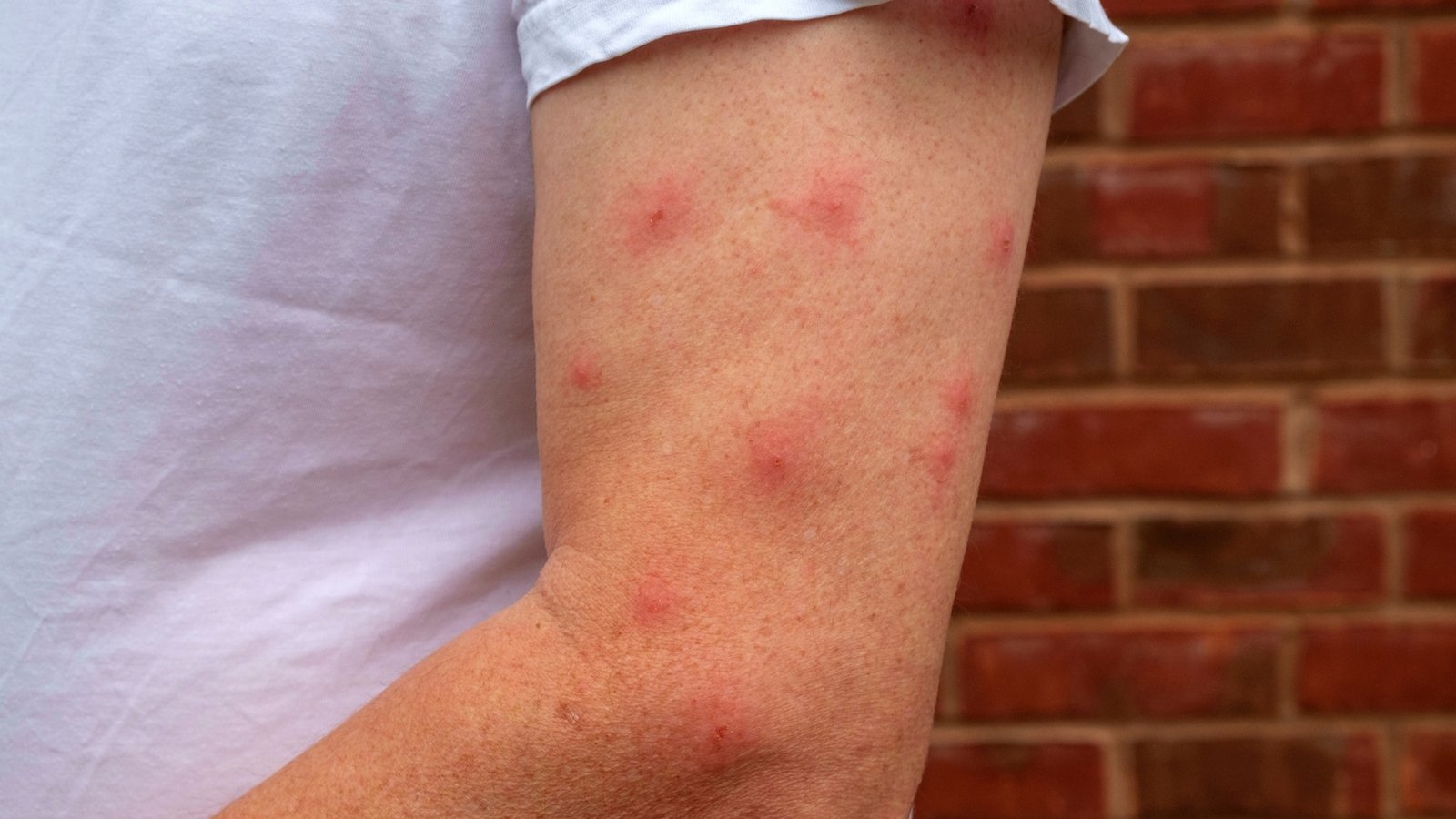
Almost everyone reacts to mosquito bites a little. The familiar small, itchy bump is itself a mild immune reaction to proteins in mosquito saliva, so in a sense a normal bite is already a minor allergic response. True, stronger allergy sits on a spectrum. At the common end are large local reactions, sometimes called skeeter syndrome, where a bite swells into a big, hot, itchy area. At the very rare far end is a whole-body (systemic) reaction that can include hives, swelling, and trouble breathing. That severe form is a medical emergency, but it is extremely uncommon. Fewer than thirty anaphylactic reactions to mosquitoes have ever been reported worldwide.
The normal reaction
A typical mosquito bite produces a small, round, itchy bump. When a mosquito feeds, it injects saliva, and your immune system responds to proteins in that saliva. That response is what causes the itch and the raised welt, so the ordinary bite reaction is already a mild immune event, not an injury from the bite itself.
Doctors describe two overlapping phases. An immediate reaction is a round wheal (a raised welt) roughly 2 to 10 mm across with some surrounding redness, peaking about 20 to 30 minutes after the bite. A delayed reaction is an itchy firm bump of similar size that peaks around 24 to 36 hours later. Both are normal, and both settle on their own. The main risk from a normal bite is scratching it open, which can let bacteria in and cause a skin infection.
Large local reactions (skeeter syndrome)
Some people react much more strongly at the bite site. The American Academy of Allergy, Asthma and Immunology defines skeeter syndrome as an uncommonly large or exaggerated reaction to mosquito bites, with a large area of swelling, heat, redness, and itching or pain that can mimic an infection.
The swelling can be dramatic. Reactions often begin about 8 to 10 hours after the bite and can bring significant inflammation, large areas of swelling, itching, and sometimes fever or blisters. Swelling that crosses a wrist or ankle can make it hard to move a hand or foot. Symptoms usually start to improve within 3 to 10 days.
The mechanism is an allergic one. Antibodies called IgE recognize the saliva proteins and trigger mast cells to release histamine and other inflammatory chemicals, which produce the redness, warmth, swelling, and itch. Because it can look like cellulitis, skeeter syndrome is sometimes mistaken for a skin infection, but it is an allergic response rather than a bacterial one.
For a fuller explanation, see our dedicated page on skeeter syndrome.
Severe and systemic reactions
A systemic reaction is one that affects the whole body rather than just the bite. Warning signs include hives or rash spreading beyond the bite, swelling of the lips, tongue, or throat, shortness of breath or wheezing, dizziness or fainting, stomach cramps or vomiting, and a sense of impending doom. Together these can signal anaphylaxis, a rapid and potentially life-threatening allergic reaction.
Anaphylaxis calls for emergency care and treatment with epinephrine, which is the most important treatment available for a severe systemic reaction. If someone shows these signs after bites, treat it as an emergency.
The reassuring part is how rare this is with mosquitoes. Anaphylaxis to mosquito bites is extraordinarily uncommon, with fewer than thirty cases reported worldwide in the medical literature. For nearly everyone, even a strong local reaction stays at the skin and does not progress to a whole-body event.
Who is more prone
Reactions to mosquito bites are not the same for everyone, and susceptibility tends to fall on people whose immune systems have not yet adjusted to local mosquitoes. Groups more likely to have large or intense reactions include:
- Young children, whose immune systems have had less time to become desensitized to mosquito saliva.
- People new to an area, including recent arrivals and travelers, who have little prior exposure to the mosquito species living there.
- People with high exposure, such as outdoor workers who are bitten often.
- People with weakened or altered immunity, including some immunocompromised individuals.
Over time and with repeated bites, many people gradually become less reactive as the body adapts, which is why long-time residents often notice milder reactions than newcomers or young children. This desensitization is variable, though, and some people continue to react strongly for years.
Treatment and prevention
Most bite reactions, including large local ones, can be managed at home. Helpful steps include:
- Oral antihistamines to reduce itching, such as cetirizine, fexofenadine, or loratadine.
- Topical treatments applied to the skin, such as 0.5 percent or 1 percent hydrocortisone cream, calamine lotion, or a baking soda paste, used several times a day until symptoms ease.
- A cold compress, a cloth dampened with cold water or filled with ice, held on the area for 10 to 20 minutes to calm swelling and discomfort.
- For severe skeeter syndrome, a clinician may prescribe oral corticosteroids or a corticosteroid injection.
Prevention matters most for people who react strongly, because the surest way to avoid a reaction is to avoid the bite. Use an effective repellent such as one containing DEET, wear protective clothing, use screens or netting, and reduce standing water where mosquitoes breed. If reactions are frequent, severe, or affecting your quality of life, it is worth seeing an allergist, who can confirm the cause and discuss a management plan.
When to see a doctor or call 911
Call 911 or seek emergency care immediately if, after bites, you or someone else has trouble breathing or wheezing, swelling of the lips, tongue, or throat, widespread hives, dizziness or fainting, or a fast, whole-body reaction. These can be signs of anaphylaxis.
Contact a doctor, though not as an emergency, if a bite area becomes increasingly red, warm, swollen, or painful over the following days, which can suggest a skin infection, if you have a fever with a bite reaction, or if large local reactions keep happening and you want help preventing or treating them. An allergist can help when reactions are recurrent or severe.
Sources
- Cleveland Clinic, “Skeeter Syndrome.” Accessed 2026-07-20. Skeeter syndrome is a large, local inflammatory reaction to mosquito bites; symptoms usually start 8 to 10 hours after the bite and improve within 3 to 10 days; it is most common in young children; treated with antihistamines, hydrocortisone, and in severe cases corticosteroids. https://my.clevelandclinic.org/health/diseases/23289-skeeter-syndrome
- American Academy of Allergy, Asthma and Immunology, “Skeeter Syndrome Defined.” Accessed 2026-07-20. Skeeter syndrome is an uncommonly large or exaggerated reaction to mosquito bites, with swelling, heat, redness, and itching or pain that mimics an infectious process. https://www.aaaai.org/tools-for-the-public/allergy,-asthma-immunology-glossary/skeeter-syndrome-defined
- Manuyakorn W. et al., “Update on mosquito bite reaction: Itch and hypersensitivity, pathophysiology, prevention, and treatment,” PMC (peer-reviewed review). Accessed 2026-07-20. Immediate wheal 2 to 10 mm peaks in 20 to 30 minutes and delayed papules peak in 24 to 36 hours; IgE and mast cells release histamine; fewer than thirty anaphylactic reactions to mosquitoes reported worldwide; higher-risk groups include children, outdoor workers, those without prior exposure, and immunocompromised people; second-generation antihistamines and topical corticosteroids used for treatment. https://pmc.ncbi.nlm.nih.gov/articles/PMC9532860/
- Asthma and Allergy Foundation of America, “Biting Insect Allergy: Mosquitoes, Flies, Kissing Bugs.” Accessed 2026-07-20. Normal reaction is pain, redness, itching, and minor swelling; anaphylaxis signs include swelling of the lips, tongue, or throat, trouble breathing, dizziness or fainting; epinephrine is the most important treatment for anaphylaxis; skeeter syndrome mainly affects children, older adults, and people with impaired or undeveloped immunity. https://aafa.org/allergies/types-of-allergies/insect-allergy/biting-insect-allergy-mosquitoes-flies-kissing-bugs/
- Mayo Clinic, “Mosquito bites: Symptoms and causes.” Accessed 2026-07-20. A normal bite is a puffy, itchy bump; more severe reactions, more common in children, can include a large area of swelling and redness. https://www.mayoclinic.org/diseases-conditions/mosquito-bites/symptoms-causes/syc-20375310
- Mayo Clinic, “Mosquito bites: Diagnosis and treatment.” Accessed 2026-07-20. Treatment includes nonprescription antihistamines (cetirizine, fexofenadine, loratadine), 0.5 or 1 percent hydrocortisone cream, calamine lotion or baking soda paste applied several times a day, and a cold, damp cloth or ice for 10 to 20 minutes. https://www.mayoclinic.org/diseases-conditions/mosquito-bites/diagnosis-treatment/drc-20375314
Related
- Skeeter syndrome (large local reactions to mosquito bites)
- Why mosquito bites itch
- How to treat and soothe mosquito bites
- Mosquito bite prevention and repellents
- Mosquito-borne diseases overview
- When a mosquito bite is infected
This page is for general education and is not medical advice. If you have a severe reaction, trouble breathing, or other emergency symptoms, call 911 or seek emergency care. For personal concerns, talk with a qualified healthcare professional.
Last reviewed 20 July 2026.