The short answer
If you do one thing about mosquitoes, get rid of standing water. Emptying, tipping, and removing the water where mosquitoes lay eggs is the single most effective control step you can take, and it costs nothing (U.S. EPA, “Success in Mosquito Control: An Integrated Approach”). Public health guidance calls egg and larva interventions the most effective and least costly way to reduce a mosquito population (U.S. EPA, “Success in Mosquito Control: An Integrated Approach”).
Mosquitoes cannot complete their life cycle without water, and many of the species that bite people around the home breed in very small amounts of it. One teaspoon is enough for some container-breeding species (University of Maryland Extension, “The 4 E’s”). That is why a bottle cap, a wrinkled tarp, or a plant saucer matters as much as a pond.
Why it works
Every mosquito passes through four stages: egg, larva, pupa, and adult (U.S. EPA, “Mosquito Life Cycle”). The first three stages happen in water. The egg hatches when it is exposed to water, the larva lives in the water and surfaces to breathe, and the pupa also lives in the water before the adult emerges and flies off (U.S. EPA, “Mosquito Life Cycle”). Larvae are the small wrigglers you can sometimes see twitching just under the surface of a bucket or birdbath.
Take the water away and the chain breaks. There is nowhere to lay eggs, nowhere for larvae to grow, and no adults to bite. This is the whole logic of source reduction: you are not chasing adult mosquitoes, you are removing the nursery.
The timing is what makes standing water so risky. Under warm conditions the full cycle can run from about 4 days to a month (U.S. EPA, “Mosquito Life Cycle”), and container species like the Asian tiger mosquito can go from egg to adult in roughly a week (Rutgers NJAES, “Rain Barrels and Mosquitoes”; CDC, “Life Cycle of Aedes Mosquitoes”). Water that has only been sitting for a few days can already be producing biting adults. Some Aedes eggs also survive dry for months and hatch later when the container refills (U.S. EPA, “Mosquito Life Cycle”), which is why scrubbing a container matters, not just dumping it.
The weekly walk-around checklist
Once a week, walk your property and empty, scrub, turn over, cover, or throw out anything that holds water (CDC, “Mosquito Control at Home”). Scrubbing matters because eggs stick to the inner walls of containers above the waterline. Weekly is the target because eggs can become biting adults in only a few days (CDC, “Mosquito Control at Home”).
Check these first:
- Buckets, flowerpots, and plant saucers. Tip them out and store empties upside down or indoors (Metropolitan Mosquito Control District, “10 Mosquito Breeding Sources”).
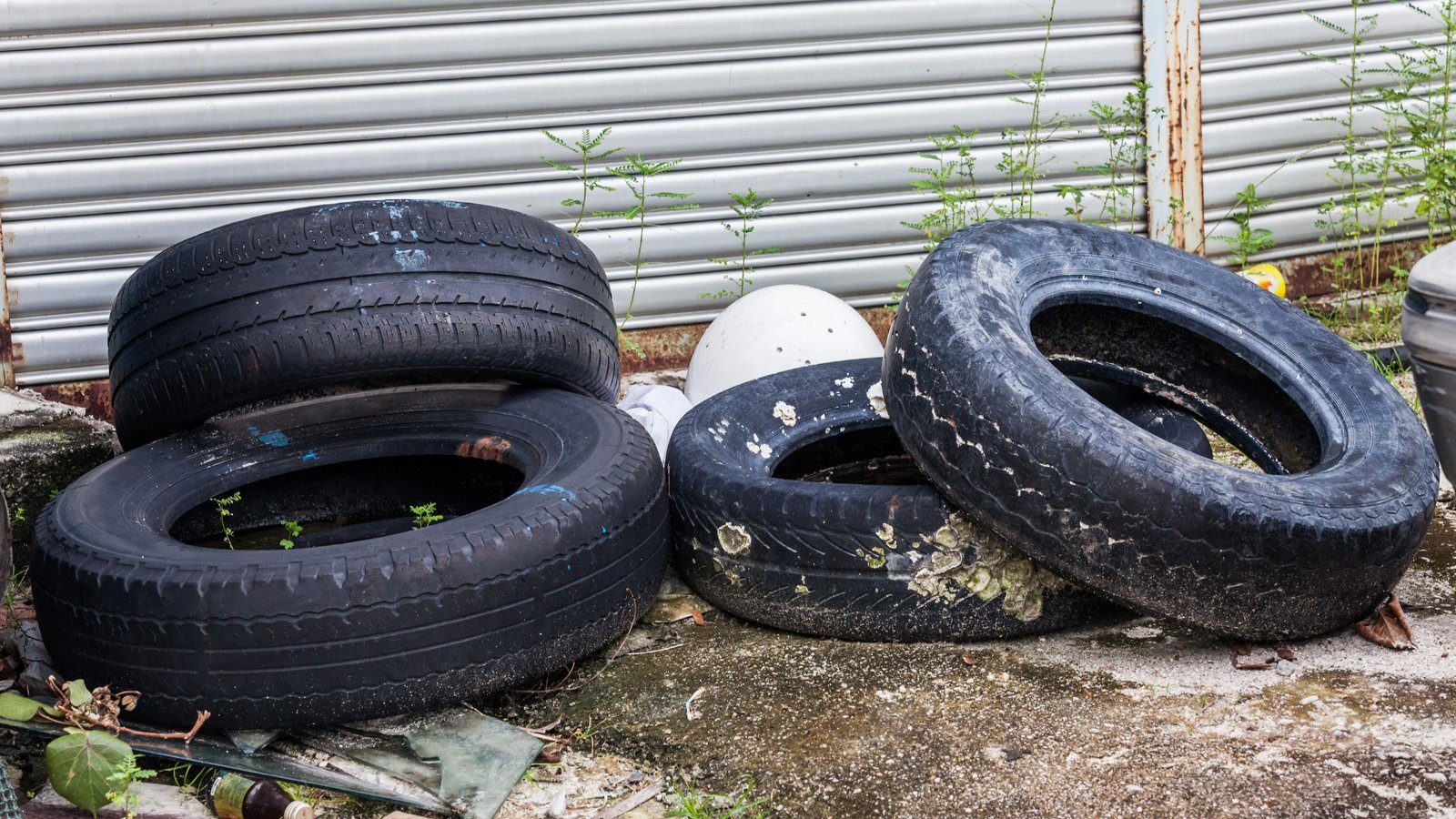
- Old tires. They trap warm, murky water and are one of the most productive breeding sites of all. Recycle them rather than leaving them outside (Metropolitan Mosquito Control District, “10 Mosquito Breeding Sources”).
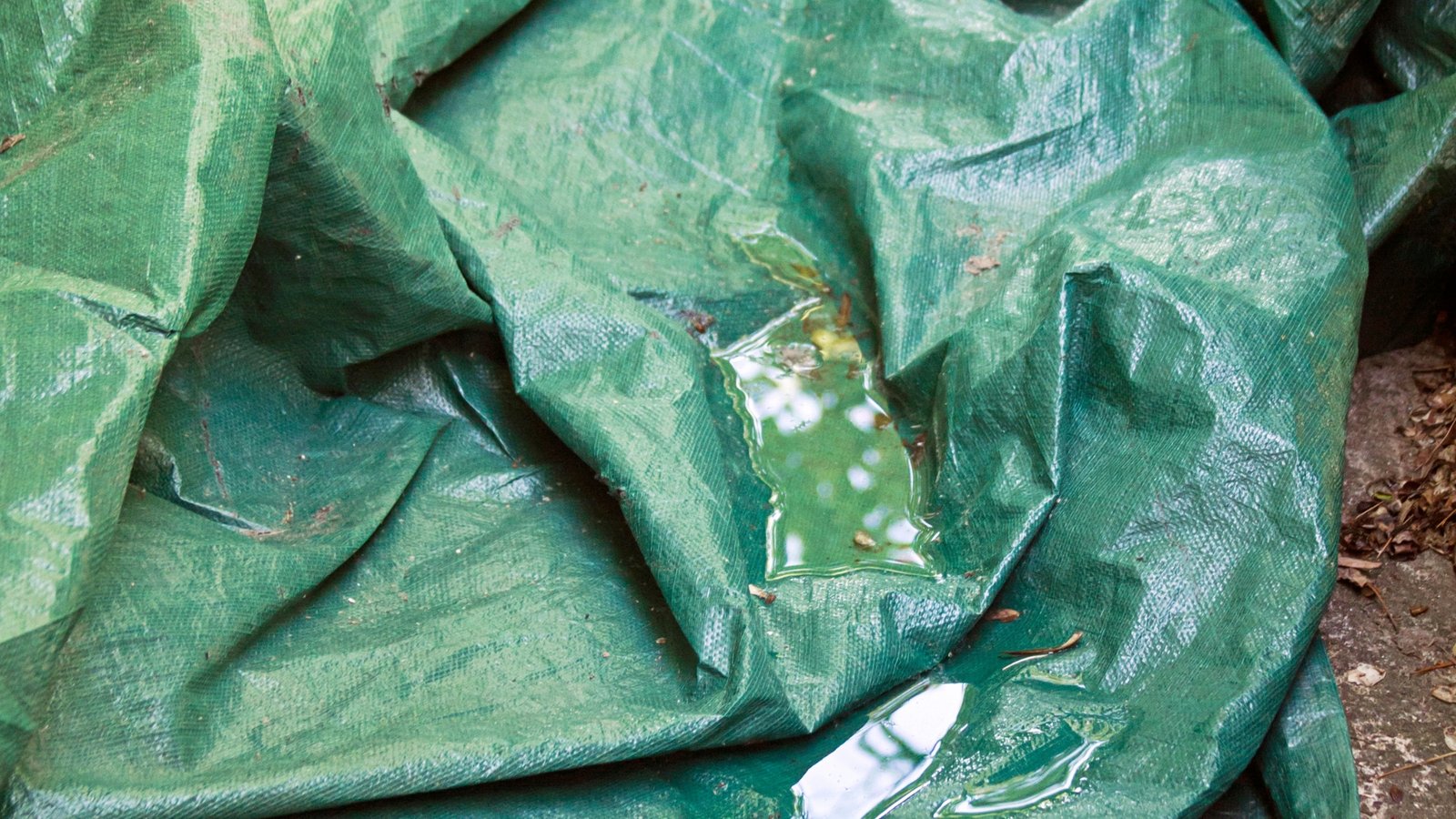
- Tarps, grill covers, and pool covers. Sagging folds collect water. Pull them tight and dump the puddles after every rain (Metropolitan Mosquito Control District, “10 Mosquito Breeding Sources”).
- Children’s toys, wheelbarrows, watering cans, and pet bowls. Flip anything that can cup water (University of Maryland Extension, “The 4 E’s”; Metropolitan Mosquito Control District, “10 Mosquito Breeding Sources”).
- Clogged gutters. Clean them through the summer, not just in fall, so water does not pool in the troughs (Metropolitan Mosquito Control District, “10 Mosquito Breeding Sources”).
- Birdbaths. Rinse and refill every couple of days rather than once a week (Metropolitan Mosquito Control District, “10 Mosquito Breeding Sources”).
- Kiddie pools and wading pools. Empty them when not in use and do not let the water sit (U.S. EPA, “Tips to Prevent Mosquito Bites”; Metropolitan Mosquito Control District, “10 Mosquito Breeding Sources”).
Be thorough, because the amount of water involved is tiny. Some species breed in as little as a teaspoon (University of Maryland Extension, “The 4 E’s”), so an upturned bottle cap, a crumpled chip bag, or the rim of a planter can be enough.
Trickier sources
Some breeding water hides in places a quick glance misses:
- French drains and corrugated downspout extensions. Every ridge in corrugated pipe can hold a separate pocket of water, and French drains are a common and easily overlooked breeding source. Where you can, swap corrugated extensions for smooth pipe with a splash guard (University of Maryland Extension, “The 4 E’s”). Larvicide can be applied at accessible drain openings when the pipe cannot be replaced (Northeast Massachusetts Mosquito Control and Wetlands Management District, “Larviciding of Catch Basins/Storm Drains”).
- Catch basins and storm drains. The standing water that sits in a catch basin for much of the summer is a prime site for Culex mosquitoes, the group most associated with West Nile virus (Northeast Massachusetts Mosquito Control and Wetlands Management District, “Larviciding of Catch Basins/Storm Drains”). These are usually treated by your local mosquito control district rather than by a homeowner.
- Tree holes. Cavities where branches broke or the trunk decayed collect rainwater and are a natural breeding site for some Aedes species. Fill them with sand or dirt, or in some cases foam or cement, so they cannot pool (University of Maryland Extension, “The 4 E’s”; Metropolitan Mosquito Control District, “10 Mosquito Breeding Sources”).
- Bromeliads and other plants that cup water. Ornamental bromeliads hold water in their central tank and leaf axils, and they can shelter mosquito larvae (University of Maryland Extension, “The 4 E’s”). Flush them out regularly, or treat the water with a larvicide if you want to keep the plants.
Water you cannot remove
Some standing water is meant to be there. Ornamental ponds, rain barrels, and similar features cannot simply be tipped out, so the goal shifts from removing the water to keeping mosquitoes out of it or killing the larvae in it.
- Screen it. On a rain barrel, cover every opening, including the inlet and any overflow, with tight window screening so adult females cannot get in to lay eggs (Rutgers NJAES, “Rain Barrels and Mosquitoes”). Draw the barrel down between rains so water does not sit long enough to raise a brood (Rutgers NJAES, “Rain Barrels and Mosquitoes”).
- Larvicide it. A biological larvicide made from Bacillus thuringiensis subspecies israelensis (Bti), sold as mosquito dunks, is eaten by the larvae and is labeled for use in birdbaths, rain barrels, animal troughs, and gutters (Rutgers NJAES, “Rain Barrels and Mosquitoes”; University of Maryland Extension, “The 4 E’s”). Bti targets mosquito and related larvae and is applied directly to the standing water (U.S. EPA, “Success in Mosquito Control: An Integrated Approach”).
- Stock it with fish. Ornamental ponds can be stocked with mosquitofish (Gambusia), which eat larvae, or the surface can be kept moving with a pump or fountain so eggs and larvae cannot thrive (Metropolitan Mosquito Control District, “10 Mosquito Breeding Sources”). Many mosquito control districts can advise on mosquitofish for backyard ponds; check with your local district.
For a deeper look at these options, see the related pages on larvicides and biological control below.
How often and why consistency matters
Weekly is the rule for a reason. Because eggs can become biting adults in only a few days (CDC, “Mosquito Control at Home”), a container you emptied two weeks ago has had time to refill with rain and raise a new batch. Fast-breeding backyard species can finish their cycle in about a week in warm weather (Rutgers NJAES, “Rain Barrels and Mosquitoes”), so a once-a-season cleanup does not keep up.
Consistency also pays off because the mosquitoes that bite around homes tend not to travel far when water is easy to find nearby. That makes the water on your own property, and your neighbors’, the water that matters most. Source reduction works best as a habit and as a shared effort on a block, not a one-time chore (University of Maryland Extension, “The 4 E’s”).
Sources
- U.S. Environmental Protection Agency, “Success in Mosquito Control: An Integrated Approach” (source reduction and larval control are the most effective, least costly step; Bti applied to standing water). https://www.epa.gov/mosquitocontrol/success-mosquito-control-integrated-approach (accessed 20 July 2026)
- U.S. Environmental Protection Agency, “Mosquito Life Cycle” (four stages, larvae and pupae live in water, eggs survive dry for a few months, cycle of 4 days to a month). https://www.epa.gov/mosquitocontrol/mosquito-life-cycle (accessed 20 July 2026)
- U.S. Environmental Protection Agency, “Tips to Prevent Mosquito Bites” (empty standing water in containers, wading pools, birdbaths, and change water at least weekly). https://www.epa.gov/insect-repellents/tips-prevent-mosquito-bites (accessed 20 July 2026)
- Centers for Disease Control and Prevention, “Mosquito Control at Home” (once a week empty, scrub, turn over, cover, or throw out water-holding items; eggs become biting adults in days). https://www.cdc.gov/mosquitoes/mosquito-control/mosquito-control-at-home.html (accessed 20 July 2026, via search snippet; page returned HTTP 403 on direct fetch)
- Centers for Disease Control and Prevention, “Life Cycle of Aedes Mosquitoes” (Aedes develop from egg to adult in roughly 7 to 10 days). https://www.cdc.gov/mosquitoes/about/life-cycle-of-aedes-mosquitoes.html (accessed 20 July 2026, via search snippet; page returned HTTP 403 on direct fetch)
- University of Maryland Extension, “The 4 E’s for Easy, Breezy, Beautiful Mosquito Source Reduction” (tiger mosquito breeds in as little as one teaspoon; eliminate, exchange, empty, and Bti; corrugated extensions, tree holes, bromeliads, ponds; community effort). https://marylandgrows.umd.edu/2023/06/30/the-4-es-for-easy-breezy-beautiful-mosquito-source-reduction/ (accessed 20 July 2026)
- Rutgers New Jersey Agricultural Experiment Station, Fact Sheet FS1240, “Rain Barrels and Mosquitoes” (screen all openings with window screening, draw barrel down between rains, container species can develop in 5 to 7 days, Bti dunks labeled for barrels, birdbaths, troughs, and gutters). https://njaes.rutgers.edu/fs1240/ (accessed 20 July 2026)
- Northeast Massachusetts Mosquito Control and Wetlands Management District, “Larviciding of Catch Basins/Storm Drains” (catch basins are a prime summer breeding site for Culex, the West Nile group; larvicide applied at drain access points). https://www.nemassmosquito.org/field-operations/pages/larviciding-catch-basins-storm-drains (accessed 20 July 2026)
- Metropolitan Mosquito Control District, “10 Mosquito Breeding Sources in Your Yard and How to Remove Them” (tires, tarps, planters, birdbaths, gutters, kiddie pools, tree holes, ponds with fish or larval dunks). https://mmcd.org/2025/06/17/10-mosquito-breeding-sources-in-your-yard-and-how-to-remove-them/ (accessed 20 July 2026)
Related
- Larvicides and mosquito dunks (Bti) [placeholder]
- Biological control: mosquitofish and predators [placeholder]
- Mosquito life cycle explained [placeholder]
- Rain barrels and water features without mosquitoes [placeholder]
- Culex mosquitoes and West Nile virus [placeholder]
This page is educational and is not pest-control or medical advice. Product use should follow the label and local regulations, and questions about a specific mosquito problem are best directed to your local mosquito control or vector control district.
Last reviewed 20 July 2026.