The short answer
A mosquito control district is a local public agency whose job is to watch mosquito populations and manage them across a whole community, not just one yard. Depending on where you live it might be called a mosquito control district, a mosquito abatement district, a vector control district, or a program inside your county health department, but the work is the same. These agencies monitor where and how many mosquitoes are breeding, test them for viruses, treat the water that produces them, and spray for adults when disease risk climbs (American Mosquito Control Association, “Mosquito Control”; Centers for Disease Control and Prevention, “Integrated Mosquito Management”).
They exist because mosquitoes do not respect property lines. Many biting species travel between yards, and the standing water that produces them often sits on roadsides, storm drains, marshes, and neglected pools that no single homeowner controls. A district can treat those shared sources at a scale that individual effort cannot reach. There are roughly 734 organized mosquito control organizations of this kind, working at state, county, and city levels, along with more than a thousand smaller community programs (American Mosquito Control Association, “Mosquito Control”).
What a district actually does
Most of a district’s work happens long before anyone sees a spray truck. The core activities are:
- Surveillance. Field staff set traps on a regular network across the district and count and identify what they catch. Common tools are CO2-baited light traps, which draw a wide range of host-seeking species, and gravid traps, which use stagnant water to attract egg-laying Culex mosquitoes, the group that spreads West Nile virus (Centers for Disease Control and Prevention, “Guidelines for West Nile Virus Surveillance and Control”; Antelope Valley Mosquito and Vector Control District, “Mosquito Surveillance”). Surveillance is what tells a district whether numbers are rising and whether a treatment is even warranted (Centers for Disease Control and Prevention, “Integrated Mosquito Management”).
- Testing mosquitoes for viruses. Trapped mosquitoes are sorted and tested in a lab for arboviruses. Many districts routinely screen for West Nile virus, St. Louis encephalitis, and Western equine encephalitis, which gives an early warning of disease in the area before people get sick (Antelope Valley Mosquito and Vector Control District, “Mosquito Surveillance”).
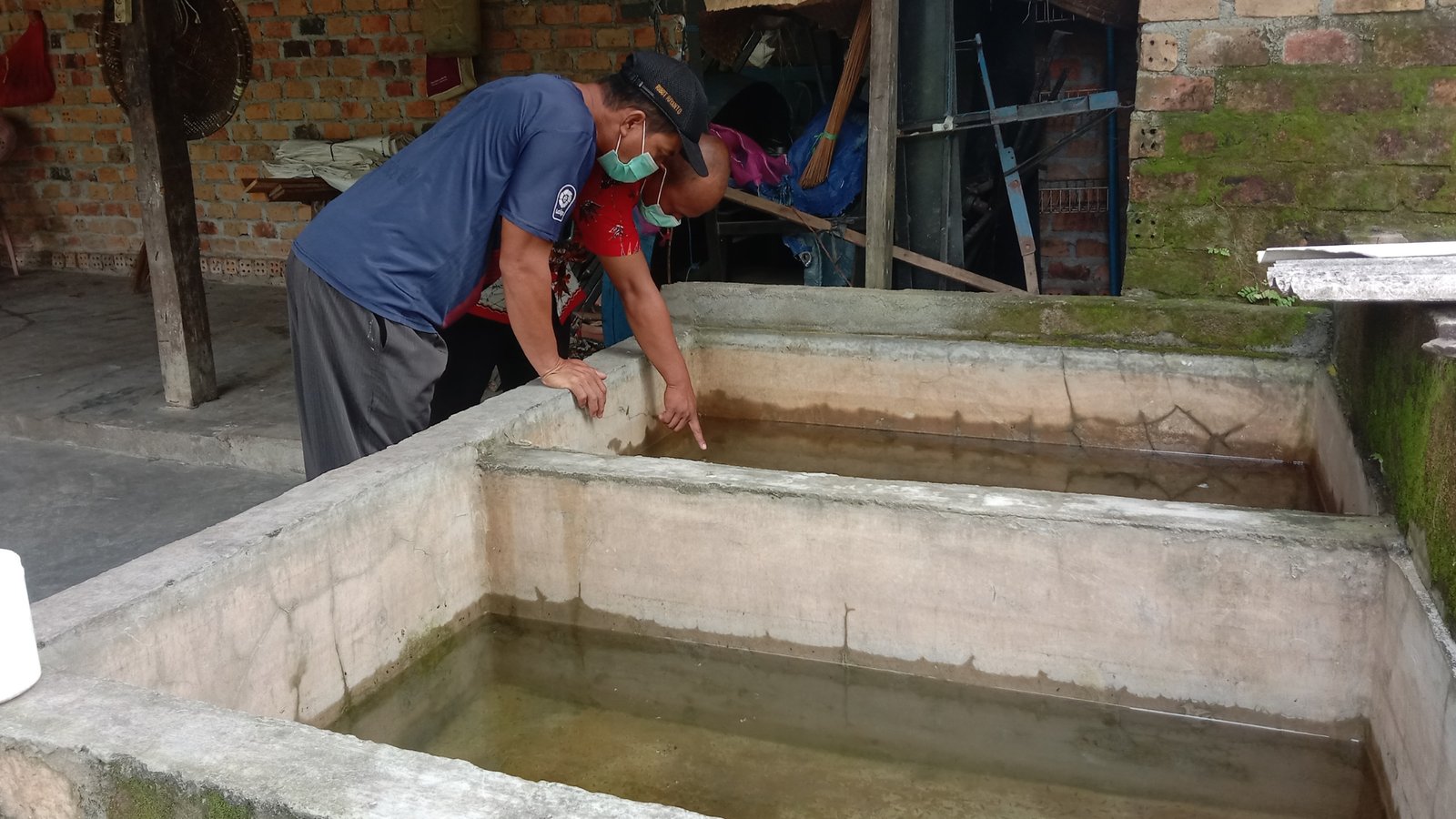
- Mapping and inspecting larval habitat. Technicians check the places that hold water and breed mosquitoes, from marshes and ditches to catch basins and neglected swimming pools, so the district knows where the next generation is coming from (San Mateo County Mosquito and Vector Control District, “Larval Mosquito Control”).
- Larviciding. Where standing water cannot be drained, the district treats it to kill larvae before they become biting, flying adults. Products include Bacillus thuringiensis israelensis (Bti), a bacterium toxic to larvae, along with the insect growth regulator methoprene and surface oils. These are applied by hand to sites like backyard ponds and catch basins, and by helicopter to large areas such as lakes and marshes (San Mateo County Mosquito and Vector Control District, “Larval Mosquito Control”).
- Targeted adulticiding. When surveillance and virus testing show that risk is high, districts spray to knock down adult mosquitoes, usually with ultra-low-volume (ULV) equipment on trucks or aircraft that release a fine mist of insecticide. The amount used per acre is small, on the order of roughly one to six ounces (Centers for Disease Control and Prevention, “Integrated Mosquito Management”; American Mosquito Control Association, “Mosquito Control”).
- Public education. Districts spend real effort teaching residents to dump standing water and protect themselves, because the mosquitoes that breed on private property are ones the district cannot always reach (American Mosquito Control Association, “Mosquito Control”).
Integrated mosquito management
Districts do not just spray. They follow an approach called integrated mosquito management (IMM), and the order of operations matters. Surveillance comes first, so that any treatment is a response to real data rather than a guess. Next comes reducing and treating the water that produces larvae, because stopping mosquitoes before they can fly is the most effective and least disruptive step. Spraying for adults sits last, reserved for when monitoring shows a genuine nuisance or disease threat (Centers for Disease Control and Prevention, “Integrated Mosquito Management”).
This is the same tiered logic a homeowner should follow, just carried out across a whole community. For the full hierarchy of what works and what wastes money, see the control pillar (Mosquito control: what works, what wastes money).
How districts are funded and organized
There is no single national model, which is why services differ so much from one place to the next. Two broad structures are common.
Some districts are independent special districts, a unit of local government created specifically to control mosquitoes. These are typically run by a board of trustees or commissioners and funded through property tax levies or special assessments on the parcels within the district’s boundaries (Municipal Research and Services Center, “Mosquito Control Districts”). Because the funding is dedicated, these districts can maintain their own labs, trap networks, and treatment crews.
Elsewhere, mosquito control is a program inside a county or city health department, paid for out of the general public health budget rather than a separate assessment. These programs vary widely in size and capacity. Some large regions have no organized district at all, which means the responsibility falls back on residents and local health officials (American Mosquito Control Association, “Mosquito Control”; Centers for Disease Control and Prevention, “Integrated Mosquito Management”).
The practical takeaway is that what your district offers depends on how it is set up and funded where you live. It is worth checking rather than assuming.
What your district can do for you
If you have an active district, it may offer services most residents never think to ask for. Depending on the agency, these can include:
- Larvicide or inspection requests. You can report a mosquito problem or a standing-water source, and a technician will inspect it and treat it if needed. Districts routinely handle sites a homeowner cannot, such as catch basins, storm drains, and abandoned pools (San Mateo County Mosquito and Vector Control District, “Larval Mosquito Control”).
- Free mosquitofish in some areas. A number of districts provide mosquitofish (Gambusia) at no charge for ornamental ponds and similar water features on private property. In most cases you request them, a technician confirms the site is appropriate, and the technician places the fish, because releasing them into natural waterways is restricted by state wildlife rules (Greater Los Angeles County Vector Control District, “Mosquitofish”; American Mosquito Control Association, “Mosquito Control”).
- A way to report breeding sources. Many districts take reports of things like a neighbor’s green swimming pool or persistent roadside water, which lets them treat problems you cannot fix yourself (San Mateo County Mosquito and Vector Control District, “Larval Mosquito Control”).
- Spray notifications. Districts that conduct adult treatments commonly let residents sign up for advance email or text alerts before a spray event, so you can close windows, cover a garden pond, or keep pets in (Consolidated Mosquito Abatement District, “Spray Notification”; Sacramento-Yolo Mosquito and Vector Control District, “Spray Notifications”).
How to find and work with yours
Start by finding out whether your area even has an organized program. If you are not sure, contact your local or county health department, which can tell you whether a mosquito control or vector control district serves your address (American Mosquito Control Association, “Mosquito Control”). A plain web search for your county or city name plus “mosquito control” or “vector control” will usually turn up the agency’s website, where treatment schedules, service request forms, and notification sign-ups live. Regional and state mosquito control associations, listed through the American Mosquito Control Association, can also point you to the district for your area (American Mosquito Control Association, “AMCA Sustaining Member List”).
Once you know who serves you, the most useful things you can do are simple: report standing water and problem sources when you see them, ask whether services like larvicide treatment or mosquitofish are available, and sign up for spray notifications if the district sprays. The district handles the shared sources across the community, and you handle the water on your own property. Both together work better than either alone (American Mosquito Control Association, “Mosquito Control”).
Sources
- American Mosquito Control Association, “Mosquito Control” (roughly 734 organized mosquito control organizations plus more than 1,100 community programs; source reduction, larviciding, aerial and ground adulticiding, Gambusia mosquitofish, and integrated mosquito management; contact local health officials if unsure whether your community has a district). https://www.mosquito.org/mosquito-control/ (accessed 20 July 2026)
- Centers for Disease Control and Prevention, “Integrated Mosquito Management” (surveillance means collecting and testing adult and immature mosquitoes and assessing breeding habitats; insecticide-resistance testing; larviciding to kill larvae and pupae; ULV adulticiding applying about one to six ounces per acre). https://www.cdc.gov/mosquitoes/php/toolkit/integrated-mosquito-management-1.html (accessed 20 July 2026, via search snippet; page returned HTTP 403 on direct fetch)
- Centers for Disease Control and Prevention, “Guidelines for West Nile Virus Surveillance and Control” (trap-based surveillance including host-seeking, resting, and gravid traps; gravid Culex traps target the primary West Nile virus vector). https://www.cdc.gov/west-nile-virus/php/surveillance-and-control-guidelines/index.html (accessed 20 July 2026, via search snippet)
- Antelope Valley Mosquito and Vector Control District, “Mosquito Surveillance” (CO2-baited light traps and gravid traps; routine testing of collected mosquitoes for West Nile virus, St. Louis encephalitis, and Western equine encephalomyelitis). https://www.avmosquito.org/mosquito-surveillance (accessed 20 July 2026, via search snippet)
- San Mateo County Mosquito and Vector Control District, “Larval Mosquito Control” (larvicides including Bti, methoprene, and surface oils applied to standing water; hand application to backyard ponds and catch basins, helicopter application to large sites; inspection of neglected pools and other water-holding sites). https://www.smcmvcd.org/larval-mosquito-control (accessed 20 July 2026)
- Municipal Research and Services Center, “Mosquito Control Districts” (mosquito control districts as special districts governed by appointed boards, funded through property tax levies and special assessments collected by the county). https://mrsc.org/explore-topics/government-organization/special-districts/mosquito-control-districts (accessed 20 July 2026)
- Greater Los Angeles County Vector Control District, “Mosquitofish” (free mosquitofish provided to district residents for placement on private property only, by service request, with technician placement; state Fish and Game regulations restrict releasing mosquitofish into waters of the state). https://www.glamosquito.org/mosquitofish (accessed 20 July 2026)
- Consolidated Mosquito Abatement District, “Spray Notification” (residents can sign up to be notified before adult mosquito treatments). https://www.consolidatedmadca.gov/spray-notification (accessed 20 July 2026, via search results)
- Sacramento-Yolo Mosquito and Vector Control District, “Spray Notifications” (residents can subscribe to receive email notifications for adult mosquito treatments). https://www.fightthebite.net/services/spray-notifications/ (accessed 20 July 2026, via search results)
- American Mosquito Control Association, “AMCA Sustaining Member List” (directory of state and regional associations and member districts that can help locate a local program). https://www.mosquito.org/amca-sustaining-member-list/ (accessed 20 July 2026, via search results)
Related
- Mosquito control: what works, what wastes money [pillar]
- Source reduction: eliminating standing water [placeholder]
- Larvicides and mosquito dunks (Bti) [placeholder]
- Adulticides and truck fogging: how ULV spraying works [placeholder]
- Culex mosquitoes and West Nile virus [placeholder]
- Biological control: mosquitofish and predators [placeholder]
This page is educational and is not pest-control or medical advice. Services, structure, and funding differ from one district to the next, so confirm details with your local mosquito control or vector control district.
Last reviewed 20 July 2026.