Short answer
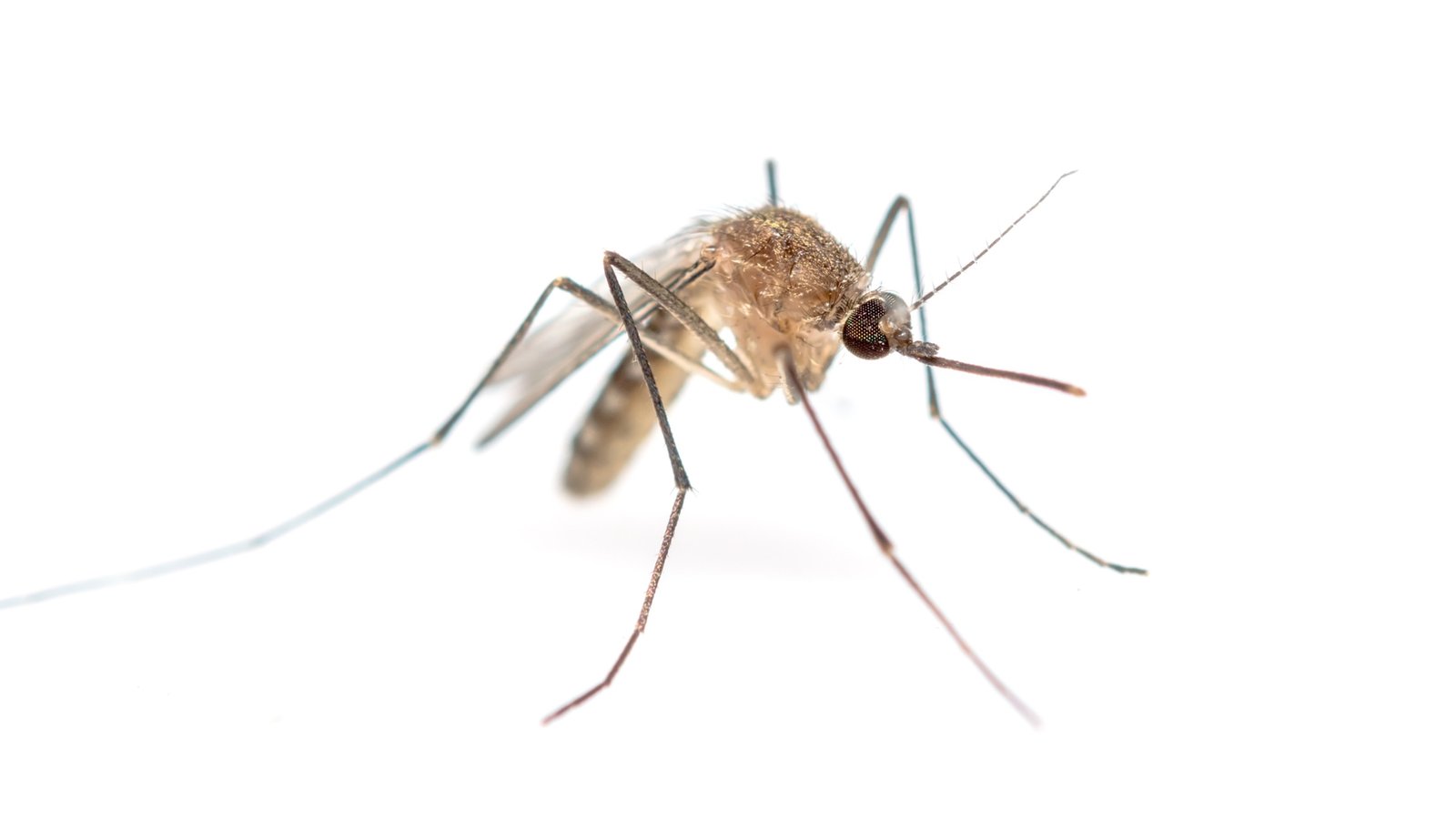
Mosquitoes do not exist for a purpose. Like every other organism, they are the product of evolution, not of design, and nature does not assign roles in advance. The more useful question is what mosquitoes actually do in the places where they live, and here the honest answer is that they play several real ecological roles. They are food for other animals in both their adult and larval forms. Some of them visit flowers and pollinate certain plants. And their aquatic larvae help process organic matter and feed a wide range of freshwater life. None of these roles makes mosquitoes irreplaceable, and researchers disagree about how much would change if they vanished, but the roles are genuine and worth understanding on their own terms (Sources 1, 2, 6).
Food for wildlife
Mosquitoes feed other animals at every stage of their life. In the water, larvae are eaten by fish, birds, and other predators, and the adults that survive to fly carry that biomass out of the water and onto land, where they are eaten by birds, bats, frogs, and other insects (Source 1). This movement of material from water to land is part of what makes mosquitoes ecologically relevant beyond the pond itself.
It is important not to overstate this. Mosquitoes are eaten widely, but they are rarely a dominant food source for the animals that eat them. When biologists in Alaska examined bird stomach samples, Arctic mosquitoes did not appear in large numbers, and midges turned out to be a more important food for tundra birds (Source 3). One comparison often used by entomologists is that a predator choosing between a large moth and a small mosquito is choosing between a full meal and a snack (Source 4). Mosquitoes are part of many diets, but usually a minor part rather than the foundation of one.
Pollination
Adult mosquitoes do not live on blood. Their fundamental food is plant sugar, most often floral nectar, and only female mosquitoes take blood, which supplies protein for developing eggs (Sources 1, 5). Both males and females visit flowers to feed on nectar, and in the process they can transfer pollen from flower to flower, which makes them pollinators of some plants (Source 1).
The clearest documented case involves the blunt-leaf bog orchid, Platanthera obtusata, of northern regions. The snow-pool mosquito Aedes communis feeds on nectar from the orchid’s floral spur, and as it feeds, a cluster of pollen called a pollinium sticks to the mosquito’s eye. When the mosquito visits the next flower, that pollinium touches the flower’s stigma and pollination occurs (Source 6). A 2020 study in the Proceedings of the National Academy of Sciences examined the chemistry behind this relationship, finding that Aedes mosquitoes are effective pollinators of this orchid and that the orchid’s scent, rich in a compound called nonanal, is what draws them in (Source 5). This is one of relatively few well-studied examples of mosquitoes acting as effective pollinators, so it should be read as a real but specific dependency, not evidence that mosquitoes are major pollinators in general.
Aquatic ecosystems
Most of a mosquito’s life happens in water. Larvae grow by consuming microorganisms such as algae and the microbes that break down decaying plant material, which means they help process organic matter in the small pools, ponds, and wetlands where they develop (Source 1). Because they concentrate and cycle nutrients this way, and because they are themselves prey for fish, birds, and other aquatic predators, larvae sit inside freshwater food webs rather than beside them (Sources 1, 2).
When a mosquito that dies, or is eaten and excreted, decomposes, the microbes it consumed as a larva are returned to the system as nutrients that plants can use (Source 1). In this sense mosquitoes are one of many organisms that move nutrients through aquatic and neighboring land habitats. The role is real, but it is shared with many other small aquatic insects that occupy similar niches.
Would eradicating them matter
Scientists genuinely disagree here, and it is worth presenting the uncertainty rather than a tidy conclusion. There are more than 3,000 mosquito species, and only a small fraction bite humans or spread disease, so the question of eradication usually means removing specific species rather than all of them.
One line of argument holds that mosquitoes do not occupy an irreplaceable niche. In a widely cited 2010 feature in the journal Nature, entomologist Joe Conlon put it plainly, saying that if mosquitoes were eradicated tomorrow, the ecosystems where they are active would hiccup and then get on with life, with something else taking over the space they left (Sources 3, 4). On this view, other insects would likely fill the gaps in most food webs and pollination systems.
The other line of argument points to specific dependencies that would not be so easily replaced. The same Nature feature notes that in the Arctic tundra, some biologists estimate that the number of migratory birds nesting there could drop by more than half without mosquitoes and the insects that share their habitat, and that mosquito swarms are heavy enough to influence the movement of caribou herds, which take up to 300 millilitres of blood per animal per day during peak season (Source 3). Documented plant relationships such as the bog orchid would also be at risk (Sources 5, 6).
The balanced reading is that eradicating a given mosquito species would probably cause local disruption that many ecosystems would absorb over time, while a few specific relationships, in particular places, would be harder to replace. Researchers also point out that the main reason a mosquito-free world remains unlikely is the difficulty of the killing itself, not a settled judgment that mosquitoes must be preserved (Sources 3, 4).
Sources
- Daniel A.H. Peach, University of British Columbia, writing in The Conversation, “The bizarre and ecologically important hidden lives of mosquitoes.” Used for larvae feeding on algae and decaying plant material, biomass transfer from water to land, adults as food for birds, bats, frogs, and insects, nutrient cycling, and both sexes visiting flowers for nectar and pollinating. https://theconversation.com/the-bizarre-and-ecologically-important-hidden-lives-of-mosquitoes-127599 (accessed 20 July 2026)
- National Wildlife Federation blog, “What Purpose do Mosquitoes Serve?” Used for mosquitoes as prey in adult and larval form for a range of wildlife, and for the blunt-leaf orchid as a mosquito-pollinated plant. https://blog.nwf.org/2020/09/what-purpose-do-mosquitoes-serve/ (accessed 20 July 2026)
- Janet Fang, “Ecology: A world without mosquitoes,” Nature, 2010. Used for the Arctic bird estimate (more than half), the caribou blood figure (up to 300 millilitres per animal per day), the finding that midges are a more important food for tundra birds than mosquitoes, and the Conlon “hiccup and then get on with life” assessment. Page returned an access restriction on 20 July 2026; claims verified through the publisher’s search snippet at the real URL. https://www.nature.com/articles/466432a (accessed 20 July 2026)
- California Academy of Sciences, “Mosquito Eradication.” Used to corroborate the Nature feature, including the point that fish, reptiles, birds, and bats feed on mosquitoes but other insects could substitute, the moth-versus-mosquito food-value comparison, and the “no unassailable niche” framing. https://www.calacademy.org/explore-science/mosquito-eradication (accessed 20 July 2026)
- Jeffrey A. Riffell et al., “The olfactory basis of orchid pollination by mosquitoes,” Proceedings of the National Academy of Sciences (PNAS), 2020. Used for Aedes mosquitoes as effective pollinators of Platanthera obtusata and for the nonanal-rich scent that mediates the relationship. Publisher page returned an access restriction on 20 July 2026; claims verified through the publisher’s search snippet at the real DOI URL. https://www.pnas.org/doi/10.1073/pnas.1910589117 (accessed 20 July 2026)
- USDA Forest Service, “Aedes communis: The Pollinating Mosquito” (Pollinator of the Month). Used for the mechanism by which Aedes communis feeds on Platanthera obtusata nectar, picks up a pollinium on its eye, and pollinates the next flower, and for adults feeding on plant nectar to fuel flight. https://www.fs.usda.gov/wildflowers/pollinators/pollinator-of-the-month/aedes_communis.shtml (accessed 20 July 2026)
Related
- What do mosquitoes eat? (placeholder)
- The mosquito life cycle (placeholder)
- How many mosquito species are there? (placeholder)
- Do mosquitoes have any natural predators? (placeholder)
Educational note: This page is a general science reference and is not medical, pest-control, or public-health advice. Mosquitoes can transmit disease, and their ecological roles do not change the value of protecting yourself from bites. For guidance specific to your area, consult your local public-health or mosquito-control authority.
Last reviewed 20 July 2026.